Understanding Pressure Regulation in Modern HVAC Industry Applications
Pressure regulation represents one of the most critical yet frequently overlooked aspects of HVAC system performance. Whether you're servicing a manufacturing facility, commercial complex, or industrial plant in Singapore, understanding how pressure regulators function within your broader system architecture is essential.
Over our 35+ years as an industrial equipment distributor, 3G Electric has observed that nearly 40% of HVAC system failures trace back to improper pressure regulation. The consequences extend beyond simple efficiency loss—poorly regulated pressure can damage downstream components, create safety hazards, and increase energy consumption by 15-20%.
Pressure regulation challenges vary significantly across Singapore's industrial landscape. Tropical humidity affects gas density, sudden load spikes in manufacturing plants stress regulator response times, and the mix of older legacy systems with newer installations creates compatibility issues. This guide addresses these real-world challenges with practical solutions.
Diagnosing Pressure Regulation Problems in Your HVAC Systems
Common Pressure-Related Symptoms
Before you can solve a pressure regulation problem, you must correctly identify it. Watch for these telltale signs:
- Unstable outlet pressure: Fluctuating pressure readings indicate a regulator struggling to maintain set points, often caused by oversizing or internal seat degradation
- Hissing or whistling sounds: Typically signals excessive pressure drop across the regulator or a failing safety relief valve
- Slow system response times: When burners take too long to ignite or shutdown lags, pressure regulation delays are often responsible
- Uneven heating across zones: Multi-zone systems with poor pressure regulation distribute energy inconsistently
- Safety valve chattering: Rapid opening and closing of relief valves indicates the primary regulator cannot maintain downstream pressure stability
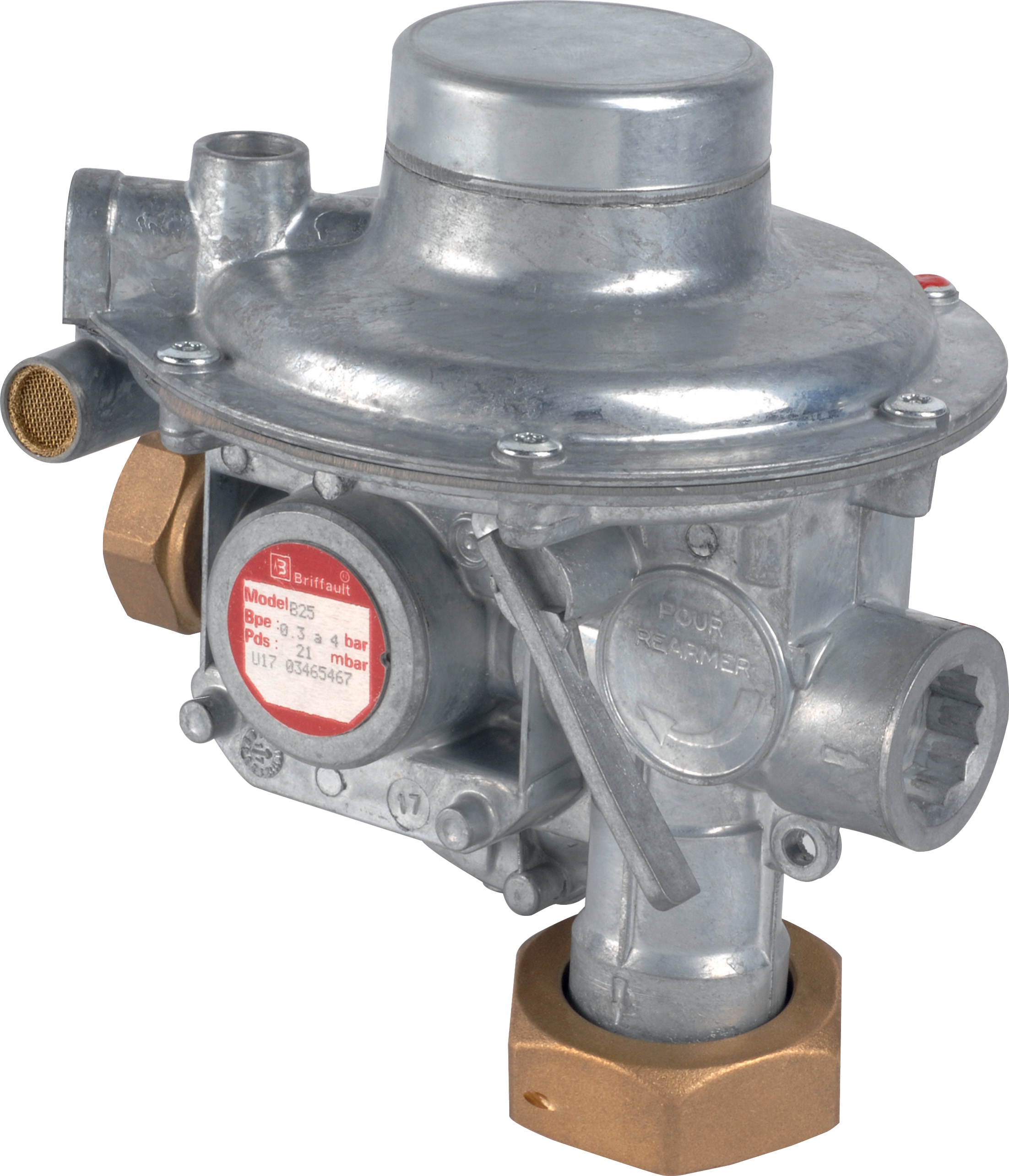
The Francel B25/37mb with integrated safety relief specifically addresses pressure instability through its dual-chamber design. The integrated safety relief valve maintains consistent 37 mbar outlet pressure while protecting against over-pressurization—a critical combination for sensitive HVAC applications in Singapore's variable operating conditions.
Systematic Diagnostic Approach
Step 1: Establish Your Baseline
Before troubleshooting, document your system's normal operating parameters. Record inlet pressure, outlet pressure, flow rate, and ambient temperature. Singapore's high humidity and temperature swings mean your baseline will shift seasonally—track these variations.
Step 2: Check Inlet Pressure Stability
If your outlet pressure fluctuates, first verify inlet pressure stability. Connect a quality pressure gauge directly at the regulator inlet. If inlet pressure swings exceed ±10% of your set pressure, the problem originates upstream. Check for:
- Partially blocked filters (change them every 90 days in Singapore's humid climate)
- Undersized supply lines creating resistance
- Faulty pressure switches cycling the supply pump
The pressure difference between loaded and unloaded conditions reveals regulator sizing accuracy. Record outlet pressure with zero flow, then again at maximum system demand. A drop exceeding 10% indicates either an undersized regulator or internal wear.
Step 4: Inspect the Safety Relief Valve
Most pressure regulation problems involve the safety relief valve. Test it by:
- Slowly increasing inlet pressure while monitoring outlet pressure
- The relief valve should open smoothly at your set pressure
- Listen for chattering or sluggish response
- Check for external leaks around the relief valve seat
Optimizing Pressure Regulation for Different HVAC Applications
Pressurization Systems with High-Flow Demands
Many Singapore industrial facilities operate combined HVAC and hydraulic systems that demand both stable pressure and high flow capacity. These applications benefit from redundant pressure regulation stages.
Primary Stage: Use a piloted regulator like the Francel B25/37mb to maintain coarse pressure control. Its 10 mm vent size handles moderate flow variations without hunting or cycling.
Secondary Stage: Install a smaller pilot-operated regulator on critical branches to fine-tune pressure for precision equipment. This two-stage approach eliminates the common problem of over-regulation at low flows and under-regulation at peak demand.
For applications requiring precise pressure with high flow rates, consider integrating Pratissoli KF30 pumps (106 L/min capacity) or Pratissoli MW40 pumps (211 L/min capacity) upstream. These Italian-engineered systems deliver consistent inlet pressure that your regulators can then stabilize effectively. Working with properly specified pump capacity prevents the common mistake of oversizing pumps and then trying to throttle their output—a practice that generates waste heat and accelerates regulator wear.
Systems with Variable Load Profiles
Manufacturing facilities in Singapore's industrial estates often experience unpredictable load swings—sudden demand spikes when production lines restart after maintenance, then low-demand periods during shift changes.
For these applications:
- Size your primary regulator for average flow, not peak flow (oversizing causes hunting)
- Install a compact Interpump E1D1808 pump (8 L/min, 2.72 kW) as a secondary feed for surge capacity
- Set the safety relief valve 10-15% above your maximum operating pressure
- Configure pressure gauges with isolating block valves to monitor both primary and secondary stages
This approach maintains stable regulation during normal operation while the secondary system handles transient spikes without overwhelming the primary regulator.
Cleaning and Spray Systems
Precision spray applications require tight pressure tolerances. The Euspray flat jet nozzle with 25° spray angle requires stable inlet pressure within ±5% of set point for consistent spray pattern and penetration.
Optimization steps:
1. Install your primary pressure regulator within 2 meters of the spray manifold (long lines create dynamic pressure losses)
2. Use the regulator's vent line sizing appropriately—a 10 mm vent is adequate for the Euspray nozzle at moderate flow
3. Locate your safety relief valve on the manifold block itself, not at the regulator outlet (reduces line pressure drop)
4. Schedule quarterly cleaning of regulator vent filters—Singapore's humidity promotes rapid corrosion of vent screens
Maintenance Protocols for Long-Term Pressure Regulation Reliability
Monthly Inspection Routine
Spend 30 minutes monthly on these critical checks:
- Visual inspection: Look for oil weeping from regulator bodies, corrosion around vent ports, or damaged pressure gauge lines
- Pressure gauge verification: Compare analog and digital gauges if you have both; they should read within 2% of each other
- Safety relief response: Manually trigger the relief valve (if equipped with a test lever) and confirm immediate pressure drop
- Vent line inspection: Ensure vent lines are clear and vent filters are not clogged with dust or debris
Seasonal Maintenance for Singapore Climate
Tropical conditions demand adjusted maintenance cycles:
- Before monsoon season: Inspect all external vent connections and add temporary protective covers if regulators are outdoors
- After high-humidity periods: Clean all vent passages with dry compressed air; moisture infiltration causes internal corrosion
- Quarterly filter changes: Replace inlet filters every 90 days rather than annually—Singapore's dust and humidity accelerate filter loading
Replacement Timing Indicators
Replace pressure regulators when you observe:
- Outlet pressure drifting more than 5% from set point despite inlet stability
- Safety relief valve leaking from the cap vent (indicates internal seat damage)
- Inability to achieve smooth regulation without continuous adjustment
- Any regulator in service more than 10 years without factory overhaul (internal seals degrade predictably)
Integrating Modern Diagnostics with Field Experience
With 35+ years supporting Singapore's industrial contractors, 3G Electric has evolved our approach to blend traditional troubleshooting with modern monitoring.
Practical Integration Strategy:
1. Install smart pressure transmitters on both inlet and outlet of your primary regulator. These devices (increasingly affordable) provide early warning of degradation before catastrophic failure.
2. Use data logging during commissioning: When you install or service a system, record 24-48 hours of pressure data. This baseline helps you spot degradation patterns at future service calls.
3. Document your system configuration: Create a pressure schematic showing all regulator stages, relief valve set points, and expected pressures at key locations. During troubleshooting, this reference accelerates problem isolation.
4. Cross-reference with pump performance: If you're using KF30 or MW40 Pratissoli pumps upstream, their pressure output curves are predictable. Deviations signal regulator problems before flow degradation becomes obvious.
Preventive Strategies to Minimize Pressure Regulation Failures
Right-sizing is your first defense: Too many contractors select regulators based on maximum system pressure rather than actual operating pressure and flow. The Francel B25/37mb is sized for 37 mbar continuous operation—understand your actual duty cycle before selecting components.
Protect against contamination: Installing a 10-micron filter downstream of your pump but upstream of your primary regulator prevents particle damage to regulator seats. This single addition extends regulator life 3-5 years in industrial environments.
Design redundancy into critical systems: For facilities where HVAC downtime causes production loss, install dual regulators with isolation ball valves. This allows you to service one regulator without system shutdown.
Schedule regular testing: Unlike pumps with obvious performance degradation, pressure regulators can fail gradually. Quarterly testing during non-peak production hours prevents surprise failures during critical operations.
Key Takeaways for Singapore HVAC Contractors
Mastering pressure regulation requires understanding both component function and system integration. Singapore's unique industrial environment—with tropical humidity, variable power quality, and dense facilities sharing infrastructure—demands more rigorous pressure management than temperate climates.
The regulators and pumps we supply through 3G Electric are selected specifically for industrial durability, but they perform optimally only with proper integration and maintenance. Use the diagnostic protocols in this guide to establish your baseline, monitor for degradation, and prevent failures before they impact your customers' operations.
When you need replacement components or want to discuss pressure regulation optimization for specific applications, 3G Electric's technical team can guide equipment selection based on actual operating conditions rather than theoretical maximums.