
Introduction: Why Measurement & Detection Matters in HVAC Commissioning
HVAC system commissioning is where theory meets reality. After months of design and installation, your measurement and detection work determines whether a system operates at peak efficiency or underperforms for years. For Singapore's hot, humid climate, accurate commissioning measurements are critical—undersized airflow means inadequate cooling, oversized systems waste energy, and improper refrigerant charge leads to premature compressor failure.
Drawing on 35+ years of experience as a global industrial equipment distributor, 3G Electric understands that contractors need reliable, accurate instruments that perform consistently in demanding field conditions. This handbook addresses the practical measurement and detection challenges HVAC contractors face during system startup, seasonal changeover, and troubleshooting.
Section 1: Core Measurement & Detection Instruments for HVAC Commissioning
Temperature Measurement
Accurate temperature measurement is the foundation of HVAC commissioning. You need instruments that respond quickly to transient conditions and maintain accuracy in Singapore's high-humidity environment.
The Dwyer PT100 OHM RTD temperature probe offers ±0.6% accuracy at 0°C with a flexible copper capillary design that fits tight spaces in supply air ducts, return plenums, and condenser coils. Its operating range from -35.5°C to +115.5°C covers both cooling and heating commissioning scenarios. The flange-clip mounting allows rapid repositioning during system startup procedures.
Practical application: When commissioning a rooftop unit in Singapore, mount this probe in the supply air stream 6-8 meters downstream of the coil to measure true leaving air temperature. Compare this against the thermostat setpoint to verify proper refrigerant charge and airflow. In humid conditions, the durable copper capillary resists corrosion that would compromise cheaper temperature probes.
Pressure Measurement
Pressure measurements tell you critical system information: refrigerant charge status, filter condition, ductwork balance, and system safety margins. Three measurement scenarios require different instruments.
Static and differential pressure: The Dwyer 616KD-13V-TC differential pressure transmitter measures 0–1 IN W.C with minimal power consumption (21 mA maximum). Use this for:
- Measuring filter pressure drop to schedule cleaning
- Checking supply/return duct balance
- Verifying proper economizer damper position
- Monitoring VAV box minimum flow rates
The transmitter's barbed process connections accommodate standard 3–5 mm tubing found in most commissioning kits. Its output signal integrates with portable data loggers for trending measurements throughout the startup period.
Low-pressure gauge readings: The Preciman stainless steel vertical pressure gauge (0/+40 mbar range) provides visual readings for system pressure verification. At 63mm dial size with G1/4 connection, it fits standard gauge ports on HVAC service manifolds. The ±1.6% accuracy meets commissioning tolerances, and stainless steel construction resists corrosion from Singapore's coastal air and high humidity. Mount this on discharge side of condensate pump, air compressor supply to pneumatic controls, or refrigerant isolation points.
Airflow Measurement
Airflow verification ensures your system delivers designed CFM and maintains proper supply/return balance. This is where commissioning separates competent contractors from mediocre ones.
The Dwyer metal average flow probe (MAFS-16) integrates into ductwork to measure both static and total pressure across its 16 cm measurement length. Installed in main supply ducts, it provides averaging effect that accounts for velocity profile non-uniformity. Using the differential between static and total pressure, you calculate actual volumetric flow without stopping work or requiring multiple traverse points.
Commissioning procedure: Install the probe perpendicular to airflow in straight duct section minimum 3 duct diameters downstream from elbows or transitions. Connect the static port to your differential pressure meter and the total pressure port to calculate velocity pressure. Reference published conversion tables to determine actual CFM based on duct diameter.
Section 2: Pressure Management and System Validation
Refrigerant Charge Verification
Incorrect refrigerant charge is the most common HVAC failure mode. In Singapore's year-round cooling demand, undercharge reduces capacity while overcharge increases head pressure and compressor discharge temperature.
During commissioning, you'll establish baseline refrigerant pressures after 15 minutes of steady-state operation. Compare suction and discharge pressures against manufacturer tables corresponding to outdoor ambient temperature and entering air conditions.
The Preciman pressure gauge mounted on your service manifold provides direct visual feedback. However, recorded data points matter more—log readings at 5-minute intervals across the first hour of operation to observe system stabilization. Pressure drift indicates:
- Rising suction pressure = excess charge or low airflow
- Falling suction pressure = insufficient charge or high indoor load
- Rising discharge pressure = dirty condenser or excess charge
System Pressure Drop Analysis
Total system pressure drop impacts compressor power consumption directly. Every 0.5 bar increase in discharge pressure increases compressor power by approximately 3-5%.
Measure pressure drops at these critical points:
- Suction line between TEV and compressor inlet
- Discharge line between compressor and condenser inlet
- Liquid line between condenser outlet and receiver
- Return air side across filter and coil
Record these baseline values for future reference. If future performance complaints arise, comparable pressure drop measurements immediately reveal whether problems stem from charge loss, blockage, or mechanical failure.
Expansion Tank Commissioning
For heating systems or hybrid systems with hot water loops, proper expansion tank pressurization is critical. Incorrect precharge causes temperature swings, intermittent flow, and premature expansion tank failure.
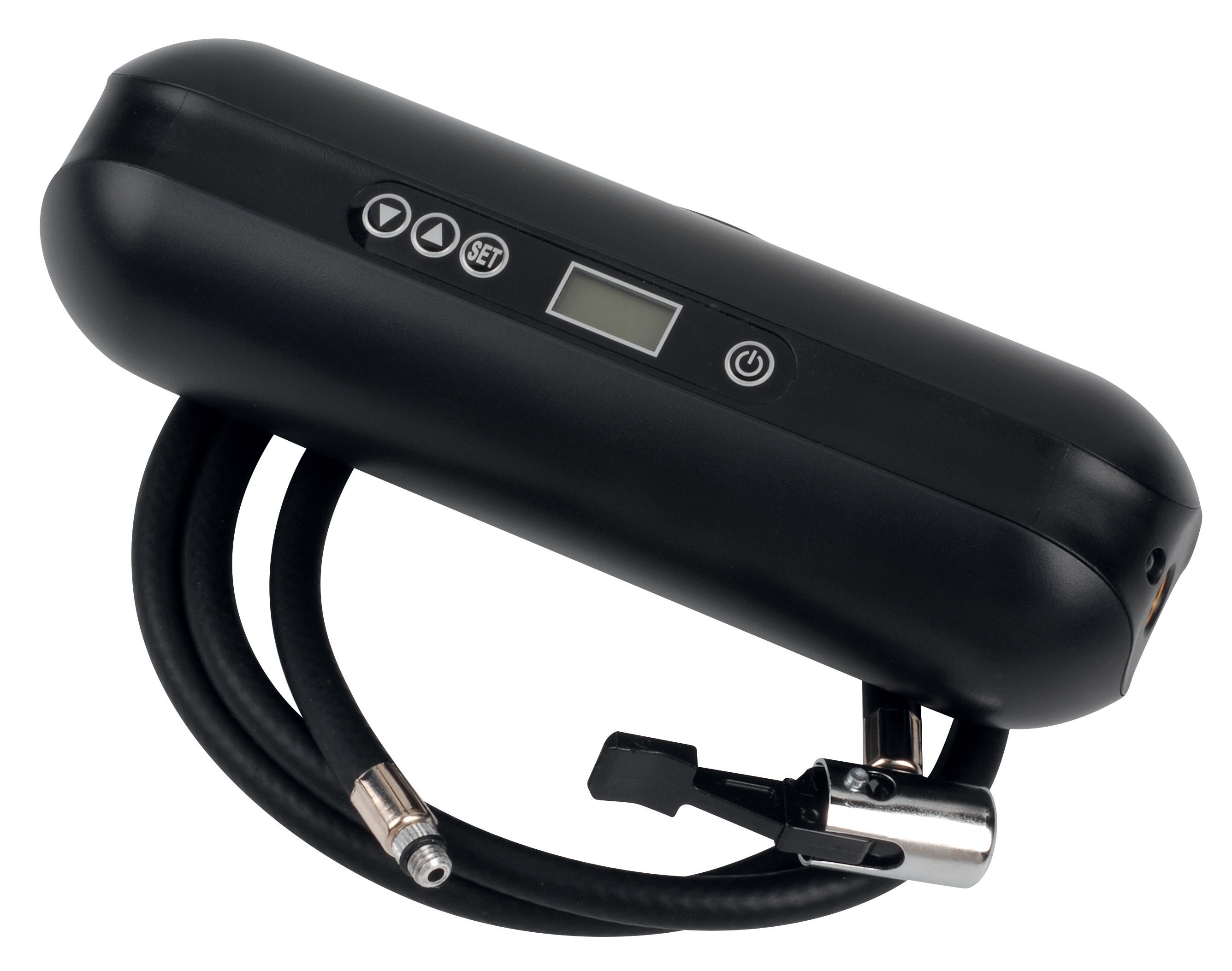
The CBM expansion tank inflator battery (2000 mAH) provides portable, battery-powered charging for expansion tank precharge. Rated to 10.3 bar maximum pressure with operational range -20°C to +60°C, it handles both initial commissioning and future maintenance. The device supports multiple pressure units (bar, PSI, kPa) matching various system documentation standards.
Critical procedure: Always depressurize the system and drain the tank before precharging. Calculate required precharge as 0.75 × system static pressure. For a 4-bar system, precharge to 3 bar. The inflator's accuracy ensures proper pressurization without overcharging that ruptures diaphragms.
Section 3: Field Measurement Procedures and Documentation
The Commissioning Data Sheet Approach
Professional commissioning requires standardized documentation. Create a baseline measurement sheet capturing:
Environmental conditions:
- Outdoor dry bulb and wet bulb temperatures
- Indoor dry bulb and relative humidity at multiple locations
- Barometric pressure
- Time of measurement
- Supply air temperature (average of multiple probe positions)
- Return air temperature
- Mixed air temperature (if economizer equipped)
- Compressor suction/discharge pressure
- Outdoor condenser unit temperatures
- Indoor coil entering/leaving water temperature (if water-cooled)
- Main supply duct static pressure
- Main return duct static pressure
- Filter pressure drop
- Individual VAV box pressure drops (if applicable)
- Refrigerant sight glass condition
- Electrical current draw (compressor, fan motors)
Trending and Performance Signatures
Beyond single-point measurements, document how parameters change over time. System behavior during the first 90 minutes of operation reveals problems early:
Normal startup signature:
- Suction pressure rises gradually as evaporator load increases
- Discharge pressure peaks within 20 minutes then stabilizes
- Supply air temperature drops from initial coil entering temperature to steady-state value
- Compressor amperage stabilizes within 45 minutes
- Suction pressure rises rapidly then drops sharply = air in system
- Discharge pressure continuously rises = condenser blockage or excessive charge
- Supply air temperature oscillates wildly = TX valve hunting or low charge
- Compressor amperage exceeds nameplate rating = mechanical problem or overcharge
Capture these signatures with your differential pressure transmitter connected to a data logger. Modern devices record measurements every 30 seconds for 2-3 hours. This data proves system was commissioned properly and becomes invaluable when troubleshooting future issues.
Seasonal Changeover Measurements
Singapore's tropical climate means cooling demand dominates, but many commercial buildings operate heating during peak morning periods. Seasonal equipment checks require measurement:
For heating changeover:
- Measure expansion tank precharge (should equal 0.75 × static pressure)
- Verify boiler pressure and temperature setpoints
- Check supply/return water temperature differential across heating coils
- Document water quality through conductivity measurement
For cooling changeover:
- Purge all air from refrigerant lines before pressurizing
- Establish baseline refrigerant pressures with actual load
- Verify economizer damper operation through air temperature reduction
- Check condenser water treatment for cleanliness
Section 4: Measurement Best Practices for Singapore's Environment
Dealing with High Humidity
Singapore's relative humidity typically ranges 70-95%, creating measurement challenges:
Condensation on instruments: Your temperature probe will read artificially low if moisture condenses on the sensing element. Insulate probes with foam or tape in return air paths where moisture is heaviest. Allow 3-5 minutes stabilization time before recording readings.
Pressure line blockage: Water vapor in pressure sensing lines causes blockages. Always include moisture traps in pressure tubing. The differential pressure transmitter specifications include operating humidity limits—verify yours operates to 95% RH.
Corrosion of gauge connections: Even stainless steel gauges suffer corrosion at connection points. The Preciman gauge's copper alloy wetted parts resist this better than plain steel, but still require occasional inspection. Wipe gauge connections dry after use and apply light silicone grease to threads.
Portable Equipment Selection
Your measurement and detection kit must withstand daily transport in tropical conditions:
- Choose insulated carrying cases that protect against temperature swings from air-conditioned vehicles to 35°C+ rooftop equipment
- Select digital meters with condensation-resistant displays
- Invest in quality pressure tubing rated for UV exposure—sun-damaged tubing develops leaks
- Calibrate instruments annually; humidity accelerates sensor drift
Integration with Building Management Systems
Most commercial HVAC systems connect to Building Management Systems (BMS). During commissioning, your hand-held measurements verify BMS sensor accuracy:
- Compare your temperature probe reading against BMS temperature display
- Verify BMS pressure readings using your portable gauge
- Check trending data from BMS against your documented baseline
- Flag any BMS sensor that differs more than ±1°C or ±0.1 bar from your portable instruments
This validation proves system was commissioned correctly and establishes the foundation for predictive maintenance programs.
Conclusion
Measurement and Detection during HVAC commissioning is both art and science. The science comes from understanding thermodynamics and system design. The art comes from knowing which measurements matter most, interpreting results correctly, and communicating findings to building owners.
3G Electric supplies the instruments—the temperature probes, pressure gauges, transmitters, and tools—that make professional commissioning possible. With 35+ years distributing industrial equipment globally, we understand the specific challenges contractors face in Singapore's demanding tropical climate.
Invest in quality measurement instruments, follow standardized procedures, document everything, and commission every system as though your reputation depends on it. Because it does.