Understanding Industry Applications in HVAC System Management
Industry Applications of pressure regulation and fluid control systems are fundamental to modern HVAC operations across Singapore's manufacturing, commercial, and industrial sectors. With over 35 years of experience as an industrial equipment distributor, 3G Electric has supported contractors facing the specific challenges of tropical climates, high-humidity environments, and demanding operational schedules that characterize Singapore's industrial landscape.
Pressure regulation is not merely a component selection—it is a strategic operational requirement. HVAC systems operating in Singapore encounter unique stressors: high ambient temperatures accelerating refrigerant pressure buildup, salt-laden air in coastal industrial zones causing corrosion, and precision cooling requirements for sensitive manufacturing environments. Understanding how pressure regulation integrates with auxiliary systems determines whether your installations operate at peak efficiency or experience costly downtime.
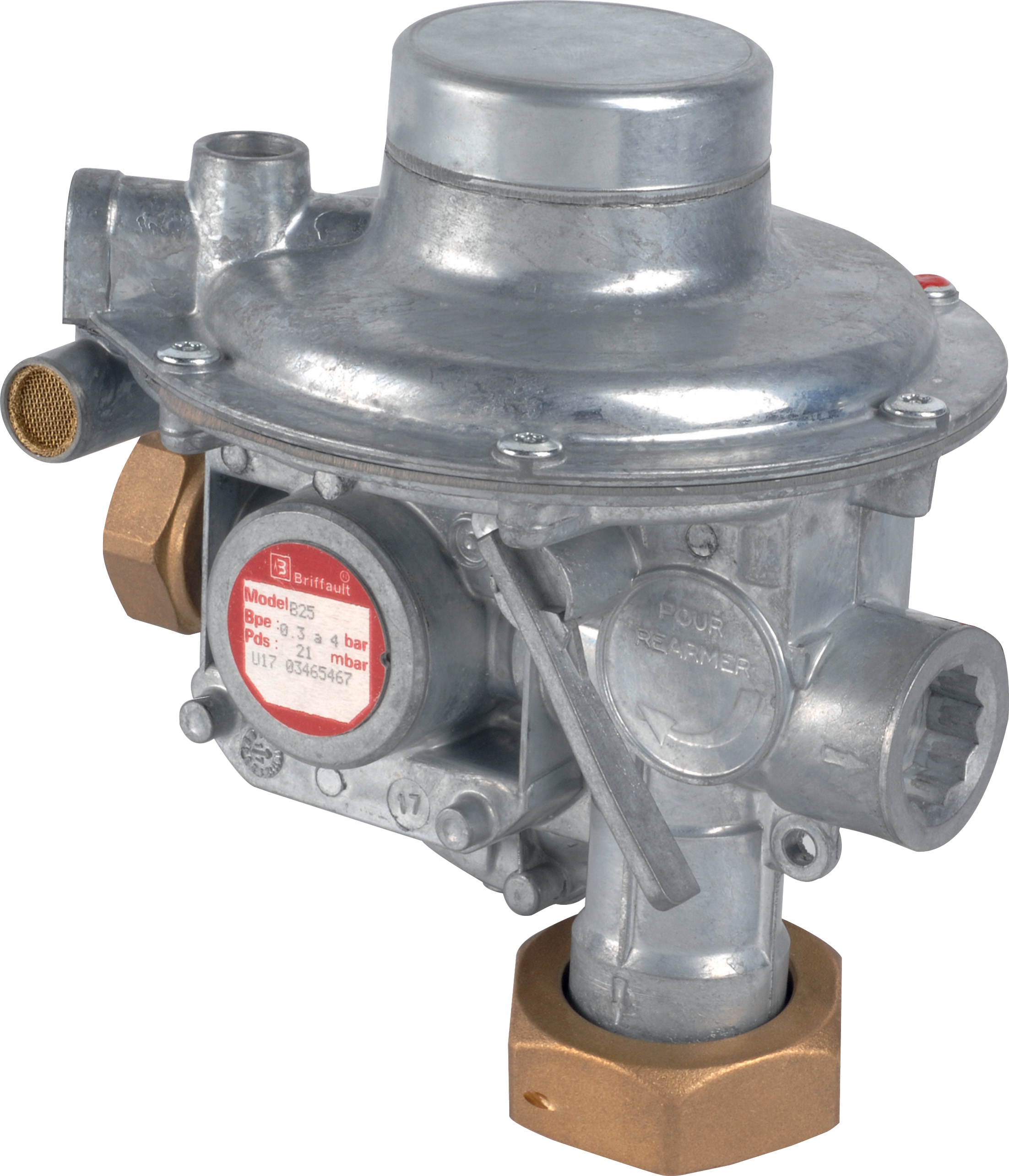
The distinction between standard pressure regulators and integrated safety relief systems directly impacts your contractor liability and system longevity. A regulator like the Francel B25/37mb with integrated safety relief addresses both primary pressure control and emergency overpressure protection—critical for systems in temperature-controlled manufacturing facilities where pressure fluctuations can damage sensitive equipment downstream.
Pressure Regulation Applications in HVAC System Design
Gas Distribution and Laboratory Integration
Many HVAC contractors in Singapore's life sciences, pharmaceutical, and precision manufacturing sectors encounter integrated gas systems where refrigerant lines, nitrogen purging systems, and compressed air networks coexist. The Francel B25/37mb pressure regulator with 37 mbar outlet delivery and 10mm vent size delivers precise downstream pressure control essential for:
- Refrigerant purity maintenance: Gas regulators prevent pressure spikes that degrade refrigerant purity and damage compressor components
- Nitrogen system integration: Purging and pressurization operations require stable outlet pressure to prevent moisture ingress and oxidation
- Safety relief functionality: Integrated 10mm vent design protects against catastrophic pressure excursions without requiring separate relief valve installation
- Laboratory environment compatibility: The regulator's design suits both industrial cooling applications and adjacent laboratory gas systems
In Singapore's pharmaceutical manufacturing sector, where GMP compliance requires documented pressure stability, regulators with integrated safety relief eliminate single points of failure and simplify compliance documentation. A dual-function regulator reduces component count, installation complexity, and potential leak points.
Pressure Stability in High-Temperature Environments
Singapore's ambient temperatures regularly exceed 32°C, with industrial facilities maintaining even higher process temperatures. Pressure regulators must compensate for thermal expansion effects that would otherwise destabilize outlet pressure. The Francel design maintains consistent 37 mbar output despite:
- Refrigerant temperature variations from compressor discharge (40-50°C) to evaporator inlet
- Ambient heat load fluctuations throughout the tropical day/night cycle
- Process heat interactions in manufacturing environments
For HVAC contractors, this thermal stability translates to predictable system behavior, reduced nuisance alarms, and consistent cooling delivery across extended operating hours—particularly critical for 24/7 manufacturing operations.
High-Flow Pumping Systems and Auxiliary HVAC Applications
Coolant Circulation and Heat Transfer Enhancement
While primary HVAC systems utilize dedicated compressors, many industrial cooling applications employ secondary pumping systems for enhanced heat transfer, process cooling, or condenser assist operations. High-performance industrial pumps serve critical roles:
The Pratissoli KF30 pump (106 L/min, 200 bar, 40 kW) enables:
- Condenser cooling loops: Direct coolant circulation maintains optimal temperature differential across condenser coils
- Glycol-based heat transfer fluids: Higher viscosity fluids require robust positive-displacement pumps to maintain consistent flow against elevated friction losses
- Process cooling integration: Manufacturing equipment requiring supplemental cooling benefits from independent circulation pumps operating at pressures/flows optimized for the specific cooling load
- Redundancy and reliability: Secondary pumping systems provide operational backup during primary system service intervals
For industrial facilities operating continuous processes, availability directly impacts production economics. A high-performance pump like the KF30 reduces cavitation risk, maintains consistent outlet flow regardless of back-pressure variations, and operates efficiently at part-load conditions typical of variable manufacturing demands.
Large-Scale Facility Cooling and District Cooling Applications
Singapore's district cooling infrastructure and large commercial complexes increasingly utilize centralized HVAC systems with distributed cooling loops. The Pratissoli MW40 pump (211 L/min, 210 bar, 85 kW) addresses:
- Building-scale heat rejection: 211 L/min flow rates serve multi-story facilities with geographically distributed cooling zones
- Thermal storage integration: Off-peak chiller operation charging thermal storage tanks requires sustained high-flow circulation
- Redundancy in critical facilities: Data centers, hospitals, and pharmaceutical facilities justify multiple MW40-class pumps for operational continuity
- Water treatment and auxiliary systems: Secondary coolant loops often incorporate treatment systems, filtration, and monitoring—all demanding reliable high-flow circulation
The 85 kW power input and 264 kg mass indicate a professional-grade system suitable for permanent installation in engineered cooling plants rather than portable or temporary applications. HVAC contractors designing facility-scale systems encounter specifications demanding exactly this class of equipment.
Spray Systems and Cooling Tower Integration
Nozzle Selection for Cooling Tower Efficiency
Cooling tower performance directly depends on spray pattern uniformity and droplet size distribution. The Euspray flat jet nozzle (HP 1/4"M BSPT, 25° angle, index 30) delivers:
- Targeted spray geometry: 25° spray angle provides optimal coverage for standard cooling tower basin dimensions
- High-pressure operation: HP rating ensures consistent atomization even at elevated system pressures (typical cooling tower systems operate 3-5 bar supply pressure)
- Uniform droplet distribution: Index 30 design achieves repeatable droplet sizing critical for maximum heat transfer efficiency
- Hot water compatibility: BSPT thread design and material selection suit hot water service typical of condenser cooling loops
In tropical Singapore, cooling tower fouling accelerates due to seasonal rainfall, airborne salt from coastal facilities, and biological growth in warm stagnant water. Precise spray patterns from optimized nozzles maximize droplet residence time in the fill material, improving cooling efficiency and reducing water consumption—a critical consideration for facilities facing water restrictions and sustainability mandates.
Maintenance Implications of Spray System Design
Euspray nozzles with index 30 design enable field service without requiring complete nozzle replacement. Index systems allow technicians to rotate or reposition individual nozzles to optimize spray pattern across the cooling tower basin. This modular approach reduces spare parts inventory and minimizes service time during maintenance windows—valuable for contractors managing multiple facilities with varying cooling tower designs.
Compact Pump Systems for Retrofit and Specialized Applications
Space-Constrained Installation Scenarios
Not every HVAC application accommodates large pump installations. Existing facilities undergoing cooling system upgrades frequently encounter space constraints where standard industrial pumps cannot physically fit. The Interpump E1D1808 pump (8 L/min, 180 bar, 2.72 kW, 5 kg) serves:
- Retrofit HVAC modernization: Upgrading legacy systems without structural modification requires compact pump solutions
- Portable chiller units: Mobile cooling systems for temporary facility support or emergency backup demand lightweight, high-power-density equipment
- Auxiliary fluid circulation: Secondary cooling circuits, glycol recirculation, or treatment system support require modest flow rates at elevated pressures
- Research and development cooling: Laboratory environments testing thermal management solutions need flexible, rapidly-configurable pump platforms
The 2.72 kW power input and 5 kg mass represent a fundamentally different equipment class—suitable for bench-top or wall-mount installation where traditional 40+ kW pumps are impractical. For HVAC contractors supporting research institutions, specialty manufacturing, or mobile cooling services, compact pump options significantly expand service offerings.
Performance Characteristics and Selection Methodology
The E1D1808 delivers 8 L/min at 2800 rpm, yielding 0.286 L/rev displacement—characteristic of precision gear pump design. This geometry ensures consistent performance across the 180 bar operating range without proportional flow reduction at high pressure. For auxiliary HVAC applications where consistent cooling delivery matters despite varying system back-pressure, this characteristic proves invaluable.
Contractors selecting between compact pumps and full-scale systems must evaluate:
- Duty cycle requirements: Continuous 24/7 operation versus periodic supplemental cooling
- Pressure/flow envelope: System demands versus equipment ratings with adequate safety margin
- Thermal load: Compact pumps concentrate energy in small volumes—adequate cooling of the pump itself becomes critical
- Noise and vibration: Smaller pumps operating at higher specific speeds may generate elevated acoustic signatures
- Integration with existing systems: Compatibility with control schemes, relief valve settings, and fluid specifications
Procurement and Operational Strategies for Singapore HVAC Contractors
System Integration and Preventive Maintenance
With 35 years of distribution experience, 3G Electric has observed that successful HVAC operations in Singapore's industrial environment depend on integrated systems thinking rather than component-focused procurement. Pressure regulators, auxiliary pumps, and spray systems function as an interdependent network where failure of any single element cascades through system performance.
Establish baseline performance metrics for each subsystem:
- Pressure regulator outlet stability: Log outlet pressure throughout operational hours; trends indicate regulator drift or downstream blockage
- Pump flow and pressure: Verify that auxiliary pumps maintain specified L/min and bar ratings; declining flow indicates internal wear requiring maintenance
- Spray nozzle performance: Visual inspection for plugging or asymmetric spray patterns; early detection prevents cooling tower fouling
- Thermal performance: Track cooling tower approach temperature and condenser outlet temperature; degradation signals auxiliary system degradation
Spares and Emergency Response Planning
Singapore's 24/7 industrial operations create unforgiving service windows. Contractors should maintain accessible inventory of critical pressure regulation and pumping components. The Francel B25/37mb, Pratissoli KF30/MW40 pumps, and Euspray nozzles represent different failure modes and should be stocked proportionally to system redundancy:
- Primary cooling systems: Pressure regulators and main pumps warrant redundant spares or rapid-swap arrangements
- Auxiliary systems: Compact pumps and nozzles serve non-critical functions but warrant overnight availability for same-day service restoration
- Seasonal requirements: Pre-monsoon season review of spray nozzles prevents cooling tower fouling during peak cooling demand
Technical Documentation and Compliance
Singapore's environmental regulations increasingly scrutinize industrial cooling water usage and discharge. Precise documentation of:
- Pressure regulator performance and safety relief operation
- Pump operating hours and maintenance intervals
- Cooling tower spray efficiency and water consumption
...enables compliance with water resource management requirements and supports sustainability certifications valuable for facility operators and end-customers.
Conclusion
Industry Applications of pressure regulation, pumping, and spray systems extend far beyond simple component selection. For HVAC contractors operating in Singapore's complex industrial environment, successful system design integrates precision pressure control, reliable high-flow circulation, and optimized spray patterns into cohesive solutions addressing tropical climate challenges, demanding operational schedules, and increasingly stringent sustainability requirements.
By understanding the technical characteristics of equipment like the Francel B25/37mb regulator, Pratissoli KF30 pump, Pratissoli MW40 pump, Euspray flat jet nozzles, and Interpump compact pumps, contractors can confidently specify systems that deliver measurable performance improvements, reduced operational costs, and enhanced reliability. 3G Electric's extensive inventory and technical expertise support contractors at every stage—from initial system design through emergency maintenance response—ensuring that Singapore's industrial HVAC infrastructure operates at peak efficiency throughout the year.