Understanding Gas Valves & Regulation in Singapore's Tropical Environment
Gas Valves & Regulation systems face unique challenges in Singapore's hot, humid climate. Unlike temperate regions, tropical conditions accelerate corrosion, affect seal performance, and create rapid pressure fluctuations in gas distribution networks. With over 35 years of experience distributing industrial equipment across Asia-Pacific, 3G Electric has observed that Singapore's HVAC contractors encounter specific failure patterns tied to environmental factors.
The combination of 80-95% humidity, temperatures exceeding 35°C, and aggressive saltwater air exposure creates accelerated degradation of valve seals, diaphragms, and regulator internals. Many contractors treat gas valve failures as simple component replacements, missing the root cause of premature failure. This guide provides systematic diagnostic approaches to identify whether failures stem from environmental factors, installation errors, or component defects.
Section 1: Diagnosing Pressure Instability and Oscillation Failures
Pressure Oscillation Patterns
Pressure oscillation—where outlet pressure fluctuates ±3-5 mbar continuously—is one of the most common complaints from Singapore contractors. This failure mode differs from gradual pressure drift and requires specific diagnostic steps.
Root Causes in Tropical Climates:
- Moisture ingress causing diaphragm swelling and stiction (stiction = sticky friction)
- Thermal cycling creating micro-movements in regulator seats
- Particulate accumulation on valve seats from humid air infiltration
- Seal degradation reducing damping capacity
1. Measure pressure fluctuation range using a quality digital pressure gauge (not analog). Record readings every 10 seconds for 5 minutes. If oscillation exceeds ±2 mbar on a 37 mbar outlet setting, proceed to step 2.
2. Check inlet pressure stability at the regulator inlet. If inlet pressure is stable but outlet oscillates, the regulator is the problem. If inlet also oscillates, investigate upstream sources (compressor discharge, supply line blockages).
3. Isolate the load by closing downstream equipment. If oscillation stops, the load is creating back-pressure feedback loops. If oscillation continues, the regulator is faulty.
4. Visual inspection of the regulator body. Look for moisture beading on the external surface, corrosion staining, or visible salt deposits (common in Singapore's marine environments). These indicate seal failure and water ingress.
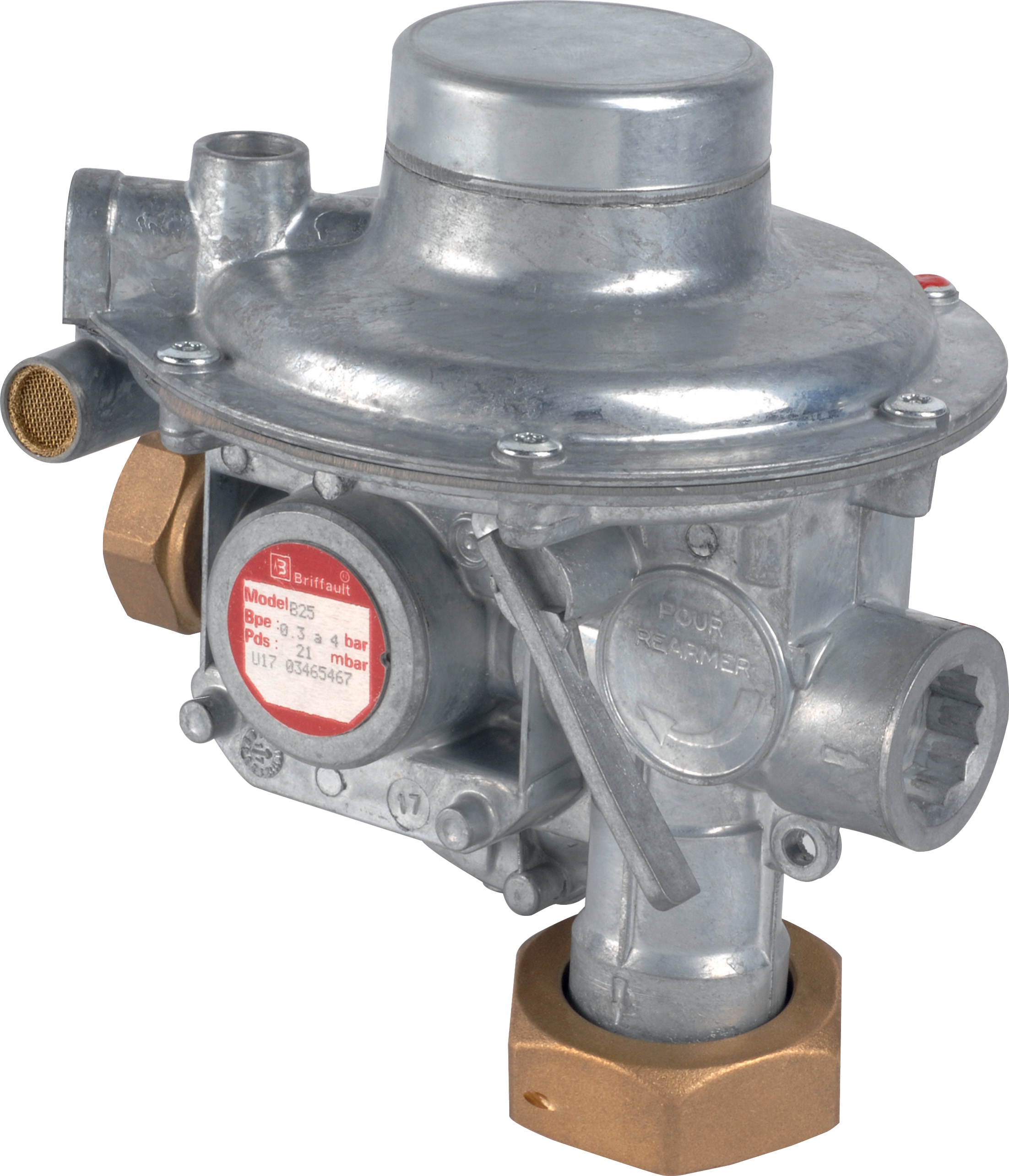
Repair Action: Replace with Francel B25/37mb regulator with integrated safety relief. This unit features robust diaphragm construction designed for humid environments and includes a 10 mm vent with moisture-blocking capability.
Pressure Creep (Gradual Rise)
Pressure creep differs from oscillation—outlet pressure slowly rises over 30-60 minutes despite stable inlet conditions.
Causes:
- Moisture trapped in safety relief chamber preventing proper seating
- Thermal expansion of gas and regulator body materials
- Valve seat erosion allowing micro-leakage
Resolution: Drain accumulated moisture from the regulator vent. Many contractors miss this step. Open the vent screw on the regulator body (typically a 2-3 mm hex head) and allow any condensation to escape. Re-test pressure stability. If this resolves the issue, the regulator's diaphragm chamber had entrapped moisture—common in Singapore installations where units are exposed to overnight condensation.
Section 2: Seal and Leakage Detection in High-Humidity Conditions
Identifying External Leakage Points
External leakage around gas valve connections poses safety and performance risks. In Singapore's humid environment, even microscopic leaks can escalate rapidly due to corrosion.
Detection Methods:
Soap bubble test (most reliable field method):
- Mix dish soap with water (1:5 ratio). Use a spray bottle.
- Pressurize the system to normal operating pressure.
- Spray all connections, seals, and bonnet areas.
- Bubbles indicate escaping gas. Mark all leak points.
- Common leakage locations: connection nuts (45%), diaphragm bonnet bolts (30%), pressure adjustment screw (15%), vent opening (10%).
- Use an ultrasonic gas leak detector if available.
- This method reveals even microscopic leaks invisible to soap testing.
- Particularly useful for finding leaks around integral safety relief components.
Addressing Corrosion-Related Seal Failure
Singapore's saltwater air aggressively corrodes brass and steel components. Many regulators develop leaks not from mechanical failure but from corrosion undermining seal seats.
Prevention and Repair:
1. Inspect all external metallic surfaces monthly for white powdery corrosion deposits. These indicate advanced salt corrosion in progress.
2. Apply protective coating to non-critical surfaces. Use clear epoxy spray (avoid coating valve stems or adjustment points). This creates a moisture barrier.
3. Check internal corrosion by disconnecting the regulator and using a borescope to inspect the inlet port. If the seat appears pitted or discolored, internal corrosion is present.
4. Replacement timeline: Regulators showing visible external corrosion should be scheduled for replacement within 2-3 months. Don't wait for leaks to develop.
Component Selection: The Francel B25/37mb includes stainless steel internal components and corrosion-resistant coatings specifically engineered for humid, marine-adjacent environments common throughout Singapore.
Section 3: Safety Relief and Over-Pressure Protection Failures
Testing the Safety Relief Function
Many contractors neglect to test the safety relief, assuming it functions if pressure doesn't spike. This is incorrect—relief valves can fail silently.
Functional Test Procedure:
1. Set system to normal pressure (37 mbar for standard applications).
2. Gradually increase inlet pressure using a manual valve upstream of the regulator. Watch outlet pressure.
3. The relief should activate when outlet pressure reaches the rated cracking pressure (typically 5-10% above normal for well-calibrated units). For 37 mbar outlet, cracking should occur around 40-42 mbar.
4. Measure relief flow by directing vent gas into a capture bag. The relief should allow steady venting without blockage.
5. Release inlet pressure and confirm outlet drops back to setpoint within 2 seconds. Slow response indicates relief seat erosion.
Common Relief Failures in Singapore:
- Salt crystallization in vent ports (40% of relief failures): Humidity + salt air creates deposits inside the 10 mm vent opening, blocking relief discharge.
- Diaphragm rupture (35%): Thermal cycling and moisture compromise diaphragm elasticity.
- Sticking relief valve seat (25%): Corrosion and particle accumulation create micro-adhesion.
Emergency Over-Pressure Response
If pressure exceeds safe limits and relief doesn't activate:
1. Immediately close the manual inlet shutoff valve (located upstream of the regulator).
2. Open the regulator vent screw fully to bleed accumulated pressure.
3. Isolate all downstream equipment to prevent over-pressurization of connected devices.
4. Do not attempt field repair of a non-functional relief. Replace the entire regulator assembly. The Francel B25/37mb features an integrated, factory-calibrated safety relief that cannot be field-adjusted, eliminating risk of improper calibration.
Section 4: Environmental Moisture Management and Preventive Maintenance
Moisture as a Root Cause
Singapore's humidity creates a unique problem: moisture ingress into gas regulators. This moisture:
- Swells rubber seals and diaphragms
- Creates corrosion inside the regulator body
- Blocks vent ports and relief openings
- Causes pressure oscillation and sticking
Moisture Prevention Strategies:
1. Install desiccant cartridges upstream of all regulators. These dry incoming gas to <-40°C dew point. Replace every 3-6 months in Singapore's climate (more frequent than manufacturer specifications for temperate regions).
2. Vent orientation matters: Position regulator vents downward, not upward. Upward-facing vents allow condensation to collect inside the diaphragm chamber during overnight temperature drops.
3. Drain accumulated moisture weekly by opening the vent screw for 30 seconds. Allow any liquid to escape (you may hear a brief hiss of pressurized gas).
Seasonal Maintenance Schedule for Singapore
Monthly Tasks:
- Inspect external surfaces for corrosion deposits
- Check pressure stability (should not drift >1 mbar over 1 hour)
- Test relief function at low inlet pressure
- Replace desiccant cartridges
- Perform full soap bubble leak test
- Inspect vent port visually for salt deposits or blockages
- Clean corroded areas with soft brush; apply protective coating if needed
- Remove and inspect the regulator vent port with magnification
- Test outlet pressure accuracy against calibrated reference gauge
- Document pressure readings to establish baseline drift patterns
- Send regulators showing any corrosion or performance degradation for bench calibration testing
- Replace units that have exceeded 5 years in service in Singapore's environment (more aggressive than 10-year typical lifespan in temperate climates)
Diagnostic Tools and Calibration
Accurate troubleshooting requires proper instrumentation:
- Digital pressure gauge (0-100 mbar range, ±0.5 mbar accuracy): Essential for detecting oscillation patterns analog gauges miss
- Calibrated reference gauge: Used annually to verify your working gauge hasn't drifted
- Soap solution and spray bottle: Most cost-effective leak detection method
- Borescope: Allows internal visual inspection without disassembly
- Thermometer: Monitor temperature effects on pressure readings
Summary: Actionable Troubleshooting Workflow
When a contractor reports gas valve or regulation issues:
1. Measure actual pressure with digital gauge for 5 minutes. Identify if problem is oscillation, creep, or instability.
2. Check upstream conditions. Stable inlet pressure + unstable outlet = regulator problem.
3. Perform soap bubble leak test on all external connections and seals.
4. Test safety relief function by gradually increasing inlet pressure and confirming cracking behavior.
5. Inspect for moisture by checking vent area and external corrosion signs.
6. Address root cause: Moisture issue = drain and improve desiccation; leakage = replace seals or regulator; oscillation + moisture = replace regulator; relief failure = replace regulator assembly.
For Singapore contractors, drawing on 3G Electric's 35+ years of experience across Asia-Pacific, the most cost-effective approach is preventive maintenance. Monthly moisture drainage and quarterly desiccant replacement eliminate 60% of failures. When replacement is needed, specify components engineered for humid, marine environments—such as the Francel B25/37mb with integrated safety relief—rather than standard industrial components designed for temperate climates.
Proper Gas Valves & Regulation maintenance directly impacts system reliability, customer safety, and your service reputation. Take these diagnostics seriously.