Understanding Gas Valves & Regulation in Industrial Settings
Gas Valves & Regulation systems are critical safety and control components in industrial facilities across Singapore. Whether you're running process gas systems, laboratory gas distribution, pneumatic controls, or pressure relief arrangements, reliable gas valve performance directly impacts operational continuity and workplace safety.
Over 35 years as an industrial equipment distributor, 3G Electric has seen firsthand how gas valve failures develop—and how to fix them quickly. The challenge isn't just identifying that something is wrong; it's diagnosing what is wrong and implementing a fix without extended downtime.
This guide focuses on the fault patterns we see most often, the diagnostic tests that actually work on the plant floor, and proven repair procedures that industrial professionals can execute with standard tools.
Section 1: Rapid Diagnostic Tests for Gas Valve Faults
Pressure Drop at the Outlet
One of the most common complaints is that outlet pressure falls below specification. Before you replace anything, run these checks:
Test 1: Isolate the regulator. Close the inlet isolation valve. Does outlet pressure hold steady for 5 minutes? If pressure drops, the regulator's internal seal is degraded—typically the main diaphragm or the outlet valve seat.
If pressure holds, the problem is downstream: blocked outlet line, obstructed filter cartridge, or a pilot vent clogged with debris.
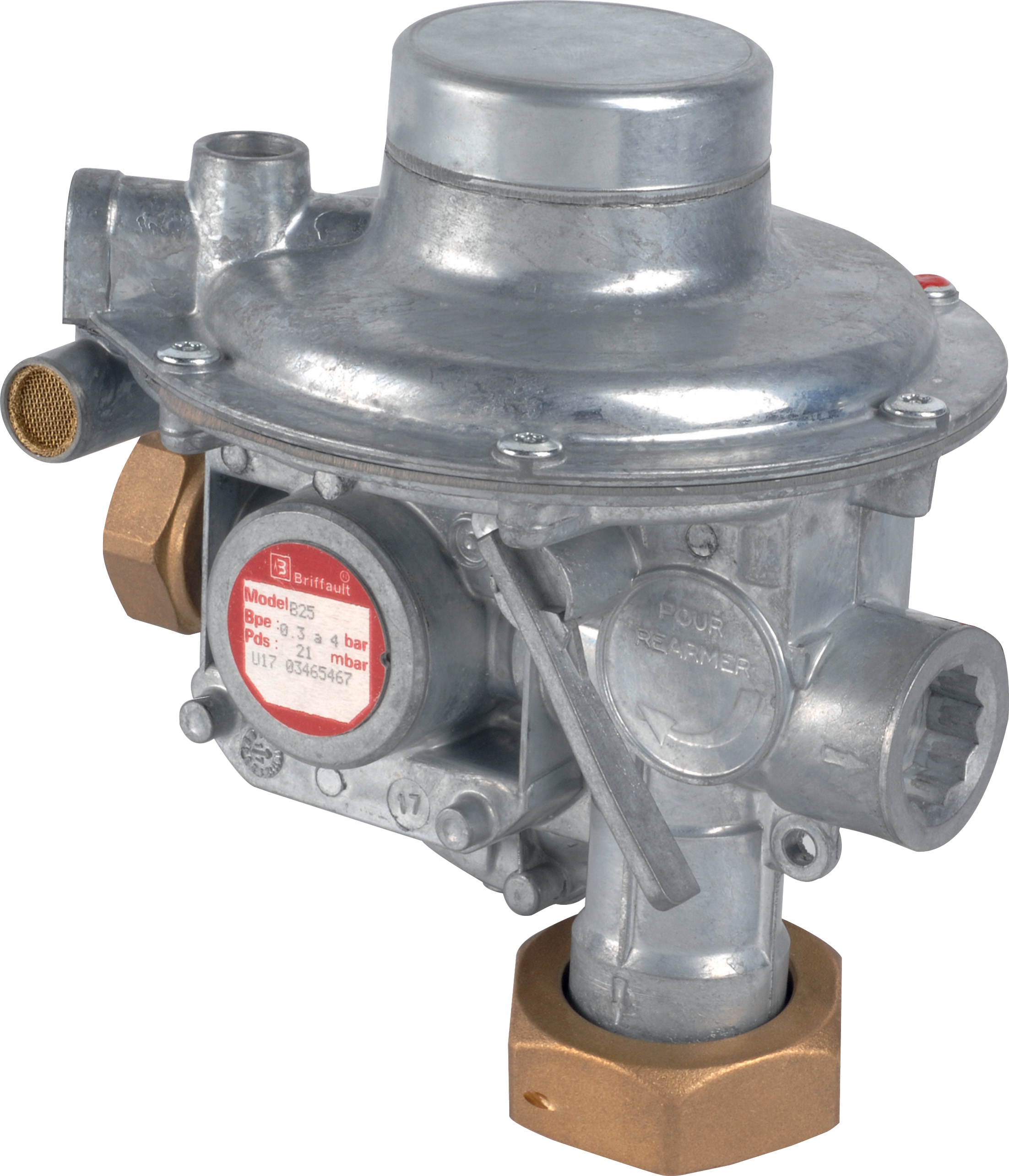
Test 2: Check the vent path. For regulators with integrated safety relief (like the Francel B25/37mb safety regulator), inspect the 10 mm vent outlet. Is it clear? Press your thumb gently over the vent opening. Does the outlet pressure rise immediately? If yes, the vent is blocked—remove the obstruction. If no change, the problem is internal valve degradation.
Test 3: Measure inlet-to-outlet differential. Use two pressure gauges simultaneously. If inlet pressure is 80 mbar and the outlet reads 25 mbar instead of the spec'd 37 mbar, calculate the drop: 80 − 25 = 55 mbar loss. This loss during normal flow indicates either a clogged inlet strainer or a regulator whose internal valve is partially stuck.
No Flow at All (Locked Outlet)
If gas stops flowing entirely:
1. Confirm the pilot pressure circuit. Many industrial regulators use a pilot-operated design. Without pilot pressure, the main valve stays closed. Check that the pilot inlet line is connected and receiving gas. Disconnect the pilot line at the regulator and verify gas escapes—if nothing, the pilot line is blocked or the upstream isolation valve is shut.
2. Listen for the relief valve. If you hear a faint hissing from the vent, the safety relief is lifting continuously. This means outlet pressure exceeded the relief setpoint because the main outlet valve is stuck closed. The regulator needs repair or replacement.
3. Check for ice formation. Singapore's humidity is high, but if the gas supply has recently undergone rapid expansion or adiabatic cooling, internal frost can form on the valve seat. Gently warm the regulator body with warm water (not above 40°C). If flow returns, you've confirmed ice blockage—address the gas supply's moisture content.
Hissing or Audible Leakage
Where you hear it tells you where to look:
- Hissing from the vent outlet: This is normal relief valve operation if outlet pressure is at or above the setpoint. If pressure is below setpoint and you still hear hissing, the relief valve seat is leaking—internal repair required.
- Hissing at the inlet connection: The inlet port fitting is loose. Use a wrench to tighten. If tightening doesn't stop the hiss, the fitting ferrule is damaged—replace it.
- Hissing at the outlet connection: Same as inlet; tighten first, then replace the ferrule if needed.
- Hissing from the regulator body itself (not connections): This indicates a cracked diaphragm or a damaged sealing surface. The regulator cannot be repaired; it must be replaced.
Section 2: Common Component Failures and What Causes Them
Diaphragm Degradation
The diaphragm is a thin elastomer disk that responds to pressure changes. Over time, humidity, thermal cycling, and gas exposure cause it to crack or lose elasticity.
Symptoms: Outlet pressure drifts unpredictably, even when inlet pressure is steady. You may need to adjust the regulator screw multiple times per shift to maintain setpoint.
Root cause in Singapore: High ambient humidity and temperature swings between air-conditioned and non-conditioned spaces accelerate diaphragm aging. Regulators exposed to salt air in coastal industrial areas degrade faster.
Fix: Replace the regulator. Some models allow diaphragm cartridge replacement, but this requires clean-room conditions to avoid contaminating the valve seat. For most industrial applications, full replacement is faster and safer.
Valve Seat Contamination
Dust, rust particles, or condensed moisture settle on the valve seat, preventing full closure or creating a partial seal.
Symptoms: Outlet pressure is lower than setpoint, or pressure oscillates rapidly (hunting). Flow is restricted even when inlet pressure is adequate.
Quick test: Briefly increase inlet pressure to 20% above normal. Does outlet pressure respond smoothly? If there's a lag or a stuttering effect, the seat is contaminated.
Fix: Try flushing. Close the inlet isolation valve, then open the outlet fully to purge any debris downstream. Reopen the inlet slowly and observe. If pressure still hunts, the seat needs cleaning—this requires disassembly in a controlled environment. Many plants find replacement faster than repair.
Pilot Line Blockage
Pilot-operated regulators route a small amount of gas to the pilot stage to amplify control authority. A blocked pilot line stops the main valve from opening or closing.
Symptoms: Outlet pressure won't reach setpoint, even at maximum inlet pressure. Or, outlet pressure holds at a very high level and won't drop when you increase the outlet load.
Diagnostic: Close the inlet isolation valve and disconnect the pilot line. Does gas escape from the pilot inlet port? If no gas, the pilot line is blocked. If gas flows, the blockage is in the pilot line itself—disconnect and blow compressed air backward through the line to clear it.
Prevention: Install a fine sintered filter cartridge on the pilot inlet. Check and replace the cartridge every six months in dusty environments.
Section 3: Pressure Relief Valve Issues
Relief Valve Won't Hold Setpoint
Integrated safety relief valves (like the Francel B25/37mb) have a spring-loaded poppet. When outlet pressure exceeds setpoint, the poppet lifts and vents gas. If the poppet sticks or the spring weakens, the relief either leaks continuously or doesn't lift at all.
If it leaks constantly:
1. Isolate the regulator and let outlet pressure stabilize.
2. Measure outlet pressure. Does it drop over 10 minutes? Small leaks (~0.5 mbar per minute) are acceptable and normal. Larger drops mean the poppet seat is damaged.
3. Try gentle tapping on the relief valve body. Sometimes a stuck poppet will free itself. If it does and leakage stops, document this and schedule replacement—the poppet is worn and will stick again.
4. If tapping doesn't help, the valve must be replaced or sent for overhaul.
If it won't lift (pressure keeps climbing):
1. Confirm your setpoint reading is accurate. Use a second pressure gauge at the outlet.
2. If pressure is genuinely above setpoint and the relief isn't lifting, the spring is broken or the poppet is stuck shut.
3. Isolate the regulator immediately and shut down the process. This is a safety hazard—overpressure can rupture downstream equipment.
4. Order a replacement unit or a relief cartridge if the design allows field replacement.
Adjusting Relief Setpoint Safely
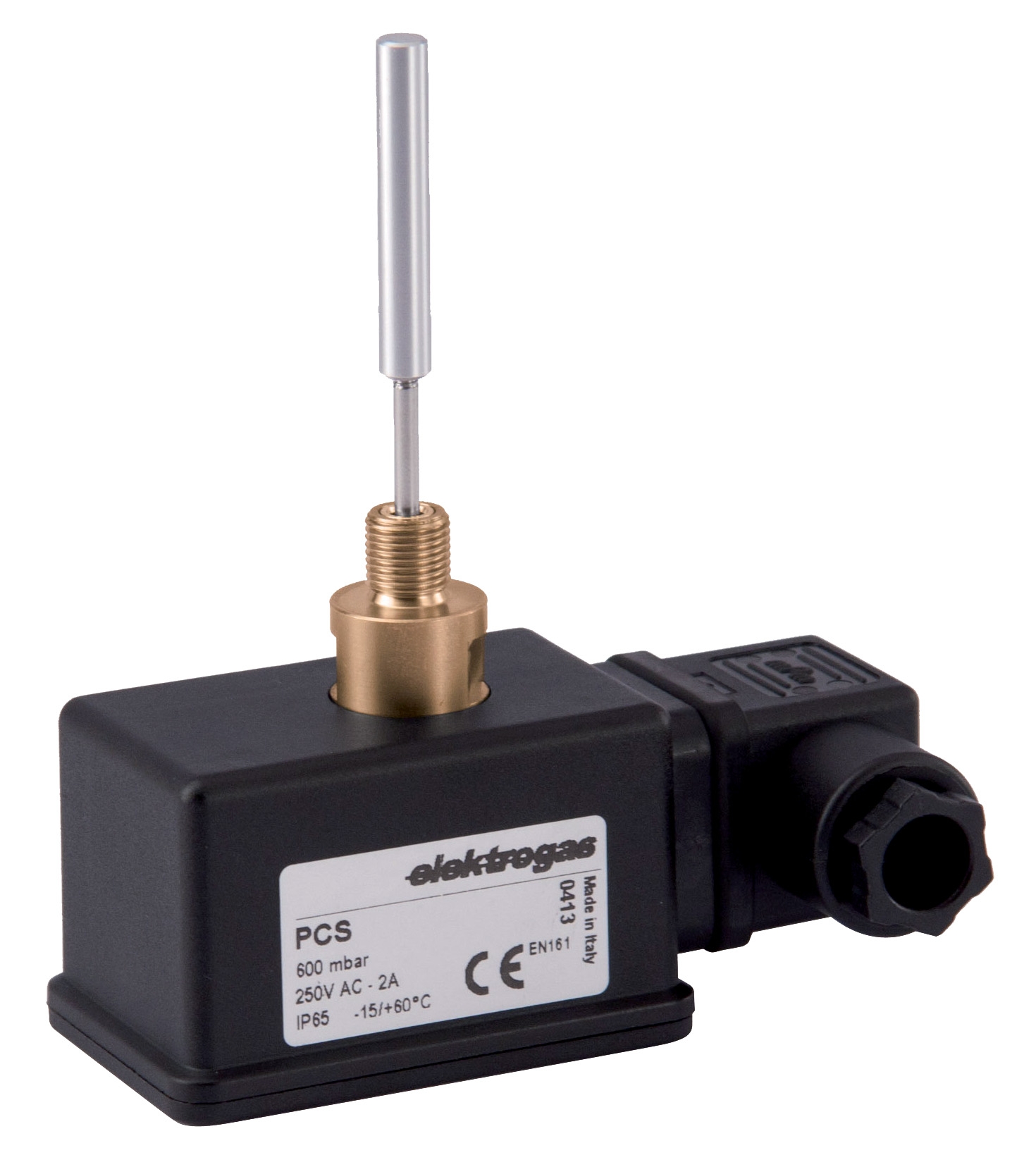
Some regulators allow adjustment via a screw on the relief cartridge. The Elektrogas VMM 20-25 end-of-stroke contact valve, rated for 6 bar, typically uses a 3 mm Allen wrench for setpoint adjustment.
Safe procedure:
1. Never adjust while the system is pressurized beyond the current setpoint.
2. Turn the adjustment screw 1/4 turn at a time.
3. Wait 30 seconds for the system to stabilize.
4. Measure the new setpoint with a calibrated gauge.
5. Do not exceed the maximum setpoint stamped on the valve body.
6. Record your adjustment in the maintenance log.
If you need to increase the setpoint significantly, verify that downstream components (hoses, fittings, gauges) are rated for the higher pressure. Hoses degrade over time; a hose rated for 10 bar may only be safe at 8 bar after 5 years of use. The Pratissoli ZT06B1000353 and ZT03A0200152 series hoses are engineered for harsh industrial duty, but always check the date code and visual condition.
Section 4: Environmental and Installation Issues Specific to Singapore
Humidity and Condensation
Singapore's climate—warm, humid, with high salt content near coastal facilities—creates condensation inside regulators. Water droplets corrode internal surfaces and cause the valve seat to stick.
Prevention:
- Install a high-capacity moisture separator upstream of the regulator. Empty the trap weekly.
- Use regulators with hydrophobic vent filters (the 10 mm vent on the Francel B25/37mb is designed for this).
- Check for water in the system after periods of heavy rain or high humidity spikes.
- If your facility sits in a coastal industrial park, consider stainless steel or nickel-plated regulators to resist salt-air corrosion.
Thermal Cycling
Air-conditioned control rooms next to hot equipment areas create temperature swings. Each cycle stresses seals and fasteners.
Mitigation:
- Install regulators in a temperature-controlled enclosure if possible.
- Use regulators rated for an ambient range of −10 °C to +60 °C (the Francel series handles this range).
- After extreme temperature shifts, re-check and re-adjust outlet pressure—setpoint may drift by 2–3 mbar.
Vibration from Nearby Equipment
CNC machines, compressors, and pumps generate vibration that travels through gas distribution lines. Vibration can loosen fittings and cause internal valve components to rattle, accelerating wear.
Solution:
- Use vibration-dampening clamps to secure gas lines every 0.5 m along runs near machinery.
- Use DIN or JIC fittings with backup wrenches (two-wrench technique) during installation to prevent vibration loosening.
- Check all connections quarterly in high-vibration areas.
Quick Reference: Troubleshooting Checklist
- Outlet pressure low: Test isolate (regulator or downstream?). Check vent blockage. Measure pressure drop.
- No flow: Confirm pilot pressure. Listen for relief hissing. Check for ice.
- Pressure hunting: Clean or replace valve seat. Verify pilot line clarity.
- Relief valve leaking: Try gentle tapping. If persistent, plan replacement.
- Relief won't lift: Confirm gauge accuracy. Isolate and replace valve. Safety priority.
- Hissing at connections: Tighten fittings. Replace ferrule if tightening fails.
- Hissing from body: Diaphragm cracked—replace regulator.
Sourcing Quality Replacement Components
When you need to replace a regulator or relief valve, specification accuracy matters. 3G Electric maintains stock of pressure regulators, relief cartridges, and pilot-operated valves from proven manufacturers. The Francel B25/37mb with integrated safety relief is ideal for laboratory and mid-range industrial distribution. Elektrogas end-of-stroke contact valves suit pneumatic control applications where precise switching is required at a given pressure threshold.
For high-pressure hose assemblies and fittings that connect to your gas valve system, Italian-engineered options like the Pratissoli series offer durability and long service life in demanding industrial environments.
When ordering, have on hand:
- Current regulator model number
- Inlet and outlet pressure ratings
- Current setpoint (if adjustable)
- Flow requirement in m³/h or liters/min
- Ambient temperature range at installation site
- Vent line size (if integrated relief)
Don't guess specifications—incorrect pressure rating or outlet size leads to undersized systems that can't meet demand or oversized regulators that can't hold tight setpoints.