Understanding Gas Valve Response Time in Southeast Asian Industrial Operations
When specifying gas valves and regulation systems for Southeast Asian facilities, procurement engineers face a critical decision: prioritizing fast response times for safety-critical applications or selecting robust, slower-acting systems for steady-state operations. Response time—measured in milliseconds from signal to full actuation—directly impacts both safety performance and operational efficiency.
With over 35 years of experience distributing industrial equipment across Asia-Pacific markets, 3G Electric has observed that response time specifications often receive insufficient attention during procurement cycles. Yet in applications ranging from pharmaceutical manufacturing to food processing, the difference between a 50-millisecond and 200-millisecond valve response can determine whether a pressure surge is contained or cascades into system failure.
Southeast Asia's tropical climate introduces moisture and corrosion challenges that degrade valve performance over time. Standard response time ratings assume clean, controlled laboratory conditions—conditions rarely found in Bangkok, Jakarta, or Manila industrial parks. Understanding how response time degrades under humid, salt-air conditions is essential for realistic procurement specifications.
Response Time Categories: Direct-Acting vs. Pilot-Operated Systems
Direct-Acting Valve Response
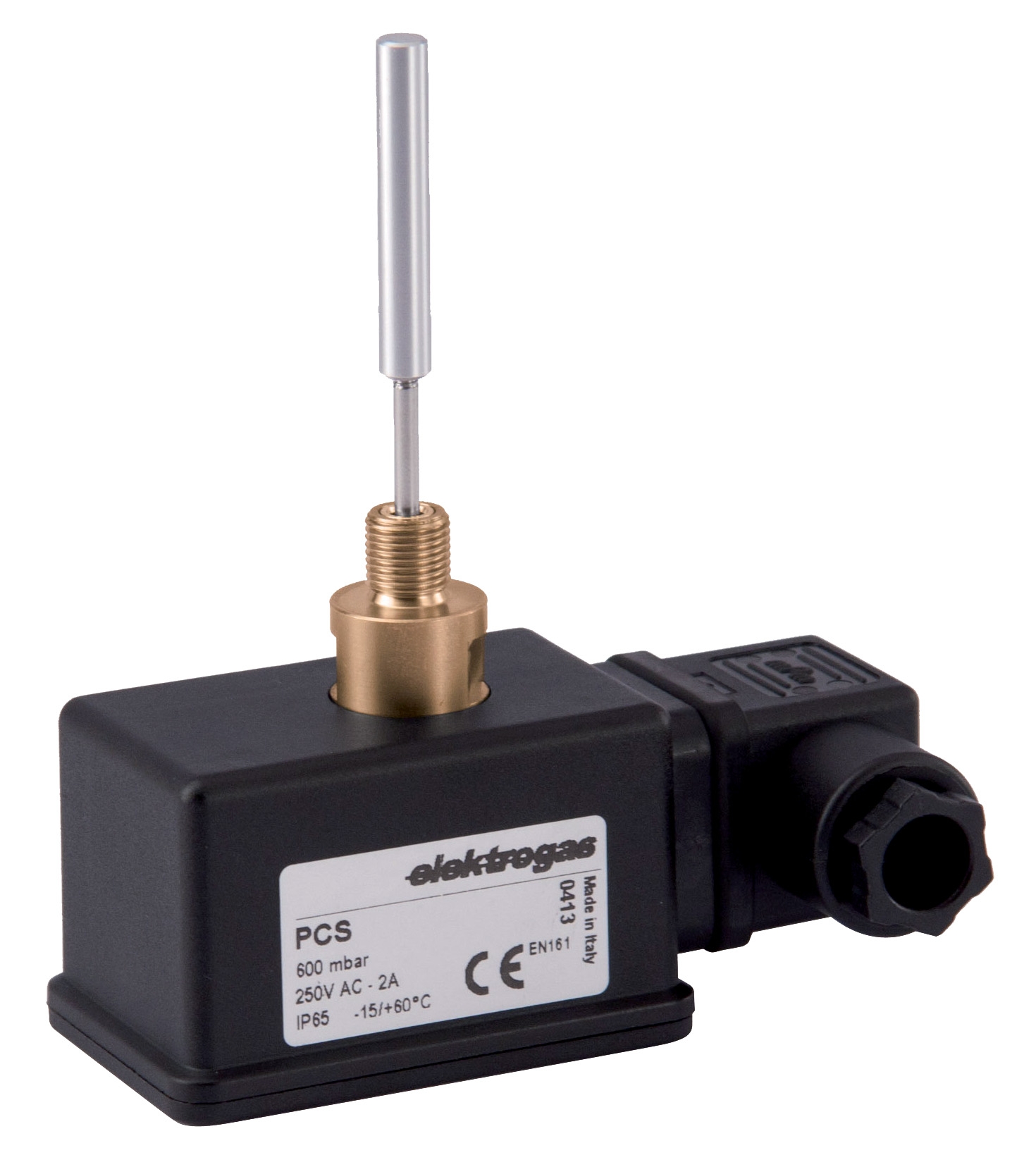
Direct-acting safety relief valves, such as the Elektrogas VMM 20-25 End-of-Stroke Contact Valve, deliver response times of 20–40 milliseconds under rated conditions. These mechanical devices respond to pressure differential directly, with no intermediate pilot signal required. In Southeast Asian industrial environments, direct-acting systems offer critical advantages:
- Minimal dependency on auxiliary systems: No pilot gas supply failure modes
- Predictable performance degradation: Mechanical wear follows known patterns
- Humidity resilience: Fewer electronic sensors vulnerable to moisture ingress
The Elektrogas VMM 20-25, designed to EN 161 standard and rated for 6 bar pressure, exemplifies this category. It requires only a 3 mm Allen wrench for adjustment, enabling field technicians to verify settings without specialized equipment—a practical consideration for regional facilities with limited calibration resources.
However, direct-acting valves exhibit response time variability of ±15% across their pressure operating range. At 3 bar inlet pressure, response may reach 50 milliseconds; at 5 bar, it contracts to 25 milliseconds. Procurement engineers must specify response time requirements at actual operating pressures, not theoretical maximum ratings.
Pilot-Operated Valve Response
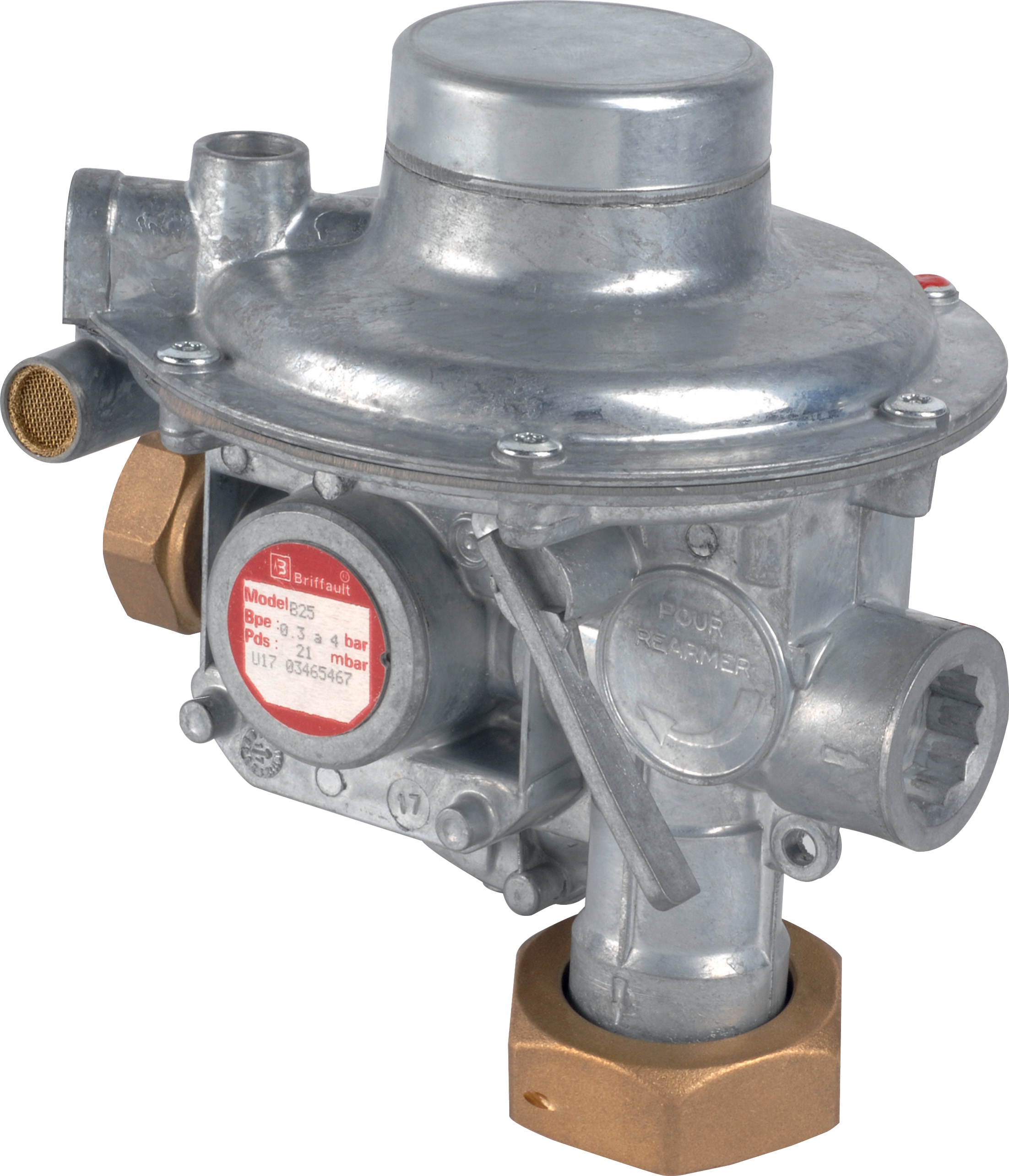
Pilot-operated regulators like the Francel B25/37mb Pressure Regulator with Safety Relief operate in two stages: a pilot stage controlling a main valve's opening. Response time typically ranges from 80–200 milliseconds, slower than direct-acting equivalents but offering superior stability once actuated.
The Francel B25/37mb delivers consistent 37 mbar outlet pressure with a 10 mm vent size, stabilizing system pressure fluctuations better than direct-acting designs. In Southeast Asian industrial settings where load variations are frequent and uncontrolled, this stability prevents nuisance safety trips that trigger unnecessary production interruptions.
Pilot-operated systems degrade more noticeably in humid environments. Pilot blockage from moisture condensation—common in uncontrolled storage areas across the region—extends response time to 300+ milliseconds, potentially exceeding safety-critical thresholds. Procurement specifications must mandate pilot gas filtration to 10 microns minimum, with desiccant cartridge replacement every 6 months in coastal facilities.
Real-World Performance Degradation: Southeast Asian Climate Impact
Humidity and Corrosion Effects
Laboratory response time data assumes 45–65% relative humidity. Southeast Asia experiences 75–95% humidity year-round, with seasonal typhoons delivering salt-laden air to coastal industrial parks. This environment accelerates internal valve corrosion and spool stiction—resistance to initial movement.
Stainless steel valve spools, standard in European regulators, develop micro-corrosion pitting within 18 months of exposure to salt-air conditions without protective coatings. This pitting increases internal friction by 15–25%, directly extending response time. A pilot-operated regulator rated 100 milliseconds at installation may require 140–160 milliseconds response 24 months later.
Direct-acting valves exhibit different degradation patterns. Spring corrosion dominates, weakening the mechanical return force and extending reset time (return to closed position) from 30 milliseconds to 80+ milliseconds. For safety-critical applications, this degradation requires valve replacement every 36–48 months, not the 60-month interval typical in temperate climates.
Maintenance Intervals and Total Cost of Ownership
Procurement engineers frequently underestimate the total cost of valve ownership in Southeast Asian environments. Initial equipment cost represents only 25–30% of the five-year total cost; maintenance labor, replacement components, and unplanned downtime dominate expenses.
A direct-acting safety relief valve purchased for USD 1,200 requires annual bench testing and cleaning (USD 400), two seal kit replacements (USD 300 each), and emergency replacement every 48 months (USD 1,200 plus labor). Five-year total cost: approximately USD 5,100.
A pilot-operated regulator costing USD 2,800 includes integrated filtration reducing external maintenance frequency. However, pilot blockage repairs average USD 600 per incident, occurring 1–2 times annually in high-humidity environments without desiccant protection. Five-year total cost with preventive desiccant maintenance: approximately USD 8,200–9,600.
The cost-benefit analysis shifts when unplanned downtime enters the calculation. A single 4-hour production halt from unexpected valve failure costs USD 2,000–5,000 in lost production. Systems experiencing response time degradation-induced nuisance shutdowns (occurring 2–4 times yearly) generate USD 4,000–10,000 annual downtime costs. Upgrading to robust, redundant systems becomes financially justified when production value exceeds USD 2,000/hour.
Practical Procurement Strategies for Southeast Asian Operations
Specification Framework
1. Define actual response time requirements at inlet pressures matching facility conditions, not theoretical maximums. Document minimum acceptable response at year-3 operational condition (post-degradation baseline).
2. Mandate pilot gas quality specifications for pilot-operated systems: filtration to 10 microns, desiccant cartridge replacement every 6 months, annual pilot line flushing.
3. Standardize valve materials across procurement categories. Select stainless steel (316L minimum) for all wetted components; carbon steel represents false economy in humid environments.
4. Establish preventive maintenance schedules accounting for climate severity. Coastal facilities require 6-month intervals; inland, elevation-above-500m facilities may extend to 12-month intervals.
5. Implement redundancy for safety-critical circuits. Parallel direct-acting relief valves provide faster combined response and protection against single-point failure.
Regional Supplier Considerations
3G Electric's 35+ years distributing industrial equipment across Southeast Asia has demonstrated that equipment sourced through local distributors with regional service networks reduces response time to emergency maintenance from 48 hours to 4–8 hours. Systems supplied without regional stockholding incur USD 800–2,000 expedited freight costs for emergency components.
When evaluating vendor proposals, request response time test data conducted at 80% relative humidity and 35°C ambient temperature—Southeast Asian worst-case conditions. Equipment certified only under standard laboratory conditions (50% RH, 20°C) will exhibit 20–35% slower actual performance.
Documentation and Traceability
Procurement specifications should require manufacturer's response time certification with batch traceability. Individual valve serial number documentation enables root-cause analysis when unexpected performance degradation occurs. This becomes critical in multi-unit installations where selective component replacement can restore system performance without complete valve replacement.
Selection Guide: Matching Response Time to Application Categories
Critical Safety Applications (Response Time <50ms)
- Pharmaceutical process control
- Compressed gas cylinder discharge protection
- Cryogenic equipment safeguards
- Recommended: Direct-acting relief valves, redundant configuration
- Example: Elektrogas VMM 20-25 with pilot override for additional safety margin
- Industrial heating systems
- Pneumatic tool supply networks
- Food processing gas injection
- Recommended: Pilot-operated regulators with integrated filtration, desiccant maintenance protocol
- Example: Francel B25/37mb with monthly filter inspection routine
- General facility gas distribution
- Laboratory bench systems
- Non-critical equipment supply
- Recommended: Standard pilot-operated systems, quarterly maintenance
- Existing installations requiring component replacement
- Recommended: Direct compatibility assessment; response time testing before installation
- Available solutions: Pratissoli Italian-engineered systems (SKU: ZT06B1000353, SKU: ZT03A0200152, SKU: ZT04A0100202) for high-pressure applications with established regional support
Conclusion: Procuring for Long-Term Southeast Asian Reliability
Response time and reliability form the foundation of gas valve specification in Southeast Asia. Unlike temperate-climate procurement decisions that can emphasize cost optimization, Southeast Asian operations demand specifications weighted toward durability and maintainability.
Procurement engineers should view gas valve selection as a system investment spanning 5–7 years, not a discrete equipment purchase. When total cost of ownership, climate-specific degradation, and production downtime costs are accurately calculated, initial equipment cost becomes a secondary consideration.
3G Electric's experience across Singapore, Malaysia, Thailand, Indonesia, and the Philippines demonstrates that facilities investing 15–20% premium over lowest-cost alternatives for climate-appropriate components realize 30–40% reductions in five-year total operating costs while improving safety compliance and production reliability.