Understanding Gas Valves & Regulation in Industrial Operations
Gas Valves & Regulation represents one of the most critical infrastructure elements in industrial gas systems, managing the flow, pressure, and safety of gases from source to point of use. Drawing on 35+ years of experience as a global industrial equipment distributor, 3G Electric has observed that properly designed regulation systems prevent equipment damage, ensure operator safety, and optimize operational efficiency across diverse applications—from pharmaceutical laboratories to manufacturing plants.
At its core, gas regulation involves controlling inlet pressure (typically 5-10 bar for many industrial gases) to safe, usable outlet pressures (often 0.5-4 bar depending on application). This pressure reduction must be smooth, stable, and responsive to demand fluctuations. Without proper regulation, downstream equipment faces catastrophic failures, leaks, and safety hazards.
The Singapore industrial environment presents unique challenges: high humidity affecting regulator seals, tropical temperatures influencing gas density, and strict PSC (Professional and Specialty Chemicals) regulations requiring documented safety compliance. Understanding these factors is essential for reliable operations.
Core Regulation Principles & Pressure Control Mechanisms
Understanding Pressure Reduction & Stabilization
Pressure regulation achieves reduction through spring-loaded diaphragm design. High-pressure gas enters the regulator inlet, pushing against a diaphragm. As outlet pressure increases, it counteracts the spring force, gradually closing an internal orifice. This automatic feedback maintains constant outlet pressure regardless of inlet fluctuations—critical for precision applications where pressure variations exceed ±5% tolerance.
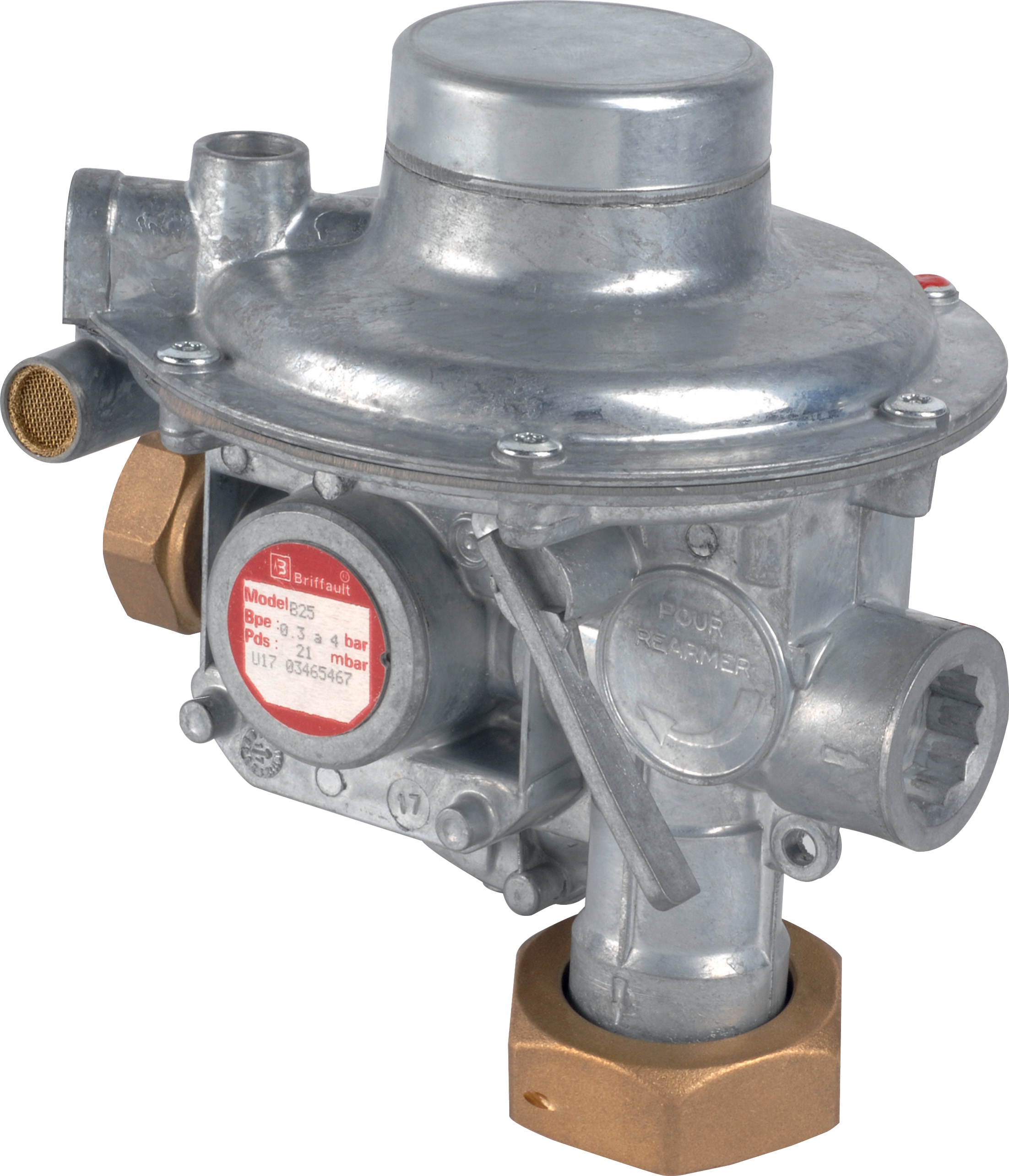
The Francel B25/37mb pressure regulator exemplifies modern regulation design with integrated safety relief. This unit delivers precisely 37 mbar outlet pressure, ideal for laboratory gas distribution where even minor variations compromise analytical results. The 10 mm vent size ensures rapid pressure decay during emergency shutdowns, preventing system over-pressure conditions.
Pressure control effectiveness depends on:
- Spring constant selection: Determines outlet pressure range; stiffer springs handle higher pressures
- Diaphragm sensitivity: Material and thickness affect response time to demand changes
- Orifice design: Restricts flow smoothly; poorly designed orifices cause pressure oscillation ("hunting")
- Vent sizing: Larger vents evacuate excess pressure faster during load reduction
Relief Valve Operation & Safety Integration
Safety relief valves protect against over-pressure scenarios where main regulators fail. These devices open when pressure exceeds a preset threshold (typically 10-15% above operating pressure), venting excess gas to atmosphere safely. The integration of relief functionality within the Francel B25/37mb eliminates external component complexity while maintaining independent safety operation.
Two relief mechanisms exist:
Direct-acting relief: Spring-loaded seat opens directly when threshold pressure is reached. Simple, reliable, suitable for lower flow applications common in Singapore laboratories and analytical facilities.
Pilot-operated relief: Small internal pilot valve opens first, using system pressure to assist main valve opening. Enables higher flow capacity and lower cracking pressure variation—essential for large-scale distribution systems.
Critical relief parameters include:
- Cracking pressure: Exact pressure at which relief opens (typically ±2-3% tolerance)
- Capacity: Maximum safe venting flow rate in standard cubic meters per hour (Sm³/h)
- Reseat pressure: Pressure at which valve closes after relieving; should be 5-10% below cracking pressure
- Thermal stability: Relief function must remain reliable across Singapore's 25-32°C ambient range plus equipment-generated heat
Component Selection & System Integration Strategies
Matching Regulator Specifications to Application Requirements
Incorrect regulator selection causes cascading failures. An undersized regulator cannot supply adequate flow, causing downstream pressure starvation. Oversized units exhibit excessive droop (pressure decrease under demand) due to low spring forces. Selection requires systematic analysis:
Flow Demand Calculation: Determine maximum simultaneous consumption across all outlets. Singapore manufacturing plants often operate multiple gas-consuming processes; sum their individual requirements with 15-20% safety margin.
Inlet Pressure Mapping: Establish actual inlet pressures from gas supplier or compressor discharge. Never assume standard pressures; pressure drops occur across supply lines, filters, and dryers. Measure actual values using calibrated gauges.
Outlet Pressure Specification: Define absolute outlet pressure requirements. Laboratory equipment typically needs 37 mbar (like the Francel B25/37mb), while pneumatic tools require 6 bar. Multi-stage regulation accommodates diverse requirements—first stage reduces to intermediate pressure (2-3 bar), second stage fine-tunes to application-specific levels.
Response Time Requirements: Precision applications demand regulators responding to demand changes within 200-500 milliseconds. Standard regulators tolerate 1-2 second response times; high-performance variants with larger diaphragms achieve faster response at cost premium.
Multi-Stage Regulation Architecture
Complex industrial systems employ multiple regulation stages, each optimized for specific functions:
Primary Regulator: Handles highest pressure drop (e.g., 200 bar to 10 bar), positioned immediately after supply source. Requires robust construction, large orifices, and high flow capacity. Primary regulators typically represent 60-70% of total pressure drop.
Secondary Regulator: Delivers precise outlet pressure from primary regulator output. Operates with relatively stable inlet pressure, enabling fine pressure control. The Francel B25/37mb functions effectively as secondary regulator in two-stage systems, providing laboratory-grade precision.
Vent & Isolation Strategy: Proper venting between stages prevents pressure lockup. Each regulator requires independent vent path; combined venting creates back-pressure that destabilizes outlet pressure. Isolation ball valves upstream of each regulator enable maintenance without full system shutdown.
Gas Control Valves & End-of-Stroke Applications
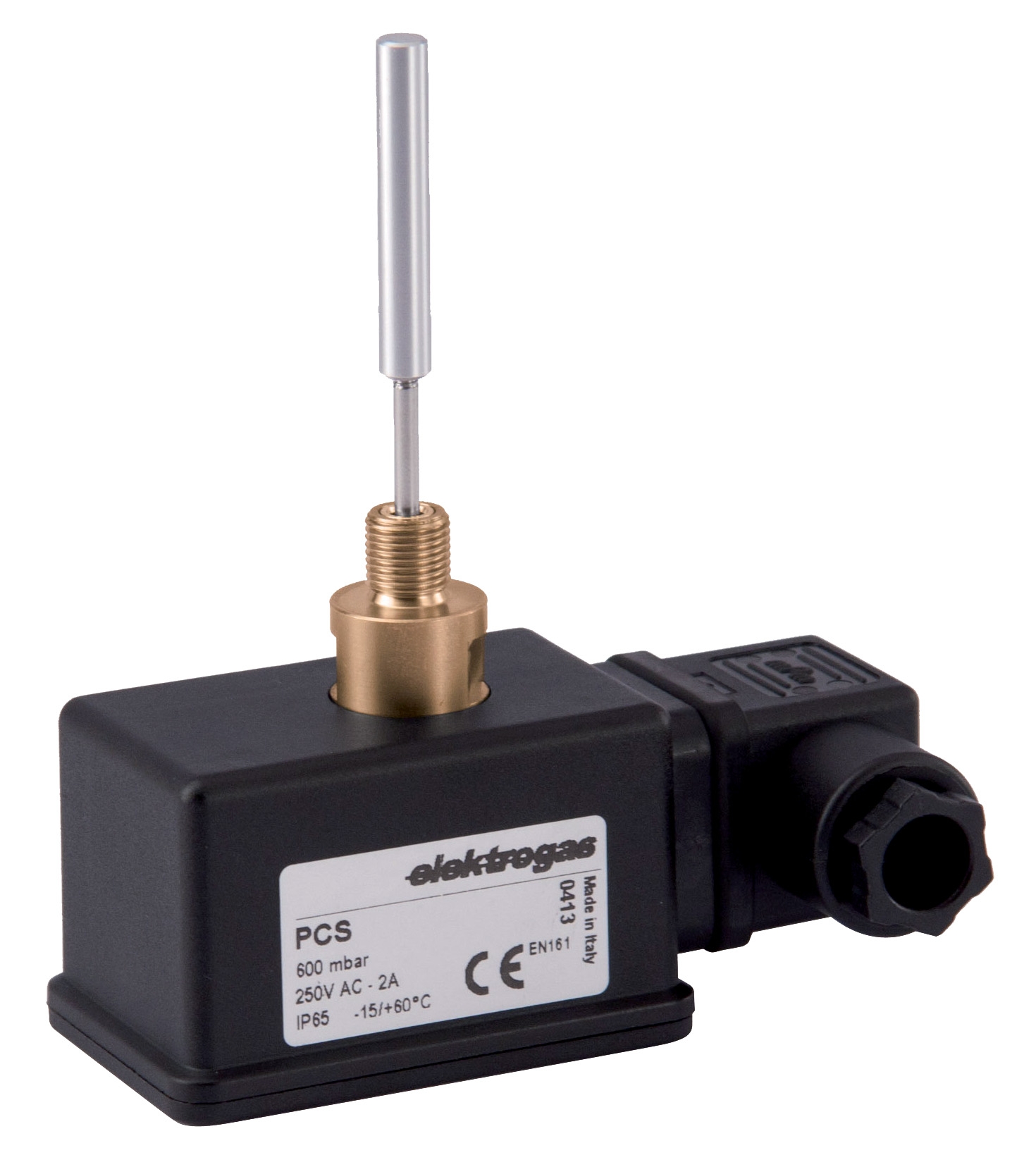
Beyond pressure regulation, solenoid and manual gas control valves govern flow to specific equipment. The Elektrogas VMM 20-25 end-of-stroke contact valve serves pneumatic and gas control applications, rated for 6 bar pressure per EN 161 standard—Singapore's adopted European safety standard.
End-of-stroke valves function in automated systems, triggering when actuators reach travel limits. Applications include:
- Plasma cutting systems (triggered at cut completion)
- Automated welding rigs (gas shutoff at cycle end)
- Pneumatic press machines (pressure relief at end of pressing stroke)
- Rotary actuator controls (stopping rotation at preset angle)
The VMM 20-25 design simplifies adjustment—requiring only 3 mm Allen wrench—reducing maintenance time from 15-20 minutes to 5-7 minutes in field conditions. This accessibility proves valuable for Singapore's labor-intensive troubleshooting environment where technicians must diagnose issues across multiple distributed locations.
Troubleshooting, Maintenance & Performance Optimization
Diagnosing Common Regulation Problems
Outlet Pressure Instability (±5-10% variation): Indicates diaphragm damage, contaminated seat surfaces, or internal spring fatigue. Disassemble regulator, inspect diaphragm for tears/creasing, clean seat surfaces with compressed air (never use solvents that degrade elastomers). If damage exists, replacement becomes more economical than repair.
Excessive Droop (outlet pressure drops >1.5 bar under demand): Spring weakening or undersized regulator for actual flow requirements. Verify actual consumption using flowmeters at downstream equipment. If consumption exceeds regulator capacity, upgrade to larger unit or implement multi-stage configuration.
Relief Valve Continuous Venting: Most critical safety issue indicating primary regulator failure or system pressure surging. Immediately isolate affected system, bleed pressure safely, inspect inlet piping for leaks or blockages causing pressure spikes. Replace primary regulator if leaking internally.
No Pressure at Outlet: Verify inlet pressure present (use gauge on regulator inlet). If inlet pressure exists but no outlet flow, relief valve may be stuck open, main valve seat contaminated, or internal diaphragm ruptured. Locate isolation valve upstream of problem regulator, close it, depressurize system, then disassemble for inspection.
Preventive Maintenance Protocols
Regular maintenance extends regulator life from typical 5-8 years to 10+ years in Singapore's challenging humid environment:
Monthly Inspections: Check outlet pressure using calibrated gauge. Record readings; trends reveal degradation patterns. Inspect all external connections for weeping leaks using soap solution. Verify vent lines are clear, unobstructed.
Quarterly Maintenance: Clean regulator inlet screens using compressed air (minimum 4 bar pressure). Remove and inspect inlet gas filter element; replace if differential pressure exceeds manufacturer specification (typically 0.3-0.5 bar).
Annual Service: For precision applications like the Francel B25/37mb, perform complete regulator overhaul—disassemble, clean all components with approved solvents, replace elastomer seals (recommend every 3 years regardless of condition due to tropical environment), bench-test assembled unit against known-good reference regulator.
Post-Incident Protocol: Any abnormal pressure reading, equipment malfunction, or safety relief activation triggers immediate complete system inspection. Document findings, photograph damage, retain failed components for failure analysis.
Performance Optimization Strategies
Pressure Optimization: Many systems operate at inlet pressures higher than necessary. Reducing inlet pressure by 1-2 bar decreases regulator wear, reduces energy consumption for compressed air systems, and decreases fugitive emissions. Audit actual system requirements; often 20-30% pressure reduction is possible without impacting equipment performance.
Intake Filtration Enhancement: Most regulator failures originate from particulate contamination. Upgrade to 10-micron (from typical 40-micron) filters on inlet lines. Initial cost premium (Rp 800,000-1,200,000 SGD equivalent) recovers within 18 months through extended regulator service life.
Vent Line Improvement: Restricted vent lines increase outlet pressure variation. Maintain vent line diameter at 1.5× downstream line diameter. Route vent lines independently without combining flows from multiple regulators. In air-conditioned facilities, plumb vents outdoors to prevent warm return air destabilizing outlet pressure.
Temperature Stabilization: Implement inlet gas temperature control within ±3°C band using immersion heaters or cooling loops for temperature-sensitive applications. Temperature changes alter gas density, affecting outlet pressure by approximately 0.36% per °C in ideal gas systems.
Selecting Quality Components for Singapore Operations
With over 35 years as a global industrial equipment distributor, 3G Electric understands that regulator selection extends beyond specifications to encompass supply chain reliability, spare parts availability, and local technical support. Singapore's strict industrial regulations (PSA, PUB standards) require components with documented traceability and compliance certifications.
Key selection criteria:
- Certification: Verify CE marking, EN compliance (EN 161 for safety valves, EN 12165 for regulators)
- Material Compatibility: Confirm gasket materials compatible with specific gases (stainless steel preferred for corrosive gases)
- Pressure Rating: Always select 1.5× system operating pressure for safety margin
- Spare Parts Availability: Confirm replacement diaphragms, springs, and seats are locally obtainable
- Supplier Support: Verify distributor offers calibration services and technical consultation
The Francel B25/37mb regulator represents professional-grade equipment selected for critical laboratory applications where pressure stability directly impacts analytical accuracy. For pneumatic and gas control applications, the Elektrogas VMM 20-25 valve provides EN 161-compliant operation with simplified field adjustment.
Conclusion
Gas Valves & Regulation systems represent engineered solutions requiring systematic selection, careful installation, and disciplined maintenance. Singapore's industrial sector demands equipment reliability, regulatory compliance, and operator safety—fundamentals achieved through understanding pressure control principles, relief valve operation, and component integration. By implementing the protocols and selection criteria outlined in this guide, industrial professionals optimize system performance, extend equipment life, and maintain the safety culture essential for sustainable industrial operations.