Multifunctional Gas Control Blocks vs. Modular Relay Systems: A Technical Comparison for Singapore Industrial Operations
Singapore's industrial sector—from marine engineering and petrochemicals to food processing and hospitality—relies heavily on reliable burner control systems. When specifying Controls & Safety equipment, facility engineers and maintenance teams face a critical decision: should they implement an integrated multifunctional gas control block or adopt a modular relay-based architecture? Each approach offers distinct advantages in reliability, response time, maintenance accessibility, and installation complexity. This article examines the technical fundamentals, real-world performance characteristics, and practical deployment considerations that differentiate these two control strategies, enabling Singapore-based industrial professionals to make informed decisions aligned with their operational requirements and regulatory compliance obligations.
Architectural Differences: Integrated vs. Modular Control Design
The fundamental distinction between multifunctional gas control blocks and modular relay systems lies in their architectural philosophy and component integration approach.
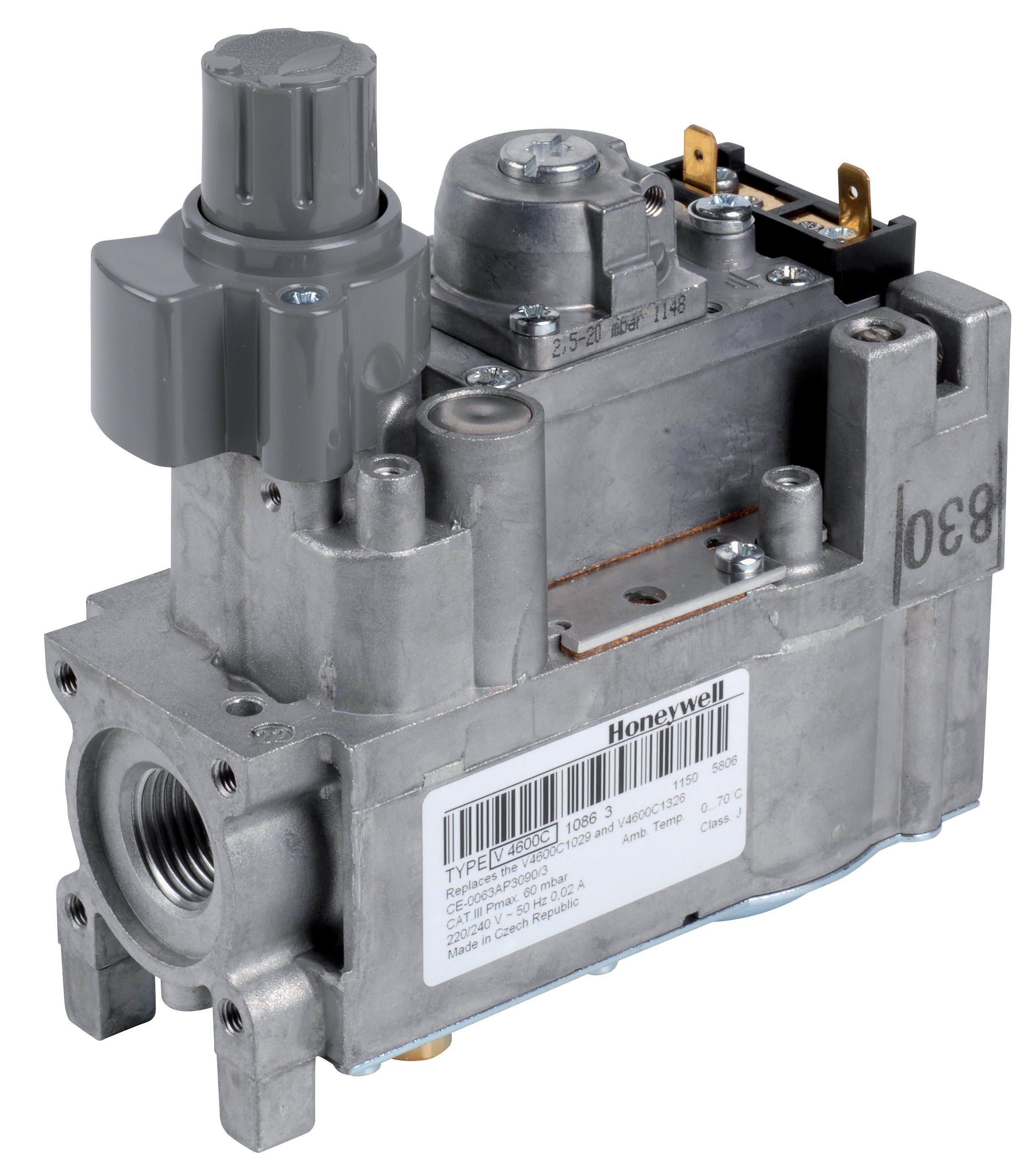
Multifunctional Gas Control Blocks integrate multiple control functions—flame supervision, pressure regulation, temperature control, and gas valve sequencing—into a single, pre-calibrated device. The CBM Minisit gas block exemplifies this approach. According to the technical specifications, the Minisit 710 incorporates thermoelectric flame supervision, pressure regulation, and temperature control functions within one compact unit. The advantage is simplicity: a single device handles the primary control logic, reducing wiring complexity, potential failure points, and on-site commissioning time. For operators, this means fewer interconnections to troubleshoot and a smaller physical footprint—critical considerations in space-constrained applications like marine engine rooms or compact boiler houses.
Modular Relay Systems decompose control functionality across specialized relay modules and detection devices. A typical configuration combines a control relay (such as the CBM Relay SM 592.2 for atmospheric burners or the CBM Relay VM 41 for forced draught applications) with discrete flame detection sensors, base modules, and operational components. This architecture offers flexibility: engineers can configure control logic by selecting and connecting appropriate modules, adapting the system to highly specific burner configurations and operational sequences. The modular approach is particularly valuable when system requirements exceed standard control block capabilities or when future expansion is anticipated.
From a control systems perspective, integrated blocks prioritize standardization and simplicity, while modular relays prioritize adaptability and scalability. Both approaches implement non-volatile lock-out functionality—a safety-critical feature that prevents automatic restart after a flame failure without manual intervention—but they achieve this through different signal paths and timing mechanisms.
Technical Specifications and Performance Characteristics
Understanding the technical capabilities of each approach requires examining specific product parameters and operational limits.
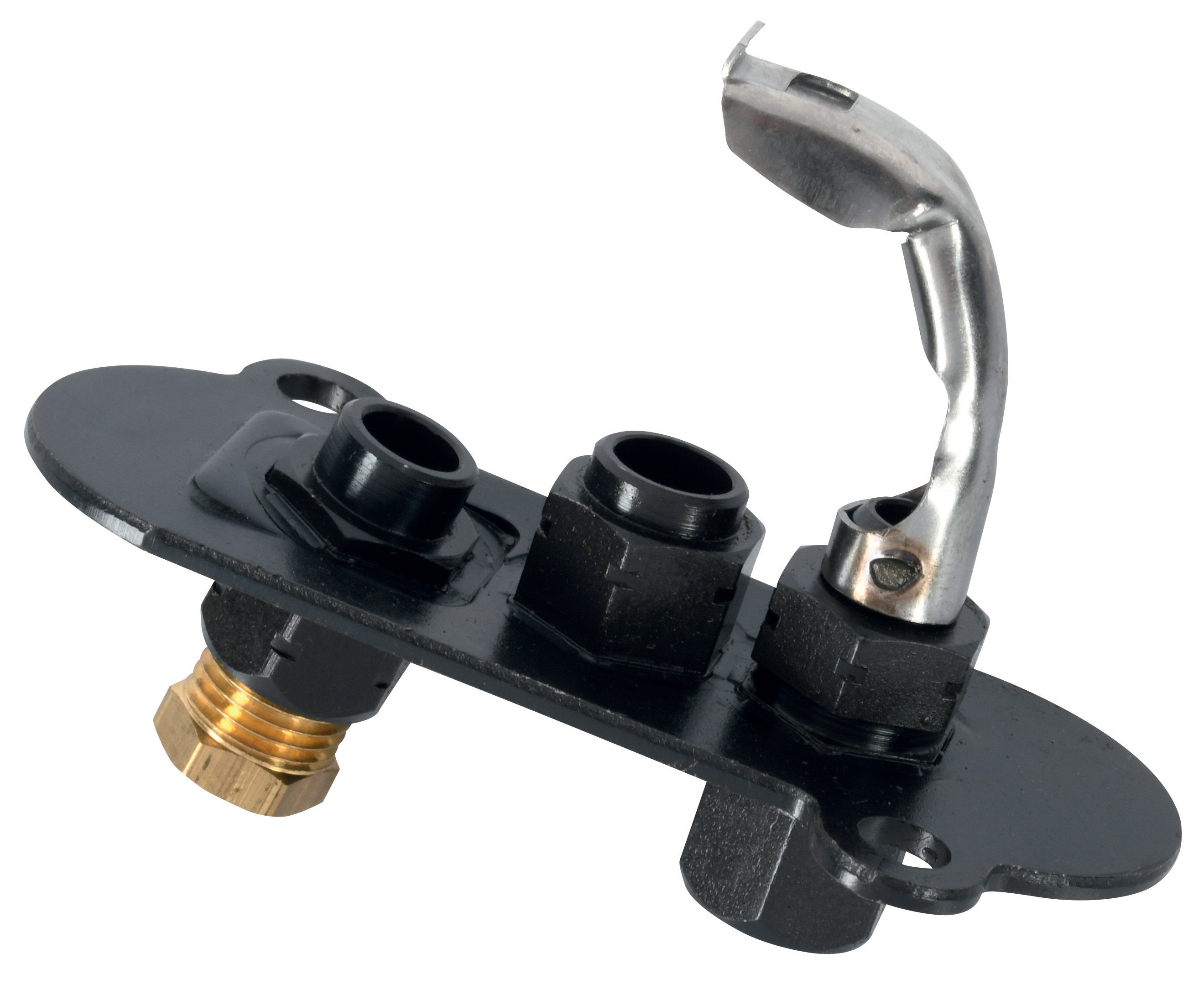
Response Time and Flame Detection: The Minisit integrated block relies on thermoelectric flame supervision, utilizing a thermocouple that generates a millivolt signal when exposed to flame heat. This electrochemical response typically requires 3–5 seconds to achieve stable signal generation—adequate for intermittent burner operation in domestic and light commercial applications. In contrast, modular systems can employ faster detection technologies. The CBM IRD 1010 blue cell, an infrared flame detector often paired with modular relays, responds to ultraviolet radiation emitted by hydrocarbon flames in approximately 200 milliseconds, making it suitable for applications demanding rapid flame-out detection and safety shutdown. The CBM Universal pilot light can be integrated into modular systems to support pilot-based burner architectures, offering silent operation and corrosion resistance while maintaining compatibility with various control relay configurations.
Pressure Regulation and Control Precision: The Minisit block integrates a pressure regulator, maintaining gas supply pressure at a fixed setpoint—typically 2.5–20 mbar depending on the model variant. This single-stage regulation suits applications where burner demand is relatively static. Modular systems, particularly those using relays from the EUROBOX series like the CBM Relay CM391.2, can incorporate external pressure regulation stages and can support proportional control sequences when paired with motorized valve operators such as the CBM Operator 220V with regulator. This capability is essential for applications requiring modulation—varying heat output in response to demand—common in district heating systems and large industrial boilers.
Temperature Control Capability: The integrated Minisit block includes temperature control through internal sensing and logic. Modular relay systems achieve temperature control by pairing control relays with external thermostats or temperature sensors, such as the CBM Thermocouple Sit INT.600. This separation allows engineers to select thermostats matched to specific temperature ranges and response characteristics, whereas the integrated block offers one fixed temperature control algorithm.
Lock-Out Behavior: Both architectures implement non-volatile lock-out, but the reset mechanisms differ. The Minisit block requires manual reset through a physical control button, while modular relays like the SM 592.2 and CM391.2 provide manual reset capability on the relay itself or via external reset switches, offering flexibility in how operators interact with the control system during fault conditions.
Real-World Application Scenarios in Singapore Industrial Operations
Scenario 1: Small-to-Medium Hospitality and Food Service
A mid-sized hotel or catering facility in Singapore operating multiple steam kettles, combi-ovens, and space heaters would benefit from the simplicity of integrated gas control blocks. The Minisit gas block offers plug-and-play installation, requires minimal commissioning, and occupies minimal space in equipment rooms. Maintenance staff—often without specialized controls training—can identify faults through the lock-out indicator and contact a service technician. The thermoelectric flame supervision is sufficiently responsive for intermittent burner duty cycles. Installation cost and complexity are minimized, a significant advantage for multi-unit deployments where standardization across several appliances reduces spare parts inventory and training overhead.
Scenario 2: Large Industrial Boiler House with Modulation Requirements
A petrochemical facility, power generation plant, or district heating network in Singapore's industrial heartland requires precise heat output modulation and rapid response to process changes. Here, modular relay systems—specifically configurations combining control relays from the EUROGAS or EUROBOX series with external flame detectors like the IRD 1010 and motorized valve operators—deliver the flexibility and performance required. Engineers can implement sophisticated control sequences: ignition logic, pre-purge, main burner fuel sequencing, and post-purge functions. The rapid flame detection of IR sensors ensures safety-critical shutdown times under 500 milliseconds. The ability to integrate multiple burners, staged ignition systems, and proportional modulation makes modular architectures the standard approach for large-scale industrial burner systems.
Scenario 3: Retrofit and Legacy System Integration
Many Singapore industrial facilities operate older burner systems designed for manual control or equipped with obsolete control devices. Upgrading to a modern control system must balance compatibility with existing hardware, cost constraints, and safety improvements. Modular relay systems excel in this context because individual components can be replaced incrementally. An aging oil burner relay can be replaced with a modern equivalent, such as the CBM Relay GR1, while retaining the existing burner assembly, fuel system, and combustion chamber. Integrated blocks, by contrast, typically require replacement of the entire control assembly, which may necessitate burner modifications.
Technical Comparison Table
| Parameter | Integrated Gas Control Block (Minisit) | Modular Relay Systems (EUROBOX/EUROGAS) |
|---|---|---|
| Primary Function | Gas regulation, flame supervision, temperature control in single unit | Modular control logic; combines relays, detectors, and operators |
| Flame Detection Type | Thermoelectric (thermocouple-based) | Thermoelectric, infrared UV, or phototransistor (selectable) |
| Typical Flame Detection Response | 3–5 seconds | 200–500 milliseconds (IR/UV); 3–5 seconds (thermoelectric) |
| Pressure Regulation | Fixed single-stage regulator (2.5–20 mbar) | Supports modular regulators; enables two-stage regulation |
| Modulation Capability | No; burner on/off only | Yes; with motorized operators and proportional valve control |
| Temperature Control | Integrated; fixed algorithm | External thermostat; selectable temperature range and response |
| Lock-Out Function | Yes; requires manual button reset | Yes; manual reset or external reset switch option |
| Installation Complexity | Low; minimal wiring; pre-calibrated | Medium to high; requires field configuration and commissioning |
| Maintenance and Repair | Full unit replacement if failure; minimal troubleshooting | Component-level repair; flexible replacement of individual modules |
| Suitable Burner Types | Small atmospheric and fan-assisted burners; intermittent duty | All burner types; atmospheric, forced draught, oil, gas; continuous or intermittent |
| Typical Scalability | Single appliance only; not suitable for multi-burner systems | Highly scalable; supports multi-burner installations and staged control |
Selection Criteria for Singapore Industrial Facilities
Choose an Integrated Gas Control Block if:
- Your application involves small to medium burners (domestic or light commercial scale)
- Burner duty is intermittent (not continuous operation)
- Simplicity and low installation cost are priorities
- Maintenance staff lack specialized controls training
- Space is severely constrained
- The system will not require future expansion or modulation capability
Choose a Modular Relay System if:
- Your application requires precise flame detection and rapid safety shutdown
- Burner modulation or proportional control is needed
- The system supports multiple burners or complex fuel staging
- Retrofit flexibility and component-level maintenance are important
- Future expansion or system reconfiguration is anticipated
- Your facility operates under demanding industrial process conditions (petrochemicals, power generation, heavy manufacturing)
- Regulatory compliance requires documented control sequences and audit trails
Regulatory and Compliance Context in Singapore
Singapore's industrial safety framework—governed by the Ministry of Manpower (MOM) and Energy Market Authority (EMA)—requires that burner control systems implement automatic flame supervision and fail-safe shutdown. Both integrated and modular systems meet these baseline requirements through non-volatile lock-out functionality. However, certain industrial sectors (petrochemicals, LNG facilities, marine applications) impose additional requirements: documented control logic, rapid flame detection, redundant safety interlocks, and periodic inspection and certification. For these applications, modular relay systems provide superior auditability and configuration documentation, supporting compliance verification and incident investigation.
Conclusion: Making the Right Choice for Your Operation
The decision between integrated multifunctional gas control blocks and modular relay systems is not simply one of preference—it is a technical decision grounded in burner type, operational requirements, maintenance capabilities, and long-term scalability. The Minisit gas block represents decades of proven performance in small-scale applications, offering reliability and simplicity for straightforward burner control tasks. Modular systems built from relays like the SM 592.2 and VM 41, paired with advanced flame detection technologies such as the IRD 1010 blue cell, deliver the responsiveness and flexibility demanded by modern industrial operations.
3G Electric, as an distributor of industrial Gas Controls Singapore and Burner Controls Singapore equipment since 1990, maintains extensive stock of both integrated and modular control solutions. Our technical team can assess your specific application—whether you operate a hospitality facility, industrial boiler house, or specialized manufacturing process—and recommend the architecture that delivers optimal reliability, safety, and cost-effectiveness.
Contact 3G Electric today for a technical consultation. Provide details of your burner type, duty cycle, and operational environment, and our engineers will help you specify the right control system for your facility. Call us or visit our website to discuss your requirements with our controls specialists.