Industrial Gas Burners & Combustion: A Technical Comparison Guide for HVAC Contractors
Selecting the right burner for industrial heating applications requires understanding the fundamental differences between combustion technologies, power outputs, and control systems. Whether you're specifying equipment for a new installation or upgrading an existing system, burners and combustion equipment vary significantly in their capabilities, efficiency ratings, and application suitability. This guide walks HVAC contractors through the key technical specifications and real-world considerations that make one burner design more appropriate than another for specific commercial and industrial settings globally.
Understanding Gas Burner Types and Combustion Technologies
Gas burners operate on one of two fundamental principles: atmospheric combustion or forced-air combustion. Atmospheric burners rely on natural draft to introduce air into the combustion zone, while forced-air (or fan-assisted) burners use a motor-driven fan to pressurize the combustion chamber, enabling much higher power outputs and more efficient fuel mixing. In industrial applications serving Global markets, forced-air designs dominate because they deliver superior flame stability, tighter emission control, and reliable modulation across a wide turn-down ratio.
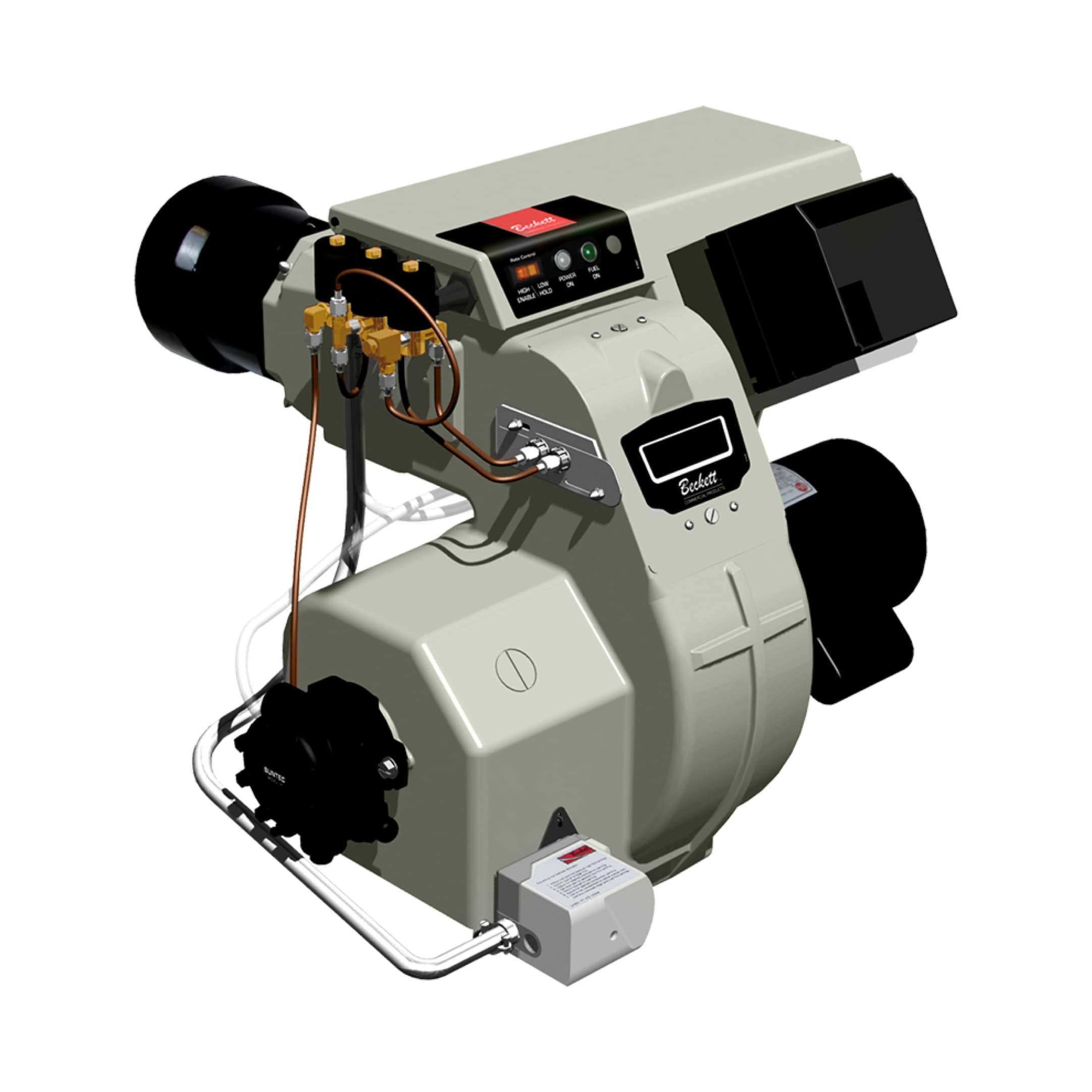
The combustion head—the component where fuel and air actually mix and ignite—is the heart of any burner design. High-efficiency combustion heads feature carefully engineered air vanes and fuel injection patterns that promote complete mixing before the flame front forms. This design philosophy minimizes unburned fuel and NOx formation. Additionally, many modern industrial burners incorporate electronic control systems that continuously monitor flame presence and adjust fuel flow in real time. These systems can respond to load changes in milliseconds, maintaining optimal combustion conditions even as building demands fluctuate throughout the day.
Turn-down ratio—the range between maximum and minimum firing rates—is another critical specification. A burner with a 5:1 turn-down ratio can safely operate between 100% and 20% of its rated capacity. Wider turn-down ratios reduce cycling losses and improve comfort by allowing the system to modulate smoothly rather than cycling on and off. High-efficiency burners in modern HVAC systems often feature modulating controls with 10:1 or better turn-down, enabling continuous adjustment rather than discrete firing stages.
Technical Specifications and Product Comparison for Key Burner Models
The FBR lineup offers a range of gas burners designed for different application scales and control requirements. The FBR GM X4 TC represents the lower power tier, delivering a maximum output of 232 kW with a minimum turn-down to 116 kW. This single-phase burner suits smaller commercial boilers and process heating applications where power requirements remain moderate. The 160 mm nozzle size indicates a compact design ideal for retrofitting into existing equipment where space constraints limit installation options.
Moving up the power scale, the FBR GM X5/2 TC provides 350 kW maximum output with 75 kW minimum capacity, offering a wider turn-down ratio of 4.67:1. This model bridges the gap between small commercial and larger industrial applications. The 250 mm nozzle represents a mid-range fuel injection system, and the single-phase electrical supply indicates compatibility with standard commercial power infrastructure.
For applications demanding higher power density, the FBR K X5/2 TL delivers 850 kW maximum with a 140 kW minimum, achieving an impressive 6.07:1 turn-down ratio. The three-phase power requirement reflects the larger fan motor needed to force sufficient air through the combustion head at these output levels. The 315 mm nozzle supports this higher fuel flow rate while maintaining atomization quality. Heavy-duty applications like large institutional boilers, district heating systems, and industrial process furnaces represent the typical use cases.
The FBR K X7/M TL pushes into the ultra-high-output category with a maximum power rating of 1.8 MW and minimum of 427 kW. This specialized burner addresses the largest commercial and industrial heating loads. The 400 mm nozzle and three-phase electrical system underscore the industrial-grade engineering. Such burners are commonly found in large-scale manufacturing facilities, utility-scale heating systems, and applications across Global industrial markets where efficiency and reliability directly impact operational economics.
The FBR BURNER GAS X5/MF TL EL VC LPG introduces modulating combustion control with electronic regulation. With 349 kW maximum and 69.8 kW minimum output, this burner achieves 5:1 turn-down using a fully modulating (PID) control system when equipped with optional modulation kits and flame detection probes. The die-cast aluminum body, high-pressure fan, and combustion head designed for high efficiency and flame stability make this model ideal for applications requiring continuous load matching. Support for multiple fuel categories (I2R, I2H, I2L, I2E, I3B, I3P, etc.) provides flexibility across different gas supply infrastructures globally.
Real-World Application Examples for HVAC Contractors
Consider a regional hospital in Southeast Asia expanding its steam plant to support new surgical facilities. The facility requires reliable heat delivery during peak morning startup while maintaining efficient part-load operation throughout the day as demand varies. The FBR K X5/2 TL burner provides 850 kW capacity to handle simultaneous steam generation for multiple loads, while the 6:1 turn-down ratio allows stable operation during low-demand periods like overnight maintenance windows. Three-phase power infrastructure is standard in large institutional buildings, eliminating installation constraints.
A manufacturing facility in Europe operates three parallel hot water generators supporting process heating and space heating in a multi-building campus. Rather than installing one 2.4 MW burner (creating single-point-of-failure risk), the facility specifies three smaller burners. Two FBR GM X5/2 TC burners (700 kW combined) handle typical loads, while a larger unit addresses peak demand. This distributed approach improves system resilience: if one burner requires maintenance, the facility maintains 50% capacity rather than complete shutdown. The modulating control system on each unit reduces cycling losses compared to traditional on-off operation.
A district heating network operator in Northern Europe implementing the FBR BURNER GAS X5/MF TL EL VC LPG benefits from continuous modulation responding to outdoor temperature sensors and consumer demand. Rather than the burner cycling between full-on and full-off, the modulating controls continuously adjust fuel flow to match demand precisely. Over a heating season, this reduces energy consumption by 8-15% compared to fixed-stage burners while improving comfort consistency for end users.
Technical Comparison Table: Key Specifications
| Burner Model | Max Power (kW) | Min Power (kW) | Turn-Down Ratio | Nozzle (mm) | Electrical Supply |
|---|---|---|---|---|---|
| FBR GM X4 TC | 232 | 116 | 2:1 | 160 | Single-Phase |
| FBR GM X5/2 TC | 350 | 75 | 4.67:1 | 250 | Single-Phase |
| FBR K X5/2 TL | 850 | 140 | 6.07:1 | 315 | Three-Phase |
| FBR K X7/M TL | 1,800 | 427 | 4.22:1 | 400 | Three-Phase |
| FBR GAS X5/MF TL EL (Modulating) | 349 | 69.8 | 5:1 | N/A | Three-Phase (370W) |
Selection Guidance: For applications under 300 kW with single-phase power availability, the FBR GM series offers cost-effective solutions. Applications between 300–900 kW benefit from the FBR K X5/2 TL's wider turn-down ratio and three-phase efficiency. Ultra-high-output installations (1.5+ MW) specify the FBR K X7/M TL. When continuous modulation and load matching are requirements, the FBR GAS X5/MF modulating burner delivers the lowest operating costs despite slightly lower maximum output than fixed-fire alternatives.
Choosing the Right Burner: Key Selection Criteria
Beyond raw power output, HVAC contractors should evaluate three additional factors when specifying burners and combustion systems. First, assess the available electrical infrastructure: single-phase power limits you to smaller models like the FBR GM series, while three-phase availability opens access to larger capacity equipment with better efficiency. Second, consider the actual load profile. If your application runs at consistent high load (like continuous process heating), a fixed-fire burner operates efficiently. If loads vary significantly (like space heating responding to outdoor temperature), modulating control prevents cycling losses and improves comfort margins. Third, evaluate maintenance access and service support: compact designs save installation space but may complicate routine maintenance like heat exchanger cleaning.
Flame detection and safety control systems represent another critical specification. Many burners integrate burner controls and flame detection systems that continuously monitor combustion. UV cells, ionization probes, and infrared detectors each offer different robustness profiles depending on the application environment. Dusty manufacturing facilities might benefit from UV-based detection (immune to ambient light interference), while clean commercial settings work well with ionization technology.
As you evaluate options globally, ensure compliance with local gas pressure regulations and fuel specifications. The FBR GAS X5/MF TL EL supports multiple fuel categories, making it adaptable across different regional gas standards and LPG/natural gas switching scenarios, while some models specify minimum inlet pressures required for reliable operation.
Conclusion and Next Steps
Industrial gas burners and combustion equipment represent one of the largest efficiency investments in commercial heating systems. Whether you're retrofitting an aging boiler plant or engineering a new district heating network, selecting the right burner from the FBR portfolio—considering power output, turn-down capability, control type, and installation constraints—directly impacts operating costs, comfort delivery, and system reliability throughout the equipment's 15–20 year service life.
3G Electric has served industrial equipment customers globally since 1990, with expertise in specifying, sourcing, and supporting burner systems across commercial and industrial applications. Our technical team can help you match specific FBR burner models to your application requirements, coordinate with local installation partners, and arrange commissioning support to ensure optimal performance from day one. Contact 3G Electric today to discuss your burner and combustion requirements—whether you need a single replacement unit or a complete heating system redesign, we'll connect you with the right equipment and expertise.