Understanding Fluid System Architecture in Singapore Manufacturing
Singapore's manufacturing ecosystem—spanning petrochemical, precision engineering, food processing, and semiconductor support industries—demands fluid system components that balance performance, reliability, and regulatory compliance. Unlike standardized North American or European markets, Singapore's tropical climate, space constraints, and stringent environmental standards create unique specification challenges.
Fluid systems in these environments typically operate across three functional tiers: (1) primary pressure generation and modulation, (2) secondary component delivery and control, and (3) tertiary application-specific distribution. Each tier requires components engineered for specific pressure ranges, flow rates, and operational duty cycles.
At 3G Electric, we've supported Singapore's manufacturing base for 35+ years by providing solutions that integrate Italian-engineered pumping systems, precision regulators, and application-specific nozzles into cohesive architectures. This article addresses the critical procurement decisions engineers face when specifying these components.
Pressure Regulation and Safety Integration in Industrial Applications
Regulatory Context and Safety Requirements
Singapore's Chemical Safety and Hazard Investigation Unit (CSHU) enforces safety standards that often exceed ISO 4414 for pneumatic systems. Pressure regulation devices must incorporate integrated safety relief mechanisms rather than relying on downstream protection.
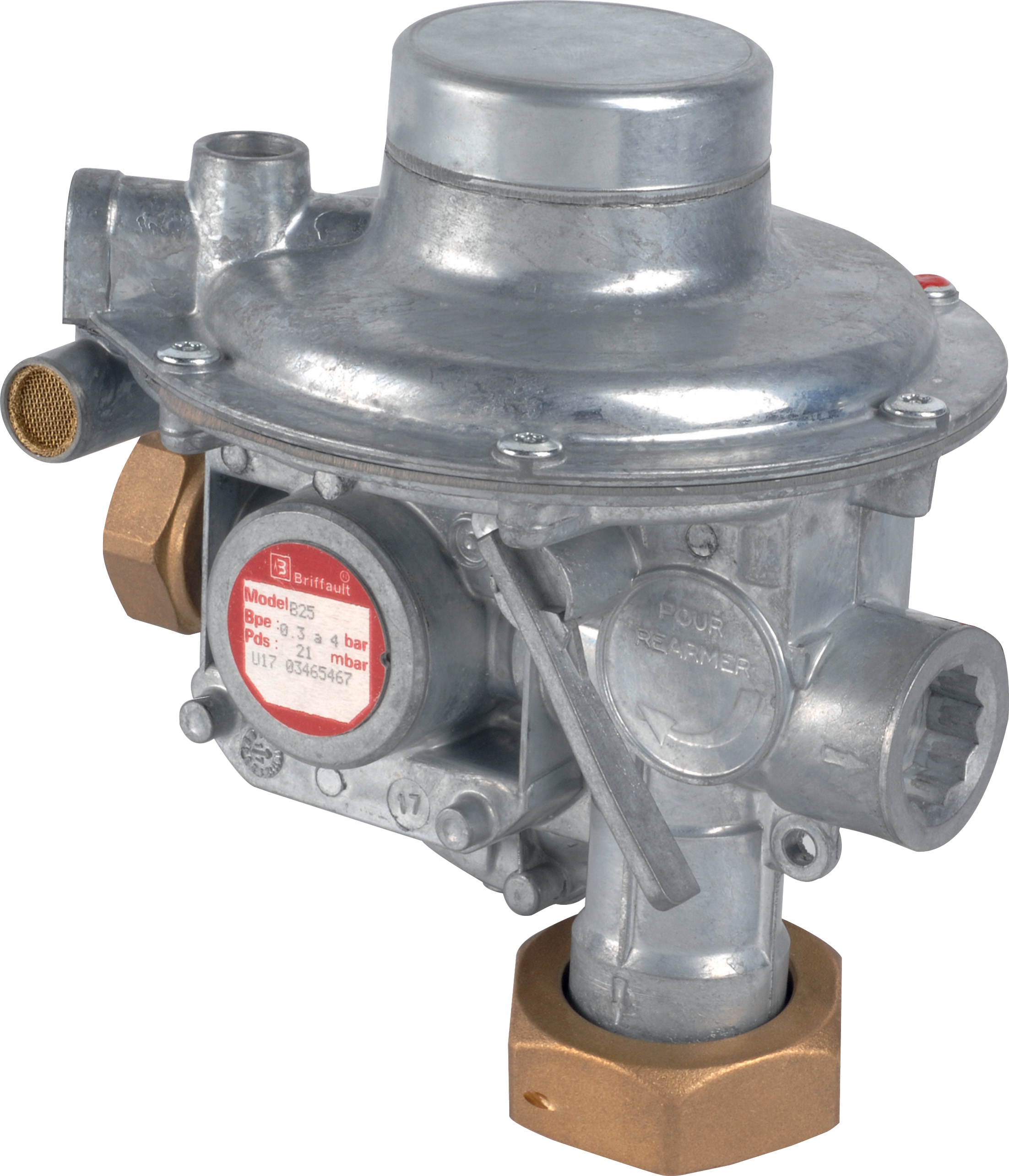
The Francel B25/37mb pressure regulator with integrated safety relief exemplifies this requirement. Designed for laboratory and industrial gas distribution, it delivers precisely controlled 37 mbar outlet pressure with a 10 mm vent size—critical for controlled depressurization in confined spaces typical of Singapore's industrial parks.
Specification Criteria for Procurement
When specifying pressure regulators, procurement engineers must evaluate:
Outlet Pressure Accuracy: The B25/37mb's fixed 37 mbar output suits applications where secondary modulation occurs downstream. For applications requiring variable pressure control, ensure your specification includes secondary proportional control devices rather than attempting adjustment at the primary regulator.
Vent Design: The 10 mm vent accommodates confined exhaust environments where larger vents create noise or environmental issues. Singapore facilities frequently operate in multi-tenant industrial complexes where noise and odor emissions trigger regulatory scrutiny.
Integration with Upstream Components: Pressure regulators must be sized for maximum inlet pressure and flow. In Singapore's humid environment, ensure your specification includes stainless steel or corrosion-resistant materials, particularly for systems exposed to salt-air environments in industrial parks near the coast.
Industrial Pump Selection for High-Pressure Distribution Systems
Flow and Pressure Mapping for Multi-Application Systems
Singapore's manufacturing operations frequently require a single prime mover to supply multiple downstream applications operating at different pressures. This architectural challenge demands careful pump selection and component staging.
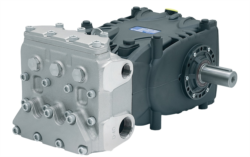
The Pratissoli KF30 pump series (106 L/min at 200 bar, 40 kW) serves mid-range applications—typical for integrated cleaning, hydraulic actuation, and pressurized delivery in machine tool operations. The Pratissoli MW40 series (211 L/min at 210 bar, 85 kW) handles higher-volume operations common in petrochemical support and food processing automation.
Procurement Decision Framework
When evaluating pump specifications, procurement engineers should construct a demand matrix:
- Peak Flow Requirement: Sum all simultaneous downstream applications. The KF30's 106 L/min suits facilities with distributed, intermittent demands; the MW40's 211 L/min addresses consolidated high-volume operations.
- Pressure Staging Strategy: Implement secondary pressure reduction downstream rather than over-specifying pump displacement. A KF30 can supply both 200 bar and 50 bar circuits through tiered pressure regulators, reducing capital cost versus purchasing dual-displacement pumps.
- Power Input Validation: The KF30 requires 40 kW; the MW40 requires 85 kW. Singapore's industrial tariffs (approximately $0.19–0.25 per kWh) make operational cost significant. A facility operating 16 hours daily will incur approximately $2,800–3,500 annually per 40 kW pump. Verify that peak flow requirements justify continuous high-power operation.
- Mechanical Space and Installation: The KF30 weighs 72 kg; the MW40 weighs 264 kg. Singapore facilities frequently operate in constrained vertical spaces. Ensure your facility layout accommodates the heavier MW40 with appropriate structural support and vibration isolation.
Precision Nozzle Selection and Application-Specific Integration
Spray Geometry and Industrial Cleaning Operations
Fluid delivery accuracy directly impacts product quality in coating, cleaning, and material processing applications. The Euspray flat jet nozzle (1/4" M BSPT, 25° spray angle, index 30) represents a critical specification point where procurement decisions affect downstream operational performance.
Technical Specification Considerations
Spray Angle and Pattern: The 25° cone angle suits general-purpose industrial cleaning where uniform surface coverage from 0.5–2 meter distance is required. Narrower angles (8°–12°) concentrate flow for high-pressure impact cleaning; wider angles (40°–60°) distribute flow for low-pressure rinsing. Verify your application requirements before specifying.
Connection Interface: The 1/4" M BSPT male connection requires corresponding female fittings. Singapore's industrial supply chains carry both BSPT (British Standard) and NPT (National Pipe Thread) fittings. Specification errors here create costly installation delays. Confirm your facility's existing manifold interface before purchase.
Index 30 Design: This refers to the nozzle's spray direction adjustment capability. Index 30 allows 30-degree increments of directional adjustment, facilitating retrofit installation where manifold orientation may not perfectly align with application geometry. This flexibility reduces custom engineering costs in multi-fixture installations.
High-Pressure Rating: Euspray nozzles typically operate to 200 bar—compatible with both the KF30 and MW40 pump specifications. Verify pressure rating in your order specification to prevent inadvertent substitution with lower-pressure variants.
Integrated System Specification: A Practical Example
Consider a Singapore-based semiconductor assembly facility requiring fluid delivery for precision cleaning and component assembly lubrication.
System Architecture:
- Prime mover: 40 kW electric motor driving Pratissoli KF30 pump (106 L/min, 200 bar)
- Primary regulation: Francel B25/37mb regulator for gas supply to auxiliary pneumatic circuits
- Secondary pressure reduction: Pilot-operated proportional regulators reduce main line pressure from 200 bar to 50 bar for low-pressure cleaning circuits
- Delivery: Multiple Euspray flat jet nozzles at primary (200 bar) and secondary (50 bar) pressure stages
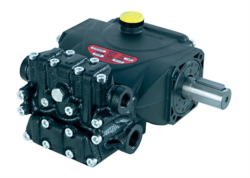
- Compact gear pump ({{PRODUCT:E1D1808S-000|Interpump PUMP E1D1808 L (8 L/min, 180 bar, 2.72 kW)}}) supplies precision lubrication circuit separately
- Single primary pump eliminates cross-contamination between main pressure and precision circuits
- Tiered pressure strategy reduces energy consumption versus dedicated high-pressure pump
- Compact gear pump handles low-volume, high-precision lubrication without oversizing main system
- Fixed-pressure regulator (B25/37mb) provides stable pneumatic supply without proportional valve complexity
Compliance and Documentation Requirements in Singapore
Singapore's Ministry of Manpower requires comprehensive fluid system documentation including:
- Pressure vessel registration for any component operating above 0.5 bar volume × pressure product
- Machinery Safety and Health Work Institute certification for integrated systems
- Maintenance schedules specifying component inspection intervals
3G Electric's 35+ years of Singapore market experience includes compliance documentation support. When specifying components, confirm that datasheets include pressure ratings, material certifications, and safety relief settings required for regulatory filing.
Cost Optimization and Lifecycle Considerations
Initial Capital vs. Operational Efficiency
Procurement engineers face pressure to minimize initial equipment cost. However, component selection significantly impacts five-year total cost of ownership:
- A KF30 (40 kW) operating 16 hours daily for 250 working days annually consumes approximately 40,000 kWh over five years—at Singapore tariffs, approximately $7,600–10,000 in electricity alone.
- Pump inefficiency (slip, heat generation) increases with age. Specify newer-generation Pratissoli units rather than accepting discounted older stock.
- Nozzle wear reduces spray pattern accuracy. Euspray nozzles typically operate for 2,000–5,000 hours before pattern degradation. Budget for scheduled replacement rather than operating to failure.
Spare Parts and Supply Chain Resilience
Singapore's manufacturing operations depend on rapid problem resolution. Establish procurement relationships with distributors maintaining local inventory. 3G Electric stocks replacement components for both Pratissoli pump series and Euspray nozzles, enabling next-day delivery for emergency repairs.
When specifying equipment, request spare parts lists and verify availability before contract signature. A critical system failure waiting three weeks for international shipment can exceed component cost in lost production.