Understanding Flame Monitoring Technology in Industrial Burners & Combustion Systems
Flame monitoring represents the backbone of modern burner safety systems. Unlike older mechanical flame detection methods, contemporary Burners & Combustion safety architectures employ two primary detection technologies: ultraviolet (UV) sensing and ionization monitoring. Each method has distinct advantages for different fuel types and operating conditions common across Southeast Asian industrial facilities.
UV flame detectors operate by sensing the ultraviolet radiation emitted during hydrocarbon combustion, typically in the 185–260 nm wavelength range. These sensors respond almost instantaneously—within 100–300 milliseconds—making them ideal for gas burner applications where rapid ignition confirmation is critical. The Siemens Relay LFL 1.622 burner safety control unit exemplifies advanced UV detection capability, integrating simultaneous UV and ionization monitoring for dual-fuel flexibility.
Ionization flame detection works by measuring electrical conductivity across the combustion flame. When hydrocarbon molecules ionize in the high-temperature combustion zone, they create a measurable electrical current proportional to flame intensity. Ionization detection excels in heavy oil burner applications and responds well to the yellow-flame characteristic of oil combustion, whereas UV sensing can occasionally be affected by high radiant heat reflection in large furnace chambers.
For HVAC contractors operating across diverse Southeast Asian markets—from Singapore's stringent PSB regulations to Indonesia's industrial standards—selecting the correct flame monitoring technology directly impacts system uptime, warranty compliance, and safety audit results. The integration of redundant detection methods (simultaneous UV + ionization) provides the highest safety integrity level and accommodates future fuel type transitions.
Safety Relay Architecture and Control Logic Integration
Flame monitoring data feeds into safety relay modules that execute the critical control logic protecting both equipment and personnel. Modern safety relays operate as programmable safety controllers, executing hardwired or firmware-based decision trees that govern burner startup sequences, flame supervision, and safe shutdown procedures.
The Kromschroder Relay BCU 570WC1F1U0K1-E burner control relay demonstrates industrial-grade safety relay design compliant with EN 746-2 and EN 676 standards—regulatory baselines across Southeast Asia for gas appliance safety. This relay supports three distinct ignition modes critical for different combustion system architectures:
- Direct ignition: Burner ignites without pilot flame, reducing fuel waste and startup time. Suitable for gas burners in tropical climates where air density variations are minimal.
- Intermittent pilot ignition: Pilot flame ignites only during startup, conserving fuel. Preferred for facilities with seasonal or variable load profiles.
- Continuous pilot ignition: Pilot burns continuously, enabling rapid main burner ignition. Necessary for emergency response applications and facilities with strict uptime requirements.
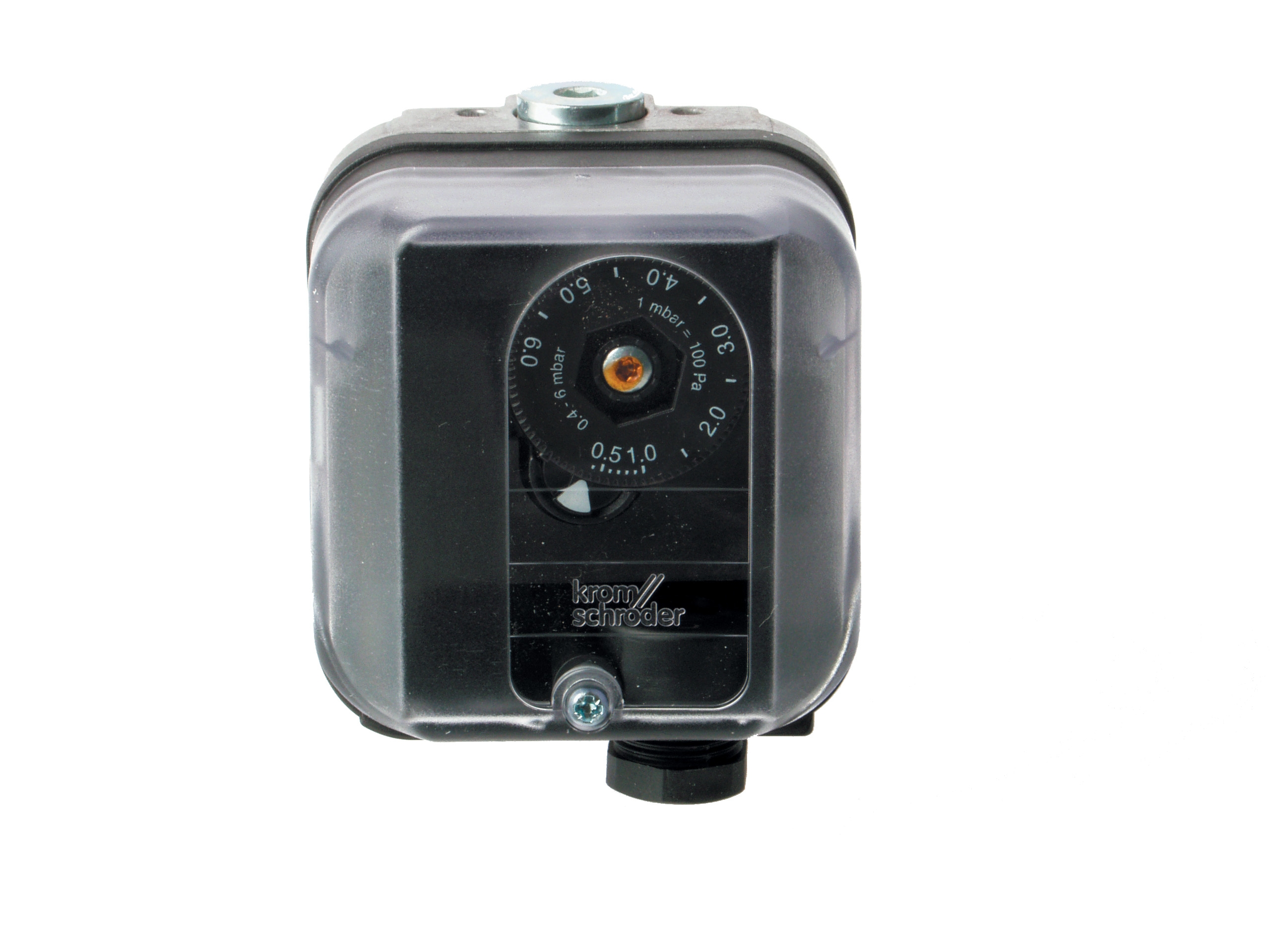
The safety relay monitors three critical signal inputs during normal operation: flame detection signal (UV or ionization), pressure switch confirmation (fuel delivery verified), and air damper position feedback (combustion air flow confirmed). The Kromschroder Pressure Switch DG 50U/6 pressure switch for burner control provides SIL 3-rated pressure confirmation, meeting FM, UL, and AGA certifications required for cross-border equipment certification in Southeast Asia.
Control logic architecture typically follows this decision sequence: (1) operator initiation signal received; (2) safety relay commands pilot ignition; (3) flame detection signal confirms pilot established within 4–6 seconds; (4) main gas valve opens; (5) flame detection signal confirms main flame within 2–3 seconds; (6) burner transitions to stable operation with continuous flame supervision. If flame detection signal drops below threshold for more than 500 milliseconds during operation, the safety relay immediately closes all fuel valves and initiates lockout, preventing unburned fuel accumulation and potential explosion risk.
For HVAC contractors, understanding this control logic is essential when troubleshooting nuisance lockouts, integrating burners into building management systems, or upgrading legacy burner controls to modern safety standards. The relay's response time directly affects burner efficiency: faster flame confirmation reduces pilot fuel consumption, while slower confirmation increases safety margins in dusty industrial environments.
Practical Integration of Pressure Switches and Flame Detection in Southeast Asian Facilities
Field integration of safety relays requires precise coordination with pressure switches, flame detectors, and burner solenoid valves. Southeast Asian industrial environments—particularly in humid tropical regions and coastal areas—introduce challenges that affect sensor reliability and signal transmission.
Pressure switches function as binary confirmation devices: they signal that fuel pressure has reached the burner nozzle, confirming mechanical integrity of the fuel delivery system. A pressure drop below setpoint (typically 1.0–2.5 bar for gas burners) triggers immediate solenoid valve closure. The Kromschroder DG 50U/6 pressure switch combines SIL 3 capability with performance level e rating, meaning it can operate within safety-critical control loops without additional redundancy.
When integrating pressure switches in coastal Southeast Asian installations, contractors must account for salt spray corrosion affecting pressure port connections. Best practices include: (1) installing isolating ball valves with gauge ports at each pressure switch, enabling field testing without breaking fuel lines; (2) applying dielectric grease to electrical connector terminals to prevent moisture ingress; (3) specifying stainless steel wetted components for pressure switches in salt-fog environments (per ISO 12944 C5 specifications).
Flame detector placement profoundly affects detection reliability. UV sensors require direct line-of-sight to the flame, while ionization electrodes must be positioned within the flame envelope. For furnaces with complex combustion chamber geometries common in Southeast Asian foundries and chemical processing plants, detector positioning errors result in spurious lockouts during stable operation. 3G Electric's 35 years of industrial equipment distribution across Asia-Pacific enables us to support contractors with field-proven detector mounting solutions and chamber-specific calibration guidance.
Electrical signal transmission from flame detectors to safety relays must follow shielded cable practices, particularly in facilities with variable frequency drives (VFDs) or high-frequency induction heating equipment. Unshielded flame detector wiring can pick up electromagnetic noise, causing false flame presence signals or erratic flame signal dropout. Standard practice specifies twisted-pair shielded cable with shield grounding at the relay terminal only (single-point grounding to prevent ground loop currents).
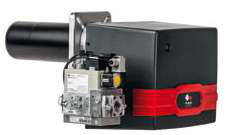
The Siemens Relay LFL 1.622 safety control unit incorporates advanced signal conditioning that filters electromagnetic noise while maintaining sub-100 millisecond response to genuine flame loss events. For dual-fuel burners FBR KN 1300/M TL EL heavy oil burner, this dual-detection capability provides seamless fuel switching without requiring detector repositioning or recalibration.
Regulatory Compliance and Testing Procedures for Southeast Asian Markets
Flame monitoring and safety relay integration must align with both international standards and specific national regulations across Southeast Asia. Singapore's PSB (Professional Engineers Board) references EN 746-2 and EN 676 for gas appliance safety, while Malaysia's SIRIM incorporates EN 60730 for electrical safety and control devices. Indonesia and Thailand increasingly adopt IEC standards for industrial equipment, though legacy installations may reference older national specifications.
Functional safety assessment of flame monitoring systems requires documented proof that the system achieves the target safety integrity level (typically SIL 2 or SIL 3 for industrial burners). This assessment includes: (1) failure mode analysis demonstrating that single-point failures cannot result in undetected burner malfunction; (2) proof testing procedures establishing that hidden faults are detected within defined intervals; (3) documentation that maintenance personnel are trained to perform required testing.
Practical testing procedures for HVAC contractors include annual flame detector sensitivity testing, pressure switch calibration verification, and safety relay functional testing. The Kromschroder BCU 570WC1F1U0K1-E relay includes built-in test circuits enabling technicians to verify flame detection sensitivity without disturbing the burner's operational state. This capability reduces downtime during compliance audits, a critical consideration for facilities subject to PSB or SIRIM regulatory oversight.
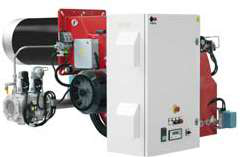
For contractors managing multi-burner installations FBR GAS XP 60/2 CE TC EVO two-stage gas burner with modulating capacity, integrating redundant pressure switches and flame detectors across multiple control zones ensures that a single sensor failure does not compromise the entire facility's combustion safety architecture. This redundancy design pattern is increasingly required for facilities seeking ISO 50001 energy management certification, which mandates documented proof of combustion safety across all heating equipment.
Conclusion
Modern Burners & Combustion safety architecture depends on reliable flame monitoring and safety relay integration to protect both assets and personnel. HVAC contractors across Southeast Asia face increasing pressure to upgrade legacy burner controls to contemporary safety standards while managing site-specific environmental challenges—salt spray corrosion, high ambient temperatures, and electromagnetic noise from industrial processes.
Through 35 years of industrial equipment distribution across Asia-Pacific, 3G Electric has supported thousands of HVAC contractors in selecting, integrating, and maintaining flame monitoring systems that deliver regulatory compliance and operational reliability. Whether upgrading to dual-fuel capability with the Siemens LFL 1.622 relay, implementing pressure switch redundancy with Kromschroder components, or scaling burner systems with modulating controls, our technical team and product specialists provide the guidance and equipment necessary for successful combustion system integration.