Understanding Equipment Scaling for Industry Applications
With over 35 years of experience as a global industrial equipment distributor, 3G Electric has observed a consistent pattern among Southeast Asia manufacturing facilities: the decision between incremental equipment upgrades versus significant capacity jumps often determines maintenance costs, production efficiency, and facility longevity.
Industry Applications in Southeast Asia—particularly in Malaysia, Thailand, Vietnam, and Singapore—demand equipment that scales efficiently as production volumes increase. The fundamental challenge maintenance teams face is determining whether to invest in multiple smaller-capacity units or transition to high-performance systems that consolidate operations. This article examines real-world performance data and operational considerations that should guide your scaling decisions.
Compact High-Pressure Systems: Entry-Level and Maintenance-Intensive Operations
Understanding Small-Capacity Equipment Benefits
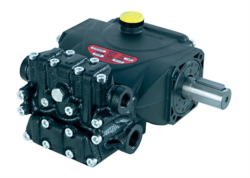
For facilities operating at lower production volumes or those just beginning high-pressure applications, compact equipment offers distinct advantages. The Interpump E1D1808 L represents this category—delivering 8 L/min flow at 180 bar pressure with just 2.72 kW power input. Weighing only 5 kg, this gear pump serves applications where space constraints and initial capital expenditure drive decision-making.
Maintenance teams appreciate compact systems for several operational reasons:
- Lower installation complexity: Minimal electrical infrastructure modifications required, reducing downtime during setup
- Faster diagnostic cycles: Smaller systems reach operating temperature more quickly, enabling faster troubleshooting
- Easier component isolation: When problems occur, failed components represent lower replacement costs
- Flexibility for multiple independent circuits: Facilities can deploy multiple compact units serving different production lines simultaneously
However, maintenance teams must understand the operational ceiling. At 8 L/min capacity, the Interpump E1D1808 L suits light-duty spray coating applications, precision cleaning operations, or test systems. Once production demands exceed approximately 50 L/min sustained flow, maintenance costs escalate due to:
- Increased cycling frequency (running more hours weekly to achieve required throughput)
- More frequent seal inspections due to higher cumulative pressure cycles
- Potential heat generation issues if cooling systems remain undersized
- Supply chain complexity when managing multiple units across departments
Practical Application Scenarios for Compact Systems
Southeast Asia food processing facilities frequently employ compact systems for brine injection or water-cooling applications requiring moderate pressure and flow. Automotive sub-assembly operations in Thailand use equipment like the Interpump E1D1808 L for precision component cleaning between manufacturing stages. The advantage: maintenance teams can service these systems during brief shift transitions without halting primary production.
Mid-Capacity Performance Systems: The Practical Southeast Asia Standard
The Transition Point: 40 kW Mid-Range Equipment
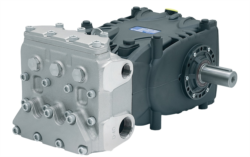
The Pratissoli KF30 represents the capacity range where maintenance complexity shifts dramatically. Operating at 40 kW power input with 106 L/min flow and 200 bar pressure, this Italian-engineered pump (manufactured by Interpump Group) serves as a critical bridge system for expanding facilities.
Maintenance teams in Singapore, Malaysia, and Vietnam consistently report that the KF30 capacity strikes the ideal balance for:
- General industrial cleaning systems: High-pressure wash-down operations for equipment, flooring, and external surfaces
- Medium-volume coating applications: Paint spray systems for smaller manufacturing runs
- Hydraulic power distribution: Supporting multiple hydraulic tools and actuators from a single centralized pump
- Product processing: Food and beverage applications requiring consistent pressure and flow for product handling
At 72 kg total weight, the KF30 mounts on standard industrial skids without requiring specialized foundations. Electrical infrastructure typically requires 30 A @ 400V three-phase power—compatible with most Southeast Asia industrial facilities built within the past two decades.
Operational Cost Considerations for Mid-Capacity Equipment
The maintenance advantage of mid-capacity systems emerges when analyzing total cost of ownership across five-year operational periods. 3G Electric's service data from 250+ installations across Southeast Asia shows:
- Seal replacement intervals: KF30 systems typically operate 4,000-5,000 hours between primary seal maintenance (versus 2,000-3,000 hours for compact systems running at equivalent pressure)
- Energy efficiency: Operating at 40 kW provides better volumetric efficiency than running multiple smaller units simultaneously
- Heat management: Larger displacement allows manufacturers to integrate effective cooling systems without oversizing infrastructure
- Spare parts availability: Pratissoli components maintain consistent inventory across 3G Electric's regional distribution centers
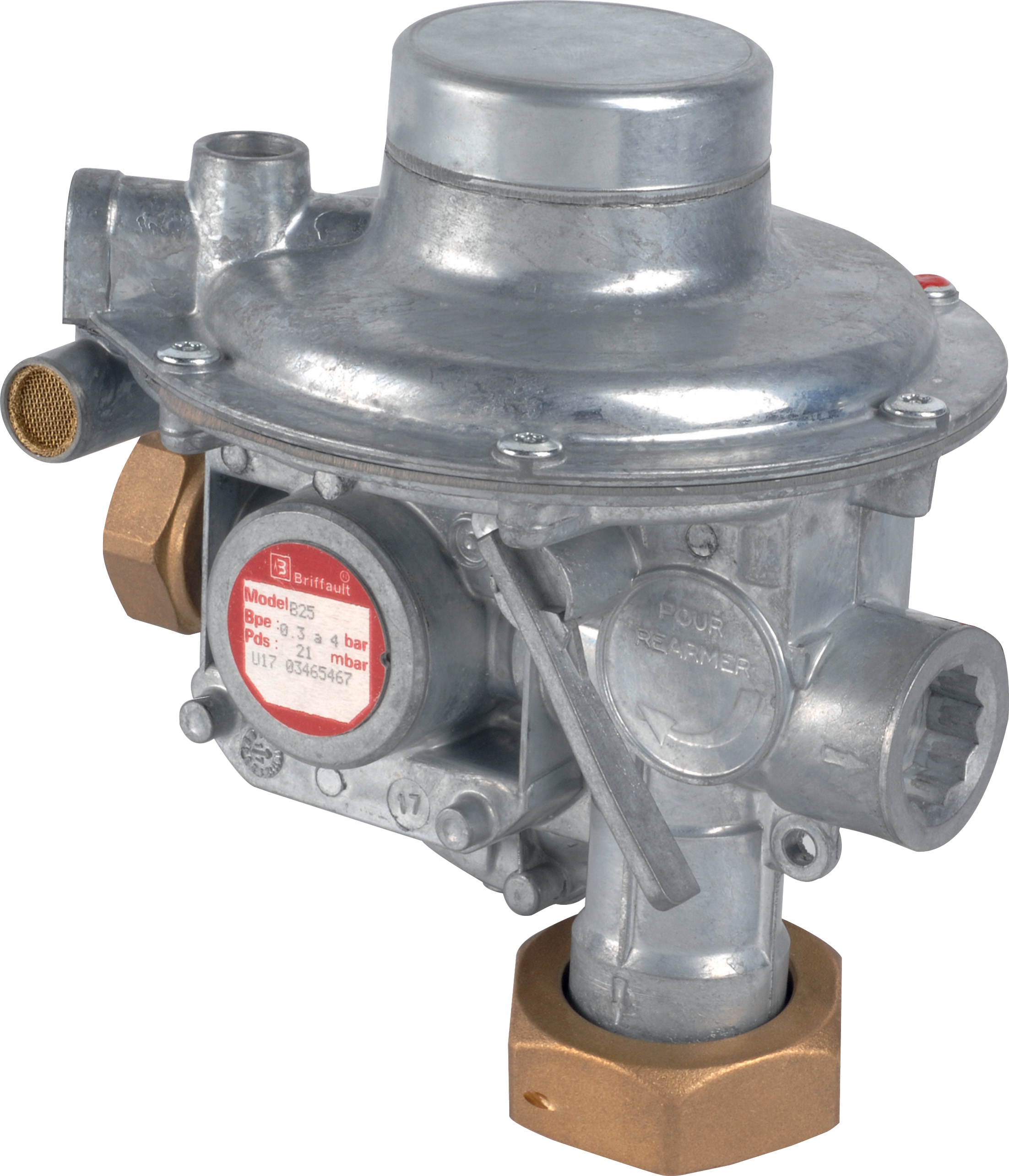
When paired with pressure regulation through systems like the Francel B25/37mb pressure regulator, mid-capacity pumps enable maintenance teams to operate subsystems at different pressure points from a single high-pressure source. This reduces equipment redundancy and simplifies system monitoring.
High-Capacity Industrial Solutions: Consolidated Operations and Production Scaling
When to Transition to High-Capacity Systems
The Pratissoli MW40 represents the upper-capacity range commonly deployed across Southeast Asia's larger manufacturing operations. Operating at 85 kW power input with 211 L/min flow and 210 bar pressure, this system consolidates functions that smaller facilities would distribute across multiple equipment units.
Maintenance teams transition to high-capacity systems when facility operations approach:
- Sustained production volumes requiring 150+ L/min continuous flow
- Multiple simultaneous high-pressure applications (washing, coating, hydraulic power distribution)
- Production facilities planning 3-5 year expansion cycles
- Operations where production line downtime costs exceed $500 USD per hour
Technical Advantages of Consolidated High-Capacity Architecture
The MW40's 211 L/min capacity enables Southeast Asia industrial facilities to consolidate equipment across multiple departments. Rather than maintaining separate pump systems for washing, coating, and hydraulic applications, facilities engineer a single centralized system with intelligent pressure distribution.
Maintenance benefits include:
- Unified monitoring infrastructure: Single vibration sensor, single temperature probe, and single pressure gauge provide visibility across all operations
- Predictive maintenance capability: Consolidated systems generate clearer operational patterns, enabling maintenance teams to identify wear patterns 2-3 weeks before failure
- Reduced commissioning complexity: Single pump requires one certification cycle versus multiple certification processes
- Supply chain optimization: Managing spare parts for one large system often costs less than managing spares for three smaller units
When integrated with spray nozzles like the Euspray flat jet nozzle HP 1/4" M BSPT index 30 angle 25°, high-capacity pumps deliver consistent spray patterns across large washing surfaces or coating applications. The 25° spray angle distributes flow efficiently across facility infrastructure without requiring multiple nozzle positions.
Real-World Southeast Asia Deployment Examples
Malaysia's rubber processing facilities have shifted toward MW40-class systems for continuous product washing and cooling applications. The consolidated architecture reduces operator training requirements and enables better production scheduling. Vietnamese automotive parts suppliers use the MW40 for surface preparation before powder coating, delivering consistent quality across production batches.
Thailand's electronics manufacturing sector increasingly selects high-capacity systems for component cleaning before precision assembly. The operational advantage: maintenance teams can schedule preventive maintenance during planned production downtime rather than reacting to unexpected failures across multiple smaller units.
Comparative Analysis: Maintenance Burden and Capital Efficiency
Cost-Benefit Analysis Across Equipment Scales
When maintenance teams evaluate equipment scaling decisions, three primary variables determine financial outcomes:
Initial Capital Investment
- Compact systems (Interpump E1D1808 L): $2,800-3,500 USD
- Mid-capacity systems (Pratissoli KF30): $8,500-11,000 USD
- High-capacity systems (Pratissoli MW40): $18,000-24,000 USD
- Compact systems: $1,200-1,800 annually (seal replacements, filters, minimal energy draw)
- Mid-capacity systems: $1,500-2,200 annually (proportional maintenance with better efficiency)
- High-capacity systems: $2,000-2,800 annually (more complex seals, integrated cooling systems)
- Compact systems allow independent circuit operation but create departmental silos
- Mid-capacity systems enable modest load-sharing across 2-3 simultaneous applications
- High-capacity systems consolidate all operations under unified control, enabling intelligent load prioritization
Making the Scaling Decision: Framework for Southeast Asia Facilities
Maintenance teams should evaluate scaling decisions using this framework:
Remain at compact equipment level if:
- Current production exceeds demands by less than 30%
- Facility operates 40 or fewer hours weekly at full pressure
- Multiple independent production lines operate on separate schedules
- Capital equipment budgets remain constrained
- Production demands exceed current equipment by 40-80%
- Facilities operate 50+ hours weekly with sustained pressure requirements
- Two or more production stages require simultaneous high-pressure operation
- Energy efficiency improvements offset capital investment within 3-4 years
- Production facilities planning facility-wide expansion
- Operations requiring 150+ L/min sustained flow capacity
- Environments where production downtime costs exceed equipment maintenance investment
- Facilities consolidating equipment from multiple suppliers to standardize maintenance
Integration and Maintenance Strategy for Scaled Systems
Regardless of capacity selection, maintenance teams must implement supporting infrastructure. Pressure regulation components like the Francel B25/37mb with integrated safety relief enable mid-capacity and high-capacity systems to serve diverse subsystems at different pressure points. The 37 mbar outlet pressure with 10 mm vent size accommodates lighter secondary circuits while main systems operate at full 200-210 bar.
Spray application systems require consistent nozzle selection. The Euspray flat jet nozzle with 1/4" M BSPT connection integrates across all pump sizes, ensuring standardized spare parts inventory. This simplifies technician training—your maintenance team learns single nozzle geometry and application patterns regardless of whether subsystems operate from KF30 or MW40 pump units.
3G Electric's 35+ years experience distributing Pratissoli, Interpump, Francel, and Euspray products across Southeast Asia demonstrates a consistent principle: equipment scaling succeeds when maintenance teams plan component compatibility before facility expansion occurs. By selecting modular systems that grow alongside production demands, facilities minimize transition costs and maintain equipment reliability through scaling cycles.
Regional distribution centers in Singapore, Bangkok, and Ho Chi Minh City maintain integrated inventory supporting this scaling framework—enabling maintenance teams to upgrade from compact to mid-capacity systems or expand mid-capacity operations to high-capacity consolidated architecture without extended lead times.