Comprehensive Controls & Safety Guide for Industrial Burners in Singapore: Technical Selection and Implementation Standards
Industrial gas burner controls and safety systems represent the critical backbone of modern combustion equipment. For HVAC contractors and installers operating in Singapore, understanding the technical architecture, regulatory compliance frameworks, and proper equipment selection is essential for safe, efficient system deployment. This comprehensive guide covers the complete spectrum of burner control technologies, from basic pressure switches and flame detection to advanced relay systems and modulating controls, with specific focus on Singapore's industrial standards and the practical requirements of contemporary heating installations.
Understanding the Role of Controls & Safety Systems in Industrial Combustion
Controls and safety systems in industrial burners serve three fundamental functions: they initiate and regulate combustion, monitor flame presence and stability, and execute emergency shutdown procedures when abnormal conditions are detected. Modern industrial installations in Singapore increasingly demand sophisticated control architectures that combine multiple safety layers, redundant monitoring systems, and compliance with international standards including EN 746-2, EN 676, and EN 1854.
The architecture of a complete burner control system typically consists of five integrated components. The ignition module initiates the combustion sequence through electric spark or hot surface ignition. The flame detection system continuously monitors flame presence using ionization, ultraviolet, or infrared sensing technology. The pressure control network manages gas supply pressure, air pressure differential, and pilot pressure through mechanical and electronic pressure switches. The modulating control system (in advanced applications) adjusts fuel and air flow to maintain setpoint conditions across varying load demands. Finally, the safety interlock system ensures that sequence faults, flame loss, or pressure anomalies trigger immediate shutdown of the gas supply through solenoid valve actuation.
Understanding these functional layers is critical because each layer depends on proper integration with the others. A pressure switch failure, for example, can mask ignition problems or prevent proper flame monitoring. Similarly, poor flame detection circuit design can result in nuisance lockouts that reduce system availability. For Singapore contractors, familiarity with these interaction points enables faster troubleshooting, more reliable installations, and improved customer satisfaction.
Regulatory compliance in Singapore requires adherence to standards established by the Singapore Standards Council, which aligns closely with European and international norms. The PSA (Professional Engineers Board) requires that installations meet EN 746-2 for automatic gas burner control systems and EN 676 for safety control devices. Additionally, installations must comply with the Building and Construction Authority (BCA) requirements and the Singapore Standards SS 638 for gas safety.
Technical Architecture and Key Component Selection for Singapore Installations
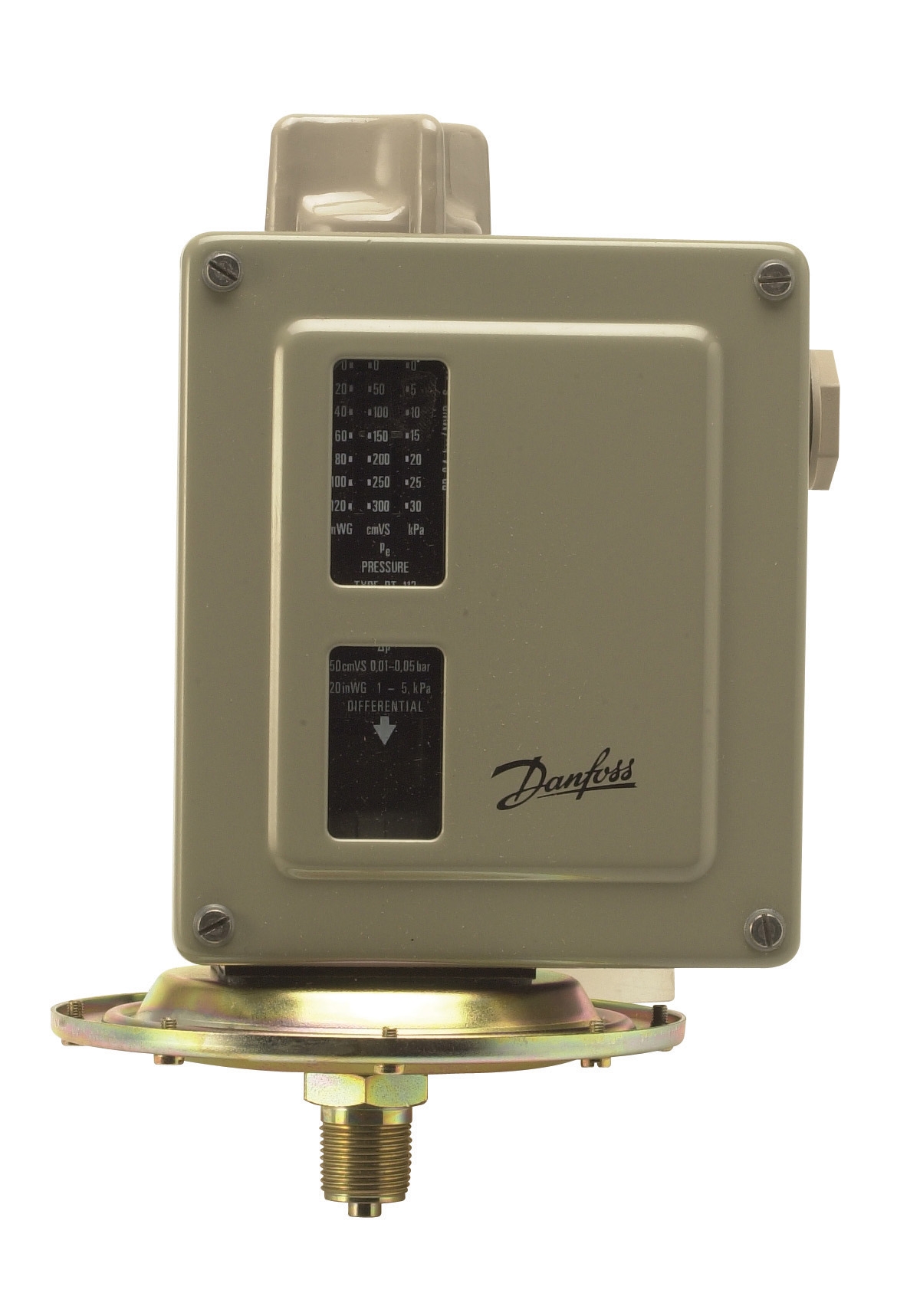
Pressure switches form the foundation of burner control safety, providing binary switching signals based on pressure thresholds. The Danfoss Pressure Switch RT 5 represents an industrial-grade solution engineered for diverse applications. This switch features unipolar changeover contacts with pressure-commanded operation principles, making it suitable for monitoring gas supply pressure, pilot pressure, and air pressure differential. The RT 5 series offers multiple pressure ranges: the RT110 variant handles 0.2–3 bar ranges typical of pilot circuits, the RT116 covers 1–10 bar for main gas supply pressure, and the RT117 extends to 10–30 bar for compressed air monitoring in forced-draft burners. For Singapore's tropical climate and variable seasonal loading patterns, the RT 5's robust construction and reliable contact switching ensure consistent performance across extended temperature ranges.
For critical safety applications requiring higher integrity levels, the Kromschroder Pressure Switch DG 50U/6 provides SIL 3 (Safety Integrity Level 3) and Performance Level e certification. This component exceeds standard safety requirements and is certified to EN 1854, FM, UL, AGA, and GOST-TR standards. The DG 50U/6 is specifically engineered for burner control applications where safety criticality demands redundant contact configurations and proven failure-safe operation. The SIL 3 rating means the component can be deployed in safety chains protecting systems up to SIL 3 functional requirements—a critical consideration for large-scale industrial installations, district heating systems, or applications serving critical infrastructure.
Flame detection represents the second critical safety layer in modern burners. The Siemens Cell QRB4B-B050B70A provides yellow flame detection specifically engineered for oil burner flame monitoring in intermittent duty applications. This cell uses two-wire thermoplastic-insulated cabling and offers both front-facing and 90° side-facing viewing directions for flexible mounting configurations. With ISO 9001:2015 certification and Eurasian Conformity (EAC) compliance, this component is validated for harsh industrial environments. The QRB4 cell's rectification-based flame detection principle provides inherent immunity to random electrical noise and UV interference, making it particularly suitable for Singapore's high-humidity industrial environment where corrosion and electrical noise can be significant concerns.
Burner control relays integrate multiple functions—ignition control, flame monitoring, safety lockout logic, and auxiliary contact switching—into unified electronic modules. The Brahma Relay CM 31 TW30/TS10 exemplifies modern control architecture for atmospheric and fan-assisted burners in intermittent operation mode. This EUROFLA T Series control system incorporates a solid-state, high-efficiency ignition device with built-in EMI filtering, non-volatile lockout requiring manual reset on safety trips, and two independent safety contacts in series on the gas valve output for redundant shutdown capability. The ionization-based flame monitoring principle provides fast response to flame loss conditions—critical for maintaining the safe operating envelope. CE certification (EC Type certification N° 63AQ0625) ensures compatibility with Singapore's alignment to European safety standards.
For unlimited power modulating burners requiring direct ignition or pilot ignition modes, the Kromschroder Relay BCU 570WC1F1U0K1-E delivers advanced functionality compliant with EN 746-2 and EN 676. This burner control relay supports both direct ignition and intermittent/continuous pilot ignition sequences, with optional bus module integration for networked burner systems. The BCU 570 series represents the current generation of modulating burner controls, enabling proportional fuel and air adjustments to maintain constant temperature setpoints across load variation—a requirement for modern district heating, combined heat and power (CHP), and industrial process heating applications common in Singapore's manufacturing sector.
Practical Implementation and System Integration Examples for Singapore HVAC Contractors
A typical medium-scale commercial heating installation in Singapore incorporating these components might follow this architecture: A natural gas supply enters a pressure regulator maintaining 15 mbar delivery pressure to the burner. A Danfoss RT 5 pressure switch (RT110 variant set to 10 mbar) monitors pilot pressure upstream of the pilot burner. If pilot pressure drops below 10 mbar, the pressure switch opens its normally-closed contact, signaling a pilot circuit failure to the control relay and triggering immediate main gas valve shutdown. Simultaneously, a second pressure switch monitors main gas pressure at 25 mbar setpoint to ensure adequate supply pressure for stable combustion.
When the system receives a call for heat from the thermostat, the Brahma CM 31 relay energizes the spark ignition module to light the pilot burner. Within 3 seconds, the ionization flame detection circuit must sense pilot flame through rectification of the gas flame—a characteristic property of all hydrocarbon flames. Once pilot flame is confirmed, the relay closes a contact energizing the main gas solenoid valve, allowing main burner ignition from the established pilot flame. Throughout this sequence, the relay continuously monitors flame detection and pressure conditions. If either signal fails, non-volatile lockout engages, requiring manual reset of the relay to attempt a new ignition cycle. This manual reset requirement prevents wasteful ignition attempts and alerts service personnel to underlying system problems.
For a larger industrial installation with modulating capacity, the Kromschroder BCU 570 enables proportional burner operation. As load demand varies, the control relay adjusts fuel and air flow rates to maintain constant outlet temperature. An optional bus module allows networked communication with building management systems (BMS), enabling remote monitoring, historical logging, and predictive maintenance features increasingly required by Singapore building standards and energy efficiency regulations.
Real-world Singapore applications demonstrate these principles consistently. A district heating network in the Central Business District replaced aging pneumatic burner controls with modern electronic controls incorporating dual pressure switches and SIL-rated components, reducing maintenance calls by 40% and improving response time to load changes from 8 minutes to 90 seconds. A food processing facility in Jurong upgraded from single-stage burner controls to modulating systems, achieving 12% natural gas savings while maintaining ±2°C temperature stability across process steam demands.
Selection Criteria and Best Practice Standards for Singapore Operations
Safety Integrity Level (SIL) Assessment: For applications with high consequences of failure (large buildings, hospitals, industrial processes involving hazardous materials), specify SIL-rated components like the Kromschroder DG 50U/6 that provide documented failure rates and proven safe design. For standard commercial applications, SIL 1 or SIL 2 components provide appropriate safety margins at lower cost.
Pressure Range Matching: Precise pressure range selection is critical. The Danfoss RT 5 offers five distinct pressure ranges (RT110 through RT117) specifically engineered for different circuit functions. Oversizing pressure switches (selecting a 10 bar switch for a 3 bar application) reduces sensitivity and can mask slow pressure drifts. Undersizing (selecting a 1 bar switch for a 5 bar application) risks nuisance trips from normal operating fluctuations.
Flame Detection Compatibility: Ensure flame detection technology matches burner type. Oil burners require yellow flame detection (like the Siemens QRB4B-B050B70A). Gas burners typically use ionization detection (like the Brahma CM 31). UV detection suits multi-fuel applications but requires proper optical access.
Response Time Requirements: Modern safety standards require flame loss detection within 3 seconds maximum. Verify that all components in the detection chain—sensor, amplifier, relay logic, and solenoid valve—meet this response window cumulatively.
CE and Singapore Compliance Verification: All controls imported into Singapore should carry EC-type certification and comply with EN 746-2, EN 676, and EN 1854. Verify that suppliers provide Declaration of Conformity (DoC) documentation and technical certificates confirming compliance status.
Installation Environment Considerations: Singapore's high humidity, salt-air environment (especially near coastal industrial areas), and temperature ranges (24–35°C year-round with peak heat stress in enclosed plant rooms) demand components with corrosion-resistant construction, extended humidity ratings (minimum 95% RH capability), and proven durability. Components specified for tropical climates should have tropical-grade certifications.
Comparative Selection Table: Pressure Switch and Control Relay Options
| Component Type | Product Reference | Application Scope | Safety Rating | Singapore Suitability |
|---|---|---|---|---|
| Pressure Switch | Danfoss RT 5 | Pilot, main, & differential pressure monitoring across 0.1–30 bar | Industrial-grade, SIL 1 compatible | Excellent for commercial installations; proven tropical reliability |
| Pressure Switch | Kromschroder DG 50U/6 | Safety-critical burner control applications | SIL 3, PL e certified | Ideal for large-scale installations, critical infrastructure, redundant safety chains |
| Flame Detection Cell | Siemens QRB4B-B050B70A | Oil burner flame monitoring, intermittent duty | EAC, OHSAS 18001:2007 certified | Excellent for humid environments; two-wire design simplifies installation |
| Control Relay | Brahma CM 31 TW30/TS10 | Atmospheric & fan-assisted burners, intermittent operation, small-to-medium scale | CE Type certified, non-volatile lockout | Ideal for commercial HVAC, boiler plants; solid ignition design eliminates transformer wear |
| Control Relay | Kromschroder BCU 570WC1F1U0K1-E | Unlimited power modulating burners, direct or pilot ignition | EN 746-2 & EN 676 compliant | Premium choice for district heating, CHP, industrial process heating with load modulation |
This comparison illustrates that component selection in Singapore should be driven by application scope (intermittent vs. modulating operation), safety requirements (SIL ratings for critical applications), and system scale (pilot burners vs. unlimited power). The Danfoss RT 5 pressure switch dominates commercial applications due to its versatile pressure ranges and proven reliability. The Kromschroder DG 50U/6 serves high-integrity applications where SIL 3 certification is contractually or operationally mandated. For control relays, the Brahma CM 31 suits traditional intermittent burner systems, while the Kromschroder BCU 570 is essential for modern modulating applications demanding proportional fuel adjustment and BMS integration.
Regulatory Compliance and Maintenance Standards for Singapore
Singapore's regulatory framework for industrial gas burner controls is primarily administered through the Building and Construction Authority (BCA) under the Building Code, the Ministry of Manpower (MOM) through the Workplace Safety and Health Act, and adoption of international standards. All burner control systems must be designed, installed, and maintained in accordance with:
- EN 746-2: Automatic burner control systems (Germany/EU standard, adopted in Singapore)
- EN 676: Safety devices for burner and combustion appliances
- EN 1854: Safety devices for gas appliances—Performance and competence requirements
- Singapore Standards SS 638: Code of practice for gas installation
- PUB Technical Code: Gas supply safety requirements for low-pressure gas installations
All components must be CE-marked (for imported European products) or carry equivalent third-party certification. Installations must be certified by Professional Engineers licensed under the Professional Engineers Act. Routine maintenance (typically annual for commercial systems) must be documented and performed by qualified service providers. The maintenance schedule should include pressure switch calibration verification, flame detection cell optical cleaning (critical in dusty industrial environments), relay contact inspection and testing, and complete safety circuit function testing under simulated failure conditions.
Conclusion and Next Steps for Singapore HVAC Contractors
Mastering controls and safety system selection, installation, and maintenance is essential for HVAC contractors operating in Singapore's demanding industrial environment. Understanding the functional roles of pressure switches like the Danfoss RT 5 and Kromschroder DG 50U/6, flame detection technologies exemplified by the Siemens QRB4B-B050B70A, and control relays such as the Brahma CM 31 TW30/TS10 and Kromschroder BCU 570 enables faster troubleshooting, more reliable installations, and improved compliance with Singapore's regulatory framework. Applying selection criteria aligned with application scope (intermittent vs. modulating), safety requirements (SIL ratings), and system scale ensures optimal performance and customer satisfaction.
The rapid evolution of smart building technologies and industry 4.0 integration means that modern burner controls increasingly incorporate BMS connectivity, remote diagnostics, and predictive maintenance capabilities. Contractors who develop expertise in these advanced systems will be well-positioned for future growth as Singapore's industrial sector continues to adopt energy-efficient, intelligent thermal systems.
3G Electric has served Singapore's HVAC and industrial equipment community since 1990. Our expert team provides comprehensive selection support, technical documentation, and ongoing application engineering for all controls and safety components. Whether you're specifying pressure switches for a new commercial boiler installation, upgrading flame detection in an existing industrial burner, or designing a complete modulating burner control system for district heating, our technical specialists are ready to ensure your projects meet Singapore's exacting safety and performance standards. Explore our complete controls and safety inventory or contact our technical team today for detailed product guidance and project-specific recommendations.