Understanding Burners & Combustion Safety Interlock Systems
Burners & Combustion systems in industrial applications rely on sophisticated safety interlocks to prevent dangerous operating conditions. These interlocks monitor fuel pressure, air supply, flame presence, and control system readiness before and during combustion. When an interlock fails or responds incorrectly, the entire burner system enters a lockout state—a critical safety feature that prevents unburned fuel accumulation and potential explosions.
At 3G Electric, with over 35 years of experience distributing industrial equipment across Asia-Pacific, we've observed that 40-50% of unplanned burner shutdowns stem from interlock faults rather than primary combustion component failures. Understanding these systems is essential for maintenance teams, plant engineers, and operations managers.
The primary components of a combustion safety interlock system include:
- Safety control relays that monitor flame detection signals
- Pressure switches that verify fuel and air supply conditions
- Solenoid pilot valves that cut fuel on demand
- Fuel shut-off solenoids for main burner fuel isolation
- Air pressure proving switches that ensure adequate combustion air
Each component must function within strict timing windows. A delay of just 100-200 milliseconds in the wrong place can trigger a safety lockout.
Diagnosing Pressure Switch Failures in Fuel and Air Supply Lines
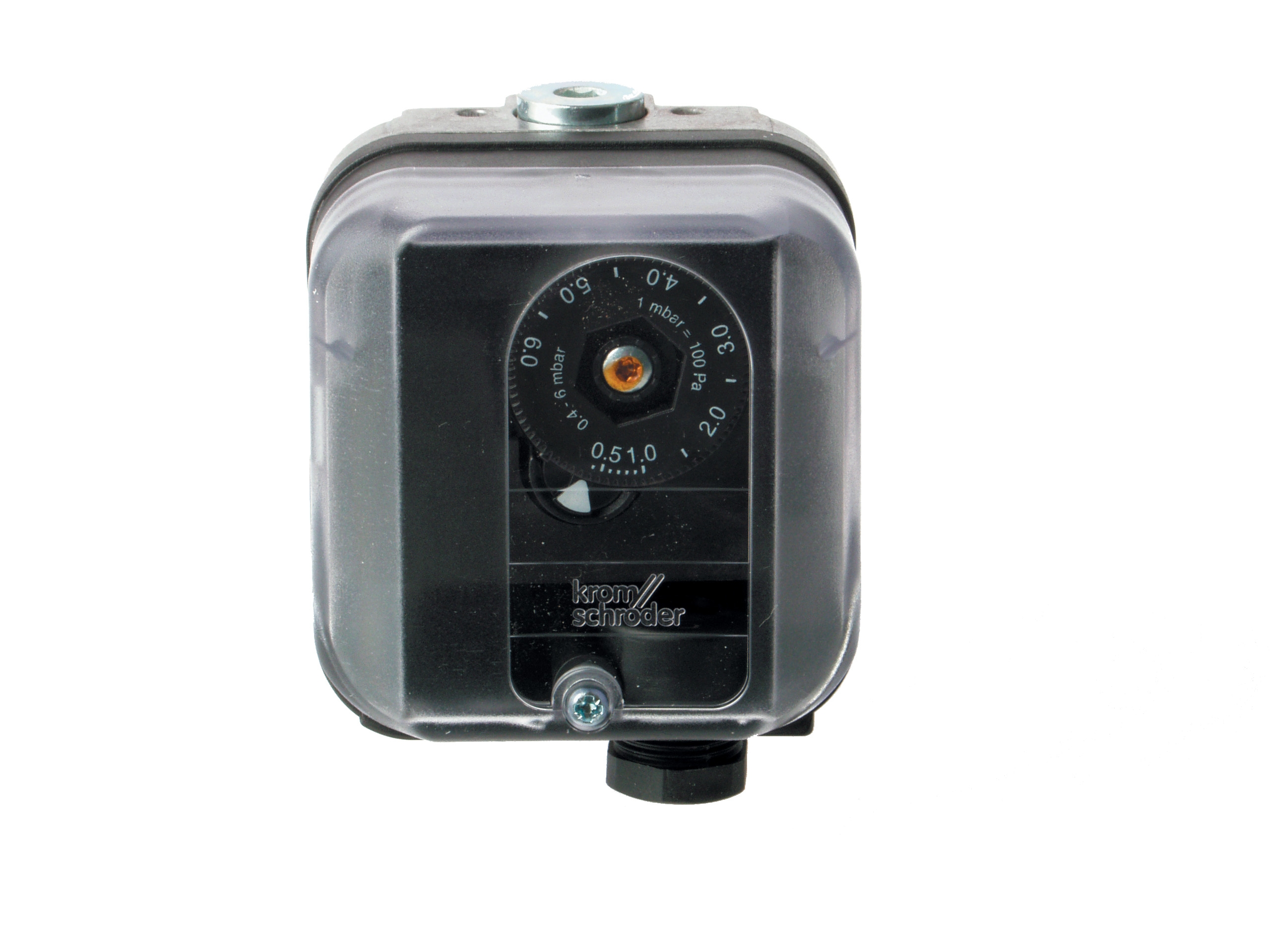
Pressure switches are the primary sensors feeding data to safety relays. The Kromschroder DG 50U/6 pressure switch is widely deployed in Singapore industrial facilities for precisely this role. This SIL 3-rated device monitors fuel line pressure with high reliability, but failures are common due to:
Mechanical Wear and Contamination
Fuel systems accumulate particulates over time. Dirt, rust particles, and water droplets can lodge in the pressure switch diaphragm, preventing smooth movement. This causes the switch contact to stick in the open or closed position.
Diagnostic steps:
1. Isolate the burner and de-pressurize the fuel line
2. Disconnect the pressure switch from its port
3. Apply controlled air pressure (2-5 bar) to observe contact closure
4. Listen for an audible "click" at the switching point
5. If no click occurs, the internal diaphragm or spring mechanism requires replacement
Water ingress is particularly problematic in Singapore's humid climate. Condensation accumulates in fuel tank headspace and migrates through fuel lines. When water reaches the pressure switch, it causes corrosion on the internal contact surfaces, creating high resistance that prevents reliable signal transmission to the safety relay.
Remedial action: Install fuel line strainers with 10-micron elements upstream of all pressure switches. Implement quarterly fuel tank bottom drain procedures to remove settled water and sediment.
Set Point Drift and Calibration Loss
Pressure switches must close at exact thresholds—typically 0.5-1.5 bar for pilot fuel and 3-8 bar for main burner fuel, depending on burner type. A drift of just ±0.3 bar can cause intermittent interlock faults.
Diagnostic procedure:
1. Connect a calibrated pressure gauge (±2% accuracy) to the fuel line
2. Slowly increase fuel pressure from zero
3. Measure the pressure at which the switch contact closes (make point)
4. Continue increasing pressure and measure where the contact opens (break point)
5. Compare to the manufacturer's specification (marked on the switch body)
6. If deviation exceeds ±0.2 bar, the switch requires factory recalibration or replacement
Set point drift typically occurs over 3-5 years due to spring fatigue and material creep. In aggressive fuel environments (heavy oil burners), degradation accelerates.
Safety Relay Interlock Logic and Fault Diagnosis
The Kromschroder BCU 570WC1F1U0K1-E relay serves as the decision-making brain for burner safety. This device evaluates signals from multiple sensors and executes predetermined logic sequences. Understanding its timing windows is essential for troubleshooting.
Standard Interlock Sequence for Gas Burners
A typical safe start sequence requires:
1. Air purge phase (5-10 seconds): Fan runs with main fuel solenoid de-energized. Air pressure switch confirms adequate fan speed.
2. Pilot ignition phase (2-5 seconds): Pilot solenoid energizes, pilot fuel flow begins, and ignition source activates (spark or hot surface igniter).
3. Pilot flame detection phase (2-3 seconds): UV or ionization flame detector must sense pilot flame presence. If no flame detected, relay aborts start and enters lockout.
4. Main fuel opening phase (0.5-1 second): If pilot flame confirmed, main fuel solenoid energizes.
5. Main flame confirmation (2-3 seconds): Flame detector re-confirms flame presence on main burner.
6. Running state: Relay maintains energized condition as long as flame and pressure signals remain valid.
Identifying Interlock Lockouts
When a safety relay enters lockout, it typically cuts power to both pilot and main fuel solenoids simultaneously. The burner will not restart until the fault is cleared and manual reset is performed (or auto-reset timer expires).
Common lockout causes:
- Pilot flame dropout during main fuel opening: Flame detector loses signal for >500ms during fuel transition. This indicates inadequate pilot air, contaminated nozzle, or flame detector misalignment.
Troubleshooting: Check pilot air shutter position (should be fully open), clean pilot nozzle with low-pressure air, verify flame detector lens is clean and not fouled by combustion byproducts.
- Air pressure switch failure during purge: Fan runs but pressure switch contact remains open, preventing logic progression to pilot ignition phase.
Troubleshooting: Verify fan rotation direction and speed. Air pressure switches typically require 0.3-0.5 bar minimum to close. Low speed indicates fan fouling, belt slippage, or bearing wear. Measure fan outlet pressure with gauze pad technique.
- Fuel pressure switch fails during start sequence: Main fuel solenoid energizes but pressure switch detects insufficient fuel pressure (burner line blockage, pump failure, or regulator malfunction).
Troubleshooting: Inspect fuel filter element for saturation. Manually vent fuel line to bleed air. Check fuel pump discharge pressure at source. Verify fuel shutoff solenoid pilot port is not clogged.
Relay Response Time Verification
Safety relays must respond to sensor faults within defined windows (typically 100-200ms). Slow response or failure to respond indicates internal relay failure.
Test procedure:
1. Locate the relay's manual reset button or lever
2. Press and hold a sensor input (e.g., pull the flame detector connector momentarily)
3. The relay should immediately cut fuel solenoid power (audible "click")
4. If relay requires >300ms to respond, the internal electronics are degraded and replacement is necessary
Practical Troubleshooting Workflow for Singapore Industrial Facilities
When a burner system exhibits intermittent faults or repeated lockouts, follow this systematic approach:
Step 1: Gather Historical Data
Request burner control system logs from your automation system. Modern burners log timestamp, duration, and fault code for each lockout. Identify patterns:
- Do lockouts occur at specific times (morning cold start, high ambient temperature)?
- Is the fault always at the same point in the start sequence?
- Does the problem worsen over weeks or months (gradual degradation) or appear suddenly (catastrophic failure)?
Step 2: Visual Inspection of Control Components
Examine the safety relay and pressure switches for:
- Corrosion or oxidation on connector pins (indicates moisture ingress)
- Fuel residue buildup on pressure switch ports (sign of fuel seepage or micro-leaks)
- Loose or disconnected wiring between relay, sensors, and solenoids
- Burnt or discolored relay housing (indicates electrical overstress)
Step 3: Pressure and Electrical Diagnostics
Using a multimeter and pressure gauge:
1. Measure voltage across pilot and main fuel solenoid coils during a start attempt. Both should show 12V DC (or 24V depending on system) during their respective phases. No voltage indicates relay failure; low voltage (<9V) indicates wiring resistance or power supply degradation.
2. Measure fuel supply pressure at source (pump discharge), at pilot solenoid inlet, and at main burner fuel inlet. Pressure drops >0.5 bar between points indicate line blockage or regulator malfunction.
3. Test pressure switch continuity: Disconnect the switch and measure resistance with a multimeter. At atmospheric pressure, the switch should read "open" (high resistance >1MΩ). Apply controlled pressure above the set point; resistance should drop to <10Ω (electrical continuity).
Step 4: Flame Detector and Sensor Verification
Flame detectors (UV or ionization types) are the most frequently blamed components but are actually reliable. Faults typically stem from:
- Fouled detector window: Combustion byproducts and soot accumulate on the UV tube envelope or ionization electrode. Clean with soft dry cloth and ethanol.
- Misalignment: Detector positioned outside the main flame envelope. Reposition to achieve full flame view.
- Contaminated fuel: High sulfur or aromatic hydrocarbons in fuel create soot that fouls detectors rapidly. Request fuel analysis from supplier.
For the Siemens LFL 1.622 relay used with dual-fuel burners, both UV and ionization flame detection paths must be validated. Test each independently by covering/exposing the detector to flame.
Step 5: Component Replacement Priority
If diagnostics narrow the fault to a specific component, replace in this order:
1. Pressure switches (lowest cost, highest failure rate): Kromschroder DG 50U/6 for fuel line applications
2. Solenoid coils (coil failure is common; valve body often reusable)
3. Safety relay (only after confirming other components)
4. Fuel/air nozzles (if flame quality is poor despite fuel/air flow confirmation)
Preventive Maintenance Schedule for Burner Interlock Systems
Based on 3G Electric's experience with industrial burners across Asia-Pacific, implement this maintenance schedule:
Monthly:
- Visual inspection of relay and pressure switch connections
- Verify burner achieves stable flame within 5 seconds of start
- Confirm fuel shutoff response time is <1 second on demand
- Clean pressure switch ports with low-pressure air
- Verify pilot flame stability and color (should be blue without yellow tips)
- Drain 2-3 liters from fuel tank bottom to remove settled water
- Replace fuel line strainer element
- Calibrate pressure switches against certified gauge
- Test flame detector response with temporary flame obstruction
- Factory recalibration of all pressure switches
- Replace any corroded pressure switch or solenoid coils
- Full system test sequence under load conditions
By maintaining these interlocks and pressure switches to specification, Singapore industrial operations can achieve >99% burner availability while maintaining the highest safety standards required by MSS, IDA, and international standards (EN 746-2, EN 676).