Understanding Burners & Combustion: Fuel Quality and Temperature Stability
Burners & Combustion systems in Singapore's industrial sector face unique environmental and operational challenges—tropical humidity, variable fuel quality from regional suppliers, and year-round high ambient temperatures all impact combustion efficiency and equipment longevity. Over 35 years of equipment distribution experience, 3G Electric has observed that fuel quality degradation and unstable combustion temperatures rank among the highest sources of burner failures and performance loss in Southeast Asian plants.
Unlike electrical control failures or flame detection issues addressed in other troubleshooting guides, fuel quality and combustion temperature management require systematic preventive analysis and real-time monitoring strategies. Procurement engineers often inherit burner systems without complete fuel supply documentation or temperature baseline records, making root-cause diagnosis difficult. This guide provides actionable procedures to identify fuel-related combustion problems, establish performance baselines, and implement cost-effective corrective measures.
Section 1: Diagnosing Fuel Quality Problems and Their Combustion Impact
Fuel Contamination Pathways in Tropical Climates
Singapore's high humidity (75–90%) and temperature fluctuations (24–35°C) accelerate fuel degradation in storage and distribution. Three primary contamination sources affect burner performance:
Water and Microbial Growth
- Condensation in fuel storage tanks and fuel lines introduces free and emulsified water
- Water reduces fuel calorific value and promotes microbial (bacterial and fungal) growth in tank bottoms
- Microbial colonies produce acidic byproducts, corroding fuel system components and creating sludge deposits
- Sludge clogs fuel nozzles, causing incomplete atomization and flame instability
- Extended storage in tropical humidity causes fuel oxidation, forming gum and varnish
- Dust ingress from broken tank vent filters and corroded filling ports introduces abrasive particles
- Particles accumulate on fuel nozzle tips, restricting fuel flow and distorting spray patterns
- Oxidized fuel has higher viscosity, requiring elevated nozzle pressure and producing uncontrolled combustion
- Regional heavy fuel oils (HFO) contain 1.5–3.5% sulfur depending on supplier and refinery origin
- During combustion, sulfur converts to sulfur dioxide and trioxide, forming sulfuric acid in cooler furnace zones
- Acid corrosion attacks burner castings, burner tubes, and heat exchanger surfaces
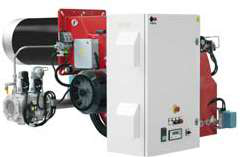
- For dual-fuel systems like the FBR KN 1300/M TL EL, inadequate fuel switchover can trap viscous HFO in gas fuel lines, degrading control precision
Diagnostic Procedures for Fuel Quality
Visual and Sensory Tests
1. Extract 500 ml fuel samples from the lowest point of main storage tank and backup fuel skid
2. Observe color (new diesel: pale yellow; degraded: dark brown/black indicating oxidation)
3. Check for suspended particles, sludge layer, or cloudy appearance (water or microbial contamination)
4. Smell sample for rancid/acidic odor (microbial activity) or overly petroleum smell (oxidation)
5. Document findings and compare against supplier certificates of analysis
Laboratory Testing (Recommended Quarterly)
- Fuel viscosity at 40°C: Measure using ASTM D445. If viscosity increases >10% from baseline, oxidation is occurring; if viscosity decreases with water presence, water has been absorbed
- Water content (Karl Fischer method): Fuel should contain <500 ppm water. Levels above 1000 ppm indicate condensation issues or microbial growth
- Total acid number (TAN): Values above 2.0 mg KOH/g indicate corrosive oxidation products; request fuel replacement or implement acid scavenging additives
- Sulfur content (ASTM D4294): Verify supplier claims; Singapore permitted levels vary by industrial class
- Particulate count (ISO 4406 code): Target 16/14/11 or better; higher codes indicate filtration failure
1. Inspect fuel storage tank: Check vent filter condition (should be dry silica gel); look for rust, corrosion pitting, or water stains inside walls
2. Test fuel line filters: Compare pressure drop across primary and secondary fuel filters using a calibrated gauge. Primary filter pressure drop >0.5 bar at normal flow indicates clogging; secondary >0.3 bar suggests sludge accumulation
3. Fuel flow measurement: At burner inlet, measure actual fuel flow using an in-line turbine or positive displacement meter. Compare against design specification (e.g., 60 kg/h for 630 kW burner). Flow reduction >5% from baseline indicates nozzle restriction or fuel system leakage
4. Fuel temperature at burner: For HFO systems, measure temperature at fuel inlet to the burner. Most HFO burners require 40–50°C for proper atomization. Below 38°C, viscosity increases and atomization becomes coarse; above 55°C, fuel degrades rapidly and nozzle deposits form
Section 2: Combustion Temperature Diagnosis and Optimization
Temperature Measurement Locations and Baseline Establishment
Unstable or elevated combustion temperatures indicate incomplete fuel-air mixing, poor atomization, or excess oxygen. Procurement engineers should establish temperature baselines during initial commissioning or after major maintenance.
Primary Measurement Points
1. Furnace exit temperature (FET): Measure using a Type K thermocouple in the main combustion chamber, 200–300 mm downstream of the burner nose. Record readings every 30 seconds for 10 minutes during steady-state operation. Baseline stable operation: ±5°C variation. Fluctuations >10°C indicate flame instability or fuel feed problems
2. Flue gas temperature: Measure at the chimney or economizer inlet using a calibrated pyrometer. For typical industrial heating: 150–250°C. Excessively high temperatures (>300°C) indicate excess combustion air, poor furnace insulation, or fuel-rich flame causing visible smoke
3. Air inlet temperature: Record ambient air temperature and inlet air temperature to the burner air fan. Temperature rise >5°C above ambient before the burner suggests inadequate ventilation or fan housing corrosion restricting airflow
Diagnosing Temperature Instability
Symptom: Combustion temperature oscillates ±15°C or more
Possible Causes and Diagnostics
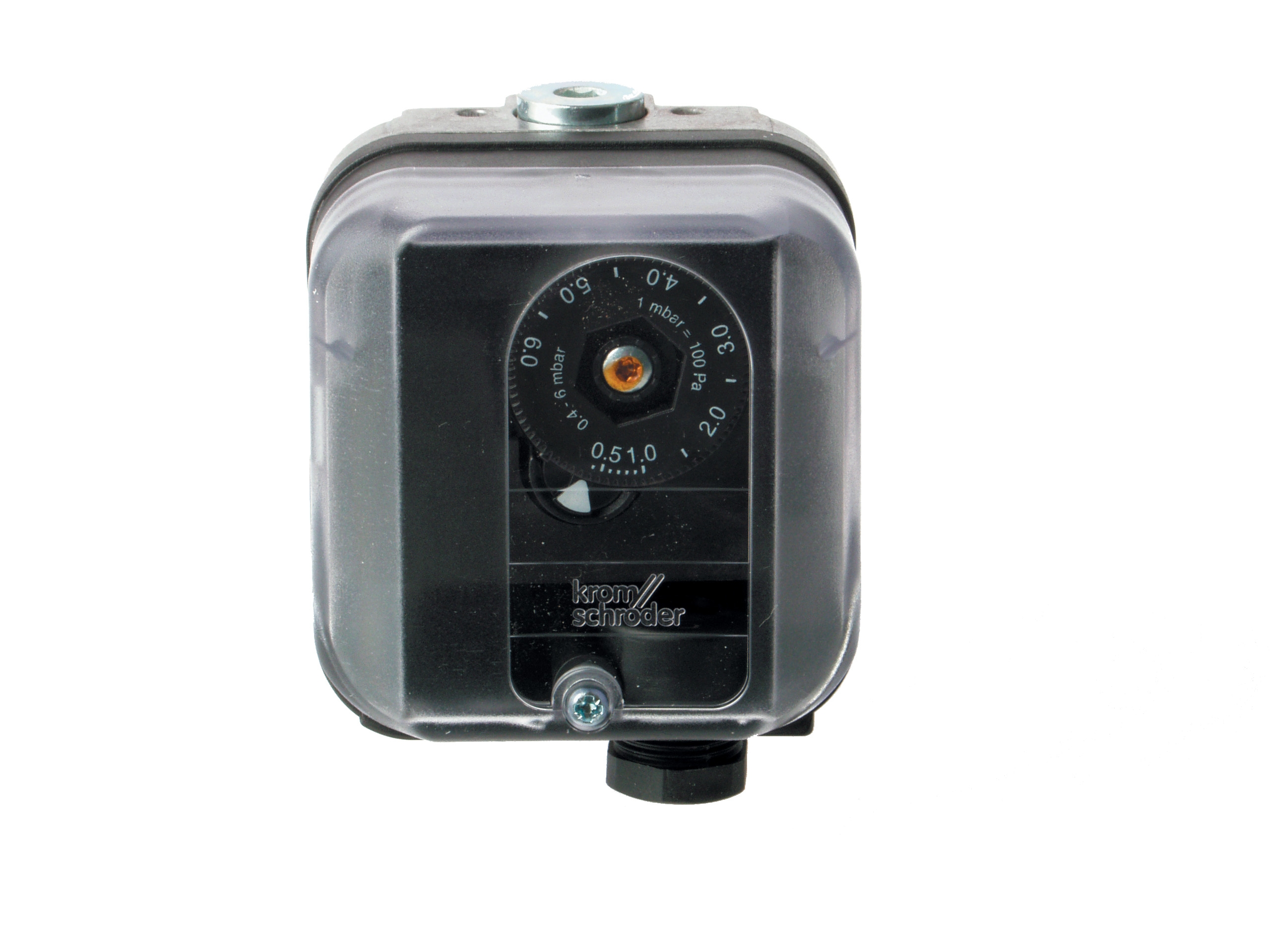
- Fuel feed rate fluctuation: Check fuel pump discharge pressure. Use a digital pressure gauge to measure pressure at 30-second intervals. Acceptable variance: ±0.5 bar. If pressure oscillates >1 bar, suspect fuel pump cavitation (air ingress), failing accumulator, or clogged fuel line. For burners equipped with Kromschroder DG 50U/6 pressure switch, verify sensor calibration by manually applying pressure to the test port; switch should toggle at rated setpoint ±0.1 bar
- Combustion air delivery instability: Measure fan outlet pressure using a manometer. Target stable pressure ±5 mm H₂O. Fluctuations >10 mm H₂O indicate fan bearing wear, damaged fan blade, or obstruction in air inlet filter. For systems with the Siemens LFL 1.622, verify that the controlled air damper (if installed) is moving smoothly and not sticking; restricted damper movement causes pressure spikes
- Flame monitoring feedback oscillation: If the control relay receives erratic flame detection signals, temperature will surge and collapse. Test the flame detector circuit: disconnect the UV or ionization cell, apply a manual test signal to the control relay, and verify stable response. If the relay holding time ("lockout delay") is set too short (<5 seconds), minor flame flicker triggers shutdown, causing temperature swings. Adjust holding time to 8–15 seconds per equipment manual
Possible Causes and Diagnostics
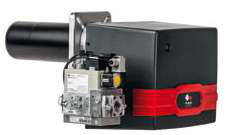
- Excess combustion air (over-ventilation): Measure O₂ concentration in flue gas using a combustion analyzer. Optimal range: 3–5% O₂ for gas burners, 2–4% for oil burners. If O₂ >6%, the air-fuel ratio is too lean. Inspect the burner air intake for restrictions (broken baffles, corrosion), and verify air damper position. For modulating burners like the FBR GAS XP 60/2 CE TC EVO, check that the modulating control signal aligns with fuel valve opening; a stuck fuel valve or damper linkage causes air-fuel mismatch
- Fuel atomization degradation: High combustion temperature with visible black smoke indicates fuel-rich flame with poor atomization. Extract the fuel nozzle and inspect the tip: look for carbon crust, erosion, or debris buildup. Clean using soft brass brushes and ISO 4406-compliant diesel (never exceed 60°C or use ultrasonic cleaning, which damages internal passages). If cleaning does not restore temperature stability, replace the nozzle with an OEM-matched unit
- Furnace refractory degradation: If combustion temperature remains elevated and flue gas temperature is normal, interior refractory may be spalling or missing, reducing furnace volume and increasing peak temperature. Visual inspection through cleanout ports can confirm condition; refractory repair requires furnace shutdown and specialized contractors
Possible Causes and Diagnostics
- Insufficient fuel delivery: Measure fuel pressure at the burner inlet using a gauge calibrated to the burner's rated range. Compare against the design setpoint (typically 8–15 bar for oil burners). If pressure is 1–2 bar below setpoint, suspect fuel pump wear, fuel line leakage, or filter clogging. Replace filters and test pump flow using a catch container over 60 seconds; flow should meet design specification (e.g., 1.0 kg/s for 630 kW burner)
- Combustion air shortage: Low FET with low flue gas temperature suggests insufficient air supply. Check the fan motor amperage; compare to the nameplate rating. If amperage is 10–15% below rated, the fan may be operating at reduced speed due to bearing friction, belt slippage, or voltage drop. Measure voltage at the fan motor terminal; it should be within ±5% of nameplate. For the Kromschroder BCU 570WC1F1U0K1-E, verify that the burner control relay is commanding the air fan to full speed during normal operation by checking the fan contactor voltage
- Heat loss from furnace: In tropical climates, furnace insulation deteriorates from thermal cycling and humidity. If furnace exterior surface temperature exceeds 60°C and combustion temperature is low, refractory or insulation has failed. Schedule insulation replacement and check for air leakage at furnace access ports
Section 3: Preventive Strategies and Performance Monitoring Framework
Establishing a Fuel Quality Management Program
Fuel quality is the foundation of stable Burners & Combustion operation. Procurement engineers should implement the following:
1. Supplier Agreements: Require fuel suppliers to provide certificates of analysis (COA) for every delivery. COA must include viscosity, water content, sulfur, acid number, and particulate count. Reject deliveries that do not meet Singapore's industrial fuel standard (equivalent to ASTM D396 Grade 4-D or EN 590)
2. Fuel Storage Best Practices:
- Install high-efficiency vent filters (silica gel or desiccant cartridge) on all tank vents; inspect and replace monthly
- Maintain fuel storage tanks in shaded locations (reduces temperature fluctuation and oxidation)
- Install a fuel polishing (conditioning) unit to circulate stored fuel through a high-efficiency filter cart quarterly
- Drain water from tank bottoms monthly using a water-detection paste (turns blue in presence of water)
3. Fuel System Filtration:
- Primary fuel filter: 150 μm absolute; replace every 500 operating hours or when pressure drop exceeds 0.6 bar
- Secondary fuel filter: 10 μm absolute; replace every 250 operating hours or when pressure drop exceeds 0.4 bar
- Install a duplex filter system to allow filter cartridge change without halting burner operation
4. Microbial Control: If water is detected in tank, add a biocide per industry guidelines (e.g., 100–200 ppm) and schedule a complete fuel polishing cycle to remove sludge
Combustion Temperature Monitoring System
To prevent temperature-related failures, implement continuous or periodic monitoring:
Real-Time Monitoring
- Install a fixed Type K thermocouple at the furnace exit and route the signal to a programmable logic controller (PLC) or data logger
- Set alarm thresholds: high alarm at +15°C above baseline, low alarm at -20°C below baseline
- Log temperature data at 5-minute intervals for trend analysis
- Generate weekly reports showing average temperature, peak/minimum values, and alarm frequency
- Measure furnace exit, flue gas, and fuel temperatures using calibrated instruments
- Record combustion analyzer data (O₂, CO, NOx if applicable)
- Compare readings against baseline; deviations >5% warrant investigation
- Document all findings in a maintenance log for trend detection over time
Troubleshooting Workflow for Temperature and Fuel Issues
1. Identify symptom: Is temperature unstable, elevated, or depressed? Is fuel flow restricted? Check visual flame color and burner noise
2. Collect baseline data: Measure fuel pressure, fuel temperature, fuel flow, combustion air pressure, and flue gas parameters
3. Eliminate fuel system problems first: Test fuel samples, clean filters, inspect nozzles, and verify fuel line integrity
4. Evaluate combustion air: Measure fan pressure, O₂ concentration, and air inlet filter condition
5. Check control system response: For burners with the Kromschroder BCU 570WC1F1U0K1-E or Siemens LFL 1.622, verify that fuel and air valve solenoids are energizing and de-energizing correctly by listening for audible clicks and measuring valve outlet pressure
6. Document and escalate: If simple corrective actions (filter replacement, nozzle cleaning) do not resolve the issue, contact equipment manufacturer technical support or your 3G Electric distributor representative for advanced diagnostics
Section 4: Practical Troubleshooting Scenario—Case Study from Singapore Industrial Operations
Scenario: Textile Dyeing Plant with FBR GAS XP 60/2 CE TC EVO Burner
Problem: A 630 kW industrial heating burner was experiencing combustion temperature swings between 160°C and 240°C at the furnace exit, causing uneven dye bath temperature and product quality complaints.
Initial Investigation:
- Burner had been in operation for 18 months with no documented fuel or temperature monitoring
- Visual inspection revealed dark, cloudy appearance of fuel in the sight glass
- No maintenance records for fuel filter changes
1. Extracted fuel sample: Laboratory analysis showed water content of 2,800 ppm (target: <500 ppm), viscosity 8.5 cSt at 40°C (design: 6.0 cSt), and acid number of 3.2 mg KOH/g (concern threshold: >2.0). This indicated severe oxidation and water ingress
2. Inspected primary fuel filter: Pressure drop was 1.2 bar at normal flow (alarm threshold: 0.6 bar). Filter element was black and clogged with sludge
3. Measured fuel nozzle spray pattern: Spray was coarse and asymmetrical, indicating nozzle tip damage from particle erosion
4. Checked fuel temperature: Burner inlet was only 35°C (design: 45–50°C), reducing atomization quality. Storage tank vent filter was broken and filled with moisture
Corrective Actions:
- Drained storage tank and performed a complete fuel polishing cycle using a mobile fuel conditioning unit (removed 250 liters of contaminated fuel sludge)
- Replaced primary and secondary fuel filters
- Replaced fuel nozzle with OEM part (same spray angle and flow capacity)
- Installed a new desiccant vent filter and repaired the tank filler cap gasket
- Added tank immersion heater to maintain fuel at 48°C
- Installed a Type K thermocouple with data logger for continuous monitoring
Lessons for Procurement Engineers:
- Fuel quality is not static; quarterly testing is essential in tropical climates
- Temperature instability often traces to fuel system problems, not control failures
- Preventive maintenance (filter changes, tank cleaning) costs far less than unplanned burner replacement
- Baseline documentation (fuel analysis, temperature logs) enables rapid root-cause diagnosis
---
Conclusion
Fuel quality degradation and combustion temperature instability represent preventable yet common causes of burner underperformance in Singapore's industrial sector. By implementing systematic fuel monitoring, establishing temperature baselines, and following the diagnostic procedures outlined in this guide, procurement engineers can identify root causes quickly and restore optimal burner operation. 3G Electric's 35-year distribution experience has shown that plants with disciplined fuel and combustion monitoring programs experience 40–50% fewer unplanned burner shutdowns and 8–12% better thermal efficiency compared to those without monitoring.
For specific guidance on your burner model or to arrange technical support, contact your 3G Electric representative or consult the equipment manufacturer's technical documentation.