Understanding Your Current Combustion Efficiency Baseline
Efficiency is the cornerstone of profitable burner operations. Most plant managers inherit systems that may not be operating at peak performance—sometimes running at 75-85% efficiency when 88-92% is achievable. The first step toward optimization is understanding where your facility stands today.
Start by collecting baseline data over a full operational cycle. Document fuel consumption rates, steam/heat output, flue gas temperatures, and oxygen levels in the exhaust. These metrics form your efficiency baseline and reveal where improvements are needed. In Singapore's tropical climate with high ambient temperatures, thermal losses through radiation and convection are often greater than expected, making accurate baseline measurement critical.
With 35+ years of experience serving industrial operations across Asia-Pacific, 3G Electric has helped numerous plant managers identify efficiency gaps that were costing thousands monthly. The most common finding? Improperly calibrated combustion air controls and suboptimal air-to-fuel ratios. Your burner may be designed for 88% efficiency, but poor controls can drop actual performance to 80% or lower.
Engage your burner control systems in this assessment. Systems like the Siemens LFL 1.622 safety relay can monitor actual flame characteristics and air damper positioning, providing diagnostic data on whether your combustion process is truly balanced.
Optimizing Air-to-Fuel Ratio Control Systems
Combustion efficiency hinges on precise air-to-fuel ratios. Too much air wastes energy heating excess oxygen; too little air creates incomplete combustion, producing smoke, carbon monoxide, and reduced output. Singapore's industrial regulations require tight control of both for safety and environmental compliance.
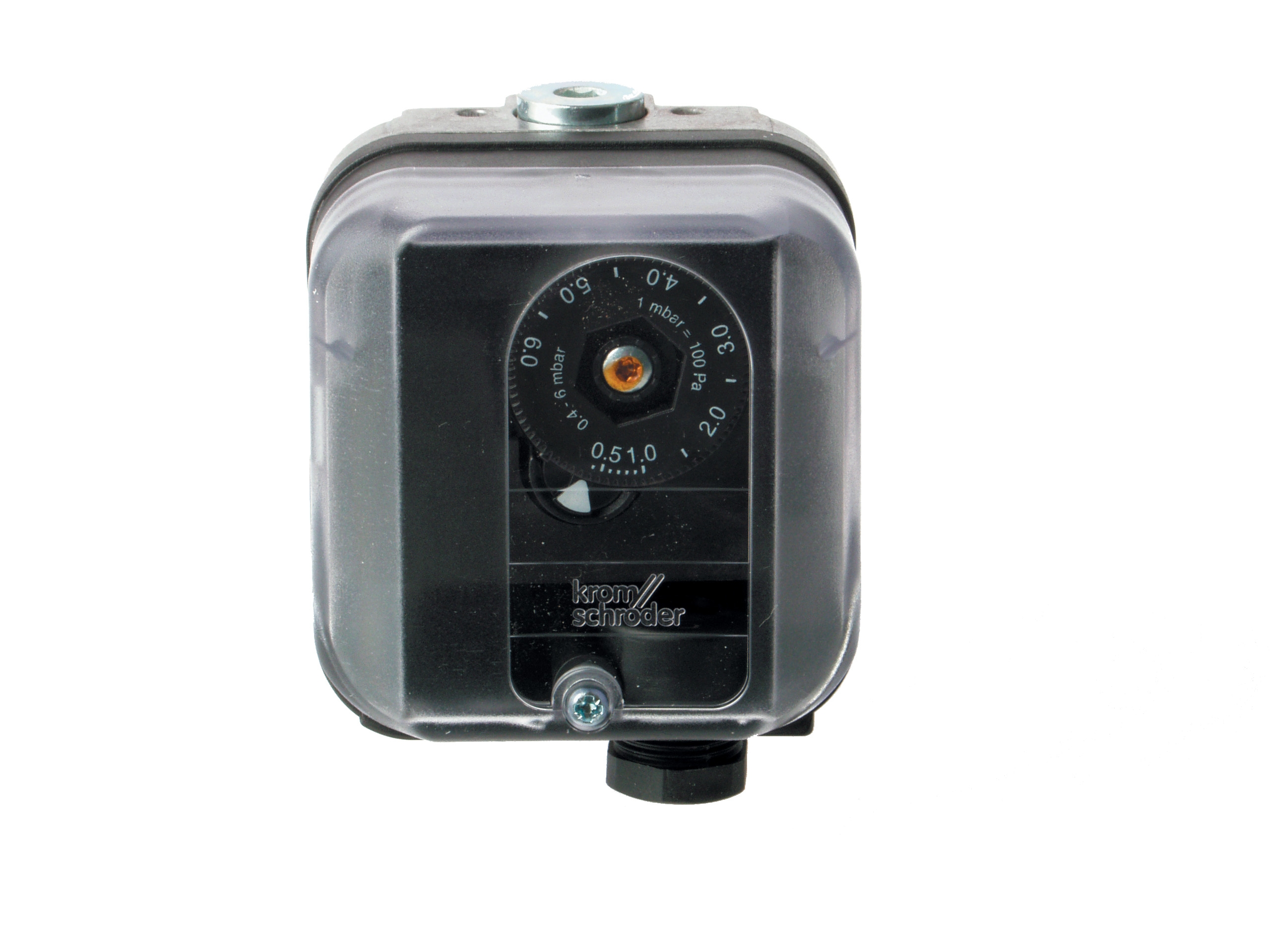
Modern modulating burners adjust automatically across load ranges, but they depend on accurate pressure sensing and feedback. The Kromschroder DG 50U/6 pressure switch is rated SIL 3 for safety-critical applications and provides the precise differential pressure measurement needed to maintain optimal combustion across varying loads. This device detects even small deviations in combustion air pressure, triggering corrective damper adjustments before efficiency drops.
For facility managers, this means implementing a three-step optimization protocol:
- Calibrate pressure differential setpoints: Work with qualified technicians to establish baseline pressure readings at full load and minimum load. Document these values—they become your performance benchmark.
- Test air damper response: Verify that air dampers respond smoothly to load changes without lag or hunting (oscillation). A 2-3 second response delay is normal; anything longer indicates tuning issues.
- Monitor flue gas oxygen: Conduct quarterly flue gas analysis. Optimal combustion typically maintains 3-5% O₂ in exhaust gases. Higher readings indicate excess air and wasted fuel; lower readings suggest incomplete combustion and safety risks.
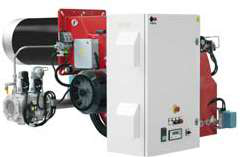
Dual-fuel systems like the FBR KN 1300/M TL EL heavy oil burner add complexity since gas and oil combustion characteristics differ significantly. When switching fuels, air damper positions must be recalibrated—another reason for quarterly audits.
Implementing Staged Combustion and Load Matching
Plant loads rarely remain constant. Your facility may operate at 40% capacity during off-peak hours and 90% at peak demand. Running the same burner at both extremes without optimization wastes substantial fuel during low-demand periods.
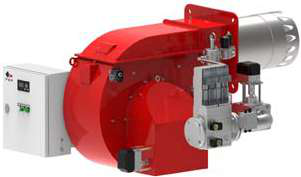
Two-stage burners like the FBR GAS XP 60/2 CE TC EVO (116–630 kW thermal output) solve this by operating either a low-fire or high-fire setting, reducing standby losses significantly. At low fire, excess combustion air creates drag and radiation losses; the burner automatically switches to minimum necessary fuel and air.
For plant managers implementing this strategy:
- Map your load profile: Over 4-6 weeks, document hourly steam or heat demand. Identify periods consistently below 50% of burner capacity.
- Evaluate modulation capability: If your current burner lacks modulating controls, assess whether upgrading to a modulating system justifies the investment. Calculate monthly fuel waste during partial-load operation and compare against equipment costs.
- Synchronize with system capacity: A burner oversized for average demand wastes fuel constantly. If your facility can accommodate a smaller primary burner with a backup unit for peak demand, efficiency gains often exceed 15% annually.
- Install proper feedback controls: Burner control relays like the Kromschroder BCU 570WC1F1U0K1-E support both intermittent and continuous pilot ignition, allowing optimized fuel use across load ranges. The relay's compliance with EN 746-2 standards ensures Singapore regulatory acceptance.
Establishing a Continuous Monitoring and Maintenance Program
Optimization is not a one-time project—it requires ongoing monitoring. Fuel quality varies, air dampers drift out of calibration, heat exchanger tubes scale, and control sensors age. Without regular oversight, efficiency degradation is gradual but relentless—often 2-3% per year.
Implement a monthly monitoring protocol using your facility's existing instrumentation:
- Flue gas temperature: Measure at the burner outlet and at the stack. Rising differential indicates heat exchanger fouling or air leakage.
- Draft pressure: Consistent draft ensures stable combustion. Increasing draft demand signals blockage; decreasing draft indicates leakage.
- Oxygen content: Use portable combustion analyzers or permanently installed O₂ sensors. Trending data reveals subtle efficiency creep.
- Fuel consumption versus output: Calculate monthly efficiency (fuel input ÷ useful heat output). A 5% drop warrants investigation.
Singapore's humid, salt-laden coastal environment accelerates corrosion of burner components. Stainless steel and protective coatings are essential, particularly for pressure switches and electrical connectors. 3G Electric's inventory includes components specifically selected for tropical industrial environments—items like the Siemens and Kromschroder products that resist corrosion while maintaining accuracy.
Create a quarterly service schedule with qualified burner technicians. This includes:
- Flame scanner cleaning and recalibration
- Nozzle inspection and cleaning
- Control relay testing and reset
- Pressure switch calibration verification
- Air damper mechanical inspection
Document all maintenance actions. Over time, these records reveal patterns—if certain adjustments recur frequently, the underlying cause (fuel quality, control calibration, or mechanical wear) becomes evident and can be addressed systematically.
Calculating ROI and Financial Impact
Plant managers operate within budget constraints. Efficiency improvements must demonstrate financial return. Fortunately, combustion optimization typically offers compelling economics.
Consider a 5 MW steam boiler operating 8,000 hours annually at 85% current efficiency. Improving to 90% efficiency (achievable with proper controls) reduces fuel consumption by approximately 6%. At Singapore's industrial energy costs (roughly SGD 0.12 per kWh equivalent for fuel), this translates to annual savings of 180,000+ SGD—often sufficient to justify new controls and safety relays within 18-24 months.
Beyond fuel savings, efficiency improvements provide secondary benefits:
- Reduced maintenance: Cleaner, more complete combustion generates less soot and deposits, extending equipment life by 20-30%.
- Lower environmental compliance costs: Better combustion control reduces NOx and particulate emissions, easing Singapore's increasingly strict industrial air quality requirements.
- Improved equipment reliability: Stable combustion reduces thermal stress and flame stability issues, minimizing unplanned shutdowns.
When evaluating control upgrades, factor in the cost of the control relay (the Kromschroder BCU or Siemens LFL series), pressure switches, and installation labor. Most facilities see payback within 2-3 years from fuel savings alone—an attractive return for capital expenditure.
With 35+ years of experience in the region, 3G Electric understands Singapore's industrial cost structure and can help procurement teams evaluate equipment options that balance performance, cost, and local regulatory compliance. We maintain inventory of proven components—not just the burners themselves, but the control and monitoring equipment that drives actual efficiency gains.