Burners & Combustion: Choosing Between Dual-Fuel and Single-Fuel Systems
When specifying burners and combustion equipment for industrial heating applications across Southeast Asia, HVAC contractors face a critical decision: dual-fuel systems or single-fuel configurations. With over 35 years of industrial equipment distribution experience, 3G Electric has supported thousands of contractors navigating this choice. The decision impacts not only initial capital expenditure but also fuel availability, operational flexibility, and long-term maintenance requirements.
Dual-fuel burners and single-fuel systems each excel in different operational contexts. Understanding their technical characteristics, performance trade-offs, and suitability for regional fuel supply conditions is essential for specifying reliable, cost-effective combustion solutions.
Single-Fuel Gas Burners: Optimized Efficiency and Simplicity
Operational Profile
Single-fuel gas burners represent the most straightforward combustion approach. These systems burn natural gas or LPG exclusively, eliminating the complexity of fuel switching logic and dual combustion chamber design. For facilities with guaranteed, stable gas supply—common in urban and industrial zones across Singapore, Malaysia, and Bangkok—single-fuel gas systems deliver exceptional value.
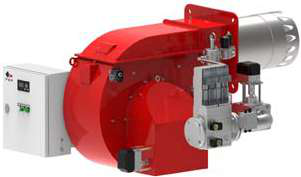
The FBR GAS XP 60/2 CE TC EVO exemplifies this category. With thermal output spanning 116–630 kW and two-stage modulating control, this burner achieves precise heat delivery across varying load conditions. Two-stage operation means the burner runs at 50% capacity during low-demand periods, conserving fuel and reducing flame instability at turndown ratios below full fire.
Technical Advantages
- Simplified control architecture: Fewer solenoid valves, simpler fuel piping, and reduced pressure regulation complexity
- Faster ignition response: Gas atomization requires only air pressure modulation; no heavy oil preheating delays
- Lower combustion pressure requirements: Typically 1–3 bar inlet pressure versus 10–25 bar for oil burners
- Reduced maintenance intervals: No nozzle clogging, no fuel filtration burden, minimal carbon deposit accumulation
- Compact footprint: Gas burners occupy less floor space, simplifying retrofit installations in confined plant rooms
In metropolitan Southeast Asia where piped gas infrastructure is mature, single-fuel gas burners dominate. Singapore's 100% urban gas grid and Malaysia's expanding distribution network make gas burners the default specification. However, rural and island locations with unreliable gas supply expose a critical vulnerability: unplanned shutdowns when supply interruptions occur.
Dual-Fuel Heavy Oil and Gas Burners: Operational Resilience and Fuel Switching
Operational Profile
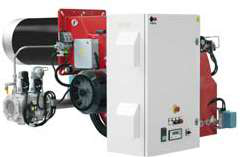
Dual-fuel burners switch seamlessly between gas and heavy fuel oil (HFO), enabling facilities to maintain heat output despite gas supply disruptions. The FBR KN 1300/M TL EL represents heavy-duty dual-fuel capability, delivering 1,700–11,500 Mcal/h with modulating, two-stage control. This thermal range serves large industrial boilers, district heating systems, and manufacturing facilities requiring continuous, uninterruptible heat supply.
Dual-fuel switching occurs through automated valve sequencing: when inlet gas pressure drops below a preset threshold (typically 0.5 bar), a solenoid pilot valve energizes the oil ignition circuit. The burner transitions to oil combustion within 10–15 seconds, maintaining boiler steam output with minimal temperature fluctuation.
Technical Complexity
- Dual fuel trains: Separate gas and oil piping, each with pressure regulation, filtration, and metering solenoids
- Oil preheating requirement: Heavy fuel oil (ISO VG 500 or higher) requires heating to 80–100°C for viscosity control and atomization
- Nozzle selection logic: Dual-fuel burners use interchangeable gas and oil nozzles; operators must swap hardware during fuel transition (or specify dual nozzles for rapid changeover)
- Combustion chamber design: Burners are internally engineered to accommodate different fuel flow rates and flame characteristics
- Control system requirements: Burner control relays must interpret fuel-selection signals and manage ignition sequencing for both fuels
When firing on gas, dual-fuel burners achieve 87–91% combustion efficiency—comparable to single-fuel gas systems. However, the dual combustion chamber design introduces slightly larger internal dead volumes, and the presence of oil-circuit plumbing adds thermal mass that marginally extends warm-up time.
When firing on heavy oil, efficiency drops to 82–86% due to higher excess air requirements and reduced heat transfer surface area (oil atomization is less precise than gas mixing). Turndown ratios narrow: typical dual-fuel units modulate 3:1 on gas but only 2.5:1 on oil, limiting part-load operation efficiency.
Control Architecture Complexity
Dual-fuel systems require sophisticated burner control relays. The Siemens LFL 1.622 safety control unit manages simultaneous gas and oil circuits, monitoring separate pressure inputs and controlling air dampers independently for each fuel. This relay interprets fuel-selection signals (typically 0–10 V analog commands or discrete switch inputs) and orchestrates the transition sequence:
1. Gas valve modulates closed
2. Oil solenoid energizes; burner switches to oil ignition
3. UV or ionization flame sensor confirms oil flame establishment
4. Startup burner fuel (if present) shuts down
5. Air damper adjusts to oil-optimized position
Reverse transition (oil to gas) follows similar logic, with built-in delays preventing flashback or combustion instability.
Control and Safety Considerations: Pressure Monitoring and Relay Integration
Pressure Switch Requirements
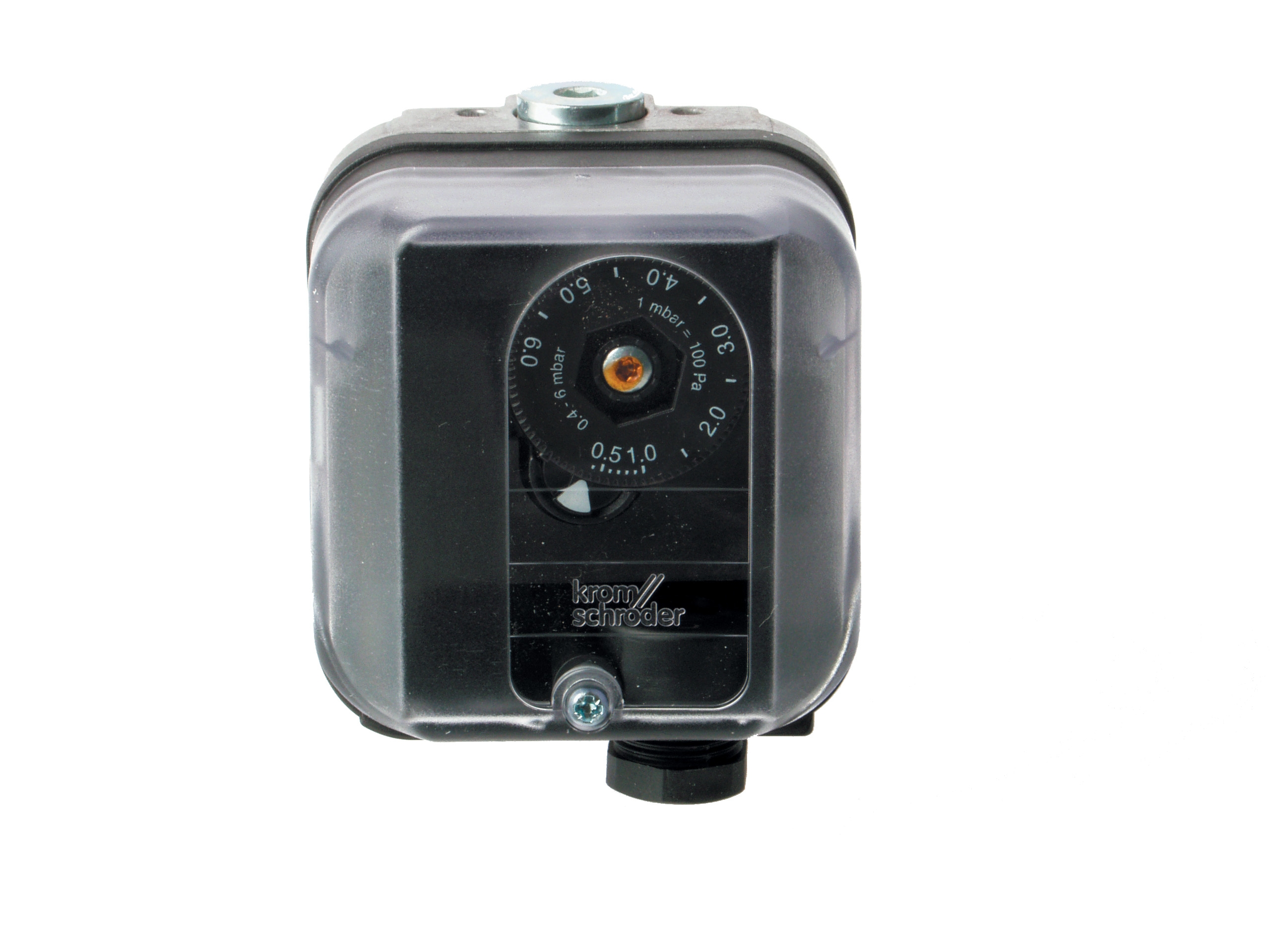
Both single-fuel and dual-fuel systems depend on accurate inlet pressure monitoring. The Kromschroder DG 50U/6 pressure switch provides SIL 3-rated protection, certifying safe shutdown if fuel pressure deviates beyond acceptable bands. For gas burners, this switch typically triggers alarm when gas inlet pressure drops below 0.3 bar (starvation) or exceeds 2.5 bar (overpressure). For dual-fuel systems, separate DG 50U/6 units monitor gas and oil circuits independently.
The DG 50U/6's hermetically sealed design suits Southeast Asian humidity and salt-spray environments (coastal facilities), where electromechanical switches corrode rapidly. Hermetic sealing extends service intervals from 12 to 36 months.
Ignition Relay Architecture
The Kromschroder BCU 570WC1F1U0K1-E burner control relay addresses both single-fuel and dual-fuel applications. This relay supports three ignition modes:
- Direct ignition: Startup burner and main burner ignite simultaneously; suitable for gas-only systems with rapid response requirements
- Intermittent pilot: A continuously-burning pilot flame ignites the main burner; reduces startup delay but consumes 2–4% continuous fuel energy
- Continuous pilot (full pilot): Pilot burns throughout operation; safest for applications with frequent on-off cycling or unstable combustion
For dual-fuel conversions, contractors typically specify intermittent pilot mode, which minimizes pilot energy consumption on low-load gas operation while maintaining flame stability during oil combustion.
Practical Procurement and Installation Guidance
When Single-Fuel Gas Burners Are Optimal
- Urban and suburban locations with guaranteed piped gas supply
- Facilities operating 5+ hours daily (pilot energy costs negligible)
- Space-constrained plant rooms where footprint matters
- Retrofit projects with existing gas piping infrastructure
- Budget-sensitive applications where fuel diversity isn't essential
- Industrial zones where gas supply interruptions exceed 12 hours annually
- Manufacturing processes requiring 24/7 uninterruptible heat (pharmaceutical, food processing)
- Facilities with on-site or delivered heavy oil inventory
- Large boiler installations (>5 MW) where dual-fuel adds <8% total project cost
- Facilities with load variations: gas for normal operation, oil for peak demands
When purchasing burner control relays, specify flame-monitoring mode based on combustion characteristics:
- UV flame detection: Responds within 1 second; preferred for gas burners and facilities with intermittent operation
- Ionization monitoring: Better suited to stable oil flames; slightly slower response (2–3 seconds) but immune to false UV-triggered shutdowns from dust or reflected light
Dual-fuel systems benefit from ionization or dual-sensor (UV + ionization) monitoring because oil flames produce weaker UV signatures, and flame instability during fuel transitions can cause nuisance shutdowns.
3G Electric's 35+ Years Supporting Regional Contractors
Across three-and-a-half decades distributing industrial equipment throughout Southeast Asia, we've supported HVAC contractors through thousands of burner selections. Our experience reflects regional patterns: single-fuel gas burners dominate urban projects, but contractors increasingly specify dual-fuel systems for industrial zones, manufacturing parks, and facilities where fuel supply resilience directly impacts production continuity.
When evaluating burner solutions, consult fuel-supply historical data (12-month interruption logs) and load profiles before committing to single-fuel design. The modest cost premium for dual-fuel capability—typically 12–18% higher capital expenditure—often proves economical when compared against production losses from unplanned outages.
Summary: Decision Framework for HVAC Contractors
Choosing between dual-fuel and single-fuel burners requires integrating technical performance metrics with regional fuel availability and operational resilience requirements. Single-fuel gas systems deliver efficiency, simplicity, and lower cost in fuel-secure environments. Dual-fuel systems provide operational flexibility and uninterruptible heat supply at acceptable cost and complexity premiums. By understanding the control architectures, pressure monitoring requirements, and efficiency trade-offs outlined above, HVAC contractors can specify burner systems that balance performance, reliability, and lifecycle cost for Southeast Asian industrial applications.