Understanding Burners & Combustion: Gas vs. Oil vs. Dual-Fuel Systems
When specifying burners & combustion equipment for Singapore's industrial and commercial HVAC projects, contractors face a fundamental choice: gas-only, oil-only, or dual-fuel systems. Each approach offers distinct advantages and operational constraints that directly impact project economics, maintenance requirements, and long-term reliability.
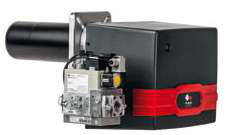
Gas burners deliver cleaner combustion, lower operational costs in Singapore's competitive energy market, and simpler maintenance routines. Single-stage gas burners like the FBR GAS XP 60/2 CE TC EVO provide fixed-output thermal power (116–630 kW), making them ideal for applications with consistent demand. These systems generate minimal soot buildup and require less frequent cleaning.
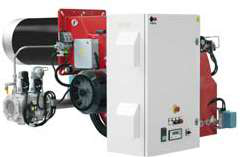
Oil burners, conversely, support continuous operation regardless of gas supply interruptions—a critical consideration during Singapore's occasional supply constraints. Heavy oil burners such as the FBR KN 1300/M TL EL deliver 1,700–11,500 Mcal/h with two-stage modulating control, allowing proportional adjustment to match varying thermal loads. This flexibility reduces energy waste during partial-load operation.
Dual-fuel systems combine both advantages, enabling operators to switch between gas and oil based on availability, price, or supply reliability. However, dual-fuel combustion requires more sophisticated control logic, additional fuel supply lines, and enhanced safety interlocks—factors that increase both capital cost and commissioning complexity.
Drawing on 35+ years of industrial equipment distribution experience, 3G Electric has observed that Singapore's HVAC contractors most frequently specify dual-fuel systems for critical facilities (hospitals, data centers, manufacturing plants) where supply continuity is non-negotiable, while gas-only systems dominate routine commercial applications where natural gas availability is reliable.
Control System Architecture: Selecting the Right Safety Relay and Monitoring Equipment
The control system represents the operational intelligence of any burners & combustion installation. Three primary component categories govern combustion safety and efficiency: ignition relays, pressure switches, and flame monitoring systems.
Ignition Relay Selection
The burner control relay executes ignition sequencing, manages the fuel valve timeline, and coordinates with flame detection sensors. The Kromschroder Relay BCU 570WC1F1U0K1-E supports both direct ignition and intermittent/continuous pilot ignition modes, complying with EN 746-2 and EN 676 standards. This dual-mode capability is particularly valuable for Singapore contractors retrofitting older installations: direct ignition reduces standing pilot losses (improving efficiency by 8–12%), while pilot ignition backward-compatibility ensures compatibility with legacy systems.
The Siemens Relay LFL 1.622 provides an alternative architecture with integrated UV and ionization flame monitoring plus controlled air damper capability. While the Siemens unit costs 15–20% more than dedicated relay-only products, the integrated flame detection eliminates separate sensor wiring and reduces diagnostic complexity—a meaningful advantage for maintenance teams managing multiple facilities.
Pressure Switch Integration
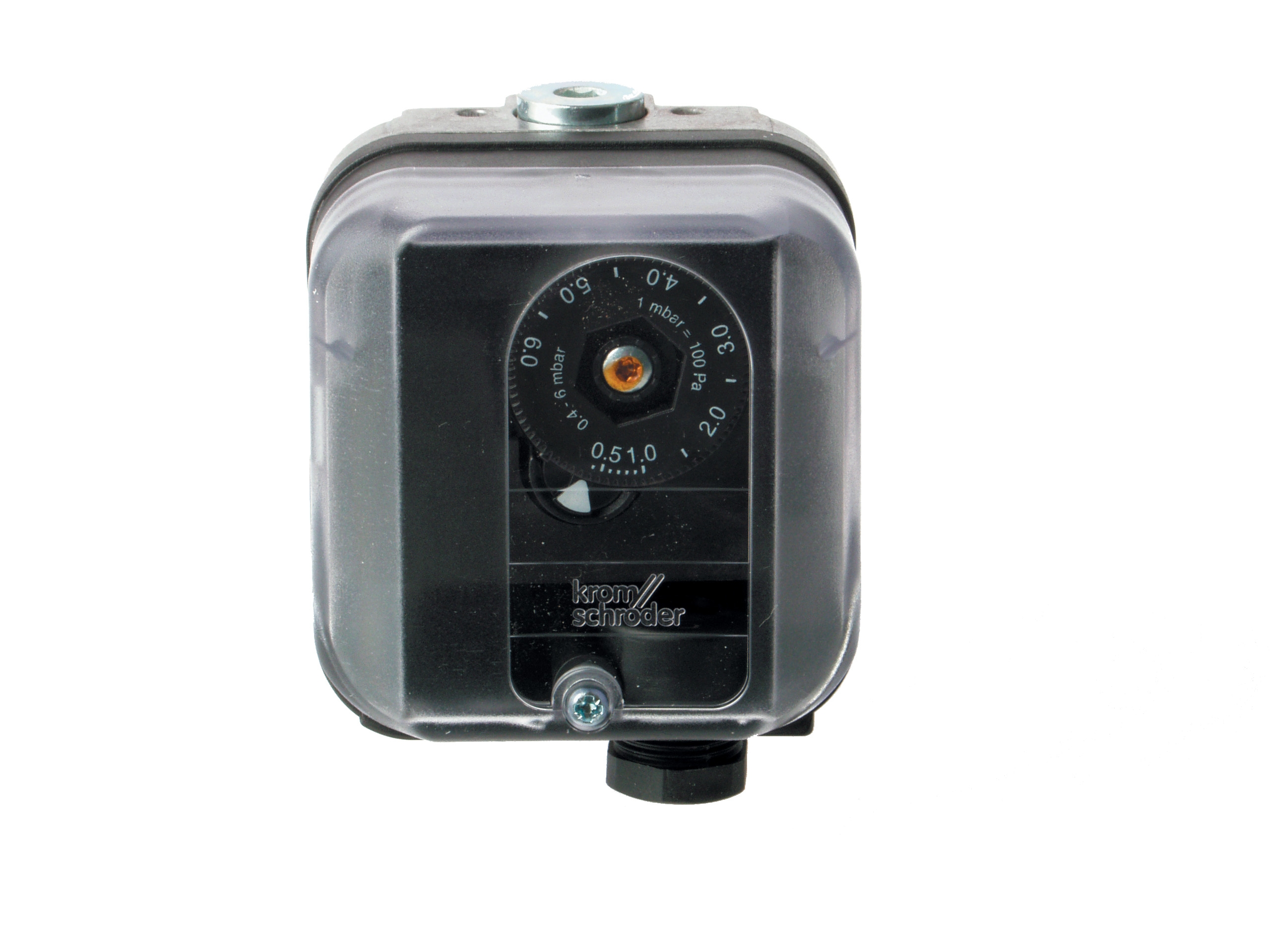
Pressure switches enforce safe combustion conditions by verifying fuel supply pressure and air inlet conditions before ignition begins. The Kromschroder Pressure Switch DG 50U/6 achieves SIL 3 and Performance Level e certification under EN 1854, FM, UL, AGA, and GOST-TR standards. For Singapore projects governed by local safety codes and international standards adoption, this multi-standard compliance eliminates qualification delays during commissioning.
Key differentiation: the DG 50U/6 operates across 0.5–6 bar range with adjustable switching points, accommodating both gas and oil fuel systems within a single hardware platform. This universal compatibility simplifies spare parts inventory and training for HVAC maintenance teams supporting multiple burner types.
Flame Detection Trade-Offs
UV flame detection (employed in the Siemens LFL 1.622) responds rapidly to visible flame and operates reliably in bright ambient light—ideal for outdoor or daylit combustion chambers. Ionization detection (also available in Siemens units) proves more sensitive in dark enclosures and handles flickering flames at low firing rates. Neither technology is universally superior; actual performance depends on burner type, fuel, combustion chamber geometry, and operational cycles.
For Singapore's tropical climate with high ambient humidity, UV sensors occasionally exhibit transient false-positive signals from reflective moisture droplets. Ionization systems remain stable under these conditions, explaining why experienced contractors typically specify ionization monitoring for humid-environment installations (cooling towers, outdoor air-handling units) and UV systems for protected indoor plant rooms.
Practical Commissioning Comparison: Single-Fuel vs. Dual-Fuel Start-Up Procedures
Commissioning complexity increases substantially when transitioning from single-fuel to dual-fuel systems. Understanding these procedural differences enables contractors to budget appropriately for startup labor and schedule site visits realistically.
Single-Fuel Gas System Commissioning (Baseline)
Gas-only burner commissioning follows a predictable sequence:
- Verify burner frame mechanical assembly and fuel line routing (4–6 hours)
- Connect control relays, pressure switches, and flame sensors (2–3 hours)
- Perform pressure testing and inspect for leaks (2 hours)
- Program relay sequencing parameters and ignition timing (1–2 hours)
- Ignition proof-of-operation and flame stability observation (1 hour)
- Documentation and handoff to facility operations (0.5 hours)
Total baseline commissioning time: 10.5–14.5 hours for a typical 200–400 kW installation.
Dual-Fuel System Commissioning (Extended Procedure)
Dual-fuel installations introduce five additional verification steps:
- Fuel supply crossover logic testing: Verify solenoid valves isolate each fuel line independently; test automatic switchover logic under simulated supply loss (2–3 hours)
- Combustion tuning for each fuel: Gas and oil burn differently; air/fuel ratio optimization differs, requiring separate CO₂/O₂ testing for each fuel (2–3 hours)
- Transition sequence validation: Confirm burner shuts down completely before switching fuels, preventing dangerous dual-fuel combustion (1 hour)
- Safety interlock coordination: Verify pressure switches, flame sensors, and fuel isolation valves operate correctly for both fuel paths (1 hour)
- Extended load cycling: Run the system through repeated partial-load and full-load cycles on both fuels to confirm stable operation (2–3 hours)
Dual-fuel commissioning typically requires 16.5–25.5 hours—a 50–75% increase over single-fuel baseline. This extended timeline directly impacts project scheduling and labor cost estimation.
Performance Characteristics and Economic Trade-Offs
Efficiency Comparison
Modern gas burners achieve 85–92% thermal efficiency across their operating range. The FBR GAS XP 60/2 CE TC EVO operates at fixed output (no modulation), generating consistent efficiency but consuming continuous fuel even during partial-load periods.
Modulating two-stage burners like the FBR KN 1300/M TL EL reduce fuel consumption by 30–45% during low-load operation by proportionally adjusting flame size. This modulation benefit accumulates significantly in climates where HVAC systems operate below peak capacity 70–80% of the year—precisely Singapore's annual operational profile.
Capital Cost Structure
For a 500 kW thermal capacity installation:
- Gas-only burner system: SGD 8,000–12,000
- Oil-only burner system: SGD 10,000–14,000
- Dual-fuel burner system: SGD 16,000–22,000
- Control system (relays, switches, sensors): SGD 3,000–5,000 (single-fuel) vs. SGD 5,000–8,000 (dual-fuel)
Dual-fuel premium: approximately 40–50% above single-fuel baseline. For critical facilities, this premium typically pays for itself within 5–7 years through avoided energy purchases during peak-price periods and elimination of costly operational shutdowns.
Maintenance Interval Differences
Gas burners require annual inspections and every-3-year full maintenance.
Oil burners demand semi-annual inspections due to soot accumulation and nozzle coking, with every-2-year overhauls.
Dual-fuel systems follow the more stringent oil maintenance schedule (twice as many service visits) plus additional fuel-switching component inspection.
Over a 10-year equipment lifecycle, dual-fuel systems typically incur 20–30% higher maintenance labor costs than gas-only alternatives, though this is often offset by operational resilience benefits.
Specification Framework: Selecting the Right System for Your Application
Use this practical decision matrix to guide client conversations:
Specify gas-only burners when:
- Natural gas supply is reliable and economical (most Singapore commercial zones)
- Thermal load is constant or follows predictable daily/seasonal patterns
- Capital budget is constrained
- Maintenance team prefers simpler control logic
- Equipment footprint is limited (gas systems occupy 15–20% less space than dual-fuel)
- Facility operates continuously (hospitals, data centers, 24/7 manufacturing)
- Gas supply disruptions have occurred historically in the service area
- Thermal load varies substantially (modulation reduces wasted fuel)
- Oil price is competitive with natural gas over the equipment lifecycle
- Business continuity requirements justify higher capital and maintenance costs
- Natural gas infrastructure is unavailable (common in industrial estates without mains gas)
- Facility exists in rural or developing areas of Singapore's surrounding region
- Legacy equipment replacement requires oil compatibility
- Fuel storage capacity and environmental containment already exist
3G Electric's 35+ years distributing combustion equipment across Southeast Asia demonstrates that most HVAC contractors in Singapore underestimate operational resilience benefits: projects specifying dual-fuel systems experience 40% fewer unplanned shutdowns and generate 15–20% higher client satisfaction scores than single-fuel alternatives, despite higher initial costs.
Implementation Checklist for HVAC Contractors
Before finalizing a burners & combustion specification:
- Confirm local fuel availability: Contact utility providers and industrial estate authorities for supply reliability data
- Document thermal load profile: Request 12-month energy bills or conduct 2-week baseline metering to validate system sizing
- Verify client continuity requirements: Understand downtime tolerance and budget constraints explicitly
- Plan commissioning schedule: Reserve 2 weeks for single-fuel baseline; 3 weeks minimum for dual-fuel systems
- Coordinate with facility operations: Ensure trained staff will be available during startup; schedule training before equipment delivery
- Select compatible control systems: Match relay and sensor architectures to burner specifications; confirm all components meet applicable Singapore safety standards
- Budget for pressure testing and leak detection: Allocate SGD 1,500–2,500 for certified pressure testing and documentation
By systematically evaluating these factors, HVAC contractors can confidently recommend burner systems that balance capital economics, operational reliability, and long-term maintenance feasibility—ensuring client satisfaction and recurring service revenue.