Understanding Air-Fuel Ratio in Burners & Combustion
Burners & Combustion systems perform at their best when fuel and air mix in the correct proportions before ignition. The stoichiometric ratio—the chemically perfect balance—varies by fuel type: natural gas requires approximately 17.2 parts air to 1 part fuel by weight, while heavy oil requires roughly 15:1. However, real-world industrial burners rarely operate at perfect stoichiometry.
For HVAC contractors managing installations across Singapore's industrial and commercial sectors, understanding why burners deviate from ideal ratios is essential for commissioning and troubleshooting. Excess air (lean combustion) reduces efficiency but improves combustion stability and reduces emissions. Insufficient air (rich combustion) wastes fuel and generates smoke, carbon monoxide, and unburned hydrocarbons—creating liability and compliance violations under Singapore's Environmental Protection and Management Act.
With over 35 years of experience as a distributor of industrial combustion equipment, 3G Electric has observed that most field problems stem from improper air-fuel ratios rather than component failures. Contractors who master ratio management reduce callbacks, improve customer satisfaction, and unlock substantial fuel savings for end-users.
Practical Air-Fuel Ratio Tuning for Field Installation
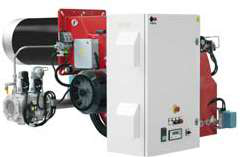
Modern burners employ two primary mechanisms to balance air and fuel: damper control (mechanical air inlet adjustment) and fuel pressure modulation (pump or regulator adjustment). Two-stage burners like the FBR GAS XP 60/2 CE TC EVO feature discrete low-fire and high-fire settings, while modulating burners adjust continuously to match heating load.
Step 1: Establish Baseline Measurements
Before tuning, record flue gas temperature, oxygen content, and CO levels at the burner outlet using a portable combustion analyzer. CO should read below 100 ppm in natural gas applications; oxygen typically runs 3–5% in efficient systems. These baseline readings tell you whether the burner is running rich (high CO, low O₂) or lean (low CO, high O₂).
Step 2: Adjust Air Damper Position
Start with the burner at full-fire condition. Gradually close the air damper (reducing combustion air) while monitoring flue gas oxygen. Your goal is to reach 2–3% oxygen with CO below 50 ppm—this is the "sweet spot" for efficiency and safety. If oxygen drops below 2%, you risk incomplete combustion and smoke generation. If oxygen climbs above 5%, excess air is wasting heat up the stack.
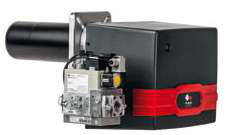
For dual-fuel burners like the FBR KN 1300/M TL EL, tune separately for gas and oil operation since their stoichiometric ratios differ. Heavy oil typically requires slightly more air adjustment due to its higher hydrogen content and greater combustion temperature.
Step 3: Verify Low-Fire Performance
Two-stage burners must maintain stable combustion at reduced load. Drop the system to low-fire (typically 25–40% capacity) and recheck oxygen and CO. Many field installations fail because contractors optimize high-fire ratios but neglect low-fire tuning, resulting in flame instability or unwanted shutdowns during part-load operation.
Step 4: Install or Verify Burner Control Integration
Burner control relays like the Kromschroder Relay BCU 570WC1F1U0K1-E manage pilot and main flame detection, air damper positioning, and fuel valve sequencing. Confirm the relay is correctly configured for your burner's ignition mode (direct ignition vs. intermittent pilot). Misconfigured relays often prevent proper damper modulation, leaving the system unable to adapt to changing load or fuel supply variations.
Diagnostic Tools and On-Site Troubleshooting
HVAC contractors should maintain a basic combustion analysis toolkit: a portable flue gas analyzer (measuring O₂, CO, and stack temperature), a manometer for draft measurement, and a pressure gauge for fuel supply verification.
High Carbon Monoxide (>200 ppm) indicates:
- Air damper closed too far (rich mixture)
- Blocked or restricted air inlet
- Failed burner control relay preventing proper damper opening
- Fuel atomization problems in oil burners
- Immediate adjustment needed—risk of incomplete combustion
- Check fuel nozzle condition; clogged or worn nozzles create unburnable fuel clouds
- Verify air damper linkage moves freely; mechanical sticking is common in humid Singapore environments
- Two-stage burner air damper springs weakening over time
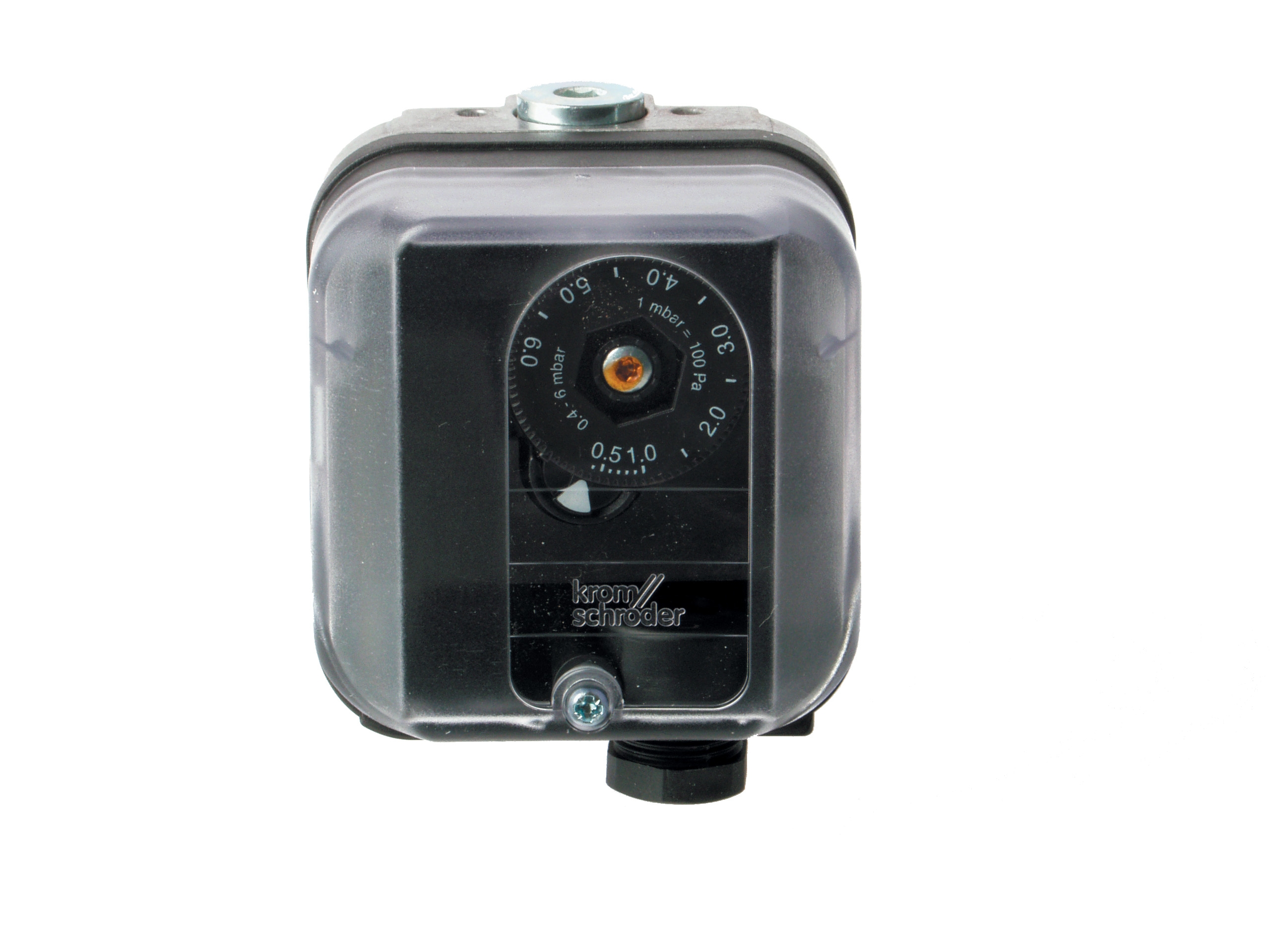
- Pressure switch Kromschroder DG 50U/6 not triggering stage transition correctly
- Intermittent fuel supply causing system oscillation
The DG 50U/6 pressure switch, rated SIL 3 and compliant with EN 1854 and UL standards, monitors burner firing pressure and signals the control relay when to shift between low and high fire. If low-fire to high-fire transitions show wild ratio swings, suspect pressure switch drift or relay calibration drift—both are field-serviceable issues that don't require full burner replacement.
Efficiency Optimization and Cost Impact
Improving air-fuel ratio efficiency yields measurable cost reduction. A burner running at 5% excess oxygen versus optimized 3% oxygen wastes approximately 2% of fuel energy. For a 500 kW industrial heating system operating 8,000 hours annually, this represents roughly SGD 3,000–5,000 in unnecessary fuel expense per year, depending on natural gas or oil pricing.
Multi-stage systems like the FBR GAS XP 60/2 CE TC EVO (delivering 116–630 kW) justify contractor investment because their modulating damper control adapts automatically to partial loads, maintaining efficiency even when system demand drops. Single-stage on-off burners cannot track load variation—they fire at full ratio or stop, leaving contractors with limited tuning flexibility.
For Singapore's industrial facilities subject to energy audits under the Energy Conservation Act, documented combustion efficiency improvements provide audit evidence and support equipment upgrade ROI calculations. Contractors who provide pre- and post-tuning combustion reports strengthen client relationships and justify maintenance contracts.
Long-term Maintenance Perspective:
Burner control systems like the Siemens Relay LFL 1.622 (with integrated UV/ionization flame monitoring) drift over time. Annual recalibration of damper response and fuel pressure settings prevents gradual efficiency decay. A burner tuned correctly at installation but neglected for three years may slip from 85% efficiency to 78% efficiency—a loss unnoticed by the end-user but highly visible to an energy auditor.
Compliance and Best Practice Summary
Singapore's regulatory framework requires burner installations to meet emissions limits under the Environmental Protection (Air Quality) Regulations. Proper air-fuel ratio management ensures compliance without upgrading equipment—a significant advantage for retrofit projects where burner replacement is economically unfeasible.
HVAC contractors should:
- Use calibrated combustion analyzers; estimate-based tuning invites regulatory non-compliance
- Document baseline and post-tuning measurements; maintain records for client audits
- Verify burner control relay configuration matches manufacturer specifications; misconfigurations are leading causes of efficiency failure
- Inspect damper linkages annually in tropical climates; salt air and humidity accelerate corrosion
- Train building operators on seasonal adjustments; Singapore's minimal temperature variation doesn't change fuel demand, but humidity and ambient air density do affect air-fuel dynamics
3G Electric's 35+ years distributing industrial combustion components positions us to support your field calibration needs. Whether sourcing replacement pressure switches, control relays, or complete burner assemblies, working with a distributor experienced in regional compliance requirements ensures your installations meet local standards and perform reliably in Singapore's demanding industrial environment.