Understanding ATEX Maintenance & Service Requirements for Hazardous Environments
Maintenance & Service in hazardous areas represents one of the most critical operational responsibilities for plant managers across Southeast Asia. Equipment operating in explosive atmospheres—whether gas, vapor, or dust environments—must meet ATEX (ATmosphères EXplosibles) certification standards that fundamentally reshape how maintenance is planned, documented, and executed.
Unlike standard industrial maintenance, ATEX-compliant Maintenance & Service requires a deeper understanding of equipment certification limits, performance degradation thresholds, and failure modes that could create ignition risks. Equipment like the Interpump PUMP W2035 L ATEX, which delivers 35 L/min at 200 bar with dedicated ATEX certification, operates under strict parametric boundaries. Exceeding pressure tolerances, operating temperature ranges, or allowing surface contamination can compromise the equipment's ability to prevent ignition sources in explosive atmospheres.
Drawing on 35+ years of industrial equipment distribution experience, 3G Electric has supported plant managers across Southeast Asia in developing Maintenance & Service systems that balance operational efficiency with safety compliance. The fundamental principle is this: in hazardous areas, maintenance is not simply about keeping equipment running—it is about preserving the engineered safeguards that prevent catastrophic incidents.
Certification-Based Maintenance Scheduling and Documentation
Every ATEX-certified component carries specific maintenance obligations embedded within its certification documentation. Your Maintenance & Service schedule must align directly with manufacturer specifications and certification parameters, not with generic industrial maintenance calendars.
Critical Documentation Requirements:
- Equipment Certification Records: Maintain permanent files showing ATEX certificate numbers, certification dates, and any modifications or repairs performed. This documentation proves compliance during regulatory inspections.
- Maintenance Logbooks: Record every service intervention with dates, technician credentials, work performed, component conditions observed, and any deviations from specification. Include pressure readings, temperature measurements, and visual inspection findings.
- Parts Traceability: Track all replacement components back to ATEX-certified suppliers. Using non-certified substitutes—even if functionally similar—violates certification integrity and creates liability exposure.
- Technician Qualification Records: ATEX equipment Maintenance & Service must be performed by personnel trained in hazardous area operations. Maintain training certificates, competency assessments, and continuing education records.
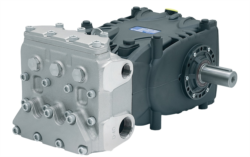
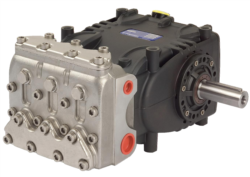
For high-performance pumps like the Pratissoli KF30, which delivers 106 L/min at 200 bar with 40 kW power output, your documentation system must track performance metrics against baseline specifications. Pressure drops, flow rate reductions, or vibration changes signal degradation that requires immediate investigation—not simply scheduled replacement intervals.
Documentation System Best Practice: Implement a centralized digital maintenance management system (CMMS) with role-based access controls. Plant managers, maintenance technicians, safety officers, and regulatory inspectors should access different information levels. This ensures compliance transparency while protecting operational data.
Preventive Inspection Protocols for ATEX Equipment Integrity
MAINTENANCE & Service in hazardous areas hinges on detecting degradation before it creates ignition risks. Preventive inspection protocols differ significantly from reactive maintenance approaches used in non-hazardous environments.
Monthly Inspection Checklist for ATEX Pumps and Pressure Systems:
- Visual examination of all external surfaces for cracks, corrosion, or contamination that could compromise surface temperature characteristics
- Pressure gauge verification against reference instruments; any deviation exceeding ±5% indicates potential internal wear
- Temperature monitoring at pump housing, discharge line, and motor windings; ATEX ratings specify maximum allowable temperatures
- Vibration assessment using hand-held instruments to detect bearing wear, seal degradation, or impeller damage
- Fluid sampling and analysis to identify internal wear debris, water contamination, or thermal degradation
- Electrical terminal inspection to verify no loose connections or corrosion that could create electrical hotspots
For systems incorporating flame detection components like the Combutech Flame relay CF1, which monitors combustion conditions with 1 A @ 250 VAC rating and IP40 protection, monthly verification ensures the safety interlock functions correctly. Test the detector response using manufacturer-approved calibration methods; do not rely on visual inspection alone.
Seasonal Deep Inspection (Quarterly or Semi-Annually):
Every three to six months—depending on operating hours and environmental severity—conduct comprehensive Maintenance & Service assessments:
- Disassemble accessible pump components and inspect internal surfaces for wear patterns, seal degradation, or unusual material deposits
- Measure critical clearances and compare against specification limits; wear exceeding 20% of tolerance typically indicates replacement scheduling
- Perform pressure relief valve testing to confirm proper calibration; any drift requires immediate recalibration or replacement
- Inspect all hose and coupling connections; even minor leaks in hazardous areas represent potential ignition sources through static discharge or fluid misting
- Verify that all safety interlocks, emergency stops, and shut-down systems respond correctly to test inputs
For transmission systems like the Interpump GEARBOX RS500, which handles 18.5 kW maximum power transmission with 2.2 ratio for high-pressure pump integration, inspect gear teeth for micropitting or spalling patterns that indicate fatigue failure beginning. Early detection allows planned replacement rather than catastrophic failure that could disable critical pressure control.
Compliance Risk Assessment and Corrective Action Management
MAINTENANCE & Service effectiveness in hazardous areas depends on a systematic approach to identifying, evaluating, and resolving compliance risks before they become operational failures.
Risk Assessment Framework:
When inspection findings occur, evaluate them using this four-step Maintenance & Service risk protocol:
1. Severity Classification: Determine whether the finding creates an immediate ignition risk (Critical), potential risk under certain operating conditions (High), degradation that requires monitoring (Medium), or minor cosmetic finding (Low).
2. Certification Impact Analysis: Cross-reference the finding against the specific ATEX certificate for that component. Does it directly compromise a certified safety function? Does it affect thermal management, electrical safety, or surface integrity covered by the certification?
3. Operational Context Evaluation: Consider whether your specific operating environment (temperature, humidity, dust presence, chemical exposure) accelerates the degradation pathway. A finding acceptable in cooler climates may become critical in Southeast Asian high-temperature environments.
4. Corrective Action Planning: Define the precise remedial step—adjustment, repair, part replacement, or equipment decommissioning—required to restore compliance. Critical findings require work stoppage until resolution.
Example Corrective Action: If pressure testing on a Pratissoli SN7045 L pump (45 L/min at 210 bar, 18.4 kW motor) reveals a 15 bar drift from specification, the Maintenance & Service response depends on assessment:
- Verify measurement using calibrated reference gauge
- Determine root cause (internal seal wear, relief valve drift, or measurement error)
- If confirmed seal wear, schedule controlled shutdown and replacement using ATEX-certified parts
- Document the finding, corrective action, technician credentials, and return-to-service verification
- Update the equipment's remaining service life estimate based on observed wear rate
Building a Sustainable Maintenance & Service Culture
The most technically sound Maintenance & Service protocols fail without organizational commitment. Plant managers must foster a safety culture where technicians understand that hazardous area maintenance differs fundamentally from standard equipment care.
Leadership Actions:
- Allocate adequate budget for ATEX-certified replacement parts and training; cost-cutting through non-certified substitutes creates regulatory and safety liability
- Establish clear escalation paths for maintenance findings; technicians must know exactly how to report compliance concerns without fear of production pressure overriding safety
- Schedule regular team reviews of maintenance findings and corrective actions; share lessons across the organization
- Partner with equipment distributors like 3G Electric who understand ATEX requirements and can provide technical guidance during complex assessments
- Conduct annual compliance audits comparing your Maintenance & Service documentation against regulatory requirements
Southeast Asian operations face unique challenges: high ambient temperatures, humidity that accelerates corrosion, tropical contamination environments, and supply chain complexities accessing ATEX-certified components. Developing a proactive Maintenance & Service system now prevents costly emergency shutdowns, regulatory penalties, and most critically, workplace incidents that endanger personnel.
Your commitment to systematic, certification-aligned Maintenance & Service demonstrates that operational excellence and worker safety are inseparable objectives.