How to Optimize Gas and Dual-Fuel Burner Performance in Singapore Industrial Systems
Industrial burners and combustion systems are the backbone of manufacturing, heating, and processing operations across Singapore. Yet many facility operators fail to extract maximum performance from their equipment, leaving efficiency gains on the table and risking premature component wear. This guide provides a technical, step-by-step approach to optimizing gas and dual-fuel burner performance, covering flame stability, combustion efficiency, pressure calibration, and real-world tuning strategies. Whether you operate a single burner or a complex multi-unit system, understanding these optimization principles will improve thermal efficiency, reduce fuel consumption, and extend equipment lifespan.
Understanding Burner Optimization and Combustion Efficiency
Burner optimization is the process of fine-tuning fuel delivery, air mixing, and combustion conditions to achieve maximum thermal output while maintaining stable flame characteristics and minimal emissions. Unlike simple on-off burner operation, optimized systems operate across their full modulating range with precision control, ensuring that thermal input matches actual demand.
The primary performance variables in gas and dual-fuel burner systems are:
- Fuel pressure: Governs atomization and combustion completeness; typically ranges from 27–33 mbar for natural gas and LPG systems
- Air/fuel ratio: Critical for complete combustion; excess air improves safety but reduces efficiency, while insufficient air causes incomplete combustion and emissions
- Flame stability: The ability of the flame to remain consistent across modulation; affected by nozzle type, combustion head design, and fan pressure
- Heat release rate: The amount of thermal energy produced per unit time; must align with system capacity and load requirements
- Combustion head alignment: Physical positioning of the combustion head relative to the furnace opening directly impacts flame pattern and heat transfer
Singapore's tropical climate and consistent industrial demand create ideal conditions for optimized burner operation. However, varying fuel quality, seasonal humidity changes, and system aging all degrade performance over time. Systematic optimization counteracts these factors, ensuring your burner operates at design specifications year-round.
Technical Specifications and Product Performance Ranges
Modern gas burners available through Singapore distributors offer precise performance specifications that define their optimization envelope. Understanding these specs is essential for tuning your system correctly.
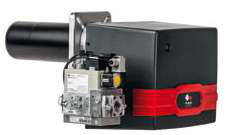
The FBR K X5/2 TL burner exemplifies mid-range industrial capacity, delivering maximum output of 850 kW with a minimum of 140 kW across a 315 mm nozzle. This 6:1 turndown ratio allows flexible modulation across varying loads. The three-phase electrical supply accommodates high-pressure fan motors essential for stable combustion across the full range.
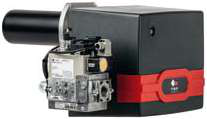
For smaller operations requiring single-phase supply, the FBR GM X4 TC burner offers 232 kW maximum and 116 kW minimum output with a 160 mm nozzle. This compact design suits retrofit applications and space-constrained installations common in Singapore's dense industrial estates.
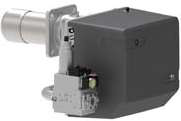
High-capacity systems benefit from the FBR K X7/M TL burner, which reaches 1.8 MW maximum output with 427 kW minimum across a 400 mm nozzle. The larger nozzle diameter supports higher fuel throughput while maintaining stable flame characteristics.
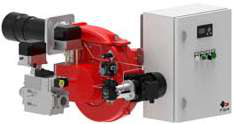
For modulating systems requiring PID-level control, the FBR BURNER GAS X5/MF TL EL VC LPG incorporates electronic modulation capability with optional modulation kits. Its die-cast aluminum construction, high-pressure fan, and combustion head with efficiency adjustment deliver 349 kW maximum and 69.8 kW minimum—ideal for applications where load varies significantly throughout operating cycles.
Intermediate capacity applications find the FBR GM X5/2 TC burner well-suited, offering 350 kW maximum and 75 kW minimum on a 250 mm nozzle with single-phase electrical connection. This model bridges the gap between compact and industrial-scale burners.
Step-by-Step Burner Optimization Process
Follow this systematic approach to optimize your burner performance:
- Document baseline conditions: Record current fuel pressure, flame appearance, flue gas temperature, and thermal output. This establishes your starting point and allows measurement of improvement.
- Verify fuel supply specifications: Confirm that inlet gas pressure, temperature, and moisture content meet burner manufacturer requirements. Gas quality directly impacts combustion stability.
- Inspect the combustion head: Visually examine nozzles, electrodes, and the combustion chamber for carbon deposits, scaling, or damage. Clean with appropriate solvents and replace worn components.
- Adjust combustion air damper: Gradually increase or decrease the air inlet to achieve slight excess air (typically 3–5% O₂ in flue gas). Use a combustion analyzer to measure; this is critical for efficiency.
- Calibrate fuel pressure: Adjust the fuel train pressure regulator to the design pressure for your specific burner model. Use a calibrated pressure gauge; precision here prevents flame instability.
- Monitor flame visually and electronically: Observe flame color (blue with slight yellow tip indicates optimal combustion) and verify stable operation across the full modulation range using control system diagnostics.
- Perform a full-load and low-load test: Run the burner at maximum and minimum output for 15 minutes each while measuring temperature stability and pressure fluctuations.
- Document final settings: Record all calibration points, pressure values, and air settings for future reference and troubleshooting.
Best Practices for Sustained Burner Performance
Preventive maintenance: Establish quarterly inspection intervals for nozzles, electrodes, and fuel filters. Particulate contamination is the leading cause of optimization drift in Singapore's industrial environment.
Flame monitoring systems: Integrate UV or ionization flame detectors to continuously verify combustion quality. Early detection of flame instability prevents efficiency loss and safety risks.
Pressure and temperature logging: Implement data logging systems to track fuel pressure, inlet air temperature, and outlet flue temperature over time. Trends reveal component wear before catastrophic failure occurs.
Fuel quality assurance: Periodically test gas supply quality—especially density, calorific value, and moisture content. Suppliers in Singapore maintain high standards, but individual system variations can occur.
Annual professional commissioning: Partner with qualified burner technicians to conduct annual optimization audits. Professional equipment and expertise identify optimization opportunities beyond routine maintenance.
Control Components and System Integration
Optimization effectiveness depends on proper control system integration. Modern burner automation requires flame detection, pressure regulation, and modulation control working in concert. These components work alongside your primary burner unit to deliver consistent, efficient combustion across all operating conditions, ensuring your gas or dual-fuel system maintains peak performance year-round.
Explore our full range of burners and combustion equipment and burner control components to build a complete, optimized system tailored to your facility's unique requirements.
Ready to optimize your industrial burner system? The team at 3G Electric has served Singapore's industrial sector since 1990, providing expert selection, installation support, and commissioning guidance for gas and dual-fuel burner systems. Contact us today for a technical consultation—our specialists will assess your current setup and recommend optimization strategies specific to your application and facility constraints.