
Introduction: Measurement & Detection as a Core Diagnostic Skill
Measurement & Detection capabilities separate competent HVAC contractors from true service professionals. When a cooling system underperforms or a heating unit cycles irregularly, accurate field measurements distinguish between minor calibration issues and critical component failures. For HVAC contractors operating across Singapore's diverse commercial and residential sectors, reliable measurement and detection equipment—combined with proven techniques—transforms troubleshooting from guesswork into systematic diagnosis.
3G Electric has supplied industrial equipment across Asia-Pacific for over 35 years, including precision measurement instruments trusted by HVAC service teams. This guide distils practical measurement and detection protocols specifically designed for contractors performing on-site diagnostics in Singapore's high-humidity, high-temperature climate.
Section 1: Pressure Measurement and Detection for System Performance Verification
Understanding Pressure as a Primary Diagnostic Indicator
Pressure measurement stands as the foundation of HVAC system diagnostics. Static pressure, differential pressure, and absolute pressure each reveal different aspects of system health. A refrigeration circuit operating at incorrect pressure indicates either undercharge, overcharge, or expansion device malfunction. Air-side pressure drop across coils signals filter loading or airflow restriction.
For accurate pressure detection in the field, contractors need instruments rated for the specific pressure ranges encountered. Low-pressure applications—such as ductwork static pressure or evaporator pressure drop—require sensitivity in the 0–1 inch water column (IN W.C) range. The Dwyer Transmitter 616KD-13V-TC provides 0–1 IN W.C measurement with barbed process connections compatible with 3–5 mm tubing, enabling quick connection to existing tap points without system isolation.
Field Pressure Detection Methodology
When diagnosing air-side pressure issues:
- Measure static pressure at return air, supply air, and across the filter to establish baseline restriction
- Compare measured values against equipment specifications (typically -0.1 to +0.3 IN W.C across coils)
- Document pressure readings at multiple outdoor conditions to identify load-dependent faults
- Use digital transmitters that output 4–20 mA signals to data loggers for trending analysis during extended diagnostics
For refrigerant-side pressure assessment, traditional analog gauges remain valuable. The Preciman Stainless Steel Vertical Pressure Gauge D63 0/+40 mbar offers mechanical reliability in low-pressure monitoring applications. Its ±1.6% accuracy across the 0–40 mbar range makes it suitable for detecting subtle pressure anomalies in low-charge conditions or expansion device sensing line measurements. The G1/4 connection fits standard isolation ball valve ports found on most commercial units.
Moisture and Contamination Detection During Pressure Assessment
When performing pressure measurement in refrigeration circuits, always consider system contamination. Pressure readings alone don't reveal moisture content or acid levels. Incorporate vacuum decay tests (isolation and 30-minute observation) alongside pressure measurement to detect micro-leaks. Document whether pressure decay occurs gradually (refrigerant loss) or abruptly (isolation valve leakage).
Section 2: Temperature Measurement and Detection for Capacity and Efficiency Diagnosis
Temperature as a System Efficiency Indicator
Temperature measurement provides the second critical diagnostic dimension. Evaporator outlet temperature, condenser approach temperature, and air temperature rise across the compressor discharge all indicate system operation and efficiency. Accurate temperature detection identifies superheat/subcooling anomalies, duct leakage, and heat exchanger fouling.
The Dwyer Probe AVG PT100 OHM RTD L.65 AVG-21241 delivers ±0.6% accuracy across the -35.5 to +115.5°C range, covering both refrigerant-side measurement (suction line at -10°C to +15°C) and air-side measurement (supply air at +5°C to +50°C depending on season). The flexible copper capillary accommodates installation on refrigerant lines, pipe penetrations, and return air plenums without requiring extensive modifications.
On-Site Temperature Detection Protocols
Establish baseline temperature measurements at specific system points:
- Refrigerant Circuit: Measure suction line (at condenser outlet for air-cooled units), discharge line (compressor outlet, typically +80–100°C), and liquid line (before expansion device)
- Air Circuit: Document return air dry bulb and wet bulb temperatures, supply air temperature, and outdoor air temperature simultaneously
- Heat Exchanger Surfaces: When diagnosing heating systems, measure inlet and outlet temperatures of the heat exchanger to calculate capacity
- Compressor Shell Temperature: Elevated shell temperature (>65°C) indicates excessive discharge temperature or oil sludging
In Singapore's humid climate, wet bulb measurement becomes critical for performance verification. When the wet bulb temperature approaches saturation (humidity >85%), cooling capacity naturally decreases. Contractors must distinguish between normal performance degradation and actual system faults by recording both dry bulb and wet bulb readings.
Trending and Comparative Analysis
Temperature measurement alone provides limited diagnostic value. Effective field diagnosis requires comparison:
- Compare measured temperatures against manufacturer specifications (typically provided for rating conditions)
- Calculate superheat and subcooling from simultaneous pressure and temperature measurements
- Establish baseline readings during initial commissioning for future comparison
- Document readings across different load conditions (morning startup, peak load, evening setback)
Section 3: Flow Measurement and Detection for System Balance and Capacity Verification
Flow Rate as a Diagnostic Integration Point
Flow measurement synthesizes pressure and temperature data into system capacity assessment. An HVAC system may exhibit correct pressure and temperature at individual points yet still operate inefficiently due to restricted or bypass flow. Average flow probe technology enables contractors to detect maldistribution, duct leakage, and coil fouling.
The Dwyer Metal Average Flow Probe MAFS-16 measures static and total pressure across its 16 cm sensing length, providing airflow rate calculation in ductwork applications. When installed in the discharge duct (minimum 2.5 times the duct width downstream of the damper and minimum 8 duct widths upstream), the probe eliminates measurement bias from localized velocity variations.
Practical Flow Detection Installation
For contractors diagnosing airflow issues:
1. Locate the Measurement Point: Install probes minimum 10 duct diameters downstream of any obstruction (fan discharge, damper, or coil) to ensure fully developed flow profile
2. Verify Duct Integrity: Before flow measurement, confirm ductwork integrity using smoke testing to identify obvious leakage
3. Obtain Differential Pressure: Record static and dynamic pressure readings across the flow probe using a differential pressure transmitter or manometer
4. Calculate Airflow: Use the Pitot tube equation or manufacturer's conversion tables to translate pressure differential into cubic feet per minute (CFM)
5. Compare Against Design: Verify measured flow matches design specifications (typically within ±10% of engineered values)
Flow Measurement Integration with Capacity Calculation
Flow measurement enables actual capacity determination. For cooling systems:
Capacity (kW) = Air Flow Rate (m³/s) × Air Density (kg/m³) × Specific Heat (kJ/kg°C) × Temperature Rise (°C)
When measured capacity deviates from rated capacity by >15%, investigate:
- Refrigerant charge: Undercharge reduces capacity linearly
- Coil fouling: Dust and biological growth reduce heat transfer and airflow
- Expansion device restriction: Reduces mass flow rate across the evaporator
- Duct leakage: Return air bypass reduces cooled air delivery
Section 4: Expansion Tank Pressure and Detection for Hydronic System Diagnostics
Expansion Tank as a System Health Indicator
Hydronic heating systems rely on expansion tanks to accommodate thermal expansion and maintain stable pressure. Improper expansion tank pressure indicates water loss, air entry, or bladder failure—all conditions that degrade system efficiency and reliability. Contractors must detect expansion tank pressure faults before they cascade into circulator bearing failure or heat exchanger stress.
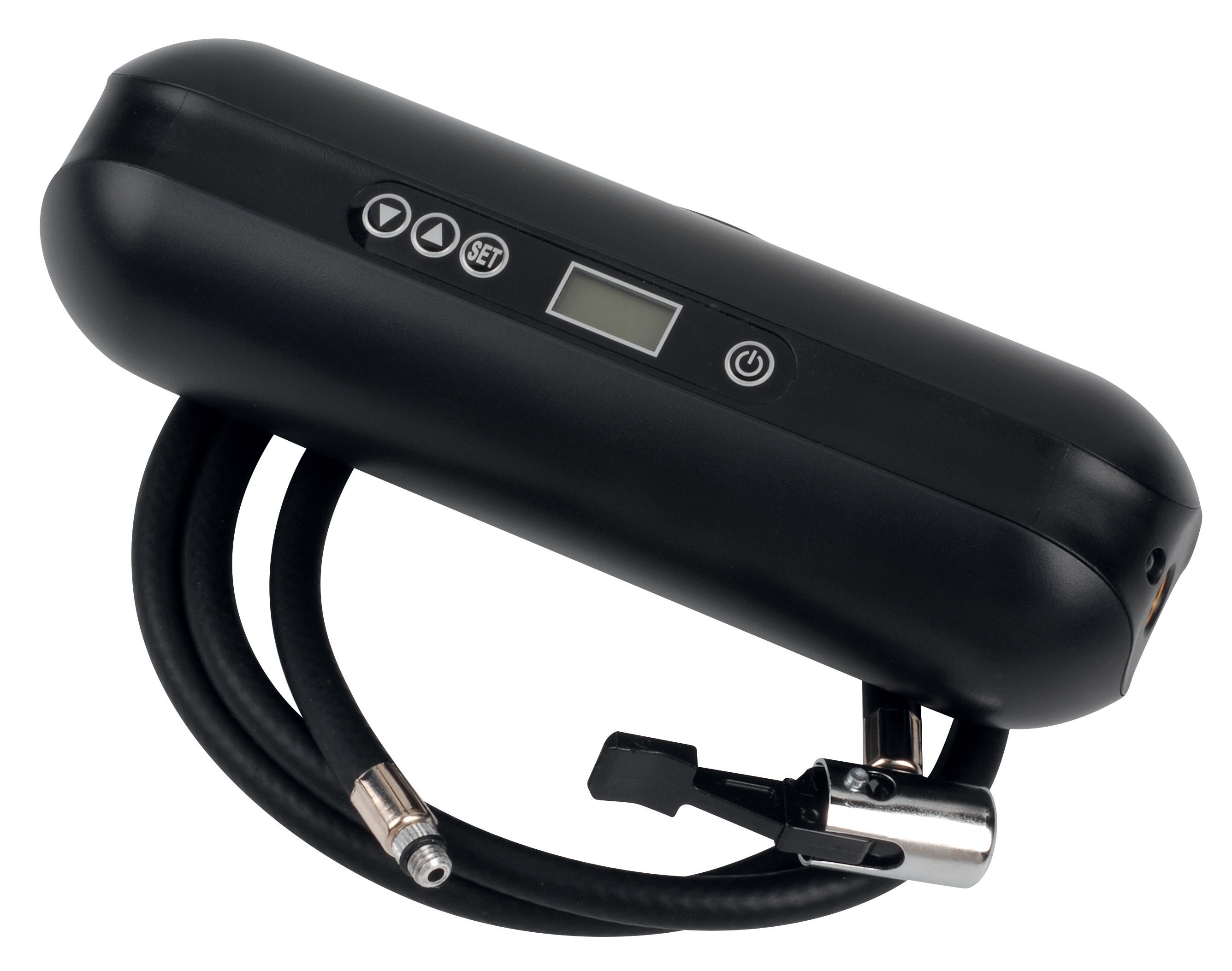
The CBM Expansion Tank Inflator Battery 2000 mAH provides portable pressurization capability for field pressure adjustment. Operating from -20 to +60°C, this inflator accommodates Singapore's temperature range and enables contractors to repressurize expansion tanks without returning equipment to the workshop. The 2000 mAH battery supports multiple pressurization cycles, and operation to 10.3 bar maximum pressure matches standard heating system requirements.
Expansion Tank Pressure Detection Protocol
For accurate expansion tank diagnostics:
1. Establish System Pressure: Measure boiler or pump discharge pressure (typically 1.5–2.5 bar for small systems) using the Preciman pressure gauge
2. Isolate the Expansion Tank: Close isolation ball valves on both the supply and return lines (if equipped)
3. Measure Tank Pressure: Install a pressure gauge on the tank air vent to obtain baseline air-side pressure
4. Compare Against Specification: Expansion tank pre-charge pressure should equal the system's static pressure at the tank location (typically 1.0–1.2 bar for residential systems)
5. Adjust if Required: If tank pressure is low, use the CBM inflator to restore proper pressure
6. Document the Condition: Record baseline and adjusted pressures for future reference
Common Expansion Tank Detection Findings
Field diagnosis frequently reveals:
- Zero Pressure Reading: Indicates complete air loss from the tank (internal bladder rupture or age-related degradation). Tank replacement is required
- Pressure Higher Than System Static Pressure: Suggests air entry from an external source or incorrect pre-charge during commissioning
- Pressure Lower Than Specification: Water has entered the air-side cavity, indicating bladder failure or manufacturing defect
- Pressure Fluctuation Over Time: Demonstrates micro-leakage from the tank or connecting isolation valve
Best Practices for Field Measurement and Detection in Singapore's Environment
Climate Considerations
Singapore's tropical environment (25–35°C year-round, 65–95% relative humidity) introduces unique measurement challenges:
- Condensation on Instruments: Allow temperature-sensitive equipment to acclimate before use to prevent moisture on sensor optics
- Battery Discharge: High ambient temperature accelerates battery drain; maintain spare batteries and pre-charge them before site visits
- Corrosion Risk: Use stainless steel gauges and protect instrument connections from salt spray if working near maritime facilities
- Rapid Temperature Transients: Record measurements only after systems reach steady state (minimum 15–20 minutes of stable operation)
Documentation and Trending
Effective field diagnostics generate standardized documentation:
- Measurement Data Sheet: Record date, time, ambient conditions, system mode, and all pressure/temperature/flow values
- Baseline Establishment: Perform comprehensive measurements during commissioning; archive for future comparison
- Trend Analysis: For recurring issues, collect measurements over multiple weeks to identify patterns
- Digital Recording: Use data loggers with remote transmission to monitor systems between service visits
Conclusion
Measurement & Detection proficiency transforms HVAC contractors from service technicians into diagnostic specialists. By mastering pressure, temperature, flow, and expansion tank measurement techniques—and integrating these measurements into systematic diagnostic protocols—contractors deliver superior troubleshooting value to building owners and facilities teams.
3G Electric's 35+ years of equipment supply experience ensures contractors have access to proven, reliable measurement instruments. From the Dwyer differential pressure transmitters and RTD temperature probes to precision pressure gauges and flow measurement devices, every component in this guide has been field-tested across Asia-Pacific's diverse climates and applications.
Implementing these measurement and detection techniques elevates service quality, reduces callback rates, and builds contractor reputation in Singapore's competitive HVAC marketplace.