Understanding Common Pumps & Compressors Failures in HVAC Systems
Pumps and compressors are the backbone of modern HVAC systems, yet they remain among the most frequently overlooked components until failure occurs. For HVAC contractors managing multiple installations across Southeast Asia, understanding failure modes isn't just about technical knowledge—it directly impacts your reputation, profitability, and customer satisfaction.
With over 35 years of experience distributing industrial equipment, 3G Electric has observed patterns in how these components fail under real-world conditions. The most common failures fall into predictable categories: cavitation, loss of prime, pressure irregularities, noise and vibration anomalies, and thermal runaway. What makes this knowledge valuable is that most failures present warning signs 2-4 weeks before catastrophic breakdown. Recognizing these signals gives you the opportunity to intervene proactively rather than responding to emergencies.
Cavitation occurs when pump inlet pressure drops below vapor pressure, creating vapor bubbles that collapse violently inside the pump. In tropical Southeast Asian climates, where ambient temperatures frequently exceed 35°C, this becomes increasingly common as fluid temperatures rise. The symptom: a grinding or crackling noise that sounds like gravel moving through the pump. Loss of prime happens when air enters the system, typically after maintenance or during extended shutdown periods. Your gauge will show zero or near-zero pressure even though the motor is running and drawing power.
Pressure irregularities—where readings spike or fluctuate unpredictably—often indicate internal wear, blockages, or valve degradation. Thermal issues manifest as unexpectedly hot fluid (exceeding manufacturer limits by 10-15°C), sluggish performance, and eventual pump seizure. These failure modes aren't random; they're predictable responses to specific operating conditions that you can monitor and control.
Diagnostic Procedures: Building Your Troubleshooting Framework
Effective troubleshooting follows a systematic approach. Before you reach for replacement parts, establish a baseline understanding of your system's normal operating parameters. This requires three essential measurements: flow rate (L/min), pressure (bar), and fluid temperature (°C). Document these values when systems are new or recently serviced. When problems develop, compare current readings against your baseline.
Step 1: Visual Inspection and Safety Check
Stop the system immediately if you observe external leaks, discoloration of fluid, unusual vibration, or smell of burning oil. Check that your shutoff valves function and that pressure relief settings are correct (typically marked on the pump nameplate). For systems using Pratissoli KF30 high-performance pumps rated at 200 bar, verify that relief valves open safely at or below rated pressure. Never assume a pressure gauge is accurate—test it against a calibrated reference gauge.
Step 2: Pressure Testing Protocol
Connect an independent pressure gauge at the pump discharge with the system running at no-load (no flow demand). For agricultural or medium-duty applications like the Interpump AB80 delivering 75 L/min at 60 bar, expect to see approximately 85-90% of rated pressure during idle running. If pressure reads zero, the pump has lost prime. If pressure exceeds rated maximum by more than 10%, suspect a blocked discharge line or failed pressure relief valve.
When pressure fluctuates between readings (jumping 20+ bar in seconds), the problem typically involves cavitation at the inlet, a worn pump that's losing internal sealing, or a failing pressure relief valve. Fluctuation patterns matter: steady oscillations suggest mechanical wear, while sharp spikes indicate relief valve chatter.
Step 3: Flow and Temperature Analysis
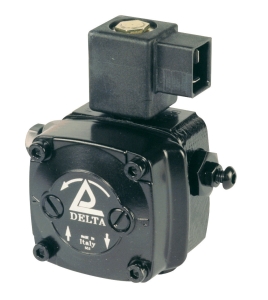
Flow measurement requires a flowmeter or collection vessel and stopwatch. Compare your measured flow against the pump's rated specification. For example, the Delta VM1 LL 2.4 oil pump rated at 35 L/min should deliver 90-95% of that flow under normal pressure conditions. Significantly lower flow (less than 80% of rating) indicates internal leakage, cavitation, or mechanical damage.
Fluid temperature is your leading indicator for thermal problems. Use a non-contact infrared thermometer or immersion thermocouple. In Southeast Asian climates, most systems run 5-10°C hotter than equivalent installations in temperate zones due to ambient temperature. If your fluid temperature exceeds 60°C consistently, you're operating in the danger zone. At 65°C+, fluid begins breaking down rapidly, viscosity changes unpredictably, and component seals degrade. This thermal stress accelerates all other failure modes.
Step 4: Noise and Vibration Diagnosis
Different failure modes produce distinctive sounds. Cavitation creates a grinding, crackling, or popping sound—like sand flowing through the pump. Worn bearings produce a grinding or squealing noise that increases with pump speed. Pressure relief valve chattering sounds like rapid clicking or stuttering at high pressure. Loose mounting bolts cause vibration that transmits through the system frame.
Use your hand (on metal surfaces, never near rotating shafts) or a vibration meter to localize where vibration originates. If vibration is concentrated at the pump inlet, suspect cavitation. If it's at the motor-pump coupling, suspect alignment problems or bearing wear. Severe vibration often indicates imminent failure—these systems should be taken offline immediately.
Emergency Response Procedures: Keeping Systems Running
When a pump fails during peak cooling season or critical process operation, your response procedure determines whether you retain the customer relationship. HVAC contractors need rapid decision trees that separate problems requiring immediate replacement from those that can be temporarily managed.
Immediate Actions (First 15 Minutes)
1. Shut down the system safely. Turn off the motor and close isolation valves immediately upstream and downstream of the pump.
2. Assess safety and containment. Is leaked fluid creating a slip hazard or environmental risk? Deploy absorbent materials and mark the area.
3. Document the failure mode. Take photographs of the pump, pressure gauge readings, and any visible damage. This information is invaluable for insurance claims and warranty disputes.
4. Contact 3G Electric immediately if you need emergency parts or specifications. With 35+ years distributing pumps and compressors, our team can often identify compatible alternatives within hours.
Rapid Diagnosis (Minutes 15-45)
With the system safely offline, perform the systematic checks outlined above. Can you identify the failure mode? Is it:
- Lost prime only? This is often recoverable without replacement. Bleed air from the inlet line, refill the pump chamber, and attempt restart. Most systems restore operation within 30 minutes.
- Cavitation? Check inlet line for blockages, verify suction lift (typically limited to 0.6 meters), and confirm fluid level in the supply tank. These are often field-correctable.
- Pressure relief valve failure? If a relief valve is chattering or stuck open, it can sometimes be cleaned on-site. If cleaning fails, replacement takes 45-90 minutes depending on accessibility.
- Internal pump damage? Severe grinding, low pressure with high motor load, or obvious mechanical damage means replacement is necessary.
For critical systems where downtime creates customer liability, HVAC contractors sometimes need temporary solutions. The Interpump WS 162 L industrial pump at 18 L/min and 160 bar or Interpump E1B1614 compact pump at 14 L/min and 160 bar are compact enough for bench replacement on many installations. If your original pump is rated for higher flow, you might operate a smaller capacity temporarily at reduced system capacity, allowing the facility to maintain partial climate control during the day while full cooling is restored.
Temporary solutions should be labeled clearly, documented in writing, and never exceed 48 hours without plan for permanent repair. Always verify that temporary equipment is properly rated for your system pressure and that all safety systems (relief valves, shutoff switches) are functional.
Building a Maintenance Program to Prevent Failures
The most cost-effective approach to pump and compressor reliability is preventing failures before they start. HVAC contractors who implement systematic maintenance programs see 40-60% fewer emergency calls compared to reactive-only services.
Quarterly Inspection Checklist
- Pressure gauge reading (compare to baseline, note any 10%+ variance)
- Fluid level and condition (color, clarity, viscosity changes)
- Temperature at pump discharge (compare to season-adjusted baseline)
- Noise and vibration assessment
- Visual inspection for leaks, corrosion, loose bolts
- Relief valve function test
Fluid degradation accelerates failure across all pump types. In Southeast Asia's humid, hot climate, oxidation and moisture contamination happen faster than in temperate regions. Replace pump fluid annually rather than the typical 2-year interval recommended for cooler climates. Monitor fluid samples monthly during peak seasons—your distributor can arrange laboratory analysis that costs less than emergency repairs but catches problems 4-8 weeks early.
Spare Parts Strategy
Maintain in inventory the most common failure items for your regularly-used pump models. For the Pratissoli KF30, keep spare seals, relief valve cartridges, and inlet check valves. These small-cost components reduce your downtime from days to hours. 3G Electric's inventory of Pratissoli and Interpump components ensures you can source these quickly even for emergency situations.
Building relationships with your equipment distributor pays dividends. When you call with a failed pump model at 2 PM on a Friday, knowing that your distributor has common replacements in stock or can expedite delivery within hours transforms a customer crisis into routine maintenance.
Conclusion
Pumps and compressors fail predictably. They announce problems through pressure irregularities, thermal changes, noise, and vibration long before catastrophic breakdown. HVAC contractors who master systematic diagnostics, understand failure modes, and maintain preventive programs convert emergency situations into competitive advantages. When you can respond to pump failures within hours rather than days, customers notice. When you prevent failures through thoughtful maintenance, your profit margins improve significantly.
Your success depends on having reliable equipment suppliers, access to emergency parts, and technical knowledge to make fast decisions under pressure. 3G Electric's 35+ years in industrial equipment distribution means we understand these challenges intimately. Whether you're managing a single installation or dozens of systems across Southeast Asia, we maintain the inventory depth and technical expertise to support your operations.