Why Plant Managers Must Assess Equipment Age and Condition
Pumps & Compressors are the heartbeat of manufacturing, food processing, HVAC, and chemical operations across Singapore's industrial landscape. Yet many plant managers operate them until catastrophic failure occurs—a costly mistake. Equipment running past its economic life consumes 20-30% more energy, requires increasingly frequent repairs, and risks unplanned production halts.
With over 35 years of supplying industrial equipment throughout Southeast Asia, 3G Electric has observed a clear pattern: plants that conduct regular condition assessments and replace equipment strategically save 15-25% on total operating costs compared to run-to-failure operations. This guide gives you the tools to make that assessment yourself.
Section 1: Establish Your Equipment Baseline
Before you can assess whether equipment needs replacement, you must understand its current operating window. This takes 2-3 weeks of systematic data collection.
Document nameplate specifications. Record the manufacturer, model, rated flow rate (L/min), pressure (bar), and power (kW) from the pump or compressor nameplate. Compare these against your actual system specifications. Many plants are unaware that equipment has been de-rated or operated outside design envelope for years.
Collect 30 days of operational data. Install temporary gauges at inlet, outlet, and discharge points to capture:
- Actual flow rate during peak and normal operations
- Operating pressure versus rated pressure
- Motor current and power consumption
- Frequency of pressure relief valve activation
- Runtime hours and duty cycle patterns
Use existing pressure gauges if calibrated within the last 12 months, or deploy portable test equipment. Document ambient temperature, humidity, and fluid condition during measurement.
Benchmark against nameplate performance. A pump delivering only 70-80% of rated flow at full rated pressure suggests either cavitation, internal wear, or intake line restriction—not necessarily imminent failure, but a red flag requiring investigation. Equipment consistently operating at 110%+ rated pressure is being overstressed.
Section 2: Conduct a Condition Assessment Using Measurable Criteria
Rather than guessing, use this framework to score equipment condition on a 0-10 scale. Equipment scoring 7+ on deterioration warrants serious replacement consideration.
Energy efficiency test (0-10 scale). Compare current power consumption to nameplate rated power:
- 0-20% above nameplate = Score 2 (normal efficiency loss)
- 21-40% above nameplate = Score 5 (significant degradation)
- 41%+ above nameplate = Score 8-10 (critical efficiency loss)
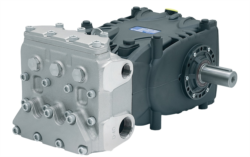
A Pratissoli KF30 rated at 40 kW should consume approximately that power under full load at 200 bar. If it draws 56+ kW (40% overage), internal wear is substantial.
Flow rate consistency test (0-10 scale). Measure flow rate at 30%, 60%, and 100% system load over 5 operating days:
- Flow variance under 5% = Score 1 (healthy)
- Variance 5-15% = Score 4 (acceptable wear)
- Variance 15-30% = Score 7 (significant wear)
- Variance over 30% = Score 9-10 (replacement imminent)
Unstable flow indicates internal clearances have opened beyond tolerance, affecting process quality downstream.
Pressure relief cycling frequency (0-10 scale). Count how often the pressure relief valve (PRV) activates during a normal 8-hour shift:
- 0-2 activations = Score 1 (normal operation)
- 3-8 activations = Score 3 (minor overpressure)
- 9-20 activations = Score 6 (recurring overpressure)
- 20+ activations = Score 9-10 (system imbalance or pump wear)
Frequent PRV opening wastes hydraulic fluid, generates heat, and indicates the pump cannot maintain system pressure efficiently.
Vibration and noise assessment (0-10 scale). Compare current noise/vibration to baseline established at commissioning:
- Unchanged = Score 1
- 10-20% increase = Score 3
- 20-40% increase = Score 6
- 40%+ increase = Score 8-10
Using a basic vibration meter ($150-400 SGD) on motor bearing housing provides objective data. Wear, cavitation, and misalignment all increase vibration signatures.
Fluid condition analysis (0-10 scale). Every 6 months, send a 100 mL sample to a lab for particle count (ISO 4406 standard):
- ISO 4406 code 16/14/11 or cleaner = Score 1-2 (excellent)
- 17/15/12 to 18/16/13 = Score 4-5 (acceptable)
- 19/17/14 to 20/18/15 = Score 6-7 (concerning)
- 21/19/16 or dirtier = Score 9-10 (contamination damage risk)
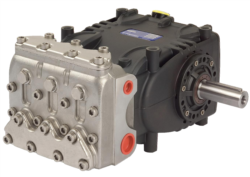
Dirty fluid accelerates wear in pumps like the Pratissoli SN7045 L, which delivers 45 L/min at 210 bar—tight clearances cannot tolerate contamination.
Repair frequency and cost analysis (0-10 scale). Track all repairs over the past 3 years:
- 0-1 repairs/year, under 5% of replacement cost = Score 1
- 2-3 repairs/year, 5-10% of replacement cost = Score 4
- 4-5 repairs/year, 10-20% of replacement cost = Score 7
- 6+ repairs/year, 20%+ of replacement cost = Score 9-10
When annual repair spending exceeds 15-20% of new equipment cost, replacement economics favor purchasing new equipment.
Section 3: Calculate the Repair vs. Replace Decision Matrix
With assessment scores completed, apply this formula to guide your replacement decision:
Total Deterioration Score = (Energy Efficiency + Flow Consistency + PRV Cycling + Vibration/Noise + Fluid Condition + Repair Frequency) ÷ 6
- Score 1-3: Equipment is healthy. Continue preventive maintenance, reassess annually.
- Score 4-6: Equipment shows wear. Plan replacement within 12-24 months. Monitor closely. Consider upgrading to higher-efficiency model during next maintenance window.
- Score 7-10: Equipment should be replaced immediately. Calculate payback period for new unit versus continued repair costs.
Example calculation:
Your facility operates a Interpump PUMP W2035 L ATEX (13.23 kW, 35 L/min @ 200 bar) for high-pressure transfer in a hazardous area:
- Equipment age: 9 years
- Assessment score: 6.8 (elevated energy use, minor flow variance, frequent PRV cycling)
- Annual electricity: 13.23 kW × 6,000 operating hours × SGD 0.25/kWh = SGD 19,845
- Annual repairs (last 3 years): SGD 4,200 average
- Downtime risk cost (estimated): SGD 2,000 per incident × 2 incidents/year = SGD 4,000
- Total annual operating cost: SGD 27,045
- New ATEX pump cost: SGD 35,000-45,000
- 50% threshold: SGD 17,500-22,500
Since SGD 27,045 exceeds the threshold, replacement becomes the rational choice. The new equipment will pay for itself within 18-24 months through energy savings alone.
Section 4: Plan Your Replacement Timeline and Execution
Once you decide replacement is warranted, execute strategically to minimize disruption.
Sequence replacements by criticality. Rank equipment by:
1. Production impact if failed (shutdown hours × revenue per hour)
2. Safety risk (ATEX compliance, pressure containment, environmental hazard)
3. Ease of installation and startup
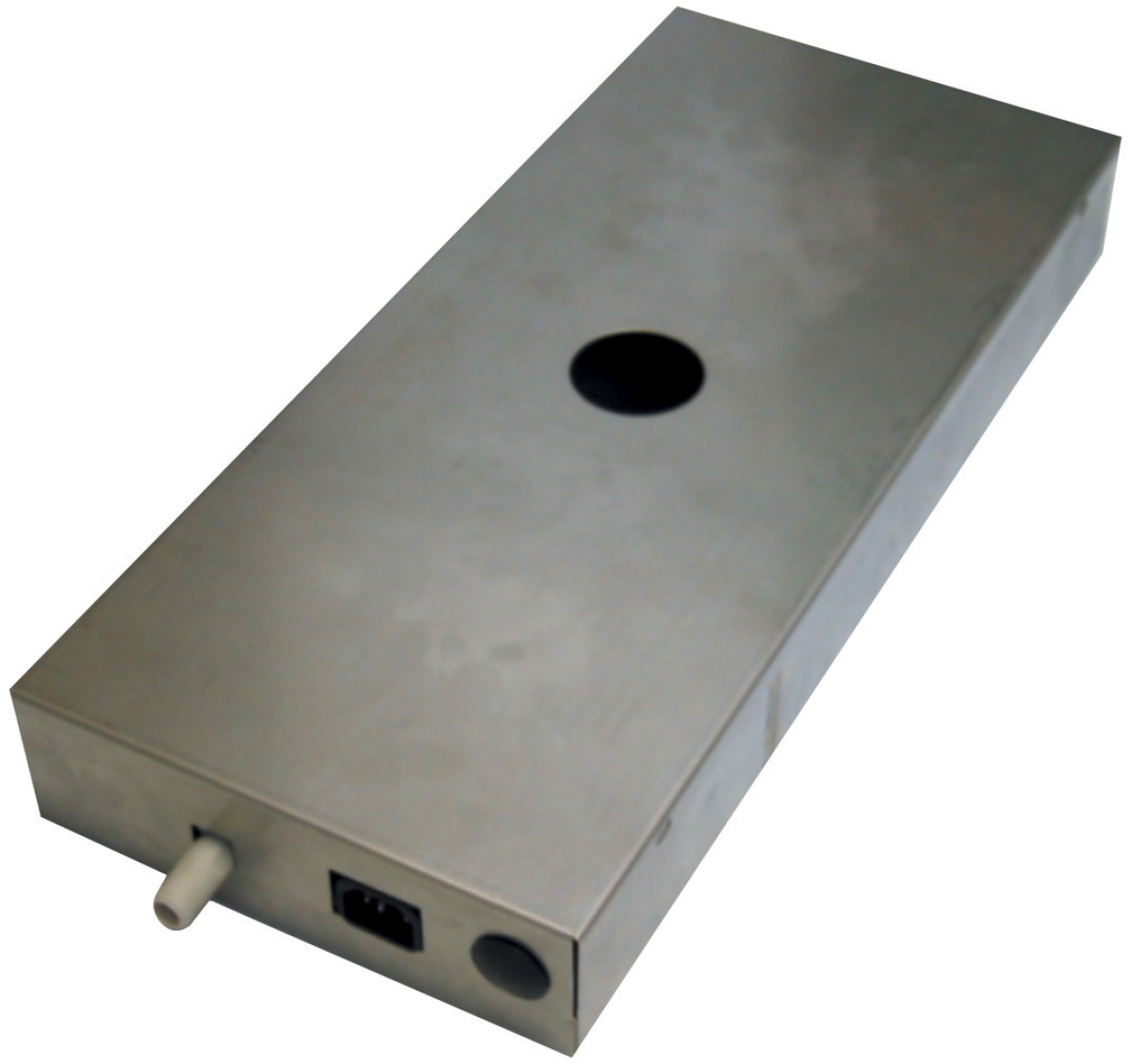
For example, a condensate pump like the Clima Concept Display pump serving backup HVAC drainage ranks lower in criticality than a primary hydraulic pump supplying production machinery.
Establish overlap and transition periods. For critical equipment:
- Procure new pump 8-12 weeks in advance
- Schedule installation during planned maintenance window or low-production period
- Run both old and new equipment in parallel for 1-2 weeks to verify performance
- Develop quick-disconnect or valve arrangements allowing fast switchover
For demanding applications, the Pratissoli KF30 (106 L/min, 200 bar, 40 kW) offers Italian-engineered reliability and energy efficiency that will lower operating costs compared to aging equipment.
Commission and performance test new equipment. Before returning old equipment, conduct a full performance verification:
- Flow rate and pressure at 30%, 60%, 100% load
- Energy consumption baseline establishment
- Pressure relief valve setting verification
- Vibration and noise signature recording
- Fluid sample analysis (baseline for future condition tracking)
Document all results as the new baseline for your 3-year maintenance cycle.
Plan fluid and filter upgrades. New equipment often performs better with fresh, clean hydraulic fluid and new filters. Budget SGD 2,000-5,000 for complete system flushing and refilling during changeover.
Conclusion
Assessing and replacing aging Pumps & Compressors is not a binary repair-or-replace decision—it is a financial optimization exercise. By collecting operational data, scoring equipment condition objectively, and calculating the 50% Rule threshold, you transform guesswork into evidence-based procurement strategy.
Plant managers who conduct these assessments every 2-3 years consistently report 15-25% reductions in total equipment operating costs, improved production reliability, and reduced emergency downtime. With 35+ years of experience supplying Southeast Asian industrial operations, 3G Electric stands ready to support your assessment process and provide the right replacement equipment when the numbers indicate replacement is justified.