How to Diagnose and Troubleshoot Common Pump Performance Issues Across Global Industrial Environments
Pump failures rarely happen without warning. Most performance degradation develops gradually—reduced flow rates, pressure fluctuations, unusual noise, or temperature spikes—all indicators that something inside the system needs attention. For maintenance teams and service engineers working with industrial pumps in diverse global climates, the ability to quickly diagnose problems separates reactive emergency repairs from proactive maintenance that keeps operations running smoothly. This guide provides the practical diagnostic framework you need to identify root causes of pump underperformance and determine whether the issue requires adjustment, component replacement, or full system overhaul.
Understanding the Three Primary Failure Modes in Industrial Pump Systems
Industrial pumps experience three distinct categories of performance degradation: mechanical failures, operational mismatches, and environmental stress. Understanding the difference helps you ask the right diagnostic questions and apply the correct remediation.
Mechanical failures occur when internal components wear or break—impeller cavitation damage, bearing deterioration, seal leakage, or shaft misalignment. These issues typically develop over months or years of operation and accelerate when maintenance intervals are missed. Mechanical failures usually require component replacement or pump rebuild.
Operational mismatches arise when the pump operates outside its design specifications. Running a pump at higher pressure than rated, exceeding maximum flow demands, or operating at rotation speeds beyond design parameters causes stress that degrades performance quickly. These issues are often configuration errors or system design problems rather than pump defects.
Environmental stress encompasses fluid degradation (contaminated or viscosity-changed fluids), temperature extremes, corrosive atmospheres, or moisture infiltration. In tropical global environments with high humidity, temperature fluctuations, and salt-air exposure, environmental stress accelerates seal degradation and bearing corrosion. Proper fluid management and protective housing become critical.
Most performance issues involve combinations of these factors. A pump might be mechanically sound but operating with degraded fluid in an overly humid environment—the combination creates failure conditions faster than any single factor alone.
Step-by-Step Diagnostic Process for Pump Performance Issues
Before disassembling or replacing components, gather baseline data and systematically eliminate variables. This structured approach saves time and prevents unnecessary component replacement.
Step 1: Document Current Operating Conditions
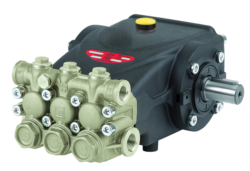
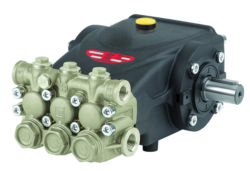
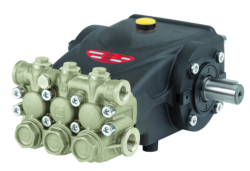
Record actual flow rate (gallons per minute or liters per minute), discharge pressure (in bar or PSI), suction pressure, motor amperage, fluid temperature, and rotation speed (RPM). Compare these readings against the pump's technical specifications and your system design parameters. For reference, the Interpump E3B2515I R pump is rated for 15 L/min at 250 bar with 1450 RPM operation—if your readings show 10 L/min at the same pressure and speed, you have a 33% flow loss requiring investigation. The Interpump E3C1515 L operates at 15 L/min with 150 bar pressure rating; reduced pressure despite normal flow suggests a different failure mode than reduced flow.
Step 2: Inspect Fluid Condition and System Cleanliness
Drain a fluid sample and assess color, clarity, odor, and viscosity. Darkened fluid indicates thermal degradation or contamination. Cloudy or milky appearance suggests water contamination—particularly concerning in humid tropical climates where moisture ingress through breather vents accelerates bearing corrosion. Test fluid viscosity against pump specifications; high-pressure pumps like the Interpump E3B1515 with integrated gearbox require specific viscosity ranges. Verify fluid change intervals have been maintained. Degraded fluid directly impacts seal performance and internal component lubrication.
Step 3: Check All Pressure and Flow Gauges
Gauge accuracy is foundational to diagnosis. A faulty pressure gauge reading 200 bar when actual pressure is 150 bar sends you down a false troubleshooting path. Cross-reference pressure readings with independent gauges. Install temporary test gauges at suction and discharge if primary gauges are suspect. Flow measurement requires checking your flow meter calibration or comparing against baseline historical data. For low-pressure applications using the Interpump E3C1021 DX pump rated for 100 bar operation, even small gauge errors create significant diagnostic confusion.
Step 4: Assess Pump Noise and Vibration
Cavitation (high-pitched chattering or grinding sound) indicates insufficient suction pressure or air entry. Bearing knock (low-frequency metallic sounds) suggests bearing wear or shaft misalignment. Screech or squealing points to coupling misalignment or seal damage. Unusual vibration often correlates with shaft runout or impeller imbalance. Document the sound characteristics and operating conditions when noise occurs—this helps distinguish between startup cavitation (normal) and operating cavitation (problematic).
Step 5: Measure Motor Current and Power Consumption
A motor drawing significantly less current than nameplate rating suggests reduced pump load—either lower flow, lower pressure, or mechanical failure reducing internal friction. Higher current consumption might indicate increased drag from bearing wear, seal friction, or fluid viscosity issues. Compare amperage and kilowatt consumption against baseline data from when the pump operated normally. The Interpump E3C1021 DX consumes 4.04 kW at rated specifications; significant deviation from this baseline indicates operational changes worth investigating.
Specific Diagnostic Scenarios and Solutions
Scenario 1: Reduced Flow, Normal Pressure
When discharge pressure remains at specification but flow decreases, the problem typically involves mechanical flow loss rather than pressure regulation. Suspect internal leakage past the impeller or worn seals allowing backflow. Check suction strainers for blockage—a partially clogged inlet filter reduces available flow. Verify pump rotation direction; reverse rotation produces minimal or zero flow despite normal pressure readings. For high-pressure models like the Interpump E3B2515I R, internal impeller wear is common after extended operation; the pump continues holding pressure but delivers less volume.
Scenario 2: Low Pressure, Normal Flow
When flow reaches specification but pressure stays below minimum rated pressure, the pump cannot overcome system resistance or maintain pressure through a relief valve passage. Check relief valve settings and cleanliness—debris prevents proper seating, causing pressure bleed-off. Inspect high-pressure seals for external leakage indicating wear. On lower-pressure pumps like the Interpump E3C1515 L rated for 150 bar, pressure loss often indicates internal seal degradation allowing fluid bypass. Verify system back-pressure hasn't changed; a new restriction downstream might have increased resistance beyond pump capacity.
Scenario 3: Cavitation Noise with Normal Readings
Cavitation occurs when local pressure at the impeller inlet falls below fluid vapor pressure, creating vapor bubbles that collapse violently. This produces distinctive chattering noise despite normal system pressure and flow. Check suction-side conditions: verify inlet strainer is clean, suction line diameter is adequate, and inlet reservoir has sufficient fluid level. Excessive suction line velocity creates pressure drop; consider enlarging inlet piping if suction line is undersized. For high-speed pumps like the Interpump E3B2515I R operating at 1450 RPM, cavitation damage accumulates rapidly—address immediately to prevent impeller erosion.
Scenario 4: Elevated Temperature Without Pressure Rise
If pump outlet temperature increases beyond normal operating range without corresponding pressure increase, internal friction is increasing. Suspect bearing wear increasing drag, seal friction degradation, or impeller rub against housing. Check motor temperature as well; elevated motor temperature alongside pump temperature suggests mechanical resistance throughout the system. In tropical climates, ensure cooling passages aren't blocked by mineral deposits or contamination. Ambient air temperature directly affects fluid temperature—verify cooling fans or radiators are functioning if equipped.
Best Practices for Systematic Troubleshooting
Establish Baseline Performance Data when the pump is newly installed or after any significant service. Record flow, pressure, temperature, amperage, and speed at various operating points. This baseline becomes your reference for detecting degradation. Without baseline data, you're always guessing whether current readings represent acceptable performance.
Create a Maintenance Log documenting every fluid change, filter replacement, gauge verification, and performance observation. Patterns emerge from logged data—if pressure creeps down 10 bar every three months like clockwork, something is deteriorating predictably. Historical context transforms individual readings into diagnostic evidence.
Verify Gauge Accuracy Quarterly by cross-referencing with independent measurement tools or having gauges professionally calibrated. A gauge drift of 10-15% is common; it's invisible until you compare against a known-good reference. Pressure gauges are inexpensive insurance against misdiagnosis.
Address Environmental Stressors in Global Locations. Tropical humidity requires desiccant breathers on reservoirs to prevent moisture ingress. Salt-air environments demand more frequent paint maintenance on exposed components and enhanced corrosion protection on fasteners. Temperature extremes require fluid selection carefully matched to ambient conditions. Environmental protection often prevents failures more cost-effectively than repair after breakdown.
Test Individual Components in Isolation when possible. If you suspect a relief valve is bypassing, temporarily isolate it and measure pressure response. If you think an inlet strainer is restricting flow, clean it and retest. Component-level testing eliminates system variables and identifies root causes with certainty.
When to Seek Professional Service Support
Some issues require expertise beyond field troubleshooting: shaft runout measurement needs precision dial indicators, internal pump inspection requires specialized knowledge of impeller geometry and clearances, and pressure relief valve tuning demands accurate test stands. If your systematic diagnosis reveals a mechanical issue inside the pump but you lack disassembly expertise, consult an distributor. The 3G Electric team has handled these issues across global operations for over three decades and can help determine whether field repair, component replacement, or pump rebuild makes economic sense for your specific situation.
Effective troubleshooting saves money by preventing unnecessary component replacement, extending equipment life through predictive maintenance, and reducing unplanned downtime. Master these diagnostic techniques and you'll transform your maintenance operation from reactive firefighting to strategic equipment management.
Contact 3G Electric today to discuss your specific pump performance challenges, arrange gauge calibration, or explore replacement pumps and compressors if your diagnosis indicates component failure. Our service engineers can walk through your diagnostic findings and recommend the most cost-effective solution for your application.