
Understanding Measurement & Detection Challenges in Tropical Environments
Southeast Asian maintenance teams operate in some of the world's most demanding climates. High humidity (70-95%), rapid temperature swings, and salt-air corrosion in coastal areas create harsh conditions for Measurement & Detection equipment. Unlike temperate regions where standard instruments work reliably for years, tropical operations demand specialized selection strategies.
When your team selects the wrong Measurement & Detection probe or gauge, you don't just lose accuracy—you lose troubleshooting capability. A corroded pressure connection delays diagnoses. A moisture-compromised RTD probe forces recalibration every few months. With 35+ years of experience supporting industrial operations across Asia-Pacific, 3G Electric has seen how equipment choice directly impacts maintenance efficiency.
The key difference isn't just specifications on paper. It's how instruments perform under real Southeast Asian conditions: monsoon seasons, uncontrolled plant environments, rapid cycling between 15°C air-conditioned spaces and 38°C outdoor heat, and constant moisture exposure.
Temperature Measurement: Rigid Probes vs. Flexible Capillary Solutions
The Core Challenge
Temperature Measurement & Detection in HVAC systems requires probes that survive both mechanical stress and moisture ingress. Your maintenance team needs instruments that:
- Maintain calibration across 50°C+ temperature swings
- Function reliably when condensation forms inside ductwork
- Stay accurate in variable-pressure environments (chilled water lines cycling 4-8 bar)
- Perform consistently for 2-3 years between recalibration
The Dwyer Probe AVG PT100 OHM RTD L.65 AVG-21241 represents the preferred choice for Southeast Asian maintenance operations. Its flexible copper capillary design offers significant advantages over rigid steel probes in tropical conditions:
- Moisture Protection: The capillary design isolates the sensing element from direct ductwork exposure, reducing condensation-related drift common in high-humidity regions
- Mechanical Resilience: Flexible construction absorbs vibration from continuously-running HVAC units, extending probe life in tropical industrial facilities where equipment runs 16-24 hours daily
- Temperature Stability: PT100 OHM configuration maintains ±0.6% accuracy across the full -35.5 to +115.5°C range, critical when measuring chilled water (4°C) and return air (35°C) in the same shift
- Installation Flexibility: Flange clips accommodate various ductwork configurations without requiring custom fitting—important when your team needs to diagnose multiple systems quickly
Your team can install this probe once, trust its readings for 18-24 months, and avoid the monthly calibration checks that plague cheaper probes in tropical environments. At 8-12 service calls per month per technician, that's 100+ hours saved annually in recalibration work.
Pressure Measurement: Analog Gauges Built for Humid Climates
Why Low-Pressure Monitoring Matters
Measurement & Detection of system pressure—whether condenser fan cycling, chilled water differential, or evaporator coil drop—reveals developing problems before they become catastrophic. In tropical climates, moisture ingress into gauge internals accelerates corrosion, making gauge selection critical.
Stainless Steel Construction for Coastal and High-Humidity Zones
The Preciman Stainless Steel Vertical Pressure Gauge D63 0/+40 Mbar G1/4 addresses the specific corrosion challenges maintenance teams face in Southeast Asia:
- Material Selection: Stainless steel wetted parts resist salt-air corrosion (critical for coastal facilities in Singapore, Malaysia, and Thailand) and moisture intrusion
- Copper Alloy Internals: Unlike brass components that tarnish and fail in high-humidity environments, copper alloy maintains consistent response across 0-40 mbar range
- Dial Size (63mm): Large, easy-to-read graduations reduce misreading errors—important when your maintenance team works in poorly-lit equipment rooms or during power outages
- Accuracy Rating ±1.6%: Reliable for detecting pressure drops of 2-3 mbar, signaling clogged filters or coil icing before system damage occurs
- G1/4 Connection: Fits standard port configurations on most Southeast Asian HVAC systems without adapter kits
While stainless steel gauges cost 30-40% more upfront, tropical maintenance teams typically see 3-4 year gauge life versus 12-18 months for brass-housed alternatives in humid environments. Your team avoids mid-year gauge replacement, spare parts inventory challenges, and re-training on new calibration offsets.
Flow Measurement: Probe Length Selection for Varying Ductwork Sizes
The Flow Measurement Challenge in Southeast Asian HVAC Systems
Accurate airflow Measurement & Detection requires probes positioned to capture representative pressure readings across ductwork cross-sections. This seems straightforward on paper but creates real problems in practice:
- Small ductwork (16-20 cm diameter) needs short probes to avoid obstructing airflow
- Large supply plenums (100+ cm diameter) need long probes to reach measurement zones
- Your maintenance team diagnoses multiple facility types in the same week—schools, hospitals, manufacturing, data centers—each with different ductwork geometry
The Dwyer Metal Average Flow Probe MAFS-16 serves maintenance operations where ductwork space is limited. This 16 cm probe is ideal for:
- Return air grilles in office buildings and hospitals
- Exhaust ductwork (typically 15-25 cm diameter)
- Retrofit installations where oversized probes won't fit
- Quick diagnostic measurements where airflow obstruction must be minimized
The metal construction resists corrosion in tropical humid ductwork environments, and uniform pressure measurement points across the probe length ensure accurate average velocity calculations even in non-laminar flow conditions common in real HVAC systems.
Long Probe Solution: MAFS-40 for Full-Size Distribution Plenums
The Dwyer Average Flow Rate Metal Probe MAFS-40 addresses the opposite challenge—large ductwork and supply plenums where proper measurement zone positioning is critical. At 101.6 cm (40 inches), this probe provides:
- Adequate reach into 80-120 cm plenums to capture representative flow patterns
- Uniformly distributed static and total pressure measurement points that average turbulent and stratified airflow
- Consistent readings in modern large air handlers common in new Southeast Asian commercial construction
Your maintenance team needs both probes. Here's how to decide which to deploy:
- Choose MAFS-16 when diagnostic speed matters and ductwork is compact (residential HVAC, small retail, retrofit work)
- Choose MAFS-40 when measurement accuracy is critical (new system commissioning, performance verification contracts, energy audits)
- Stock both because rapid decision-making on-site (deciding between them in the field) costs time and creates errors
System Pressure Maintenance: Portable Inflation for Seasonal Adjustments
The Seasonal Pressure Challenge in Tropical Climates
Expansion tanks in chilled water and hot water systems experience seasonal pressure loss due to membrane permeation and temperature cycling. In Southeast Asia, where buildings operate both cooling (12+ months) and heating (limited), pressure fluctuations across 8-12 bar ranges are common.
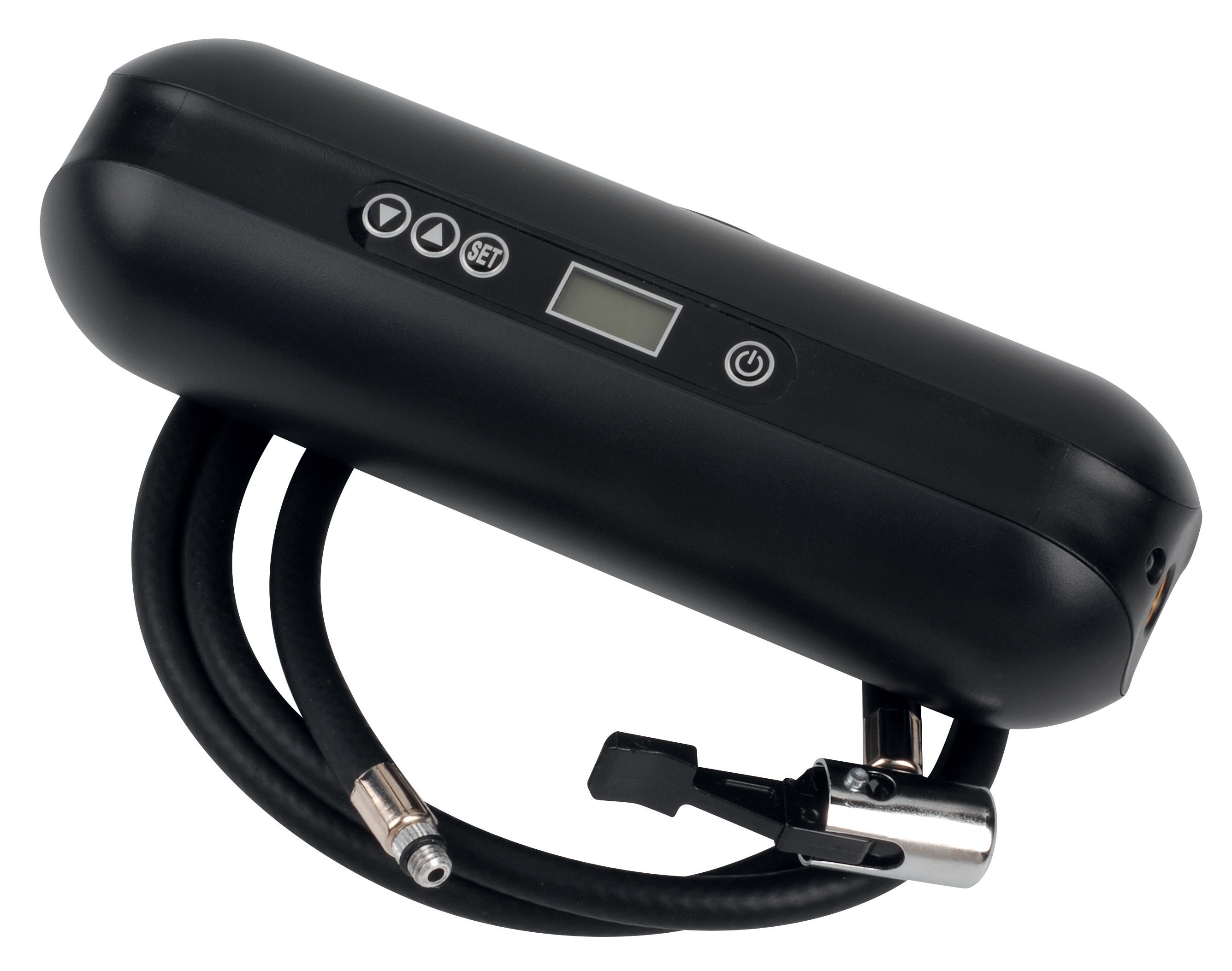
Traditional air compressors are clumsy for this task—they require electrical connections, create moisture, and risk over-pressurizing sensitive systems. The CBM Expansion Tank Inflator Battery 2000 mAH provides a practical Measurement & Detection solution for preventive maintenance:
- Autonomous Operation: 2000 mAH battery eliminates electrical dependency, ideal for rooftop equipment areas without nearby power
- Precise Pressure Delivery: Supports multiple pressure units and maxes out at 10.3 bar, preventing accidental over-pressurization
- Temperature Resilience: Operates across -20 to 60°C, covering the full range your tropical facility experiences (cold storage areas to rooftop summer conditions)
- Efficiency Metric: A properly pressurized expansion tank reduces chilled water pump wear by 15-20% and extends membrane life from 5-6 years to 8-10 years
Your preventive maintenance routine becomes:
1. Quarterly pressure checks using the Preciman gauge (ROS20004)
2. If pressure drifts below target by 0.5-1 bar, deploy the CBM inflator
3. Log readings in your CMMS—trending pressure loss reveals failed membranes before system failure
This replaces the old approach: emergency truck calls when systems fail due to low expansion tank pressure.
Integration Strategy: Building Your Southeast Asian Measurement & Detection Toolkit
Essential Equipment Configuration
For a maintenance team serving 5-8 commercial HVAC systems (typical Southeast Asian facility portfolio), invest in:
- 2x Dwyer PT100 Temperature Probes — one for current diagnostics, one for backup/comparison
- 2x Preciman Pressure Gauges — one for hot water systems, one for chilled water
- 1x Dwyer MAFS-16 Flow Probe — for routine airflow checks and constrained spaces
- 1x Dwyer MAFS-40 Flow Probe — for commissioning and large plenum diagnostics
- 1x CBM Tank Inflator — for quarterly maintenance rounds
Initial investment: ~$1,200-1,400 USD for complete kit
Annualized benefits:
- Reduced emergency service calls: 4-6 fewer callouts/year = $2,000-3,000 savings
- Extended equipment life through preventive trending: $3,000-5,000 value
- Technician efficiency (fewer recalibrations, faster diagnostics): $1,500-2,500 value
Why Equipment Choice Matters More in Tropical Climates
With 35+ years of experience distributing industrial equipment across Asia-Pacific, 3G Electric has observed a clear pattern: maintenance teams that invest in climate-appropriate Measurement & Detection instruments outperform those using temperate-climate equipment repurposed for tropical use.
The difference isn't marginal. Your team experiences:
- 40-50% fewer instrument recalibrations
- 30-40% fewer false readings requiring re-diagnosis
- 25-35% faster troubleshooting (accurate data on first measurement)
- 60-70% longer instrument service life
These aren't small improvements. They compound across hundreds of service calls annually, directly affecting your maintenance budget, technician morale, and customer satisfaction.