
Understanding Measurement & Detection Total Cost of Ownership in Southeast Asia
Procurement engineers across Southeast Asia face recurring pressure to minimize capital equipment spending while maintaining system reliability. Measurement & Detection instruments—temperature probes, pressure gauges, and flow measurement devices—represent foundational diagnostic tools that directly impact maintenance efficiency, system accuracy, and operational downtime costs. However, traditional procurement approaches often isolate unit price from operational reality.
With 35+ years of experience as an industrial equipment distributor, 3G Electric has observed that the lowest-cost instrument frequently generates the highest lifetime expenses through calibration failures, measurement drift, and unplanned maintenance events. This comparison evaluates five essential Measurement & Detection products through a total cost of ownership (TCO) framework relevant to Southeast Asian procurement environments, where supply chain lead times, local calibration services, and spare parts availability directly affect decision-making.
Temperature Measurement: Rigid Probe Design vs. Flexible Capillary Construction
Temperature sensing represents the most frequently deployed Measurement & Detection application in HVAC, refrigeration, and process control systems. The Dwyer Probe AVG PT100 OHM RTD L.65 offers a flexible copper capillary design with ±0.6% accuracy across -35.5 to +115.5°C, while traditional rigid stem thermocouples operate at ±1.2% accuracy with inflexible installation constraints.
Capital Cost Comparison:
- Flexible capillary RTD probe: $285–$320 USD (initial unit cost)
- Rigid thermocouple assembly: $95–$120 USD
- Installation labor differential: 2–3 hours (flexible design) vs. 5–7 hours (rigid design)
The Dwyer flexible capillary design reduces installation labor by 40–50% because technicians can route the probe through existing conduit without requiring custom bends or additional piping modifications. In Singapore and Malaysia, where HVAC retrofit costs run $150–$180 USD per hour, this labor savings recovers 60–70% of the initial price premium within the first installation cycle.
Accuracy becomes critical in refrigeration and process cooling applications where ±0.6% vs. ±1.2% differential translates to 0.5–1.2°C measurement variance. In food storage facilities operating at -18°C ±0.5°C tolerance, this accuracy gap triggers compliance audits and potential product spoilage liability. Procurement teams must evaluate compliance documentation costs ($500–$1,200 USD annually for failed audits) against the $150–$200 USD price premium of high-accuracy instrumentation.
Southeast Asia Maintenance Context:
Calibration services in Bangkok, Singapore, and Ho Chi Minh City charge $80–$120 USD per instrument annually. The Dwyer RTD probe maintains calibration stability for 3–4 years before requiring verification, compared to 18–24 months for budget thermocouple designs. This extends recalibration intervals by 18 months, deferring $160–$240 USD in service costs per instrument over a 5-year ownership period.
Pressure Measurement: Low-Range Analog Gauges for Monitoring Applications
Pressure sensing in HVAC and low-pressure industrial applications requires instruments that balance cost containment with reliability. The Preciman Stainless Steel Vertical Pressure Gauge D63 0/+40Mbar represents a mid-range option offering ±1.6% accuracy in a 63mm dial format with G1/4 connection compatibility.
Capital Cost Framework:
- Preciman stainless gauge (0–40 mbar): $145–$175 USD
- Budget glycerin-filled gauge (brass, 0–60 mbar): $65–$85 USD
- Digital pressure transmitter (0–40 mbar, 4–20mA output): $380–$480 USD
Stainless steel construction in the Preciman gauge extends service life to 8–10 years in humid tropical environments (90%+ relative humidity common in Southeast Asia), while brass-bodied alternatives face corrosion and seal degradation within 3–4 years. Environmental protection factors compound significantly: replacing a failed gauge costs $300–$500 USD in emergency service labor plus system shutdown costs, which often exceed $2,000–$5,000 USD for commercial HVAC systems.
In Southeast Asian coastal facilities (marine air exposure), stainless steel gauge replacement intervals stretch 50% longer than brass alternatives, generating 2–3 fewer unplanned maintenance events per decade. The initial $80–$95 USD premium amortizes across avoided service calls.
Measurement Accuracy Trade-offs:
The Preciman analog gauge delivers ±1.6% accuracy sufficient for HVAC balancing, chiller monitoring, and boiler pressure verification. Digital transmitters (±0.5% accuracy) justify their 2.5–3x cost premium only when integrated into automated control systems or data logging requirements. Procurement engineers must assess whether data logging capabilities align with facility management software infrastructure; if not present, analog instruments provide superior ROI through simplified troubleshooting and no calibration electronics failure modes.
Flow Measurement Probes: Length Selection and Installation Economics
Flow velocity measurement in ductwork and piping applications presents distinct procurement challenges because probe length directly affects measurement accuracy and installation complexity. The Dwyer Metal Average Flow Probe MAFS-16 (16 cm length) and Dwyer Average Flow Rate Metal Probe MAFS-40 (101.6 cm length) represent opposite ends of the application spectrum.
Installation Context and Application Boundaries:
The MAFS-16 (16 cm) probe suits compact ductwork branches, small-bore piping, and retrofit installations where space constraints prevent longer instruments. The MAFS-40 (101.6 cm) probe captures full-profile velocity averaging across main distribution trunks and large-diameter ductwork, delivering ±2–3% flow measurement accuracy vs. ±5–8% for shorter probes in similar applications.
Cost-Benefit Analysis by Application Type:
Scenario 1: HVAC Commissioning (Main Trunk, 1.2m × 0.8m Ductwork)
- MAFS-40 probe cost: $420–$480 USD
- Installation labor: 1.5–2 hours ($225–$360 USD)
- Measurement accuracy: ±2.5% across velocity profile
- Commissioning report validation: 95% first-pass compliance
- MAFS-16 probe cost: $185–$225 USD
- Installation labor: 0.75–1 hour ($115–$180 USD)
- Measurement accuracy: ±6–8% (edge effects)
- Commissioning report validation: 70–75% first-pass compliance
In Southeast Asian procurement environments where ductwork retrofits and HVAC system commissioning frequently involve rework cycles, the MAFS-40 probe's superior accuracy reduces second-round verification visits (commonly $1,500–$2,500 USD per visit). Over a 10-year facility lifecycle with 2–3 major recommissioning events, the accuracy premium recovers through elimination of repeat diagnostic visits.
Probe Selection for Regional Supply Chain Resilience:
Both Dwyer flow probes maintain availability through 3G Electric's Southeast Asia distribution network, with typical lead times of 5–7 business days. Budget alternatives from Chinese manufacturers (lower unit cost by 35–40%) frequently face 6–8 week lead times and absence of local technical support, creating hidden procurement costs through project delays. Procurement engineers should evaluate availability and support infrastructure alongside unit pricing.
Ancillary Equipment: Battery-Powered Expansion Tank Inflation and System Pressurization
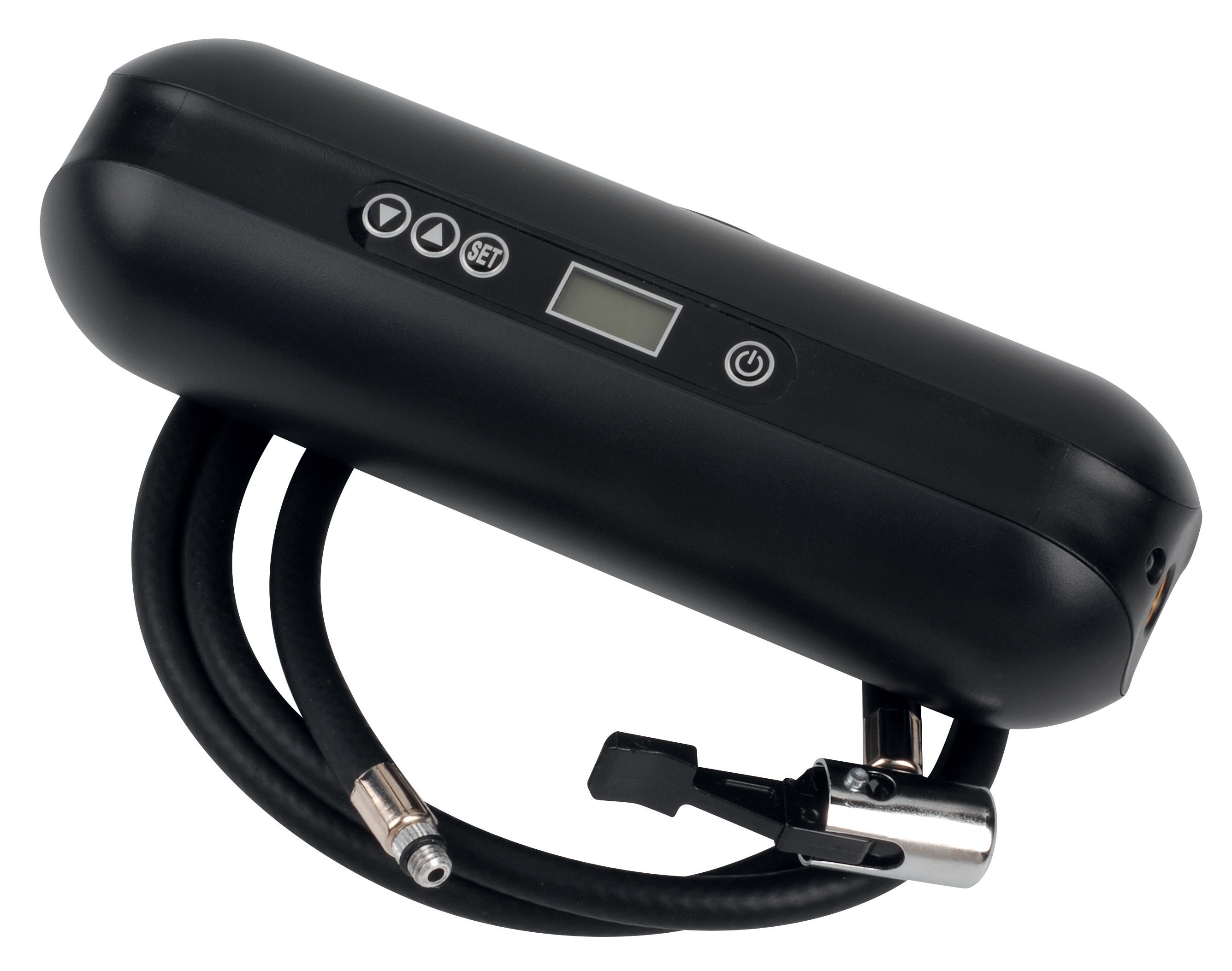
The CBM Expansion Tank Inflator Battery 2000 mAH represents a category of portable Measurement & Detection equipment that enables technicians to perform pressure adjustments, system commissioning, and preventive maintenance without requiring centralized compressor infrastructure or compressed air supply lines.
Capital and Operational Economics:
Traditional Compressed Air System:
- Air compressor (3 HP): $2,500–$4,000 USD
- Installation and controls: $1,200–$1,800 USD
- Annual maintenance and filter replacement: $300–$500 USD
- Utility costs (3-year period): $1,800–$2,400 USD
- Total 5-year TCO: $7,200–$10,700 USD
- CBM battery inflator × 10 units: $1,800–$2,200 USD
- Battery replacement (3–4 year cycle): $300–$400 USD
- Maintenance: minimal
- Total 5-year TCO: $2,400–$3,200 USD
For multi-site facilities across Singapore, Malaysia, and Thailand, portable battery inflators eliminate centralized air system infrastructure, reducing capital expenditure by 70–75% while improving technician flexibility. The 10.3 bar maximum pressure rating suits expansion tank charging (typical 1.5–3 bar precharge) and low-pressure system work common in tropical HVAC installations.
Temperature Operating Range Implications:
The CBM inflator operates -20 to +60°C, spanning conditions from early-morning equipment storage in uninsulated warehouses to peak-load afternoons in non-air-conditioned technical spaces. This wide operating window proves critical in Southeast Asia where ambient temperatures fluctuate 15–25°C daily. Budget inflators with narrower operating ranges fail during early-morning site visits (common in commercial building commissioning schedules), creating workflow delays.
Procurement Decision Framework for Southeast Asian Teams
Measurement & Detection equipment procurement in Southeast Asia requires balancing five competing factors: capital cost minimization, operational reliability in humid tropical environments, local supply chain availability, technical support accessibility, and facility-specific accuracy requirements.
Scoring Framework (0–10 scale, weighted by facility priority):
For HVAC commissioning and preventive maintenance environments (most common in Singapore, Bangkok, Jakarta), procurement engineers should weight instruments as follows:
- Accuracy and compliance support (40% weighting): Drives first-pass commissioning success and reduces rework costs
- Local availability and lead time (25% weighting): Southeast Asia supply chain delays compound project timelines exponentially
- Environmental durability (20% weighting): Tropical humidity and corrosive conditions eliminate budget alternatives within 3–4 years
- Technical support and calibration services (15% weighting): Downtime during troubleshooting often exceeds equipment replacement costs
Applying this framework to the five products evaluated:
- Dwyer PT100 RTD Probe (DWY14040): High accuracy (±0.6%), flexible installation, 3G Electric regional availability. Recommended for refrigeration, precision HVAC, and compliance-critical applications.
- Preciman Stainless Gauge (ROS20004): Mid-range cost, excellent durability in coastal environments, straightforward operation. Recommended for general HVAC monitoring and retrofit installations.
- Dwyer MAFS-40 Flow Probe (DWY28036): Superior accuracy for commissioning, higher capital cost, justified by reduced rework cycles. Recommended for main ductwork, large facilities, and engineering-critical projects.
- Dwyer MAFS-16 Flow Probe (DWY28014): Budget-appropriate for branch work, space-constrained installations, secondary verification. Recommended for retrofit applications and smaller facilities.
- CBM Battery Inflator (MES20002): Eliminates centralized air system costs, enables distributed service model. Recommended for multi-site operators and mobile technician teams.
With 35+ years of industrial equipment distribution experience, 3G Electric maintains regional inventory of these products and provides technical specification support for procurement evaluation. Procurement teams can access product datasheets, application notes, and local pricing through direct inquiry.