How to Interpret Pump Flow Rate and Pressure Specifications for Global Industrial Procurement
When evaluating industrial pumps for procurement, the technical specifications sheet can feel overwhelming. Flow rates in multiple units, pressure ratings in different measurement systems, power consumption in kilowatts and horsepower—these numbers are essential to understanding whether a pump will perform in your application. Yet many procurement engineers struggle to translate specification data into practical performance understanding. This guide demystifies how to read and interpret pump specifications, enabling you to confidently compare models, anticipate system compatibility, and select equipment that meets your operational requirements. Whether you're sourcing industrial pumps for global applications or managing equipment procurement across multiple regions, understanding these technical fundamentals is critical to project success.
Understanding Flow Rate Specifications and Their Practical Implications
Flow rate represents the volume of fluid a pump can move per unit of time, typically expressed in liters per minute (L/min) or US gallons per minute (US gpm). This is one of the two critical parameters that define pump performance—the other being pressure. Flow rate directly correlates to system throughput: a pump rated at 15 L/min will deliver different system performance than one rated at 21 L/min, even if both operate at similar pressures.
However, flow rate specifications must be understood in context. The rated flow capacity assumes operation at nominal conditions—typically the pump's rated rotation speed, inlet pressure, and viscosity range. In real-world applications, actual flow may vary based on system backpressure, fluid temperature, and seal condition. A pump specified for 15 L/min at 1,450 rpm will deliver that flow only when operating near that rotational speed and within design pressure limits. As system resistance increases (higher backpressure), flow typically decreases while pressure increases.
For procurement engineers, flow rate specifications serve multiple critical functions. First, they determine whether a pump can meet your system's volume delivery requirements. Second, they inform pipe sizing decisions—undersized piping increases friction losses and reduces actual flow. Third, flow specifications help calculate power consumption and energy costs over the equipment's operational lifetime. When comparing pumps globally, always verify that flow ratings use consistent measurement units and reference conditions. Some manufacturers list nominal flow; others list maximum flow, which can differ significantly.
Decoding Pressure Ratings and Their Critical Role in Application Matching
Pressure specification indicates the maximum force the pump can generate, typically expressed in bar, PSI (pounds per square inch), or MPa (megapascals). Unlike flow rate—which remains relatively constant across a pump's operating range—pressure can vary significantly based on system load and resistance. Understanding pressure specifications is essential because selecting an undersized pump leads to insufficient force for the application, while oversizing increases cost and energy consumption unnecessarily.
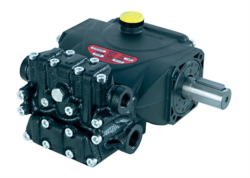
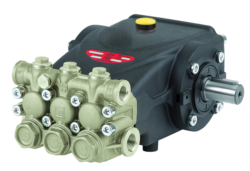
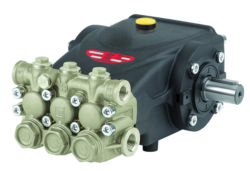
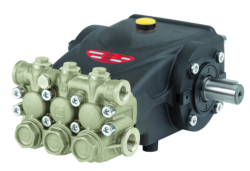
The Interpump E3B2515I R exemplifies high-pressure pump specifications with a 250 bar (3,625 PSI / 25 MPa) rating and 15 L/min flow capacity. This combination—moderate flow with very high pressure—suits applications requiring concentrated force delivery with moderate volume throughput, such as precision hydraulic pressing or controlled-pressure material processing. In contrast, the Interpump E3C1021 DX operates at 100 bar (1,450 PSI / 10 MPa) with 21 L/min flow, making it suitable for lower-pressure, higher-volume applications like circulation systems or general industrial fluid transfer.
Pressure ratings must never be exceeded during operation—doing so risks seal failure, component rupture, and system catastrophe. However, rated pressure represents maximum capability, not typical operating condition. Most systems operate at 70-90% of maximum pressure to extend component life. When interpreting pressure specifications, also note whether the rating applies continuously or only intermittently. Some pumps specify maximum intermittent pressure distinct from continuous working pressure. This distinction is critical for applications running 24/7 versus periodic-duty scenarios.
The Interpump E3C1515 L and Interpump E3C1218 L demonstrate mid-range pressure specifications at 150 bar and 120 bar respectively, suitable for general industrial applications, hydraulic machinery, and process systems. Understanding where your application falls within this pressure hierarchy helps procurement engineers select appropriately rated equipment without over-specification.
Step-by-Step Guide to Reading and Comparing Pump Specifications
Step 1: Identify Your System Requirements
Before examining any specification sheet, define what your system needs: minimum flow rate in L/min (or convert from gpm), required operating pressure in bar (or PSI), duty cycle (continuous, intermittent, or cyclical), and expected fluid properties (viscosity, temperature range, corrosiveness). This baseline prevents specification confusion caused by comparing irrelevant models.
Step 2: Convert All Values to Consistent Units
Manufacturers globally use different measurement systems. Convert all specifications to single units before comparison: use bar for pressure, L/min for flow, and kilowatts for power. Reference conversion factors: 1 bar = 14.5 PSI = 0.1 MPa; 1 L/min = 0.264 US gpm. This standardization eliminates unit-based comparison errors.
Step 3: Cross-Reference Flow and Pressure Together
Never evaluate flow and pressure separately. A 15 L/min pump at 250 bar performs completely differently than a 21 L/min pump at 100 bar. Calculate the power requirement using: Power (kW) = (Pressure × Flow) ÷ 600, where pressure is in bar and flow is in L/min. This calculation reveals true power demand and helps identify undersized or oversized options.
Step 4: Verify Rotation Speed and Application Compatibility
Note the pump's nominal rotation speed (rpm). Higher-speed pumps (3,500 rpm) suit electric motor drive; lower-speed pumps (1,450-1,750 rpm) may suit alternative drives or have different component wear characteristics. Speed affects pump efficiency and component longevity.
Step 5: Check Material Specifications and Environmental Ratings
Review materials of construction, seal types, and environmental operating ranges. For global procurement across tropical climates, ensure temperature and humidity ratings accommodate your deployment region. Inspect technical documents for shaft type, connection specifications, and overall dimensions to confirm mechanical compatibility.
Best Practices for Global Pump Specification Comparison and Selection
When comparing pumps across suppliers and regions, establish a structured evaluation matrix. Create columns for each candidate model including normalized flow (L/min), normalized pressure (bar), calculated power demand (kW), weight, dimensions, and material specifications. This visual comparison quickly reveals which options best match your application profile.
Always request complete technical documentation, not just summary specifications. Datasheet details reveal operating envelope limits, temperature derating curves, maximum intermittent pressures, and seal material compatibility with your working fluid. These details prevent application mismatches caused by partial specification understanding.
For global procurement, consider support infrastructure and spare parts availability. A pump's specifications matter little if replacement seals or repair services are unavailable in your region. Verify that your equipment supplier maintains technical support and stocks critical components in your geographic market.
Performance derating under tropical or extreme conditions is often overlooked. High ambient temperatures reduce pump efficiency and can affect seal longevity. Request derating curves if your application operates in climates exceeding 40°C or in high-humidity environments. This proactive step prevents specification-to-reality mismatches in challenging global deployments.
Finally, build specification comparison worksheets that your team reuses. Standardized evaluation processes reduce procurement errors, accelerate decision-making, and create institutional knowledge across your organization. When specification language changes across suppliers, your comparison framework ensures consistent evaluation criteria.
Real-World Application Scenario: Matching Specifications to System Needs
Consider an industrial facility requiring a circulation pump for a moderate-pressure hydraulic system. The application demands 18 L/min delivery at 120 bar working pressure, continuous duty, eight-hour daily operation. The Interpump E3C1218 L specifications show exactly 18 L/min and 120 bar—a direct match. Power consumption of 4.12 kW aligns with facility electrical capacity. The 1,750 rpm rotation speed suits standard electric motor coupling. Dimensions (265 × 223 × 140 mm) fit available installation space. This represents ideal specification matching: the pump's rated capacity exceeds system minimum requirements with manageable safety margin, component cost remains reasonable, and power demand is acceptable.
Contrast this with a high-pressure precision application requiring 15 L/min at 250 bar. The Interpump E3B2515I R delivers exactly these specifications with 7.13 kW power consumption. The higher pressure rating (versus the lower-pressure E3C models) commands higher cost but provides necessary system force. Without careful specification interpretation, a procurement engineer might incorrectly substitute a lower-cost model and subsequently face system performance shortfalls or component failures.
Conclusion and Next Steps
Interpreting pump flow rate and pressure specifications is a fundamental procurement competency that directly impacts project success, operational efficiency, and total cost of ownership. By understanding how these parameters interact, translating specifications across measurement systems, and evaluating complete technical documentation, procurement engineers can confidently select equipment that performs reliably in global industrial environments.
The complexity of modern industrial pumps and compressor systems demands systematic specification evaluation. Rather than relying on incomplete summary data or supplier recommendations alone, your team benefits from structured, technical specification analysis that aligns equipment to actual system requirements.
If you're procuring industrial pumps for global applications and need guidance matching specific requirements to equipment specifications, contact 3G Electric's technical team. We maintain extensive inventory of industrial pump and compressor equipment from leading manufacturers and provide specification consultation to help you select the right equipment for your application. Our procurement engineers understand global deployment requirements, tropical climate considerations, and multi-region support logistics. Reach out today to discuss your specification requirements and explore equipment options tailored to your operational needs.