HVAC/R System Evacuation and Pressure Testing: A Technical Application Guide for Global Industrial Operations
System evacuation is a critical but often underestimated phase in HVAC/R installation, maintenance, and troubleshooting across global industrial facilities. Whether you're commissioning a new chiller system, recovering refrigerant from legacy equipment, or diagnosing pressure anomalies in active circuits, the quality of your evacuation directly impacts operational efficiency, system longevity, and regulatory compliance. This guide addresses the technical specifications, equipment selection criteria, and field deployment practices that plant managers and operations directors must understand to maintain optimal system performance across diverse geographic and climatic conditions.
The Critical Role of Vacuum Evacuation in HVAC/R Systems
Refrigeration and air conditioning systems operate under strict moisture and non-condensable gas tolerances. Any air, water vapor, or contaminants remaining in the circuit after assembly or service can cause chemical degradation, acid formation, compressor failure, and pressure control instability. The evacuation process removes these contaminants by reducing system pressure to near-zero levels, allowing dissolved moisture and gases to escape as the pressure differential pulls them from every circuit corner.
Industrial HVAC/R systems globally face varying environmental challenges. Tropical climates with high ambient humidity present elevated moisture ingress risks during service windows. Cold-climate facilities must account for moisture that crystallizes at lower temperatures. High-altitude installations experience different pressure dynamics than sea-level operations. Each scenario demands reliable, calibrated evacuation equipment capable of achieving consistent vacuum levels—typically below 500 microns (0.5 millibars) for critical applications—and maintaining them during pressure rise testing to verify circuit integrity.
The technical foundation of successful evacuation rests on three measurable parameters: (1) ultimate vacuum level achieved, measured in microns or millibars; (2) evacuation rate, expressed in liters per minute (L/min) or cubic feet per minute (CFM); and (3) pump reliability and repeatability across multiple service cycles. Plant managers must select equipment that balances flow capacity against target vacuum depth, accounting for circuit volume, piping length, and service frequency in your facility.
Vacuum Pump Specifications and Selection Criteria for Industrial Applications
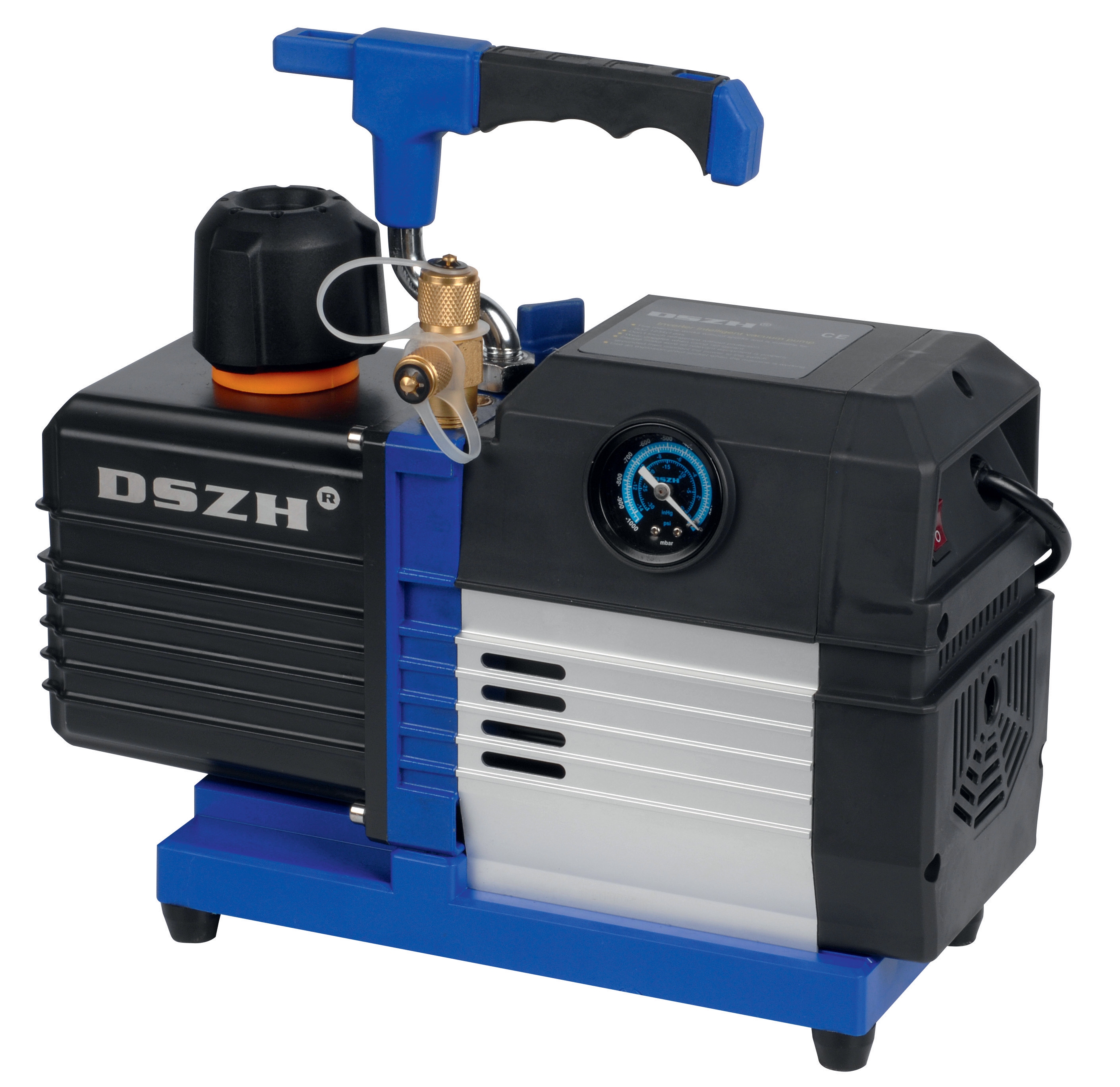
The CBM Vacuum Pump 71 L/MIN represents the performance envelope typically required for medium-scale HVAC/R service work in global industrial settings. With a nominal flow rate of 71 liters per minute and dual inlet ports (1/4" and 3/8"), this pump accommodates both retrofit work on legacy systems with smaller service ports and new installations with modern larger-diameter charge lines. The 600 ml oil capacity reflects extended operation periods without requiring mid-cycle oil changes—a practical advantage when managing multiple circuits or extended emergency-response evacuations.
Pump selection hinges on matching flow rate to system size and evacuation timeframe requirements. A general sizing rule: evacuation time (minutes) = system volume (liters) ÷ pump flow rate (L/min) × evacuation factor (typically 3–5 for the pressure drop from atmospheric to target vacuum). A 50-liter chiller circuit evacuated with a 71 L/min pump reaches rough vacuum (atmospheric to ~5000 microns) in approximately 3–4 minutes, but achieving final vacuum levels below 500 microns requires 45–90 minutes depending on moisture load and circuit geometry.
Beyond flow rate, pump selection criteria include oil type compatibility (mineral vs. synthetic), ultimate vacuum capability (typically 0.5–2 microns for high-performance units), and maintenance requirements. The WK-2BM model incorporates intelligent thermal management and contamination indicators—features that reduce unplanned downtime and extend pump service life in high-utilization environments like Singapore's dense industrial corridors or North American manufacturing clusters.
Pressure measurement during and after evacuation requires precision instrumentation. The CBM Glycerin Stainless Steel Pressure Gauge provides reliable analog indication across the 0 to +4 bar range with 1/4" NPT port compatibility, allowing technicians to monitor vacuum decay rates and verify system integrity. Glycerin-filled gauges dampen needle oscillation caused by pump pulsation, providing stable readings critical for detecting slow leaks (pressure rise of >100 microns/minute indicates a circuit failure requiring immediate attention).
System Integration: Piping, Fittings, and Measurement Architecture
Evacuation equipment does not operate in isolation. The integrity of connecting piping, manifold valve blocks, and measurement points directly affects vacuum achievement and data reliability. Many field failures trace not to pump inadequacy but to poor fitting geometry, kinked hoses, or undersized evacuation lines that create bottlenecks downstream of the pump.
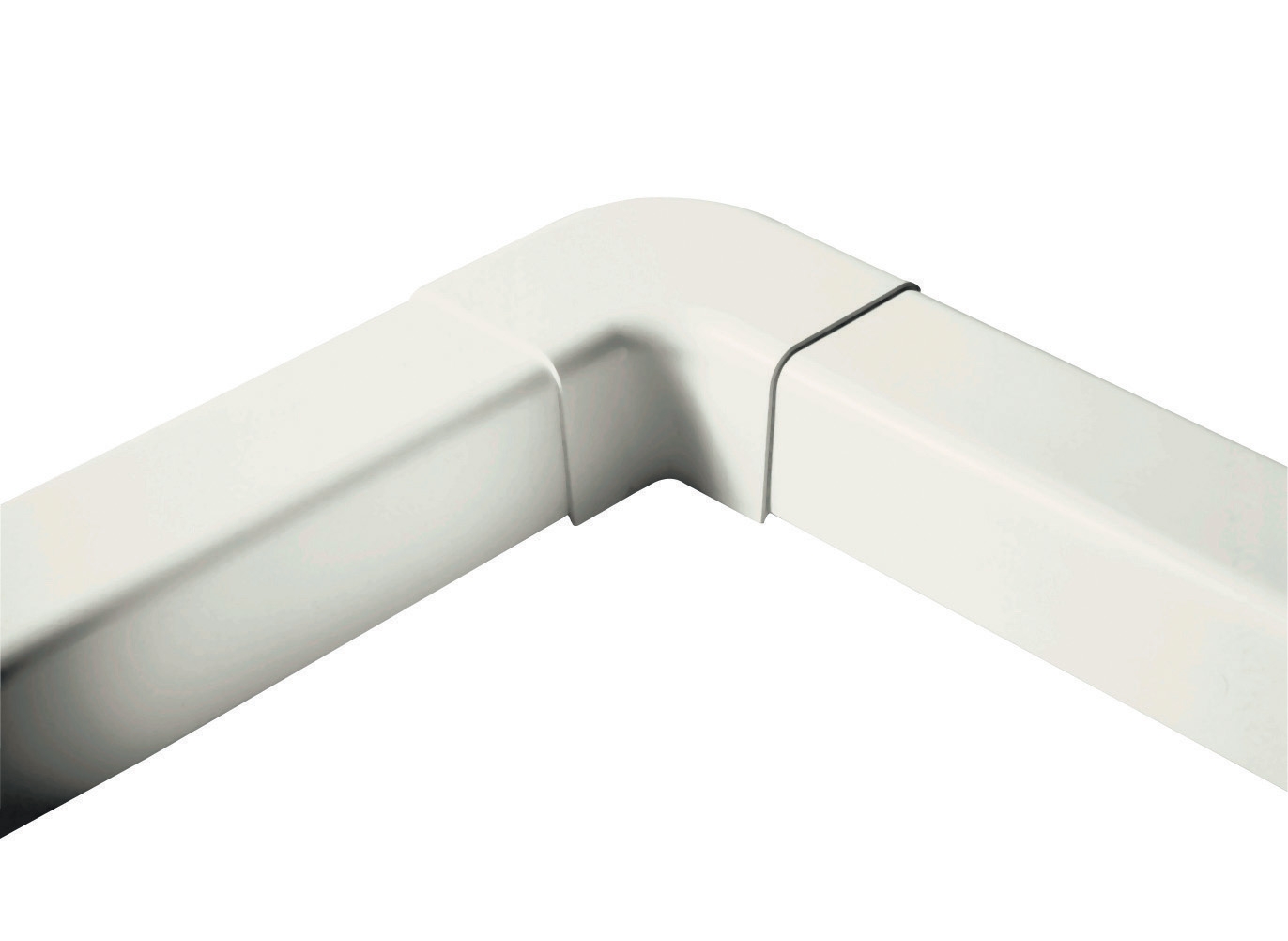
The CBM Flat Elbow 90° 60mm exemplifies component-level selection discipline. Flat (or parallel-port) elbow fittings minimize turbulence and pressure drop compared to traditional 45° elbows, enabling faster evacuation rates and more stable vacuum levels. In retrofit applications where existing piping includes older 45° swept-radius fittings, substituting modern flat-port elbows can reduce evacuation time by 15–25% while improving pump longevity by reducing cavitation stress.
Proper manifold configuration also matters. A well-designed evacuation circuit includes: (1) isolation ball valve at the pump inlet (allows pump shutdown without atmospheric reentry); (2) liquid line evacuation port with check valve (prevents backflow); (3) suction line port with isolation valve; (4) oil separator or moisture trap upstream of measurement gauge; and (5) pressure gauge with adjustable bleeder needle valve for controlled atmospheric venting. This architecture allows technicians to isolate the system and verify vacuum stability before and after refrigerant charging, catching circuit breaches before they degrade system performance in production.
Real-World Application Scenarios Across Global Industrial Settings
Scenario 1: Emergency Chiller Commissioning in a Data Center (Singapore)
A 150-kW water-cooled chiller arrives on-site requiring immediate evacuation before refrigerant charge. Facility conditions: 35°C ambient, 85% relative humidity, tight 6-hour commissioning window. A 71 L/min pump with staged evacuation protocol (rough vacuum to 5000 microns in 10 minutes, secondary evacuation to 500 microns over 60 minutes) confirms circuit integrity. Pressure gauge monitoring shows 50 micron/minute leak decay—within acceptable tolerance—allowing technicians to proceed with R-513A charging and system startup on schedule.
Scenario 2: Retrofit Piping Integration in a Manufacturing Facility
An automotive parts supplier in North America upgrades from legacy R-22 to R-410A systems, reusing existing copper tubing with original 45° elbows. Technicians install modern flat-elbow transitions at three critical junctions (compressor discharge, condenser inlet, expansion device inlet). Evacuation time drops from 140 minutes (old geometry) to 105 minutes (new geometry), and final vacuum stability improves—pressure rise measures 25 microns/minute vs. 80 microns/minute previously—indicating superior circuit integrity and longer equipment service life.
Scenario 3: Routine Maintenance Cycle in a Modular Facility
A pharmaceutical cold-storage warehouse in Europe implements quarterly preventive evacuation and pressure testing on five identical 30-kW units. Using a single 71 L/min pump with standardized manifold and gauge setup, technicians complete five full cycles (rough + secondary evacuation + 24-hour pressure hold test) in one 8-hour shift, reducing labor cost per unit from 2.5 hours to 1.6 hours while improving diagnostic consistency and audit trail documentation.
Best Practices and Selection Criteria for Reliable Operations
Flow Rate Matching: Match pump capacity to your facility's typical system sizes. For circuits under 40 liters, a 71 L/min pump offers adequate capacity with comfortable margin. For circuits over 150 liters, consider dual-pump setups or larger units (150+ L/min) to maintain realistic evacuation schedules.
Measurement Accuracy: Invest in quality pressure gauges with documented accuracy (±2% or better). Glycerin-filled analog gauges provide reliable field indication; digital multimeters complement analog gauges for electrical continuity testing and temperature monitoring. The CBM Automatic Multimeter MM420 offers AC/DC current and voltage measurement across service ranges, supporting diagnostic work beyond evacuation—useful when testing burner ignition circuits, solenoid valve coils, or motor windings in integrated HVAC/R systems.
Preventive Maintenance: Check pump oil condition monthly; discolored or milky oil indicates moisture contamination and signals imminent pump degradation. Replace pump oil before it becomes saturated. Track evacuation times for identical circuits across multiple service cycles; increasing times (10–15% quarter-over-quarter) indicate wear and warrant pump rebuilding or replacement.
Geographic and Environmental Adaptation: High-humidity regions (tropical and subtropical climates) require extended secondary evacuation phases and more frequent moisture-indicator monitoring. High-altitude facilities (above 2000 meters) experience lower atmospheric pressure, which shifts absolute vacuum reference points—adjust target micron readings accordingly (e.g., 500 microns at sea level ≈ 380 microns at 2000m altitude, accounting for barometric pressure variance).
Closing Recommendations and Next Steps
System evacuation is not a checkbox activity—it is a measurable engineering process that directly correlates to equipment reliability, regulatory compliance, and total cost of ownership. By selecting purpose-built evacuation equipment, understanding its interaction with piping architecture and measurement instrumentation, and applying consistent field protocols, plant managers significantly reduce refrigerant losses, extend compressor life, and minimize emergency service calls.
3G Electric's technical team has supported HVAC/R professionals across global markets for over three decades, providing reliable equipment specifications, field-tested configurations, and application guidance. Whether you are upgrading evacuation capability, standardizing service procedures across multiple facilities, or troubleshooting chronic pressure anomalies, our inventory includes industrial-grade vacuum pumps, precision gauges, and system components designed for demanding global operations. Contact us today for equipment consultation, technical specification reviews, or on-site training support tailored to your facility's evacuation and commissioning workflows.