Understanding Gas Valve & Regulation Failures in Singapore Operations
Gas Valves & Regulation systems are critical to safe, efficient plant operations—but field failures happen more often than they should. Over 35 years as an industrial equipment distributor serving Singapore plants, 3G Electric has tracked common failure modes: pressure creep, outlet instability, seal leakage, and vent blockage. Most failures are predictable and preventable with the right diagnostic approach.
Unlike catastrophic mechanical failures, valve regulation problems develop gradually. A 2–3 mbar pressure drift over weeks doesn't trigger alarms, but it accumulates operational cost, product quality loss, and safety margin erosion. Plant managers who understand the root causes—spring relaxation, membrane degradation, contamination, and thermal cycling—can intervene before critical thresholds are crossed.
This article focuses on real-world troubleshooting workflows, symptom-to-cause mapping, and field optimization tactics that keep gas distribution systems performing reliably across Singapore's humid tropical climate and variable industrial loads.
Diagnosing Pressure Drift and Outlet Instability
Pressure Creep: The Silent Killer
You set outlet pressure to 37 mbar on Monday morning. By Wednesday, it's 39–40 mbar. By Friday, operators are manually adjusting. This is pressure creep, and it's the most common regulation complaint in the field.
Root causes:
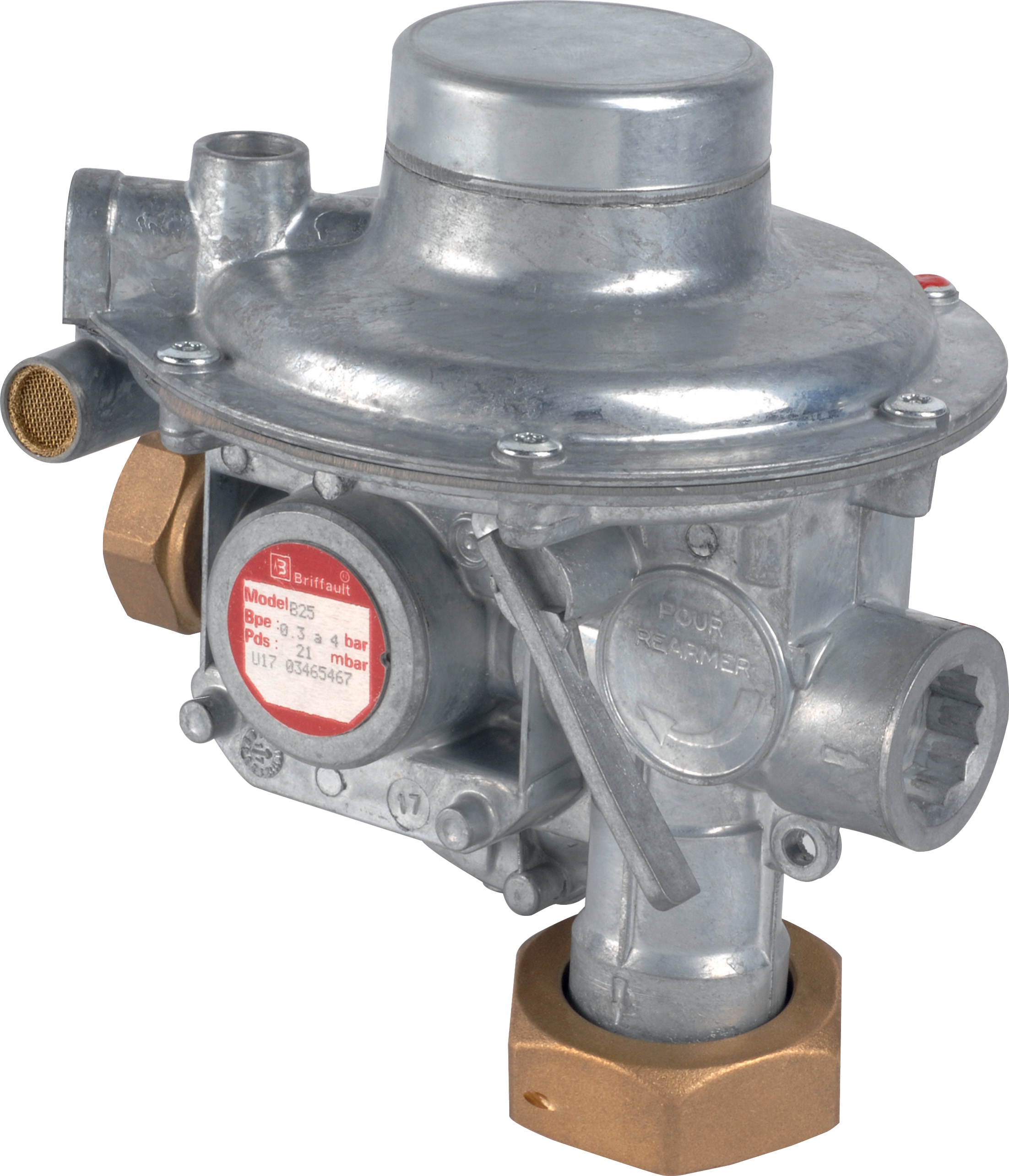
- Spring relaxation: Compression springs lose preload over months of thermal cycling. Singapore's ambient temperature swings (23°C to 35°C) accelerate this in poorly insulated manifolds. High-quality regulators like the Francel B25/37mb with integrated safety relief use precision-wound springs sized to resist relaxation, but older or undersized units drift steadily.
- Membrane creep: The flexible membrane that senses downstream pressure gradually stretches under sustained load, especially in high-cycle applications (burners, pilot lights). The membrane becomes less responsive, and the regulator overshoots setpoint. Common in systems cycling 10,000+ times per week.
- Contamination particle migration: Dust, rust scale, or moisture trapped in the regulator body eventually lodges between the valve seat and plug. This prevents full closure, allowing pilot pressure to bleed through and nudge outlet pressure upward. In Singapore's humid environment, moisture ingress is accelerated unless proper atmospheric vent breathers are installed.
1. Log outlet pressure hourly over 48 hours. Plot the trend.
2. Check spring preload visually: if adjustment screw is at the limit of its range, spring relaxation is likely.
3. Inspect the vent outlet: is it blocked, kinked, or submerged in condensate? A blocked vent prevents atmospheric reference, causing false pressure rise.
4. Measure pilot supply pressure. If pilot is drifting, the primary regulator (upstream) is the culprit, not the secondary.
5. If pressure stable over 24 hours but drifts again after load cycling, suspect membrane creep.
Solutions:
- Replace the spring and adjustment mechanism if drift exceeds ±2 mbar over one week.
- Install a secondary regulator with finer adjustment (10 mbar range vs. 50 mbar range) downstream to catch small drifts before they reach critical equipment.
- Add a 3-micron gas filter with automatic drain upstream of the regulator to trap moisture and particles.
- Ensure vent lines are routed downward with drip legs and condensate traps every 2 meters on horizontal runs.
Outlet Pressure Oscillation
Outlet pressure bounces ±3 mbar or more every few seconds. This is oscillation (hunting), and it damages equipment faster than steady overpressure.
Why it happens:
Oscillation occurs when the regulator's feedback loop is underdamped. The valve opens, pressure rises, the membrane pushes the valve shut, pressure falls, the valve opens again—repeatedly. Common causes: oversized regulator for the application, downstream volume too small, or stiff spring setting.
For example, a 25 mbar regulator rated for 500 L/min applied to a 50 L/min system will oscillate unless a downstream orifice is added to restrict flow and stabilize feedback.
Diagnostic workflow:
1. Connect a 0.5–2 second response pressure gauge (digital preferred) immediately downstream of the regulator.
2. Observe peak-to-peak amplitude and cycle frequency. Oscillation <0.5 mbar at 1–2 Hz is acceptable. Oscillation >2 mbar at >2 Hz requires intervention.
3. Check if oscillation decreases when downstream valve (pilot, burner) is fully open (high flow). If yes, the regulator is oversized; if no, downstream volume is too small.
4. Inspect the adjustment spring: if very stiff (requires high turning force), the proportional response is sluggish.
Solutions:
- Add a downstream surge tank (5–10 L) to absorb load transients and smooth feedback.
- Install a needle valve or orifice in parallel with the main downstream line to dampen flow response without restricting steady flow.
- Reduce spring preload (turn adjustment screw counterclockwise) by 1–2 turns to soften the feedback loop. Re-stabilize and test.
- Replace with a matched regulator: choose flow capacity 1.5–2× your peak demand, not 5×.
Seal Degradation, Vent Blockage, and Environmental Factors
Leak Diagnosis: Seals vs. Seat
You smell gas at the regulator outlet or hear a hiss. Is it the outlet seal, the seat seal, or the vent?
Outlet seal leaks: Liquid drips from the outlet port or pressure gauge tapping. Cause: membrane puncture, seal ring hardening (aged elastomer), or particle scored the sealing surface. Solution: replace the membrane cartridge (usually $50–200 depending on model). For the Francel B25/37mb, the cartridge is field-serviceable.
Seat leaks: Pressure at the outlet gauge is stable, but gas seeps from the vent port (small hiss). Cause: particle lodged in the seat, spring pressure insufficient, or the valve plug is scarred. Solution: First, increase spring preload (turn adjustment screw clockwise) by 1 turn and retest—often this reseats the plug. If leak persists, the regulator must be cleaned or replaced. Do not exceed 2 full turns (torque limit ~10 Nm) to avoid spring damage.
Vent leaks: Gas exits the vent line at high velocity (loud hiss), or the vent line drips liquid. Cause: blocked outlet preventing pressure relief, or the membrane has ruptured and atmospheric pressure can't regulate feedback. Solution: immediately isolate the regulator and inspect the downstream system for blockage. Clean any scale or particles from the main outlet port. If vent flow continues, replace the regulator—the membrane is compromised.
Vent System Maintenance in Singapore's Humidity
Singapore's relative humidity (70–90%) means moisture constantly enters vent lines. Blockage is common and dangerous: it prevents proper regulator response and can cause dangerous pressure spikes.
Vent maintenance checklist:
- Vent lines must slope downward (minimum 1:100 gradient) and terminate outside or in a safe area. Never submerge vent outlets in water or connect to pressurized drain systems.
- Install a 100-micron sintered bronze vent filter immediately downstream of the regulator vent port. This traps moisture and particles while allowing low-resistance breathing.
- Drain vent filters weekly in high-humidity zones (kitchens, wash bays, chemical areas). Water accumulation increases backpressure.
- Use stainless steel or brass fittings on all vent lines—carbon steel rusts in humid air and blocks the line within months.
- Route vent lines away from hot surfaces (>60°C). Thermal expansion of trapped moisture can rupture soft tubing.
Optimization Strategies: Extending Regulator Life and Improving System Reliability
Cascade Regulation Design
A single regulator cannot reliably control pressure across a wide range of flows and supply conditions. Use a two-stage design:
Stage 1 (Primary regulator): Reduces high supply pressure (e.g., 200 bar cylinder) to an intermediate pressure (e.g., 60 mbar). This regulator handles large pressure drops and tolerates supply variation. Choose a robust, pilot-operated design rated for 10× your demand flow.
Stage 2 (Secondary regulator): Fine-tunes from intermediate to final outlet pressure (e.g., 37 mbar). This regulator works at lower differential pressure, responds faster, and exhibits less drift. Use a precision direct-acting regulator like the Francel B25/37mb, which is compact and accurate to ±1 mbar over time.
Benefit: Total system stability improves from ±5 mbar to ±1 mbar. Regulator lifespan extends 3–5 years because each valve operates within optimal range.
Filtration and Drying Integration
Contamination and moisture are the root cause of 60–70% of field failures. Integrate a 3-micron filter and automatic moisture trap immediately upstream of the primary regulator:
- Filter: Removes rust scale, welding spatter, and dust. Pressure drop <0.1 bar at rated flow.
- Moisture trap: Automatic drain removes water and oil mist. Manual drain variants work but require operator discipline.
Change filters every 2,000 operating hours or when pressure drop exceeds 0.2 bar (whichever first). In Singapore's tropical climate with frequent coastal salt spray, increase frequency to every 1,500 hours if equipment is near marine environments.
Pressure Gauge Selection and Monitoring
Standard glycerin-filled gauges (100 mm dial, 0–100 mbar range) are unreliable for regulation diagnostics. They have 2–3% error and damping that masks transient behavior.
Better practice:
- Install a 0.5–2 second response digital pressure transmitter (4–20 mA output) at the outlet. Connect to your plant's SCADA or a simple data logger. Log pressure every 5 seconds.
- A secondary analog glycerin gauge (for visual reference) is acceptable, but base diagnostics on digital data.
- Use 1.6 bar or 2.5 bar full-scale range gauges for 37 mbar regulation—this improves readability. A 0–100 mbar gauge reading 37 mbar is hard to read accurately.
Cost: ~SGD 200–400 per monitoring point. ROI: Catch pressure drift before it affects product, preventing batch loss (often SGD 2,000+).
Thermal Compensation
Singapore's daytime temperature can swing 15°C in a few hours. Gas at 25°C and 35°C has 4% density difference, affecting both flow and regulator behavior.
If regulation must be tighter than ±2%, specify a regulator with integrated temperature compensation, or install one externally. For the Francel B25/37mb, the spring and membrane materials resist thermal drift, but adding a shroud that maintains 25–30°C ambient (water cooling or ventilation) improves stability by 30%.
Practical Maintenance Schedule
Monthly:
- Inspect vent outlet for blockage or liquid accumulation.
- Check outlet pressure trend (compare to last month's reading).
- Listen for leaks or unusual hissing.
- Drain vent filter and moisture trap.
- Inspect inlet supply lines for scale or corrosion.
- Test outlet pressure stability over 30 minutes at nominal load.
- Replace inlet filter element.
- Inspect regulator body and connections for external corrosion or damage.
- Log current spring preload setting (number of turns from fully open) and compare to installation baseline.
- If drift exceeds ±3 mbar from setpoint, schedule cartridge replacement.
- Perform full regulator overhaul or replacement. Springs, membranes, and seals degrade predictably; preventive replacement avoids unplanned downtime.
With 35+ years of Singapore industrial experience, 3G Electric stocks genuine replacement cartridges and pressure regulators from trusted manufacturers like Francel. Contact our team to discuss preventive maintenance contracts tailored to your plant's gas distribution system.