How to Size and Match Industrial Gas Burners to Your System in Singapore
Choosing the correct industrial gas burner is far more complex than simply picking a unit based on brand reputation alone. For facility managers, plant engineers, and maintenance professionals in Singapore, proper burner selection requires a methodical approach to matching power output, nozzle dimensions, fuel type compatibility, and electrical requirements to your specific combustion system. An undersized burner will fail to deliver adequate heat; an oversized unit wastes energy and creates operational inefficiencies. This guide provides the technical framework to evaluate and select the right gas burner for your industrial application, with reference to proven solutions available through established distributors in the Singapore market.
Understanding Industrial Burner Power Ratings and Thermal Requirements
Industrial gas burners are rated by their thermal output, measured in kilowatts (kW), which represents the heat energy they can generate under full combustion. Every burner has both a maximum power rating (at full flame) and a minimum power rating (at reduced flame or modulating operation), and understanding this range is critical to system compatibility.
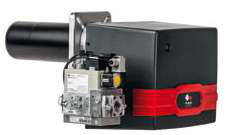
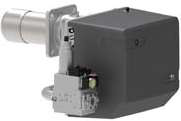
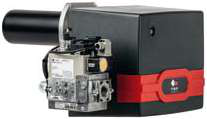
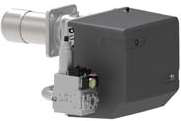
The power range defines the burner's turndown ratio—the relationship between maximum and minimum operating capacity. A burner with a maximum rating of 850 kW and minimum of 140 kW (such as the FBR K X5/2 TL) has a turndown ratio of approximately 6:1, meaning it can modulate across a wide operating band. This flexibility is essential in industrial settings where heat demand varies throughout production cycles.
The thermal requirement of your system—whether it's a furnace, boiler, dryer, or process heater—must fall comfortably within the burner's operating range. As a rule of practice, your system's designed heat input should not exceed 85% of the burner's maximum rating. This safety margin prevents the burner from operating continuously at peak capacity, which accelerates component wear and reduces equipment lifespan. Conversely, if your system requires only 100 kW of heat but the smallest available burner provides a minimum of 200 kW, you face operational challenges including flame stability issues, incomplete combustion, and difficulty achieving precise temperature control.
For Singapore's diverse industrial base—from food processing and chemical manufacturing to metalworking and textile production—burner selection must account for seasonal variations in ambient temperature, which affects combustion air density and burner performance. The atmospheric conditions in Singapore's tropical climate require particular attention to air density corrections when calculating actual thermal output.
Technical Specifications: Nozzle Size, Fuel Type, and Electrical Requirements
Beyond power ratings, three critical technical parameters must align with your system: nozzle size, fuel type compatibility, and electrical supply requirements.
Nozzle Size and Pressure Drop: The nozzle, measured in millimeters, determines fuel atomization quality and combustion efficiency. Smaller nozzles (160–250 mm) are used in lower-capacity burners, while larger nozzles (350–481 mm) support higher thermal outputs. For reference, the FBR GM X4 TC features a 160 mm nozzle with power ratings from 116–232 kW, while the industrial-scale FBR K 190/M TL EL incorporates a 481 mm nozzle to support outputs up to 2,395 kW. The nozzle must be matched to the fuel supply pressure and the burner's air delivery system. Higher fuel pressures enable finer atomization and more complete combustion, but they also increase energy consumption in the fuel supply pump.
Fuel Type and Gas Category: Industrial burners are categorized by the fuel gases they accept. Natural gas (methane) is the standard in most Singapore industrial applications, but some facilities require dual-fuel capability or LPG operation. The FBR BURNER GAS X5/MF TL EL VC LPG is specifically designed for LPG and natural gas applications, with a minimum gas train pressure of 27 mbar for natural gas and 33 mbar for LPG. Understanding your facility's fuel supply—and whether pressure regulation hardware can achieve the minimum required pressure—is essential before purchase.
Electrical Supply: Industrial burners require either single-phase (1-phase) or three-phase (3-phase) electrical input to power the combustion fan and control systems. Lower-capacity burners like the FBR GM X5/2 TC (350 kW maximum) operate on single-phase supply, while larger units demand three-phase power. The FBR K X7/2 TL, rated at 1,800 kW maximum, requires dedicated three-phase infrastructure. Before committing to a burner purchase, verify your facility's electrical panel capacity and whether three-phase distribution is available at the installation point.
Step-by-Step Guide to Sizing Your Industrial Burner
Step 1: Calculate Your System's Heat Requirement
Determine the total heat input (in kW) required by your equipment. This is typically found in the equipment manufacturer's specifications or can be calculated from fuel consumption data. For example, if your furnace consumes 50 m³/hour of natural gas, and natural gas contains approximately 10 kWh per m³, your heat requirement is roughly 500 kW.
Step 2: Apply a 15% Safety Margin
Multiply your calculated requirement by 1.15 to establish your target burner maximum rating. Using the example above: 500 kW × 1.15 = 575 kW target maximum. This safety margin accounts for combustion losses, seasonal variations, and aging equipment degradation.
Step 3: Evaluate Modulation and Turndown Requirements
Determine the minimum heat load your system experiences during normal operation. If your process requires heat modulation between 400 kW and 575 kW, you need a burner with a minimum rating no higher than 400 kW. The FBR K X5/2 TL, with a minimum of 140 kW and maximum of 850 kW, would accommodate this range with excellent turndown capability.
Step 4: Verify Fuel and Electrical Compatibility
Confirm that your facility's gas supply pressure exceeds the burner's minimum requirement and that electrical service matches the burner's specifications. Cross-reference against technical datasheets or consult with your distributor.
Step 5: Consider Control System Integration
Modern industrial burners integrate with burner control systems that manage combustion air, fuel metering, and flame supervision. Ensure your selected burner is compatible with your facility's control infrastructure or budget for control system upgrades.
Best Practices for Burner Selection and Installation in Singapore
Account for Environmental Conditions: Singapore's humid tropical climate affects combustion air properties. High ambient temperatures and humidity reduce air density, which decreases the mass of oxygen available for combustion. When selecting a burner, consider that summer conditions may reduce effective output by 3–5% compared to sea-level standard conditions. Similarly, if your facility operates near coastal areas where salt corrosion is a concern, specify burners with enhanced corrosion protection.
Plan for Future Capacity Growth: Select a burner that provides adequate headroom for modest production increases without requiring replacement. A burner operating at 70% of maximum capacity typically achieves optimal combustion efficiency and lifespan.
Document the Installation: Maintain detailed records of your burner specifications, installation date, fuel pressure settings, and combustion air adjustments. This documentation is invaluable for troubleshooting, efficiency audits, and compliance verification.
Partner with Established Distributors: Working with experienced industrial equipment distributors in Singapore ensures access to genuine components, technical support, and warranty coverage. Reputable distributors maintain technical expertise and can guide you through sizing methodology, compatibility verification, and post-installation commissioning.
Conclusion and Next Steps
Proper industrial burner selection requires balancing thermal output, fuel compatibility, electrical requirements, and system integration—a process that demands both technical knowledge and practical experience. By following the sizing methodology outlined in this guide, facility managers across Singapore can confidently select burners that optimize combustion efficiency, reduce operational costs, and ensure reliable heat generation.
Whether you're replacing an aging burner or installing new combustion equipment, the expertise of an established industrial equipment distributor is invaluable. 3G Electric has served Singapore's industrial sector since 1990, providing comprehensive burner solutions, control systems, and technical support. Contact our team to discuss your specific burner requirements, receive a technical assessment of your application, and explore the full range of proven industrial burner solutions we offer. Our experienced specialists can help you navigate the selection process, verify compatibility with your existing systems, and ensure successful commissioning.