Understanding Industry Applications in Southeast Asian Manufacturing Context
Southeast Asia's manufacturing sector—spanning automotive, food processing, chemical production, and textile industries—operates under unique environmental and operational pressures. Tropical humidity, frequent equipment cycling, and extended operating hours demand fluid transfer and pressure regulation systems engineered for reliability and precision. Procurement engineers in this region face the critical challenge of selecting equipment that maintains performance consistency while minimizing downtime and maintenance costs.
With over 35 years of experience distributing industrial equipment globally, 3G Electric understands the specific demands of Southeast Asian operations. The region's rapid industrialization, combined with stringent quality standards, requires procurement professionals to evaluate equipment not just on initial specifications, but on total cost of ownership, local support availability, and system integration capabilities.
This guide focuses on practical decision-making frameworks for three interconnected system components: pressure regulation, primary fluid transfer, and precision application delivery. By understanding how these elements work together, procurement engineers can optimize equipment selection for manufacturing plants across Thailand, Vietnam, Indonesia, Malaysia, and Singapore.
Pressure Regulation Systems: Foundation for Stable Operations
Critical Role in Industrial Processes
Pressure regulation represents a foundational requirement across nearly every manufacturing process in Southeast Asia. Whether managing compressed air systems in automotive assembly plants, controlling hydraulic circuits in food processing equipment, or regulating gas flow in chemical operations, consistent outlet pressure directly impacts product quality and equipment longevity.
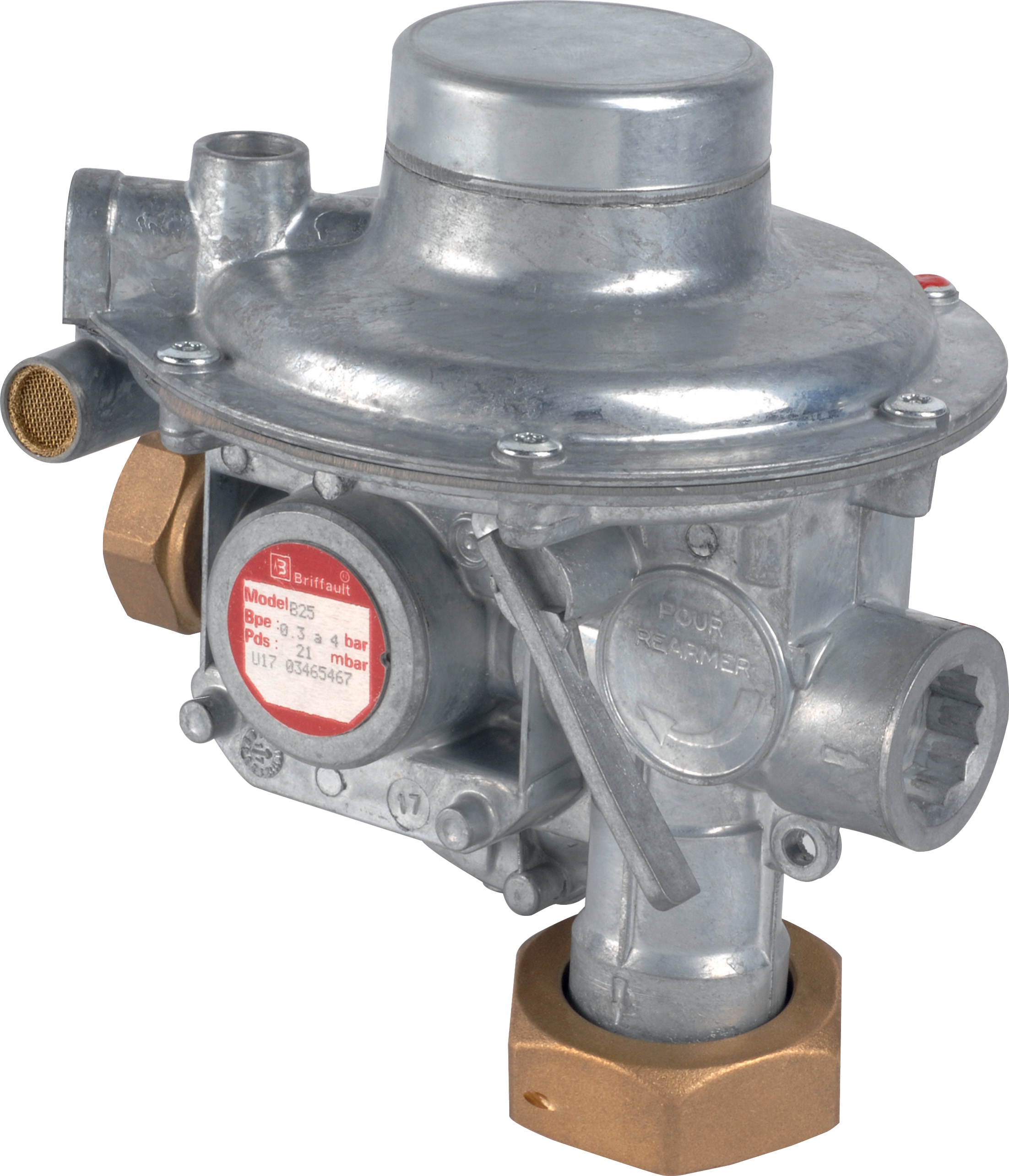
The Francel B25/37mb pressure regulator with integrated safety relief exemplifies the pressure control standards that procurement engineers should evaluate. This regulator delivers a stable 37 mbar outlet pressure—a specification critical for laboratory gas distribution and precision industrial applications. The integrated 10 mm safety relief vent provides essential overpressure protection, preventing equipment damage and ensuring operator safety.
Application Selection Criteria
When evaluating pressure regulators for Southeast Asian environments, procurement engineers should consider:
Environmental Resilience: Tropical humidity and temperature fluctuations (typically 25-35°C with 60-90% relative humidity) accelerate corrosion and can affect seal integrity. Regulators must feature stainless steel or corrosion-resistant components for extended service life.
Pressure Stability: Manufacturing processes—particularly precision coating, chemical dosing, and pneumatic control systems—require ±2-3% pressure consistency. Pilot-operated regulators with integrated relief provide superior stability compared to direct-acting designs.
Maintenance Accessibility: Southeast Asian manufacturing plants often operate with lean maintenance teams. Regulators featuring accessible adjustment mechanisms and clear relief settings reduce troubleshooting time when system parameters drift.
Integration Compatibility: Pressure regulators must interface seamlessly with existing manifold systems, quick couplings, and downstream equipment. Understanding your facility's gas or fluid compatibility (air, inert gases, hydraulic fluids) prevents costly specification errors.
Primary Fluid Transfer Systems: Selecting Pumps for High-Utilization Environments
Matching Flow and Pressure to Process Requirements
Southeast Asian manufacturing typically operates in three demand categories: moderate-duty applications (automotive component washing), medium-duty operations (food processing fluid transfer), and high-performance systems (chemical spray application and precision cleaning). Your pump selection must align precisely with these demands.
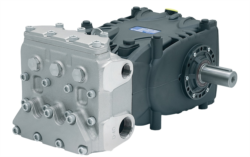
The Pratissoli KF30 industrial pump represents the moderate-to-medium duty segment, delivering 106 L/min flow at 200 bar pressure with 40 kW power consumption. This specification suits automotive facilities requiring consistent fluid circulation without excessive energy expenditure. For procurement engineers managing energy costs—a significant concern in Southeast Asia where electricity represents 15-25% of manufacturing operating expenses—the KF30's efficient Italian engineering delivers cost-effective operation.
For facilities requiring higher output, the Pratissoli MW40 pump provides 211 L/min at 210 bar with 85 kW power input. This system scales appropriately for larger food processing operations, chemical transfer applications, and industrial coating systems where higher flow rates prevent bottlenecks in production workflows.
Compact Solution for Space-Constrained Facilities
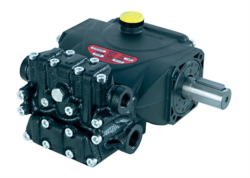
Many Southeast Asian manufacturing facilities operate in densely populated industrial zones with limited floorspace. The Interpump E1D1808 gear pump addresses this constraint, delivering 8 L/min at 180 bar in a compact 5 kg package. While designed for smaller-scale applications—precision hydraulic circuits, sample transfer systems, laboratory equipment—this pump demonstrates that performance and compactness need not be mutually exclusive.
Procurement engineers should evaluate pump selection across these dimensions:
Flow Rate Matching: Oversized pumps waste energy; undersized pumps create production delays. Calculate actual system flow requirements (considering flow-path friction losses) before pump selection.
Pressure Margin: Select pumps rated 20-30% above peak system pressure. This margin accommodates filter restriction, hose degradation, and seasonal viscosity changes without reliability compromise.
Noise and Vibration: Southeast Asian factories increasingly operate near residential areas with strict noise ordinances. Gear pumps like the Interpump E1D1808 generate lower noise profiles than piston designs, reducing compliance risks.
Long-term Spare Parts Availability: Italian-engineered Pratissoli systems benefit from established distribution networks across Southeast Asia. Confirm that critical wear components (seals, impellers, bearings) are locally available before specifying equipment.
Precision Application Systems: Nozzles and Delivery Accuracy
Optimizing Spray Patterns for Process Control
Fluid application—whether industrial cleaning, chemical coating, or thermal management—demands precision that extends beyond simple flow delivery. The Euspray flat jet nozzle with 25° spray angle exemplifies precision application engineering. This nozzle's 1/4" M BSPT connection and index 30 design provide specific spray geometry optimized for industrial cleaning and coating processes.
Procurement engineers must understand how nozzle selection impacts process outcomes:
Spray Angle Specification: A 25° spray angle concentrates fluid energy for penetrating cleaning action. Wider angles (40-60°) distribute fluid over broader surfaces. Your process determines optimal angle selection—automotive parts cleaning requires tighter concentration than surface pre-treatment applications.
Connection Standardization: The 1/4" M BSPT connection ensures compatibility with standard industrial manifold systems. Avoid non-standard connections that create spare-parts management complications and increase maintenance costs.
High-Pressure Capability: Euspray nozzles accommodate the outlet pressures delivered by Pratissoli and Interpump systems (180-210 bar). This pressure compatibility ensures system components work synergistically without conversion losses or throttling.
System Integration Considerations
Procurement engineers must recognize that nozzles, regulators, and pumps form an integrated system. Suboptimal component selection in one area cascades through the entire assembly:
Pressure Drop Accumulation: Each component introduces friction losses. Pressure regulators (5-10 bar drop), hose networks (10-15 bar drop depending on length), and nozzles (5-8 bar drop) combine to reduce effective outlet pressure. System design must account for cumulative losses.
Flow Path Velocity: Excessive velocity (>5 m/s in delivery lines) creates noise and heat generation; insufficient velocity (<2 m/s) causes settling of suspended particles. Selecting appropriate hose diameters and nozzle orifice sizes maintains optimal flow conditions.
Maintenance Access: Systems should position regulators and pressure relief points at accessible locations for operator adjustment and safety verification. Many Southeast Asian facilities operate multiple shifts with varying operator expertise—clear access improves compliance with maintenance protocols.
Procurement Strategy: Integrating Components for Southeast Asian Success
Total Cost of Ownership Framework
Successful equipment procurement extends beyond purchase price evaluation. Southeast Asian manufacturing operates under cost pressures that demand attention to operational expense, maintenance requirements, and system reliability:
Energy Efficiency: Pump power consumption directly affects operating expenses. A 40 kW pump (KF30) operating 16 hours daily in a facility with $0.08/kWh electricity costs approximately $1,920 monthly in pump power alone. Oversizing equipment for future expansion wastes money; right-sizing for current demands controls costs.
Preventive Maintenance Scheduling: Equipment designed with accessible components and standard connections reduces maintenance time and labor costs. The 35+ years of 3G Electric's industry experience demonstrates that standardized equipment across multiple facilities simplifies staff training and reduces spare-parts inventory complexity.
System Redundancy: Southeast Asian manufacturing increasingly requires 24/7 production capability. Specifying dual pressure regulation systems or backup pump capacity prevents production loss from single-point equipment failure. Procurement engineers should evaluate backup system costs against revenue loss from unplanned downtime.
Vendor Relationship Considerations
Selecting a distributor with established Southeast Asian presence—rather than importing equipment directly—reduces lead times, improves local support, and simplifies warranty management. 3G Electric's three decades of global distribution experience ensures understanding of region-specific requirements, currency fluctuations, and customs procedures that affect equipment delivery and cost.
When evaluating vendors, procurement engineers should confirm:
Technical Support Availability: Can the distributor provide commissioning assistance, system design consultation, and troubleshooting support? Southeast Asian procurement engineers benefit from vendor relationships extending beyond purchase transactions.
Stock Availability: Vendors maintaining local inventory reduce lead times critical for maintaining production schedules. Confirm that high-use items like pressure relief seals and nozzles are stocked locally.
Training and Documentation: Equipment manuals translated into local languages and technical training for maintenance personnel reduce operational errors and improve equipment longevity.
Regional Application Examples
Automotive Component Manufacturing (Thailand/Malaysia): Facilities requiring high-pressure washing systems integrate Pratissoli MW40 pumps delivering 211 L/min, pressure regulators maintaining consistent rinse pressure, and Euspray nozzles optimized for precision cleaning. This integrated approach reduces water consumption and chemical waste while maintaining consistent component quality.
Food Processing Operations (Vietnam/Indonesia): Fluid transfer systems manage processing liquids requiring gentle handling and contamination control. Smaller Interpump E1D1808 pumps coupled with precise pressure regulation prevent product damage while maintaining sanitary processing conditions.
Chemical Manufacturing (Singapore): High-performance systems combining Pratissoli pumps, integrated safety-relief regulators, and precision nozzles ensure consistent chemical dosing and safe operation under strict regulatory requirements.
Conclusion
Successful fluid transfer and pressure regulation systems in Southeast Asian manufacturing result from systematic component selection, integrated system design, and vendor partnerships supporting long-term operational excellence. Procurement engineers who evaluate equipment specifications against actual process requirements, environmental conditions, and total cost considerations optimize equipment selection for regional success.
3G Electric's 35+ years of industrial equipment distribution positions our team to support Southeast Asian procurement engineers through specification development, system integration guidance, and reliable product supply. By combining technical knowledge of pressure regulators, industrial pumps, and precision application nozzles with understanding of regional operational demands, procurement professionals can select systems that deliver performance, reliability, and cost-effectiveness across diverse manufacturing applications.