Understanding Centrifugal Pump Maintenance & Service in Singapore's Industrial Environment
Centrifugal pumps form the backbone of industrial fluid delivery systems across Singapore's manufacturing, petrochemical, and water treatment facilities. With over 35 years of experience supplying industrial equipment throughout Southeast Asia, 3G Electric understands the unique challenges that maintenance teams face in Singapore's high-humidity, tropical climate. Salt spray, thermal cycling, and continuous operation place extraordinary demands on pump components, making structured Maintenance & Service procedures essential for reliable operation.
Unlike positive displacement pumps that rely on mechanical sealing, centrifugal pumps depend on dynamic seal integrity, bearing lubrication, and precise shaft alignment. Neglecting these critical areas leads to catastrophic failures—often resulting in unplanned downtime, product loss, and safety incidents. This guide equips maintenance teams with the technical knowledge to perform inspections, diagnose failures, and execute repairs that minimize operational disruption.
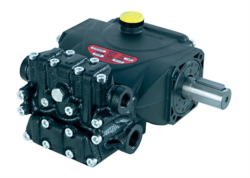
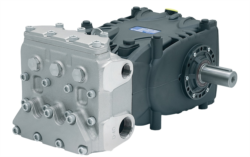
The high-performance Pratissoli KF30 industrial pump (106 L/min, 200 bar) and Pratissoli MW40 system (211 L/min, 210 bar) represent the class of equipment requiring disciplined maintenance protocols. Whether managing legacy installations or modern high-efficiency systems, the principles outlined here apply across all centrifugal pump architectures.
Seal and Bearing Inspection Procedures
Mechanical Seal Assessment
The mechanical seal is your pump's first defense against fluid leakage. In tropical Singapore, where humidity accelerates corrosion and salt spray attacks seal faces, quarterly inspections become mandatory rather than optional.
Visual Inspection Protocol:
- Observe the seal chamber for visible weeping or sustained dripping (more than 3–5 drops per minute indicates seal degradation)
- Examine the seal face for discoloration, scoring, or crystalline deposits—signs of thermal stress or particulate contamination
- Check the seal bellows or springs for corrosion or mechanical damage
- Inspect the gland plate bolts for loosening, which reduces clamping pressure on the seal assembly
Touch the pump casing near the seal chamber with an infrared thermometer during operation. Mechanical seals running hotter than 65°C (150°F) signal excessive friction, often caused by inadequate barrier fluid pressure or bearing wear creating shaft runout.
Barrier Fluid Verification (for balanced seals):
Maintain barrier fluid pressure 0.3–0.5 bar above system pressure. Low barrier pressure allows process fluid to migrate into the seal cavity, accelerating wear. In Singapore's heat, barrier fluid degrades faster; establish quarterly drain-and-refill schedules using compatible fluids per OEM specifications.
Bearing Lubrication and Wear Assessment
Bearing failures precede seal failure by weeks in many cases. Inadequate lubrication or contaminated oil allows radial and axial movement that destroys shaft seal contact faces.
Oil Sampling Schedule:
- Extract bearing oil samples every 500 operating hours (or 6 weeks minimum)
- Submit samples to certified laboratories for particle count (ISO 4406 standard), viscosity, and ferrous content analysis
- ISO particle counts above 18/16/13 indicate active bearing wear; schedule immediate bearing replacement
Install thermocouples on both inboard and outboard bearing housings. Temperature rise exceeding 10°C above baseline signals lubrication breakdown or incipient bearing seizure. In Singapore's 32–35°C ambient, bearing housings should not exceed 55–60°C during normal operation.
Greased Bearing Maintenance:
For grease-lubricated bearings, relubrication intervals depend on bearing size and speed. Use only specified bearing grease (typically NLGI Grade 2); incompatible grease formulations cause churning losses and overheating. Purge old grease quarterly by manually rotating the shaft 20–30 revolutions, then injecting fresh grease until new grease extrudes from the relief weep hole.
Cavitation Detection and Prevention
Cavitation—the formation and collapse of vapor bubbles within the pump—causes pitting damage to impeller and casing surfaces, leading to performance loss and catastrophic failure. Singapore's tropical heat and high ambient temperatures elevate vapor pressure, making cavitation a persistent threat.
Acoustic and Vibration Diagnosis
Cavitation produces distinctive acoustic signatures: a crackling, grinding, or popcorn-like noise audible through the pump casing. Establish baseline vibration signatures using portable vibration analyzers:
- Inboard bearing vertical: <2.8 mm/s RMS (non-cavitating); >4.5 mm/s indicates cavitation or bearing wear
- Outboard bearing horizontal: <3.0 mm/s RMS baseline
- Cavitation increases broadband vibration across all frequencies; isolated frequency peaks suggest imbalance or looseness
Suction-Side Pressure Verification
Install a pressure gauge on the pump suction line 0.5 meters upstream of the pump inlet. During operation at full flow:
- Suction pressure must remain ≥0.3 bar absolute (at sea level, Singapore's standard)
- Each 0.1 bar drop in suction pressure increases cavitation risk exponentially
- Check suction strainer differential pressure; strainers restricting flow beyond 0.5 bar cause suction cavitation
1. Lower fluid level in the suction reservoir to reduce static pressure loss
2. Reduce system flow rate by partially closing discharge valve (temporary measure only)
3. Replace or clean suction strainer elements immediately
4. Increase suction line diameter to reduce velocity; suction velocity should not exceed 1.2 m/s
Impeller Inspection After Cavitation Events
Once cavitation is suspected, isolate the pump and disassemble for impeller inspection. Look for:
- Honeycomb pitting on the impeller suction-side blade surfaces
- Material loss that creates sharp edges (safety hazard during reassembly)
- Casting erosion that compromises structural integrity
Impellers showing cavitation damage must be replaced; repair welding is unreliable and creates stress concentrations.
Alignment and Vibration Management
Misalignment between motor and pump shafts is the leading cause of premature bearing failure in Singapore's industrial base. Thermal expansion, foundation settling, and inadequate bolt torque combine to degrade alignment over months.
Laser Alignment Procedure
Perform laser shaft alignment annually or after any bearing replacement:
1. Soft-Foot Test: Lift each motor foot sequentially with a feeler gauge while observing dial indicators on the pump coupling. Soft foot exceeding 0.1 mm requires shim adjustment under motor feet.
2. Horizontal Alignment: Mount laser alignment tool on motor shaft, measure runout relative to pump shaft. Parallel misalignment (offset) should not exceed 0.05 mm; angular misalignment (angularity) should not exceed 0.02 mm per 25 mm of coupling length.
3. Vertical Alignment: Repeat measurements in vertical plane. Account for thermal growth; measure alignment when pump has reached operating temperature (minimum 30 minutes of operation).
Corrective Shimming:
Adjust motor feet with stainless steel shims (corrosion resistance critical in Singapore's marine environment). Use shim packs directly under motor feet rather than under coupling bolts. Verify alignment after each shim adjustment.
Coupling Inspection
Flexible couplings (typically elastomeric) used on KF30 and MW40 systems degrade under continuous tropical heat and UV exposure.
- Inspect coupling elastomer for hardening, cracking, or visible degradation every 6 months
- Measure coupling hub-to-hub distance monthly; wear allows axial creep that compromises seal integrity
- Replace couplings showing any visible damage immediately; elastomer failure leads to complete shaft misalignment within hours
Routine Maintenance Schedule and Documentation
Weekly Operator Checks
- Monitor pump discharge pressure (should remain within ±5 bar of baseline)
- Listen for unusual noise; any change in sound signature warrants immediate investigation
- Check for weeping at seal chamber; drips greater than one per minute indicate imminent seal failure
- Verify bearing temperature by touch; both bearing housings should feel equally warm
Monthly Maintenance Team Inspections
- Inspect coupling alignment visually; any visible offset indicates misalignment
- Check all fasteners (flange bolts, bearing cap bolts, foundation anchors) for looseness; retorque to OEM specifications
- Drain and inspect suction strainer basket for debris accumulation
- Verify motor and pump frame grounding continuity using a digital multimeter
Quarterly Detailed Service
- Extract and analyze bearing oil samples
- Perform laser alignment if baseline data exists
- Inspect mechanical seal for weeping, discoloration, or galling
- Measure pump head pressure, flow rate, and power draw; trending reveals efficiency loss
- Flush bearing cooling jackets (if equipped) to remove mineral deposits common in Singapore's water supply
Annual Major Maintenance
- Perform complete pump disassembly and inspection
- Replace mechanical seals regardless of visual condition (preventive replacement extends overall reliability)
- Inspect impeller for erosion, cavitation pitting, or casting cracks
- Rebalance impeller if any cavitation damage is evident
- Replace all elastomeric components (gaskets, O-rings, coupling elements)
- Perform ultrasonic bearing lubrication verification
Documentation Requirements
Maintain detailed logs in a CMMS (Computerized Maintenance Management System) or equivalent:
- Baseline operational parameters (pressure, flow, power draw, temperature, vibration)
- All maintenance activities performed with dates, technician initials, and parts replaced
- Oil analysis results with particle counts and trending
- Laser alignment reports with measured values and corrections applied
- Failure modes and root cause analysis for any unplanned downtime
With 35 years of industrial equipment distribution experience, 3G Electric recommends that maintenance teams maintain documentation for a minimum of 5 years, enabling trend analysis that predicts failures months in advance.
Conclusion
Structured Maintenance & Service programs transform centrifugal pumps from unpredictable liabilities into reliable production assets. Singapore's demanding tropical environment—with high heat, humidity, and salt spray—requires discipline and consistency from maintenance teams. By implementing seal inspections, bearing monitoring, cavitation prevention, and alignment verification protocols outlined in this guide, you extend equipment life, reduce unplanned downtime, and protect your operational margin.
3G Electric's long history supplying industrial pumps throughout Southeast Asia positions us as your trusted partner for equipment and technical guidance. Consult our technical team when planning major maintenance activities; we maintain relationships with pump manufacturers and can source replacement components, seals, and bearing assemblies to keep your operations running.