Understanding Burners & Combustion System Architecture for Procurement Decisions
Burners & Combustion systems in industrial applications are rarely single-component purchases. Procurement engineers working with Singapore's manufacturing sector—petrochemical plants, food processing facilities, and thermal processing operations—must understand how control relays, pressure switches, flame detection sensors, and actual burner units interact within a unified safety and operational framework.
With over 35 years of experience distributing industrial equipment, 3G Electric has observed that component incompatibility remains a leading cause of system failure, safety non-compliance, and operational downtime. A burner control relay like the Kromschroder BCU 570WC1F1U0K1-E operates within a specific pressure range and electrical architecture. Pair it with an incorrectly specified pressure switch—say, one rated for a different SIL level—and your system fails regulatory audits and creates genuine safety risk.
This article addresses the practical reality procurement engineers face: how do you specify components that work together, meet Singapore's regulatory framework (which aligns with European EN standards and increasingly IEC 61508 for functional safety), and deliver long-term reliability in high-temperature, high-pressure environments?
Control Relay and Pressure Switch Compatibility: The Foundation of System Safety
Burners & Combustion control systems depend on two critical decision points for procurement:
Control Relay Selection and Function
A burner control relay orchestrates ignition sequences, monitors flame presence, and manages shutdown logic. The Kromschroder BCU 570WC1F1U0K1-E is EN 746-2 and EN 676 compliant, supporting both direct ignition and intermittent/continuous pilot ignition modes. This flexibility is valuable for retrofits and new installations, but it creates a specification responsibility: which ignition mode does your facility's burner hardware demand?
The Siemens LFL 1.622 safety control unit addresses medium to high-power burner applications with UV and ionization flame monitoring. These are distinct technologies—UV detection responds faster to flame loss but requires line-of-sight access; ionization detection is slower but works in complex combustion chambers. Your procurement decision depends on:
- Burner power rating (is it medium, high, or ultra-high?)
- Existing flame detection infrastructure
- Response time requirements per your process safety management (PSM) documentation
- Environmental conditions (dust, vibration, thermal cycling in your facility)
The compatibility matrix is real: if you specify a control relay for a 1 MW burner but install it on an 8 MW unit, electrical ratings mismatch and you've created a latent failure mode.
Pressure Switch Integration and SIL Requirements
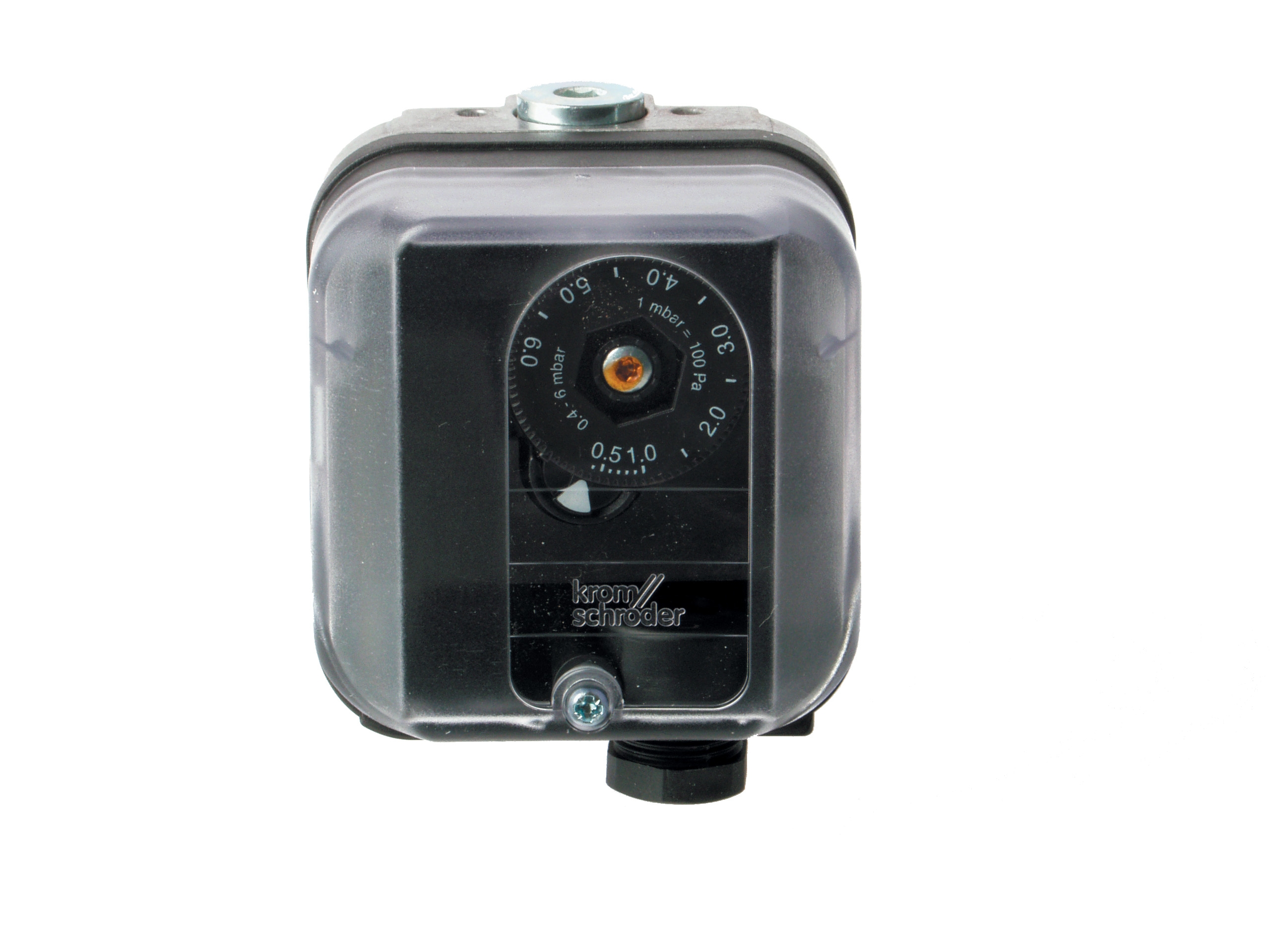
The Kromschroder DG 50U/6 pressure switch is rated SIL 3 and Performance Level e, meeting EN 1854, FM, UL, AGA, and GOST-TR certifications. This is not academic compliance—SIL 3 capability means the device participates in your safety instrumented system (SIS) at a level appropriate for high-consequence failure scenarios.
Procurement engineers must align pressure switch selection with:
- Burner air/fuel ratio monitoring: The DG 50U/6 typically manages pre-purge air pressure (ensuring combustion chamber is clear before ignition) and burner fuel pressure verification. What pressure ranges is your actual burner hardware designed for?
- Functional safety architecture: If your facility operates under PSM rules and your combustion system is a critical control point, SIL 3 certification becomes mandatory, not optional.
- Installation pressure taps: Pressure switches must connect to actual pressure measurement points on your burner. If your burner hardware has pressure taps rated for 6 bar maximum, but you specify a pressure switch for 16 bar, the system cannot function safely.
In our 35+ years serving Singapore's industrial sector, we've seen installations where procurement specified SIL 3 pressure switches but installed them on burner hardware designed for basic (SIL 1) operation. The mismatch creates false confidence—your system appears compliant but doesn't actually achieve the safety integrity level you intended.
Matching Burner Hardware to Control System Specifications
Once control relay and pressure switch compatibility is established, the actual burner unit must be evaluated against these control system capabilities.
Two-Stage vs. Modulating Gas Burners
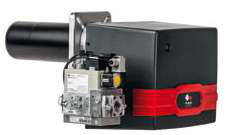
The FBR GAS XP 60/2 CE TC EVO is a two-stage gas burner delivering 116–630 kW thermal power. Two-stage operation means the burner runs at either low fire (typically 30–40% output) or high fire (100% output), with a discrete transition between states. This is mechanically straightforward and works well with simpler control relays.
For procurement engineers, two-stage burners require:
- Control relay capability for on/off and low-fire/high-fire signals
- Air damper modulation between two discrete positions
- Pressure switch monitoring at specific setpoints (pre-purge pressure, low-fire pressure, high-fire pressure)
This matches well with both the Kromschroder and Siemens control relays, assuming electrical interfaces align (24 VDC, 110 VAC, etc.).
Heavy Oil and Dual-Fuel Complexity
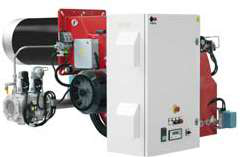
The FBR KN 1300/M TL EL heavy oil burner operates at 2 stages with modulating control, delivering 1700–11,500 Mcal/h thermal power. Dual-fuel burners introduce substantial procurement complexity:
- Fuel switching logic: The control system must manage changeover between gas and oil, including purge sequences, pressure equalization, and flame detection mode switching (oil burners often use ionization; gas may use UV).
- Oil-specific pressure requirements: Heavy oil requires preheating and higher fuel pressures than gas. The Kromschroder DG 50U/6 must be specified for oil-rated pressure ranges, which typically exceed gas-only pressure switches.
- Control relay fuel-specific modes: Not all control relays support dual-fuel operation with automatic or manual switching. The BCU 570WC1F1U0K1-E supports gas; verify whether your facility's dual-fuel dual-fuel operation is manual (operator switches fuel source) or automatic (control system switches based on pressure/demand).
For the FBR KN 1300/M TL EL, procurement engineers must specify:
1. A control relay explicitly rated for heavy oil burners (the Siemens LFL 1.622 supports gas, oil, or dual-fuel; the Kromschroder BCU 570WC1F1U0K1-E is gas-focused)
2. Pressure switches with oil-compatible wetted parts (stainless steel, appropriate seals)
3. Fuel skid hardware (preheating, filtration, pressure regulation) that matches the burner's Mcal/h rating and operating pressure window
Practical Procurement Workflow for Singapore Industrial Applications
When specifying Burners & Combustion systems, 3G Electric recommends this sequence:
Step 1: Establish Regulatory and Safety Requirements
- Determine if your facility operates under Singapore's PSM rules or equivalent
- Identify whether this is a new installation, retrofit, or replacement
- Confirm SIL/Performance Level requirements from your hazard analysis documentation
- Verify electrical supply (24 VDC, 110 VAC, 220 VAC, 380 VAC availability and quality)
The burner unit drives all downstream decisions. Specify:
- Thermal power (kW or Mcal/h)
- Fuel type (gas, oil, dual-fuel)
- Operating mode (two-stage or modulating)
- Ignition type (direct or pilot)
- Pressure taps and their locations
- Electrical interface voltage and current draw
- Flame detection method supported (UV, ionization, or both)
Match the relay to burner specifications. Siemens LFL 1.622 offers flexibility for gas, oil, or dual-fuel. Kromschroder BCU 570WC1F1U0K1-E is gas-optimized. Consider:
- Electrical interface compatibility
- Flame monitoring capability (must match burner hardware)
- Ignition sequence support (does your burner need intermittent or continuous pilot?)
- SIL rating (does it meet your facility requirements?)
Must be compatible with:
- Fuel type (gas or oil versions)
- Pressure range (must match actual burner pressure specifications, not theoretical maximums)
- Electrical interface (normally open/normally closed contact configuration)
- SIL rating (must meet or exceed your safety architecture)
- Installation points (ensure burner has accessible pressure taps at required locations)
The Kromschroder DG 50U/6 is suitable for both gas and oil when properly specified, but verify fuel-specific material options with the distributor.
Step 5: Verify Integration and Request FAT Documentation
Before procurement is final:
- Request Factory Acceptance Test (FAT) documentation showing all components operating together
- Confirm pressure drop across all connections (particularly critical for heavy oil installations)
- Verify flame detection response time meets your process requirements
- Confirm all components are CE marked or UL listed per your jurisdiction
- Request calibration certificates for pressure switches at your specified setpoints
Regional Considerations for Singapore Operations
Singapore's tropical climate and industrial density create specific challenges:
- Humidity and corrosion: Stainless steel wetted parts (pressure switch diaphragms, burner nozzles) are essential. Carbon steel versions fail rapidly in salt-air environments near coastal facilities.
- Dust contamination: Port and manufacturing areas have high particulate loads. Pressure switches must have sealed electrical connectors; burner combustion air inlets require adequate filtration upstream.
- Spare parts availability: Both local distributor stock and supply chain redundancy matter. Working with 3G Electric, which maintains inventory across multiple markets, reduces lead times for critical components.
- Regulatory audits: Singapore's Ministry of Manpower and process safety regulators increasingly focus on functional safety. System documentation—including compatibility matrices, calibration records, and test reports—must demonstrate intentional design, not ad-hoc assembly.
Procurement engineers who specify Burners & Combustion systems with deliberate attention to control relay and pressure switch compatibility avoid costly retrofits, regulatory citations, and operational failures. The additional specification effort—perhaps 20–30 hours of engineering review—prevents months of downtime and safety risk.