Understanding Burners & Combustion in Southeast Asia's Industrial Context
Burners & Combustion systems represent critical infrastructure across Southeast Asia's manufacturing, food processing, chemical, and energy sectors. However, the region's approach to industrial equipment differs significantly from European and North American markets, with varying safety standards, environmental regulations, and operational expectations across countries.
With over 35 years of experience serving industrial clients globally, 3G Electric has supported facility managers and procurement professionals throughout Southeast Asia in navigating the complex landscape of burner selection, installation, and compliance. The region presents distinct challenges: disparate regulatory frameworks between nations, varying electricity grid characteristics affecting control system stability, tropical climate considerations impacting equipment durability, and the need for equipment that performs reliably across diverse fuel quality standards.
Understanding these regional factors is essential before selecting any combustion system. This guide provides actionable insights for industrial professionals making equipment decisions in Southeast Asia.
Regulatory Frameworks and Compliance Standards Across Southeast Asia
National Standards and International Adoption
Southeast Asian nations have adopted varying approaches to industrial equipment regulation. While some countries reference European EN standards (particularly EN 746-2 for burner control equipment and EN 1854 for pressure switches), others maintain unique certification requirements or lack centralized standards.
Key regulatory considerations by market segment:
- Singapore and Malaysia: Strong adoption of EN and ISO standards; many facilities require equipment certified to EN 746-2, EN 676, and EN 1854 for gas burners
- Thailand and Vietnam: Growing alignment with international standards but with supplementary local requirements; some older facilities operate under less stringent historical standards
- Indonesia and Philippines: Developing regulatory frameworks; equipment must often meet multiple certification paths (EN, API, or local requirements)
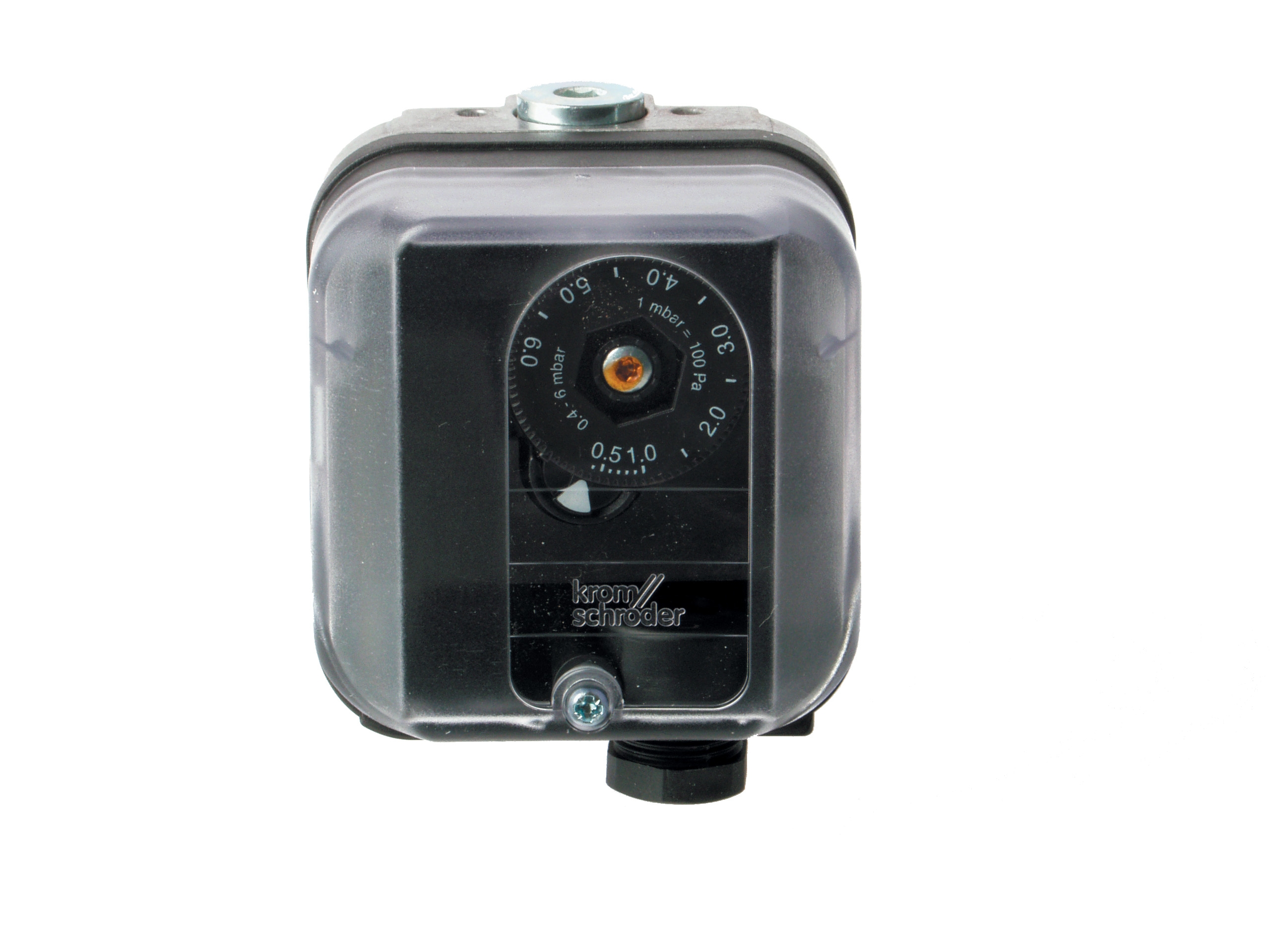
The Kromschroder Pressure switch DG 50U/6 exemplifies equipment suitable for Southeast Asian compliance requirements. Rated SIL 3 and Performance Level e, it meets EN 1854, FM, UL, AGA, and GOST-TR certifications simultaneously—providing flexibility across different national interpretations of safety standards.
Environmental and Emissions Regulations
Southeast Asia's rapid industrialization has prompted increasing attention to air quality and emissions control. While Europe enforces strict NOx and particulate matter limits, Southeast Asian regulations are evolving but generally less stringent. However, major industrial hubs (Singapore, Bangkok, Ho Chi Minh City) are implementing tighter controls.
For combustion systems, this means:
- Burners must minimize excess air and maintain proper combustion efficiency to reduce emissions
- Two-stage and modulating burners become advantageous for varying load conditions
- Facilities in sensitive areas should consider equipment with integrated combustion air management capabilities
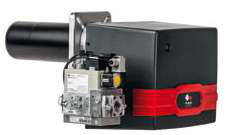
The FBR GAS XP 60/2 CE TC EVO two-stage gas burner (116–630 kW) offers the flexibility needed for facilities managing changing environmental compliance requirements. Its staged operation optimizes combustion across load ranges, reducing emissions during partial-load operation common in seasonal industries.
Safety and Control System Standards
Safety relay standards diverge across the region. The Kromschroder Relay BCU 570WC1F1U0K1-E and Siemens Relay LFL 1.622 represent control technologies that must function reliably across Southeast Asia's electrical infrastructure variations.
Critical considerations:
- Voltage fluctuations: Many Southeast Asian facilities experience wider AC voltage swings (±10-15%) than European utilities; equipment should tolerate these variations
- Frequency stability: Consistent 50 Hz operation cannot be assumed in all regions; control systems must be resilient
- Backup power: Rolling blackouts and grid instability in some areas require burner systems capable of safe shutdown and restart cycles
Equipment Selection Strategy for Southeast Asian Operations
Assessing Fuel Quality and Availability
Fuel characteristics directly impact burner selection. Southeast Asia's fuel supply chain presents variables not typical in developed markets:
Gas Burners:
- Natural gas availability and composition varies significantly by location and season
- LPG is common in areas without pipeline infrastructure but introduces different flame characteristics
- Gas quality monitoring becomes essential; poorly maintained supply systems introduce water vapor and contaminants
- Heavy fuel oil (HFO) quality varies widely; sulfur content and viscosity fluctuate seasonally and by supplier
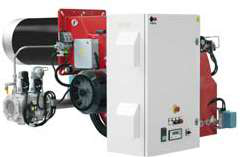
- The FBR KN 1300/M TL EL dual-fuel heavy oil burner (1700–11500 Mcal/h) addresses this uncertainty through flexible fuel capability and modulating control
- Dual-fuel capacity provides operational resilience when primary fuel becomes unavailable or uneconomical
Matching Burner Power Output to Facility Requirements
Southeast Asian industries span massive ranges: from small food processors (100 kW) to large petrochemical complexes (10+ MW). Oversizing burners wastes fuel during typical partial-load operation; undersizing creates inadequate capacity.
Selection methodology:
1. Determine peak thermal demand: Calculate maximum BTU/hour or kW needed at highest ambient temperature
2. Assess typical operating load: Most facilities operate at 50-80% capacity; understand your facility's load profile
3. Consider seasonal variation: Wet-season ambient temperatures and humidity affect combustion air density
4. Account for future expansion: Plan 10-20% capacity margin for growth
The FBR GAS XP 60/2 CE TC EVO range (116–630 kW) suits small-to-medium facilities, while the FBR KN 1300/M TL EL addresses larger industrial operations.
Control System Selection for Regional Grid Conditions
Burner control systems must stabilize flame, maintain combustion efficiency, and execute safe shutdowns. In Southeast Asia, control reliability depends on equipment tolerance for electrical variations:
Critical control components:
- Safety relays: Kromschroder Relay BCU 570WC1F1U0K1-E supports direct ignition and pilot ignition modes, essential for regions where electrical supply stability varies. Its compliance with EN 746-2 ensures compatibility with modern flame detection technologies
- Flame detection systems: The Siemens Relay LFL 1.622 integrates UV and ionization flame monitoring, providing redundancy valuable in dusty or humid environments common in Southeast Asia
- Pressure monitoring: The Kromschroder Pressure switch DG 50U/6 ensures burner fuel pressure remains within safe ranges; critical for maintaining combustion stability across fluctuating supply pressures
These integrated systems prevent hazardous conditions like flame loss, incomplete combustion, or uncontrolled fuel flow—risks amplified in regions where maintenance infrastructure may be less developed.
Operational Best Practices for Southeast Asian Facilities
Installation and Commissioning Considerations
Southeast Asia's tropical and subtropical climates introduce installation challenges absent in temperate regions:
Environmental factors:
- Humidity and corrosion: Install burners in sheltered locations; consider stainless steel components in coastal areas
- Combustion air quality: Ensure air intake filters are upgraded for high-dust environments; change intervals of 2-4 weeks may be necessary versus 6-12 weeks in Europe
- Vibration: Mount burners on vibration-isolating bases to prevent loosening in seismic zones (Philippines, Indonesia)
- Use surge protection devices; lightning strikes are common during monsoon seasons
- Verify control system voltage tolerance aligns with local utility specifications
- Install dedicated electrical circuits to prevent interference from other industrial equipment
Maintenance and Spare Parts Management
Maintenance reliability depends on spare parts availability. 3G Electric's 35+ years of service include strategic warehousing throughout Southeast Asia, ensuring critical components remain accessible:
Recommended maintenance schedule:
- Monthly: Visual inspection of burner flame, check fuel filters, verify pressure readings
- Quarterly: Clean burner head and nozzle; inspect combustion air inlet; test flame detection response
- Semi-annual: Complete burner disassembly and cleaning; replace fuel filters; verify control system calibration
- Annual: Full service by qualified technician; document all parameters for trend analysis
- Maintain stock of consumables (fuel filters, nozzles, electrode assemblies)
- Establish relationships with local distributors for quick access to control components
- Document equipment serial numbers and specification sheets for rapid ordering
Training and Operational Competency
Burner system performance depends fundamentally on operator knowledge. Many Southeast Asian facilities face high staff turnover; establishing training protocols becomes critical:
Essential operator training topics:
- Recognizing normal versus abnormal flame appearance and sounds
- Understanding pressure gauge readings and safety limits
- Procedures for safe burner shutdown during fuel supply interruptions
- Responding to control system alarms (flame loss, pressure deviation, ignition failure)
Regular refresher training ensures competency persists despite staff changes. Document all training in personnel records for regulatory compliance and insurance purposes.
Monitoring and Predictive Maintenance
Modern burner systems increasingly integrate data logging capabilities. Tracking combustion efficiency, fuel consumption, and control system response patterns reveals maintenance needs before catastrophic failures:
Key metrics to monitor:
- Fuel consumption per unit output: Degradation indicates fouling, misalignment, or control drift
- Burner ignition time: Lengthening ignition delays suggest electrode wear or fuel quality issues
- Flame signal strength: Declining signals indicate mirror fouling or detector aging
- Pressure fluctuations: Instability suggests fuel supply problems or component wear
Comparison of historical data reveals trends; significant deviations warrant immediate investigation. This approach prevents emergency shutdowns and extends equipment service life.
Conclusion: Integrating Equipment and Practices for Southeast Asian Success
Successful burner and combustion system operation in Southeast Asia requires balancing internationally standardized equipment (from manufacturers like Kromschroder, Siemens, and FBR) with region-specific operational practices. The selection and installation of equipment like the Kromschroder Relay BCU 570WC1F1U0K1-E, Kromschroder Pressure switch DG 50U/6, Siemens Relay LFL 1.622, FBR GAS XP 60/2 CE TC EVO, and FBR KN 1300/M TL EL must be complemented by rigorous maintenance, staff training, and compliance monitoring tailored to local conditions.
3G Electric's experience serving industrial customers across Southeast Asia since our founding demonstrates that equipment reliability and operational efficiency emerge from understanding both universal engineering principles and regional implementation realities. By applying the frameworks presented here—regulatory clarity, equipment selection methodology, operational best practices, and predictive maintenance—industrial professionals can optimize burner and combustion system performance across the diverse Southeast Asian industrial landscape.