Understanding Burners & Combustion: Oil vs. Gas System Comparison
Burners & Combustion technology has evolved significantly since 3G Electric began supplying industrial equipment 35 years ago. Today's procurement engineers face a critical decision: oil-fired or gas-fired combustion systems. Both technologies deliver reliable heat, but they differ fundamentally in fuel atomization, combustion efficiency, maintenance requirements, and troubleshooting protocols.
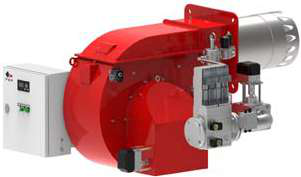
Oil burners like the Beckett CF3500 operate through pressure atomization, spraying fuel at 17–35 GPH through a nozzle into the combustion chamber. Gas burners like the FBR HI-GAS P550/M CE TL introduce gaseous fuel directly, relying on air-fuel mixing rather than mechanical atomization. This fundamental difference cascades through equipment design, operational performance, and failure modes.
For procurement engineers, understanding these distinctions prevents costly equipment selection mistakes and streamlines troubleshooting when problems arise. This guide compares both technologies across critical performance dimensions, enabling you to specify the right burner for your facility's thermal requirements.
Oil Burner Systems: Atomization, Pressure Management, and Performance Diagnostics
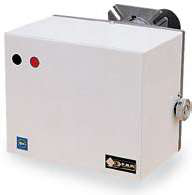
Oil burners depend entirely on atomization quality. The Beckett CF3500 uses direct spark ignition and flexible voltage options to create a reliable ignition source, but combustion quality hinges on nozzle performance and fuel pressure consistency.
Key Oil Burner Troubleshooting Areas:
- Nozzle Blockage vs. Pressure Loss: Compare these by measuring actual GPH delivery against nameplate rating. A Beckett CF3500 rated for 17–35 GPH operating at only 12 GPH indicates either a clogged nozzle (localized restriction) or a failing fuel pump (system-wide pressure loss). Use a pressure gauge at the nozzle line to differentiate. Nozzle blockage shows normal pump pressure with low flow; pressure loss shows reduced pump output.
- Fuel Quality Impact: Light oil (#2) flows freely; heavy oil (#6) requires preheating and specialized nozzles. Contaminated fuel clogs filters and nozzles within hours. Sample fuel regularly and compare viscosity against equipment specifications. Oil burners are more sensitive to fuel quality than gas systems.
- Combustion Air Ratio: Oil requires precise air-fuel ratios (approximately 15:1 by weight). Too much air creates excessive draft loss and heat loss up the stack; too little causes smoke and incomplete combustion. For the Beckett CF3500, adjust the combustion air damper incrementally and measure stack temperature. Ideal stack temperatures are 350–400°F; above 450°F indicates excess air.
- Electrode Maintenance: Direct spark systems degrade over time. If the CF3500 fails to ignite after 4–5 seconds, inspect electrodes for carbon buildup or gap drift. Gap should be 0.125 inches; measure with feeler gauges. Compare electrode condition across units to establish replacement intervals.
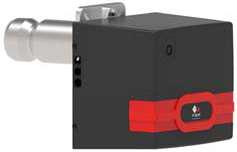
Low-NOx oil burners like the FBR X X4.22 TC SI add complexity through staged combustion, delivering under 120 ppm NOx emissions. These require tighter control of primary and secondary air introduction, making maintenance more critical than standard systems.
Gas Burner Systems: Modulation Control, Efficiency Scaling, and System Integration
Gas burners offer superior efficiency through modulation—the ability to scale output from 30% to 100% of rated capacity. The FBR HI-GAS P550/M CE TL (2325–6395 kW) and FBR GAS/M CE D2"S-F-50 (485–4070 kW) exemplify progressive and modulating designs that adjust fuel flow and air supply continuously, matching actual heating demand.
Key Gas Burner Troubleshooting Areas:
- Modulation vs. Fixed-Rate Output: Gas burners excel at part-load efficiency. When a 6395 kW burner runs at 40% capacity on a mild day, it consumes only 40% fuel while maintaining stable combustion. Oil burners lack this flexibility; the Beckett CF3500 runs at full 35 GPH regardless of demand. For variable-load facilities, gas burners reduce fuel costs by 15–25% annually. Procurement engineers should model seasonal demand before selecting systems.
- Pressure Regulator Calibration: Gas burners depend on precise inlet pressure (typically 28–35 mbar for natural gas). Drift in pressure regulators causes flame instability and safety shutdowns. The FBR HI-GAS P550/M requires monthly pressure checks with a manometer at the burner inlet. Oil systems are less pressure-sensitive because fuel nozzles accommodate wider pressure ranges.
- Air/Gas Ratio Control: Unlike oil's mechanical atomization, gas depends on proportional air introduction. A failing combustion blower or blocked air intake reduces oxygen availability, causing incomplete combustion and flame rollout. Inspect fan blade condition monthly; compare amperage draw across identical units. Normal variance is ±5%; larger deviations indicate bearing wear or blade fouling.
- Ignition Type Trade-offs: Most industrial gas burners use direct spark or hot surface ignition. Direct spark (as in the CF3500 oil equivalent) requires high-voltage transformer maintenance; hot surface igniters operate silently but degrade gradually. Compare maintenance cost (spark plug replacements are inexpensive; hot surface igniters cost 3–5 times more) against uptime requirements.
Dual-fuel burners (like the FBR GAS/M variant) add complexity. Switching between natural gas and propane, or between gas and oil, requires sealed fuel trains and precision switchover controls. Procurement engineers must budget additional commissioning time and operator training for dual-fuel systems.
Comparative Performance: Scaling, Footprint, and Installation Complexity
Burner selection extends beyond combustion performance to facility integration.
Oil vs. Gas Economics:
- Footprint: Oil systems require fuel storage tanks (above or below ground), occupying 500–2000 square feet depending on heating season duration. Gas systems eliminate tank space but require pressurized gas supply piping, which can add 5–10% to installation cost if existing infrastructure is absent. For cramped industrial plants, gas is advantageous; for rural locations distant from gas mains, oil becomes mandatory.
- Fuel Availability: Natural gas networks cover urban and developed suburban areas; rural sites depend on propane or oil. The Beckett CF3500 functions anywhere with fuel delivery. Gas burners like the FBR HI-GAS P550/M CE TL require guaranteed gas supply pressure; supply interruptions shut the system down immediately, whereas oil systems maintain combustion until fuel supply is exhausted.
- Emissions Compliance: Low-NOx gas burners meet stringent environmental regulations (typically <30 ppm NOx for modern units). The FBR X X4.22 TC SI oil burner delivers <120 ppm NOx through staged combustion, acceptable in most jurisdictions but not tier-one air quality regions. Gas burners inherently produce lower particulate emissions and sulfur byproducts, making them preferred in densely populated areas.
- Commissioning Complexity: Oil systems require nozzle selection, air damper tuning, and pressure testing (3–4 hours for experienced technicians). Gas systems demand gas train leak testing, pressure regulator calibration, and modulation curve programming (6–8 hours). Procurement engineers should include commissioning costs in total cost of ownership calculations.
The Beckett CF3500 delivers 17–35 GPH in oil; the FBR HI-GAS P550/M delivers 2325–6395 kW in gas. These units serve different scale ranges:
- Small facilities (bakery ovens, small industrial process heaters): The FBR G 2001 S provides 71–153 Mcal/h, sufficient for bakery ovens and process vessels.
- Medium facilities (commercial HVAC, manufacturing): The Beckett CF3500 and FBR GAS/M CE D2"S variant bridge 200 kW to 1400 kW thermal output.
- Large facilities (district heating, paper mills, chemical plants): The FBR HI-GAS P550/M CE TL delivers 2.3–6.4 MW, enabling single burner designs for massive thermal loads.
Procurement engineers must ensure equipment is sized for actual peak load plus 10–15% safety margin. Oversizing causes short cycling (frequent on-off cycles) and poor efficiency; undersizing creates insufficient heat and system strain.
Maintenance Intervals and Troubleshooting Cost Comparison
Over a 15-year equipment lifecycle, maintenance strategy determines true cost of ownership.
Oil Burner Maintenance:
- Annual: Filter replacement, nozzle inspection, electrode gap check, combustion air damper cleaning.
- Every 3 years: Nozzle replacement ($150–400), fuel pump overhaul ($300–700).
- Every 5 years: Heat exchanger cleaning (reduces efficiency loss by 10–15%).
- Total 15-year cost: $2,500–4,500 per unit (labor + parts).
- Quarterly: Pressure regulator verification, combustion air intake inspection, flame detector calibration.
- Annually: Modulation valve servo testing, gas train leak check (required by code).
- Every 2–3 years: Ignition transformer replacement ($200–400), control board diagnostics ($150–300).
- Total 15-year cost: $3,200–5,800 per unit (labor + parts).
Gas systems incur slightly higher maintenance costs but deliver efficiency gains that offset this over time. In facilities operating >6 months annually, gas usually achieves payback within 5–7 years through fuel savings.
Troubleshooting speed matters. Oil burner problems (nozzle blockage, fuel pressure drift) typically resolve in 1–3 hours with simple tools. Gas burner diagnostics (modulation curve errors, pressure regulator drift, control logic faults) may require 4–8 hours and specialized electronic test equipment, extending downtime costs.
Procurement engineers must weigh these factors when specifying equipment. Include maintenance training costs and spare parts inventory requirements in budget planning. 3G Electric's 35 years of experience sourcing Beckett oil burners and FBR gas systems globally ensures you access equipment with established service networks and documented troubleshooting procedures.
Selection Framework for Procurement Engineers
Use this decision matrix to compare options:
Choose Oil Burners (like Beckett CF3500) when:
- Facility is remote from natural gas infrastructure.
- Thermal load varies significantly seasonally (oil storage provides flexibility).
- Budget constraints limit initial installation cost (oil systems cost 10–15% less upfront).
- Site space for fuel tank is available.
- Emissions regulations are moderate (not tier-1 air quality areas).
- Natural gas supply is reliable and cost-competitive locally.
- Thermal load fluctuates (modulation efficiency is critical).
- Emissions regulations demand low NOx (<30 ppm).
- Long-term fuel cost stability is a priority (gas pricing less volatile than oil).
- Facility planning includes future capacity expansion (gas scales more easily).
- Application requires sector-specific performance (bakery ovens, precision process heating).
- Emissions compliance mandates <120 ppm NOx.
- Nozzle design matches fuel characteristics (1.5 mm for light oil, 2.5 mm for heavy oil).
Work with your equipment supplier to obtain detailed combustion curves, baseline performance data, and local maintenance support networks. 3G Electric distributes both oil and gas systems globally, with technical teams experienced in cross-regional equipment selection and long-term support planning.