Understanding Burners & Combustion: The Three Fuel Pathways
As an HVAC contractor in Singapore, you'll encounter three primary burner types for industrial and commercial heating applications: gas burners, oil burners, and dual-fuel systems that switch between both. Each represents a distinct combustion chemistry, control requirement, and operational cost profile. With over 35 years of equipment distribution experience, 3G Electric has supported contractors through countless fuel selection decisions across Southeast Asia.
The choice between these systems isn't simply about price—it's about matching combustion characteristics to your client's infrastructure, regulatory environment, and long-term operational goals. Singapore's tropical climate, strict emissions standards, and high energy costs make this decision particularly critical.
Gas Burners: Lower Emissions, Higher Efficiency, Simpler Control
Gas burners dominate Singapore's HVAC landscape for good reason. Natural gas combustion produces cleaner exhaust, requires less maintenance, and integrates seamlessly with modern control systems.
Combustion Advantages:
- Complete combustion at lower temperatures (minimal particulate matter)
- Cleaner fuel-to-air mixing, reducing excess air requirements
- Faster response to load changes due to gaseous state
- Lower NOx emissions compared to heavy oil (critical for Singapore's Clean Air Act compliance)
Gas burners typically use electronic ignition with flame detection via UV sensors or ionization. The Siemens LFL 1.622 safety relay provides medium-to-high power gas burner control with UV and ionization flame monitoring—ideal for Singapore's demanding industrial standards.
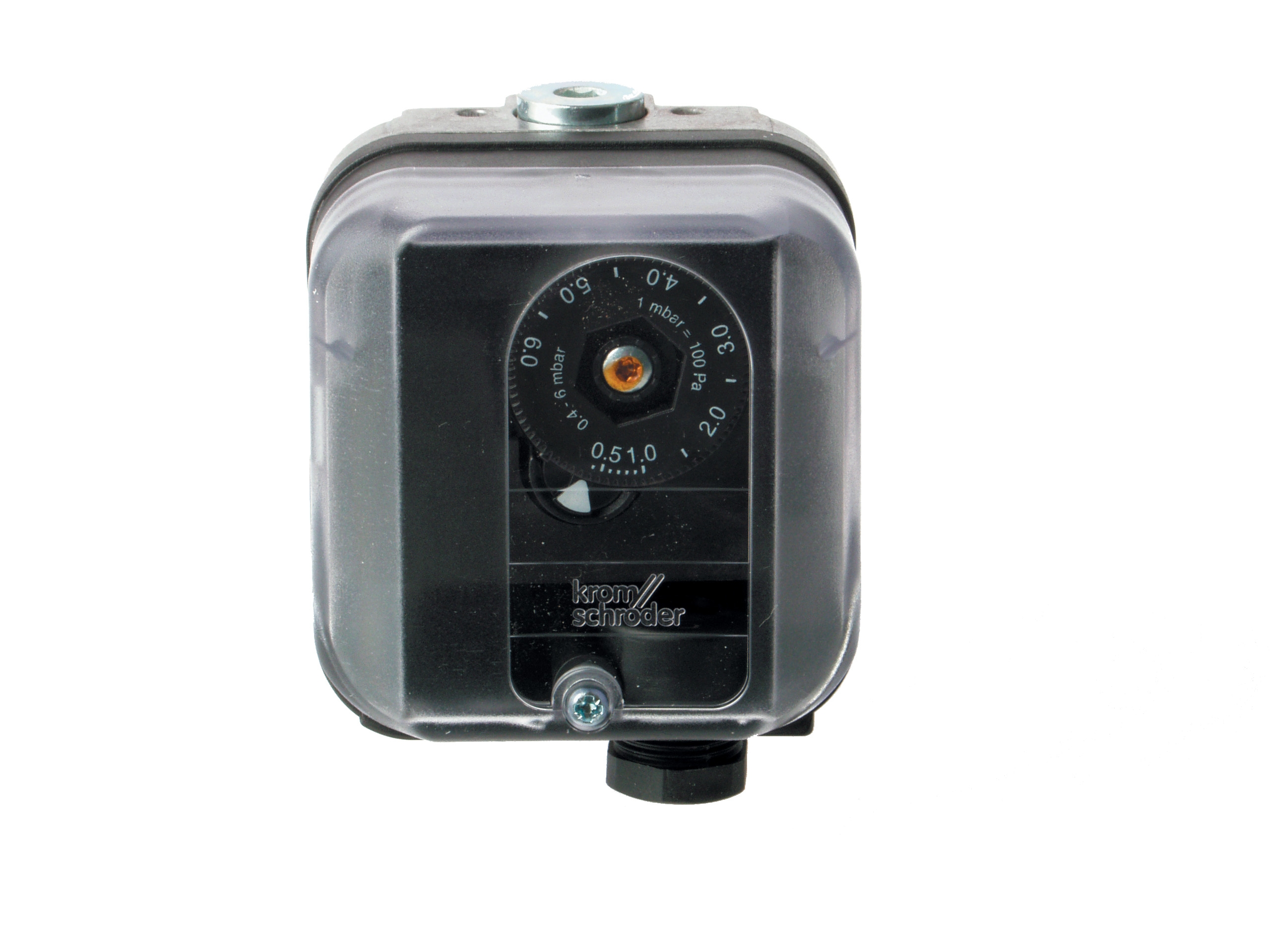
For pressure regulation and safety interlocking, the Kromschroder DG 50U/6 pressure switch offers SIL 3 rated protection, meeting EN 1854 and FM certifications required for commercial installations.
Fuel Supply Considerations:
Singapore contractors benefit from reliable city gas infrastructure. However, you'll need:
- Pressure regulation from 10-15 bar supply down to burner inlet pressure (typically 0.5-1.5 bar)
- Gas filter-regulator units with integrated safety shutoff
- Proper ventilation (gas can accumulate in lower spaces)
Gas burners have lower installation costs ($8,000-15,000 SGD for medium capacity systems) and minimal soot cleaning. Fuel costs track Singapore's petrochemical pricing but remain competitive against oil.
Oil Burners: High Energy Density, Greater Flexibility, Maintenance-Intensive
Heavy fuel oil (HFO) and industrial diesel burners remain relevant for facilities without gas access, backup power scenarios, or high-load industrial processes. Singapore's port facilities, food processing plants, and older institutional buildings still rely on oil combustion.
Combustion Characteristics:
- Higher energy density per unit volume (11-12% more than gas)
- Requires preheating (typically 60-90°C for HFO) to achieve atomization
- Produces more particulate matter and requires more frequent cleaning
- Higher combustion temperature increases NOx formation
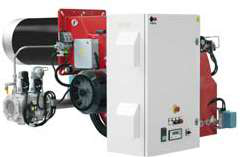
The FBR KN 1300/M TL EL dual-fuel burner demonstrates modern oil burner design with 2-stage modulating control, delivering 1,700-11,500 Mcal/h. This configuration allows contractors to match burner output to variable load conditions, reducing fuel waste during partial-load operation.
For oil-fired systems, you must specify:
- Oil storage tank with proper venting and drain valves
- Fuel heating system (immersion heaters or steam coils)
- High-pressure pump (typically 4-8 bar) with relief valve
- Oil filter with bypass protection
- More sophisticated flame detection (usually UV dual-sensor or ionization)
Oil burners demand precise combustion air control due to higher particulate production. The burner's air damper must respond dynamically to load changes—a feature found in premium controllers like the Kromschroder BCU 570WC1F1U0K1-E relay, which supports continuous pilot ignition modes.
Maintenance and Operational Costs:
Oil systems require monthly inspections:
- Nozzle inspection and cleaning (HFO clogs easily)
- Oil line flushing
- Combustion chamber and flue inspection
- More frequent boiler cleaning (soot accumulation)
For Singapore contractors, this translates to higher annual service costs (20-30% more labor than gas systems) but provides independence from gas infrastructure and emergency backup capability.
Dual-Fuel Burners: Flexibility at the Cost of Complexity
Dual-fuel systems switch between gas and oil based on availability, price, or load requirements. These are increasingly common in Singapore's industrial sector, particularly in facilities requiring operational resilience.
System Architecture:
Dual-fuel burners integrate two combustion pathways controlled by selector switches and flow monitoring:
- Gas pathway: Low-pressure supply with electronic ignition
- Oil pathway: Heated oil through pressure-atomizing nozzle
- Switchover logic: Electronic controller monitors fuel availability and cost signals
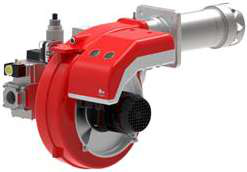
The FBR GAS XP 60/2 CE TC EVO burner represents modern gas burner efficiency (116-630 kW range), while the KN 1300/M TL EL handles oil with comparable power density. Combining both in one system requires careful control architecture.
Control System Implications:
Dual-fuel operation requires:
- Dual safety relays or a single unit supporting both fuel modes
- Separate flame detection for each fuel (UV for gas, ionization for oil, or cross-checked sensors)
- Interlock logic preventing simultaneous fuel supply
- Fuel pressure monitoring on both lines
- Combustion air compensation that adjusts to fuel type
The Siemens LFL 1.622 supports this complexity with independent flame detection modes and air damper control suitable for dual-fuel applications.
Operational Advantages for Singapore:
During the 2022 LNG supply disruptions affecting Southeast Asia, contractors with dual-fuel capability maintained service continuity. This flexibility justifies the 15-20% cost premium and added commissioning complexity.
The Trade-Off:
Dual-fuel systems require more sophisticated commissioning and annual testing (both fuel pathways must be validated). Annual service costs run 30-40% higher than single-fuel systems due to the additional monitoring and switchover verification.
Comparative Performance Metrics for Singapore Contractors
Thermal Efficiency:
- Gas burners: 85-92% (cleaner combustion, less heat loss)
- Oil burners: 80-88% (higher particulate losses in flue gas)
- Dual-fuel: 80-90% depending on operating mode
- Gas: 2-4 seconds (gaseous fuel mixes instantly)
- Oil: 5-8 seconds (must atomize and ignite)
- Dual-fuel: 8-15 seconds (includes switchover logic)
- Gas: NOx 80-150 mg/m³ (typically passes without post-treatment)
- Oil: NOx 180-250 mg/m³ (often requires SCR retrofit)
- Dual-fuel: Must meet the stricter standard (oil pathway)
- Gas: Minimal (pressure-regulator and valve station)
- Oil: Large (storage tank, heating system, high-pressure pump)
- Dual-fuel: 40% more equipment than single-fuel systems
Practical Selection Framework for Singapore HVAC Projects
Choose Gas Burners When:
- City gas supply is available and reliable
- Emissions compliance is critical (hospitals, schools, residential areas)
- Budget favors lower installation and service costs
- Load variations are moderate (modulating gas burners handle partial load well)
- No gas infrastructure exists (remote facilities, islands)
- Industrial process requires high temperature combustion
- Emergency backup fuel storage is essential
- Facility operates infrequently (oil doesn't degrade like gas lines can)
- Client requires operational resilience against fuel supply disruption
- Facility spans extended uptime windows (24/7 operations)
- Budget permits 15-20% system cost premium
- Long-term fuel price volatility is a concern
Commissioning and Support: Leveraging 3G Electric's Experience
With 35+ years distributing burner controls and combustion equipment across Southeast Asia, 3G Electric understands the regional installation challenges—tropical humidity affecting electrical connections, corrosive salt air in coastal facilities, and the specific pressure/flow characteristics of Singapore's gas distribution network.
When selecting components for your projects, we stock:
- Kromschroder relay systems for reliable ignition and flame monitoring
- Pressure switches rated for Southeast Asian industrial standards
- Safety relays with proven performance in humid, corrosive environments
- Burner units from FBR with CE compliance and regional certification
Our technical team can advise on:
- Fuel supply line sizing for Singapore's pressure/temperature conditions
- Control system integration with building management systems
- Commissioning protocols specific to local electrical standards (SS 638, PSB approval paths)
- Spare parts availability and lead times (critical for HVAC contractors managing multiple projects)
The right burner choice amplifies your competitive advantage. Gas systems build your reputation for clean, efficient installations. Oil systems demonstrate capability for complex industrial work. Dual-fuel installations position you as a premium contractor solving resilience challenges.
Your choice isn't just about combustion chemistry—it's about matching equipment reliability, service accessibility, and long-term client satisfaction to each unique Singapore project context.