Understanding Burners & Combustion Control Relay Technologies
Burners & Combustion systems depend entirely on reliable control relays to manage ignition sequences, monitor flame presence, and execute emergency shutdowns. With over 35 years of experience supplying industrial equipment across Southeast Asia, 3G Electric recognizes that maintenance teams often face confusion when comparing control relay specifications—particularly regarding safety integrity levels, flame detection modes, and fuel type compatibility.
Unlike general-purpose electrical relays, burner control relays serve as the safety-critical interface between your combustion system and its fuel supply. A single relay failure can trigger unwanted shutdowns, create safety hazards, or allow dangerous unburned fuel accumulation. Understanding the technical differences between relay models is therefore essential for effective maintenance planning and procurement decisions.
This guide compares three representative control relay solutions used across Singapore's industrial sector: the Kromschroder BCU 570WC1F1U0K1-E, the Siemens LFL 1.622, and pressure switch integration strategies. We examine how maintenance teams can evaluate relay specifications, interpret safety certifications, and select the appropriate technology for different burner applications.
Comparing Relay Types: Direct Ignition vs. Pilot-Based Systems
Direct Ignition Relays: The Kromschroder BCU 570WC1F1U0K1-E Approach
The Kromschroder Relay BCU 570WC1F1U0K1-E represents a modern direct ignition control strategy. This relay supports three operational modes: direct ignition (spark ignites main gas directly), intermittent pilot (continuous reignition between burner cycles), and continuous pilot (pilot flame held during all operational states).
Key advantages for maintenance teams:
- Compliant with EN 746-2 (safety of gas burners) and EN 676 (controls for burners and combustion equipment)
- Supports both gas and oil applications, enabling multi-fuel facility standardization
- Modular design allows relay replacement without full system redesign
- Direct ignition mode eliminates continuous pilot flame waste—reducing fuel consumption by 8-12% in intermittent duty cycles
- Direct ignition spark plugs require seasonal inspection (cleaning carbon deposits)
- Intermittent pilot mode demands reliable ignition transformer performance
- More complex logic control requires technician training on sequence diagnostics
- Gas pressure stability critical—fluctuations exceed 50 mbar can cause misfires
Maintenance teams using direct ignition relays should establish quarterly spark plug inspections and verify gas pressure stability within ±10 mbar of design setpoint.
Medium-to-High Power Systems: The Siemens LFL 1.622 Safety Control Unit
The Siemens Relay LFL 1.622 addresses a different maintenance scenario—large industrial burners requiring dual flame detection capability and synchronized air damper control. This unit combines UV and ionization flame monitoring, allowing cross-checks that prevent false flame signals.
Operational advantages:
- UV flame monitoring detects visible combustion light (0.2-3.0 µm wavelength)
- Ionization monitoring measures electrical conductivity across flame front
- Dual-detection redundancy meets SIL 2 and SIL 3 application requirements
- Integrated air damper modulation coordinates fuel and combustion air
- Supports gas, oil, or dual-fuel burners at medium-to-high power ratings
- UV sensors accumulate soot deposits in high-dust environments—typically require cleaning every 500-800 operating hours
- Ionization electrodes sensitive to fuel contamination and water accumulation
- Requires annual calibration verification to maintain SIL compliance
- More sophisticated software logic demands OEM training for diagnostic procedures
Maintenance teams deploying Siemens relay systems should establish strict flame monitoring verification protocols. Monthly visual inspection of UV lens clarity and quarterly electrode resistance measurement (typically 0.5-2 MΩ acceptable range) prevents false shutdowns.
Pressure Switch Integration: Supporting Relay Function and System Safety
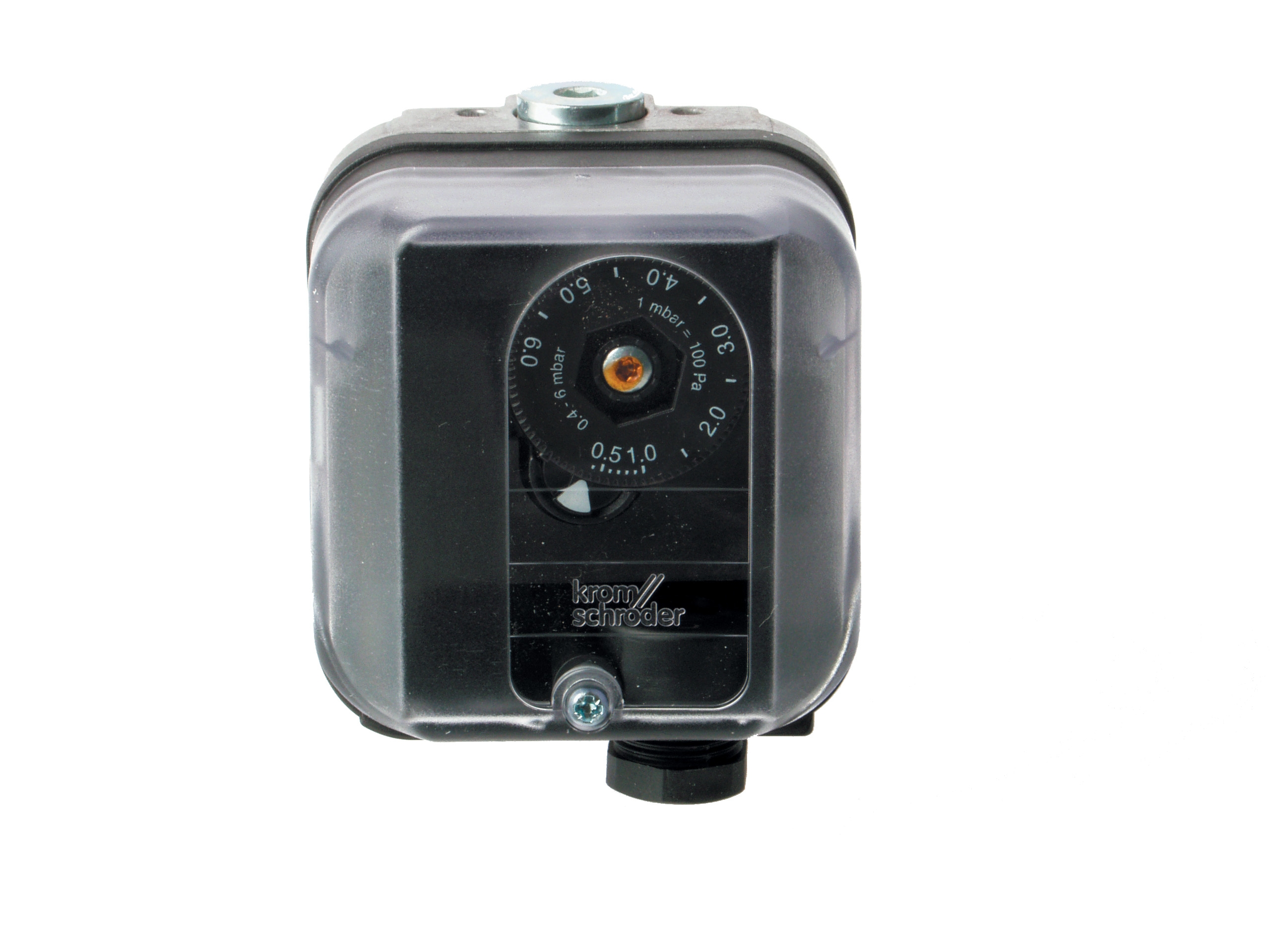
Burner control relays rarely operate in isolation. The Kromschroder Pressure Switch DG 50U/6 exemplifies how pressure monitoring supplements relay logic, creating defense-in-depth safety architecture.
Pressure Switch Certification and Performance Levels
The DG 50U/6 achieves SIL 3 and Performance Level (PL) e ratings under EN 1854, meeting FM, UL, AGA, and GOST-TR international standards. This certification matters because it enables compliance with various national pressure equipment regulations without additional de-rating.
Practical comparison with relay-only systems:
| Aspect | Relay + Pressure Switch | Relay Only |
|--------|------------------------|------------|
| Gas supply loss detection | Immediate (<100 ms) | Depends on flame detection delay (0.5-2 sec) |
| Water hammer protection | Yes (adjustable deadband) | No—relies on external relief |
| Pilot pressure verification | Available as secondary signal | Not monitored |
| Compliance pathway | Supports SIL 2/3 architectures | Limited to SIL 1 typically |
| Maintenance interval | 12-24 months (depending on gas quality) | N/A |
Maintenance teams should understand that pressure switches detect system failures relays cannot identify: gas regulator drift, fuel line blockages, and supply-side leaks. Installing a pressure switch creates a "safety net" preventing delayed combustion chamber fill or delayed fuel shutoff.
Burner Type Compatibility: Relay Selection for Different Combustion Applications
Two-Stage Gas Burners: The FBR GAS XP 60/2 CE TC EVO Example
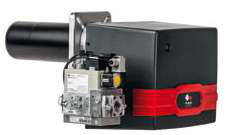
The FBR GAS XP 60/2 CE TC EVO two-stage gas burner delivers 116–630 kW thermal power with modulating control. Maintenance teams should recognize that two-stage operation—low-fire and high-fire states—creates different relay requirements compared to on/off burners.
Relay considerations for two-stage burners:
- Direct ignition relays like the Kromschroder BCU must support two-stage sequencing logic
- First ignition occurs at low-fire setpoint; high-fire transition requires modulating valve response
- Pilot pressure must remain stable across both flame heights; pressure monitoring becomes more critical
- Maintenance complexity increases with additional intermediate operating points to monitor
Two-stage systems allow maintenance teams to reduce fuel waste by operating at partial capacity during low-demand periods. However, relay diagnostics become more challenging—technicians must verify flame stability at both fire levels, not just on/off operation.
Heavy Oil Burners: The FBR KN 1300/M TL EL Dual-Fuel Configuration
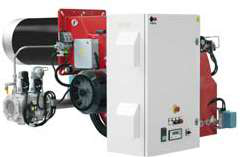
The FBR KN 1300/M TL EL dual-fuel heavy oil burner operating at 1700–11500 Mcal/h represents the highest-complexity scenario. Oil combustion demands different relay logic than gas because fuel atomization quality directly affects flame stability.
Maintenance team adjustments for oil burners:
- Oil requires preheating (70-90°C) for proper viscosity; relay must monitor nozzle and fuel line temperatures
- Flame detection more challenging due to smoke/soot interference with optical sensors
- Ionization monitoring preferred over UV for oil applications; maintenance must verify electrode gap (typically 3-4 mm) quarterly
- Fuel pressure more critical than gas pressure—poor atomization causes "pulsating flame" false shutdowns
Dual-fuel systems like the FBR KN 1300/M introduce sequential complexity: gas ignition, transition to oil, fuel switching, and cross-fuel interlocks. Maintenance teams should expect 30-50% longer relay commissioning time compared to gas-only installations.
Practical Maintenance Strategy: Relay Selection and Lifecycle Planning
Decision Matrix for Relay Selection
Maintenance teams should evaluate three primary criteria when selecting between control relay types:
1. Safety Integrity Level (SIL) Requirement
- SIL 1 (low hazard): Simple on/off gas burners, non-critical applications—direct ignition relay acceptable
- SIL 2 (medium hazard): Industrial process heating, intermittent duty—dual-channel flame detection recommended
- SIL 3 (high hazard): Large steam boilers, continuous operation, high-occupancy facilities—redundant pressure switches and UV/ionization monitoring required
Singapore's Building and Construction Authority (BCA) typically requires SIL 2 minimum for commercial building burners; SIL 3 for district heating systems. Maintenance teams should confirm facility-specific SIL requirements with your local authority and equipment specifier before relay selection.
2. Fuel Type and Availability
- Gas-only facilities: Kromschroder BCU 570WC1F1U0K1-E (cost-effective, direct ignition reduces pilot waste)
- Dual-fuel or oil-primary operations: Siemens LFL 1.622 (superior flame monitoring for oil combustion)
- Heavy industrial applications: Combine either relay with pressure switch integration (DG 50U/6) to achieve SIL 3
- Basic instrumentation skills: Direct ignition relays (spark plug cleaning, pressure gauges)
- Advanced technician training: UV/ionization relay systems (sensor cleaning, electrode resistance measurement)
- External service dependency: Complex dual-fuel systems require annual OEM commissioning
Preventive Maintenance Timeline by Relay Type
Direct Ignition Relays (Kromschroder BCU 570WC1F1U0K1-E):
- Monthly: Visual inspection for spark plug carbon deposits
- Quarterly: Spark plug cleaning (isopropyl alcohol, soft brush)
- Semi-annually: Gas pressure stability verification (±10 mbar)
- Annually: Full sequence test (ignition, flame hold, shutdown)
- Weekly: Visual UV lens inspection (cleanliness)
- Monthly: Electrode spacing verification (3-4 mm gap)
- Quarterly: UV lens cleaning (soft cloth, mild solvent)
- Semi-annually: Electrode resistance measurement (multimeter)
- Annually: OEM calibration and flame detection sensitivity verification
- Quarterly: Visual inspection for corrosion on gauge connections
- Semi-annually: Pressure calibration verification (deadband testing)
- Annually: Complete unit replacement if "stick-slip" occurs (chattering output)
Conclusion: Relay Selection Aligned with Singapore Industrial Standards
With 35 years of experience distributing industrial burner equipment across Southeast Asia, 3G Electric understands that Singapore maintenance teams operate in a highly regulated environment. Building and Construction Authority codes, Environmental Public Health regulations, and workplace safety standards create specific compliance pathways that influence relay selection.
Direct ignition relays like the Kromschroder BCU 570WC1F1U0K1-E excel for straightforward gas-fired applications where maintenance resources favor simplicity. Medium-to-high-power facilities benefit from dual-detection relays like the Siemens LFL 1.622, which provide safety redundancy and comprehensive flame monitoring. Integration of pressure switches (DG 50U/6) elevates any system to SIL 3 capability, supporting Singapore's most demanding industrial facilities.
Your maintenance strategy should prioritize relay type selection during procurement—changing relay types in-service creates operational disruption and training overhead. Align relay specification with your facility's safety requirements, fuel type, and maintenance team capabilities. This forward-looking approach reduces emergency shutdowns, extends equipment lifecycle, and keeps your combustion systems compliant with Singapore's evolving industrial standards.
For specific relay selection assistance based on your facility's burner model and safety requirements, contact 3G Electric's technical team. Our distributors maintain comprehensive stock of Kromschroder, Siemens, and FBR burner equipment, supporting rapid replacement and commissioning across Singapore industrial operations.