Understanding Burners & Combustion Control Architecture
Burners & Combustion systems in industrial facilities require multi-layer control architectures combining primary ignition controls, secondary flame detection, and fuel pressure management. For procurement engineers, the complexity lies not in burner mechanical selection alone, but in specifying the complete control ecosystem that ensures safe, reliable, and efficient combustion across varying load conditions.
The control architecture typically comprises three functional layers: ignition sequencing (controlling spark or ignition electrode timing), flame detection and verification (confirming successful ignition through UV or ionization sensing), and fuel delivery regulation (maintaining optimal fuel pressure and air ratios). Each layer must integrate seamlessly with the others while meeting Singapore's adoption of international standards including EN 746-2 (burner control devices), EN 676 (safety devices), and EN 1854 (pressure switches for combustion control).
With 35+ years of industrial equipment distribution experience, 3G Electric has supported procurement teams in specifying control systems for facilities ranging from 150 kW heating boilers to 11,500 Mcal/h heavy oil installations. Understanding your control requirements before equipment selection prevents costly retrofits and ensures compliance with Safety Integrity Level (SIL) ratings mandated for process safety.
Burner Control Relay Selection: Matching Mode and Monitoring Strategy
Direct Ignition vs. Pilot Ignition Modes
The first critical specification decision involves ignition mode. Direct ignition control relays provide spark or electrode ignition directly at the main burner, eliminating pilot gas consumption and enabling fast response to load changes. Intermittent pilot ignition maintains a small pilot flame during standby, then introduces main fuel on demand. Continuous pilot ignition keeps the pilot flame constantly lit, requiring higher fuel consumption but providing immediate load response.
The Kromschroder Relay BCU 570WC1F1U0K1-E exemplifies modern direct ignition architecture, supporting all three modes through firmware configuration. For procurement specification, this relay supports unlimited burner starts without recycle delays—critical for facilities experiencing frequent load cycling. Compliance with EN 746-2 and EN 676 ensures integration with European-standard combustion management systems increasingly adopted in Singapore's petrochemical, maritime, and pharmaceutical sectors.
Flame Detection and Confirmation Strategy
Flame monitoring technology divides into two categories: UV (ultraviolet) sensors detecting radiation across 185-260 nm wavelengths, and ionization sensors measuring electrical conductivity across the flame front. UV detection responds rapidly (typically 50-150 milliseconds) and requires line-of-sight to the flame envelope. Ionization detection provides superior stability in industrial environments with ambient radiation but exhibits longer response times (200-300 milliseconds).
The Siemens Relay LFL 1.622 integrates both UV and ionization flame monitoring capabilities, allowing procurement engineers to specify dual-sensor redundancy for SIL-rated safety chains. This relay specifically addresses Singapore's mixed-fuel industrial base, supporting gas, oil, and dual-fuel burners with medium to high power ratings. The controlled air damper capability enables modulating combustion control, adjusting air supply proportionally to fuel demand for improved efficiency across partial-load operation.
For procurement teams: specify dual-sensor systems where burner output varies significantly with load (boiler applications) or where ambient conditions include infrared sources (furnaces with radiant heating). Single-sensor systems suffice for constant-load applications like industrial drying or process heating.
Fuel Pressure and Safety Control Integration
Pressure Switch Specification for Combustion Safety
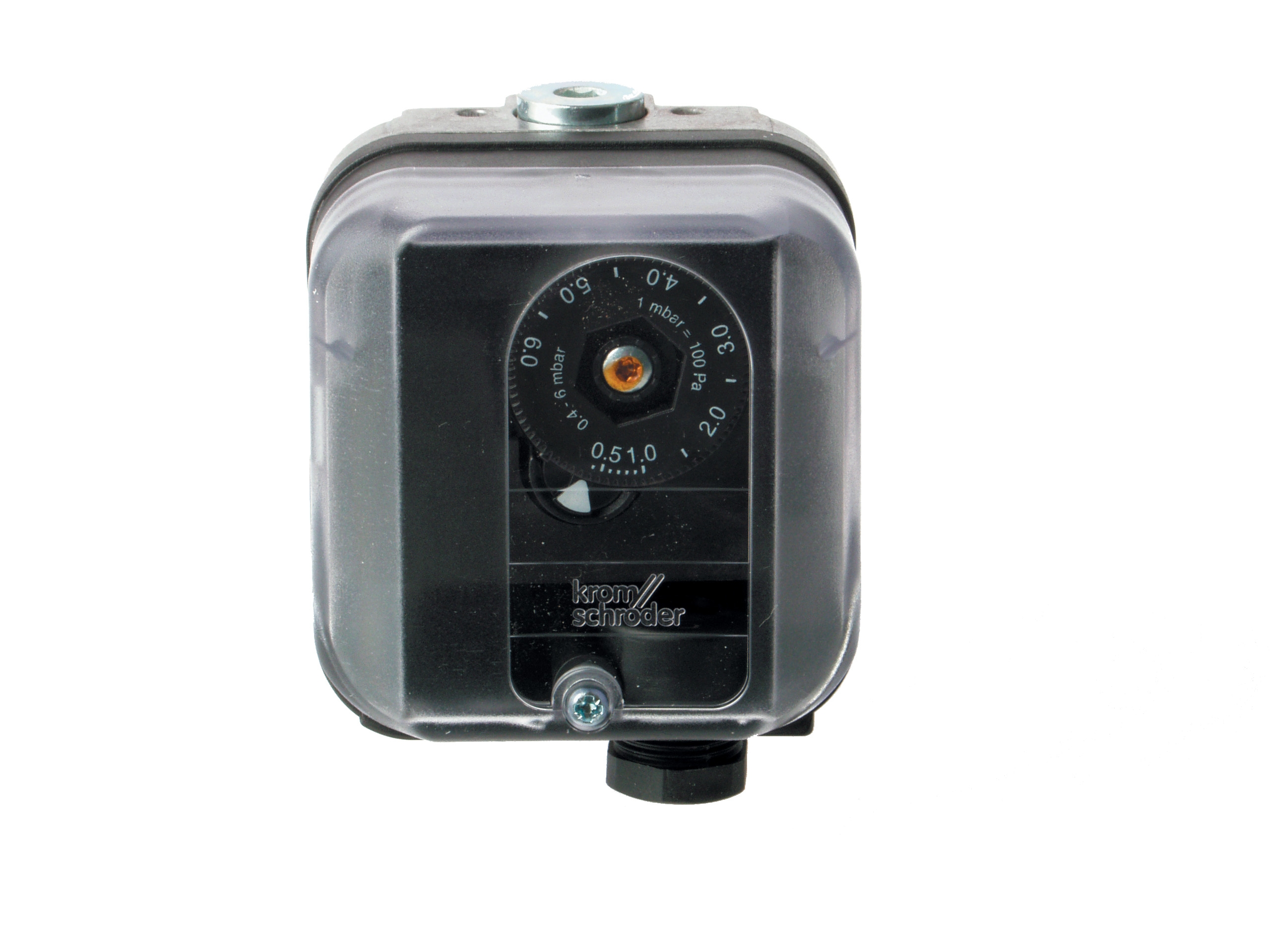
Pressure switches validate fuel delivery system integrity and provide safety interlock functions preventing ignition attempts if fuel pressure falls below design specifications. The Kromschroder Pressure Switch DG 50U/6 delivers SIL 3 / Performance Level e certification, meeting EN 1854, FM (Factory Mutual), UL, AGA (American Gas Association), and GOST-TR standards—comprehensive coverage for multinational operations or facilities exporting products to regulated markets.
Procurement engineers should note that pressure switch response time directly impacts safety chain response. The DG 50U/6 provides switching speeds under 50 milliseconds, ensuring rapid fuel shutoff if pressure anomalies develop. For gas burner applications, specify pressure switches with differential settings matching your fuel delivery system: typical gas burners operate 17-69 mbar (2.5-10 psi), while oil burners require 8-20 bar (115-290 psi) differential settings.
In Singapore's humid tropical environment, specify stainless steel wetted components and sealed electrical connections preventing corrosion-related seal degradation. Many pressure switch failures in maritime industrial facilities result from saltwater intrusion into terminal connections, not pressure sensor drift.
Fuel Rail and Air Damper Control Integration
Modern burner control systems coordinate fuel pressure regulation with combustion air supply. As fuel flow increases during load ramps, air supply must increase proportionally to maintain proper fuel-air ratios (typically 1:15 to 1:20 by mass for natural gas). The Siemens LFL 1.622 includes controlled air damper capability, allowing procurement teams to specify single-control-loop systems rather than complex dual-loop architectures.
For procurement specification: validate whether your facility requires proportional modulation (0-100% load adjustment) or step control (High-Low-Off operation). Proportional systems require 0-10 VDC or 4-20 mA analog control outputs from the relay, plus stepper motor or servo actuators on both fuel valves and air dampers. Step control systems use simple on-off outputs and mechanical fuel valve actuators, reducing complexity and cost but limiting operating flexibility.
Burner Equipment Selection: Thermal Power Matching and Application Alignment
Gas Burner Specifications for Industrial Heating
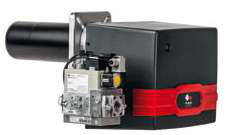
Gas burners require specification of thermal power output (kW), modulation range (turndown ratio), and emissions compliance. The FBR GAS XP 60/2 CE TC EVO delivers 116–630 kW thermal power across two operational stages with proportional modulation, providing 1:5.4 turndown ratio. Operating noise of 66–69 dBA suits facilities where external walls face residential areas (Singapore's industrial parks increasingly neighbor residential zones).
IP 40 protection rating indicates suitability for indoor installation but requires shelter from direct spray or pressure washdown. For procurement teams specifying burners in food processing facilities using high-pressure cleaning systems, upgrade specifications to IP 54 or higher, adding premium costs of approximately 15-20% but preventing moisture-related failures.
Gas burner selection should include: (1) confirmation of gas type (natural gas, LPG, biogas) and supply pressure stability, (2) acoustic considerations relative to facility location and community regulations, (3) turndown requirements matching your facility's typical operating envelope, and (4) spare parts availability through your equipment distributor.
Heavy Oil Burner Specifications for Thermal Load Ranges
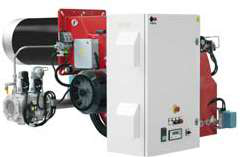
Heavy fuel oil (HFO) and marine diesel oil (MDO) burners demand greater complexity than gas equipment, requiring fuel heating, pressurization, and atomization control. The FBR KN 1300/M TL EL dual-fuel heavy oil burner operates at two stages with modulating control, delivering 1700 to 11,500 Mcal/h thermal power—positioning this equipment for larger industrial heating plants, ship-shore power installations, and petrochemical facilities.
Procurement specifications for heavy oil burners must include: (1) fuel preheating system capacity (typically 50-120°C preheat for HFO to achieve proper viscosity for atomization), (2) fuel filtration requirements (100 micron strainers minimum, 10 micron recommended for nozzle protection), (3) combustion air supply temperature and humidity limits (air preheating required below 5°C ambient), and (4) stack emissions monitoring capability if operating under Environmental Protection Agency (EPA) or Singapore's Pollution Control Agency (PCA) oversight.
Heavy oil systems require quarterly maintenance intervals compared to annual for gas burners. Budget accordingly: fuel system flushing, nozzle replacement, and electrode carbon removal form the maintenance core.
Procurement Framework: Specification and Vendor Qualification
Creating Procurement Specifications with Certification Requirements
When developing procurement specifications for burner control systems, structure documentation around four primary dimensions:
Functional Requirements: Define ignition mode (direct/intermittent/continuous pilot), desired flame detection technology (UV/ionization/dual), modulation type (proportional/step), and integrated safety functions (fuel pressure validation, flame failure response timing).
Compliance Requirements: Specify applicable standards explicitly—EN 746-2, EN 676, EN 1854 are baseline for Singapore industrial installations. If your facility exports products or operates under ISO 50001 (energy management) certification, include energy efficiency metrics (minimum seasonal efficiency requirements, modulating capability scores). Maritime facilities require DNV-GL or Lloyd's Register approval; pharmaceutical facilities require FDA CFR Part 11 traceability for control system audit trails.
Integration Requirements: Document communication protocols (0-10 VDC analog, 4-20 mA, Modbus, Profibus, EtherCAT), electrical supply parameters (voltage, frequency, UPS requirements), and expected response times for load ramp scenarios. Specify whether existing plant DCS systems require integration or if standalone relay operation suffices.
Lifecycle Requirements: Define warranty expectations (typically 2-3 years for industrial relays), spare parts support commitment, technical documentation requirements in English or local language, and on-site commissioning support availability.
**Vendor Evaluation: Beyond Price
When evaluating suppliers, establish weighted evaluation criteria: technical compliance (40%), local support capability (25%), total cost of ownership including spares (20%), delivery timeline (10%), and risk mitigation (5%). For control system relays and pressure switches, 3G Electric's 35+ years distribution experience provides both technical validation and continuity assurance—critical when selecting equipment requiring five to ten year lifecycle support.
Request vendors provide: (1) detailed technical datasheets with electrical schematics, (2) certification copies directly from testing bodies (not marketing materials), (3) warranty terms including coverage for field integration failures, (4) availability commitments for replacement components, and (5) references from comparable facilities in Singapore or Southeast Asia.
Specification of control system components demands discipline: premature cost-cutting on relay or pressure switch selection often results in 3-6 month troubleshooting cycles, facility downtime costs exceeding original equipment savings by 500-1000%. Invest upfront in proper specification and vendor qualification.
Implementation Roadmap: From Specification to Operational Integration
Implement burner control system procurement through five sequential phases:
Phase 1 - Requirements Workshop: Convene operations, maintenance, engineering, and procurement teams to establish functional and compliance requirements. Document facility constraints (space limitations, ambient conditions, integration dependencies). Typical duration: 2-3 weeks.
Phase 2 - Preliminary Vendor Engagement: Share specifications with 3-4 qualified suppliers requesting technical proposals and preliminary cost estimates. Request site surveys for integration feasibility assessment. Duration: 3-4 weeks.
Phase 3 - Vendor Selection and Negotiation: Evaluate proposals against your weighted criteria, negotiate warranty and support terms, establish delivery timelines. Duration: 2-3 weeks.
Phase 4 - Factory Acceptance Testing (FAT): If applicable for larger installations, arrange witness testing at vendor facilities confirming control sequences, response times, and safety interlocks function as specified. Duration: 1-2 weeks (typically embedded in delivery timeline).
Phase 5 - Site Integration and Commissioning: Coordinate installation, electrical integration, safety chain validation, and operator training. Budget 3-5 days for commissioning with vendor technical support present. Duration: 2-4 weeks including pre-commissioning preparation.
Total procurement-to-operation timeline typically spans 12-16 weeks. Compressed timelines risk specification errors and integration failures—avoid emergency procurement unless facility risk assessment justifies accelerated cost premiums.