Burner Control Systems in Singapore: Automatic Relay Logic and Flame Detection Architecture
Industrial burner control systems represent a critical intersection of operational efficiency and workplace safety. In Singapore's manufacturing and energy sectors, these systems manage everything from intermittent combustion in commercial kitchens to continuous-duty applications in process heating. Unlike pilot light controls which focus on ignition safety, burner control relays orchestrate the entire combustion cycle—from air damper sequencing to real-time flame monitoring and emergency shutdown. This article examines the technical architecture of automatic burner control systems, the flame detection technologies that underpin them, and practical selection criteria for Singapore-based industrial facilities.
Understanding Automatic Burner Control Relay Architecture
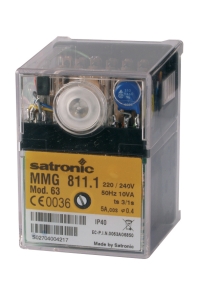
Automatic burner control systems operate on a fundamentally different principle than traditional manual or thermostat-based controls. Rather than simply responding to temperature setpoints, these relays execute a precisely sequenced control program that manages the entire firing cycle. The CBM Relay TMG 740-3 63.55 exemplifies this architecture—it is purpose-built for both gas and mixed-fuel burners operating in intermittent duty cycles with single or dual combustion heads.
The control sequence typically progresses through five distinct phases: (1) Pre-purge, during which the burner chamber is swept with air to remove residual fuel vapors; (2) Ignition preparation, where the burner management system energizes ignition electrodes or spark assemblies; (3) Pilot establishment, confirming flame presence through UV, ionization, or infrared detection; (4) Main flame ignition, transitioning fuel supply from pilot to main burners; and (5) Run-hold, maintaining stable combustion while monitoring flame integrity throughout the firing cycle.
The TMG 740-3 relay incorporates logic circuitry that manages these transitions automatically, with built-in safety interlocks that prevent fuel delivery if flame detection fails. The relay's design accommodates three distinct flame detector technologies, allowing system designers to select the detection method best suited to their specific fuel type and burner configuration. This flexibility is particularly valuable in Singapore's diverse industrial environment, where facilities may operate multiple burner types or upgrade systems over time without requiring complete control panel redesigns.
Modern automatic relays also integrate modulating capability—rather than simple on/off burner operation, these systems can proportionally adjust fuel supply based on demand signals from room thermostats, process temperature sensors, or building management systems. This modulation capability directly improves energy efficiency, a critical consideration for Singapore facilities operating under increasingly stringent environmental standards and energy cost pressures.
Flame Detection Technologies and Safety Integration
The heart of any burner control system is its flame detection capability. The three primary technologies each present distinct advantages and operational characteristics, and the choice between them fundamentally affects system performance and maintenance requirements.
Ionization Detection operates on the principle that a flame in a combustion chamber creates a conductive path between two electrodes. When flame is present, a small DC voltage applied across strategically positioned electrodes detects ion current flow, confirming flame presence. This technology is economical and requires minimal maintenance, but it can be susceptible to nuisance shutdowns in environments with electrical noise or in applications where fuel composition varies significantly.
Ultraviolet (UV) Cell Detection, exemplified by the CBM Cell QRA 10C, detects the UV radiation naturally emitted by flame. UV cells use sealed vacuum tubes containing a photosensitive electrode that generates current proportional to UV intensity. This technology is highly reliable and essentially immune to electrical interference, making it ideal for installations in electrically noisy environments such as facilities with large motor drives or welding equipment. The QRA 10C accommodates multiple mounting collar variations (QRA2, QRA10, QRA53, QRA55 series), providing mechanical flexibility for retrofit applications common in Singapore's aging industrial infrastructure.
Infrared (IR) Detection monitors the infrared spectrum characteristic of flame oscillation—the natural flickering of combustion. IR detectors are exceptionally fast-responding and provide good discrimination against false signals from ambient light or reflected surfaces. However, they require precise alignment and line-of-sight access to the flame.
Integration of any flame detection technology into a control relay requires consideration of response time, proven working range, and failure mode characteristics. The relay must receive and process the flame signal within milliseconds, then execute appropriate control actions—maintaining fuel supply if flame is confirmed, or initiating shutdown sequences if flame is lost. Response time specifications are typically in the 100-300ms range, ensuring that any combustion anomaly is detected and acted upon before hazardous conditions develop.
Real-World Application Examples in Singapore's Industrial Sector
Singapore's industrial facilities operate burner systems across a diverse range of applications, each with distinct control requirements. Consider a food processing facility operating steam boilers with dual-burner configurations for continuous-duty applications. Such facilities require automatic relay controls that can manage two independent combustion heads while maintaining synchronized flame monitoring—precisely the capability the TMG 740-3 provides through its dual-head architecture. The system's intermittent-duty optimization is particularly relevant for facilities that cycle burners on and off based on steam demand, rather than modulating output continuously.
In petrochemical processing environments, where fuel composition may vary between pipeline natural gas and backup liquefied petroleum gas (LPG), automatic relay systems must accommodate fuel switching without compromising safety. The ionization detection option available in these relays can be challenging in such environments due to the electrical characteristics of different fuel types. Conversely, UV cell detection—as provided by the QRA 10C—offers superior consistency across varying fuel compositions, making it the preferred technology for such switchover applications.
Commercial kitchen equipment in Singapore's hospitality sector represents another significant application area. These installations typically require rapid flame response and compact control packaging. Smaller automatic relays engineered for intermittent duty cycles meet these requirements while maintaining the safety integrity necessary for personnel-occupied spaces. The modulating capability of modern relay systems allows kitchen equipment to maintain more consistent cooking temperatures while reducing overall energy consumption—a meaningful consideration for high-volume food service operations operating in Singapore's expensive real estate environment.
Selection Criteria and Best Practices for Singapore Installations
Specifying the correct burner control system requires systematic evaluation across multiple technical dimensions. Begin with the primary duty cycle classification: is the application intermittent (cyclic, with extended off periods) or continuous? The TMG 740-3, optimized for intermittent duty, may not be ideal for applications requiring prolonged continuous operation, where different thermal stress characteristics and control algorithms apply.
Second, determine the appropriate flame detection technology. Facilities in electrically noisy environments (large motor drives, high-frequency switching equipment, proximity to welding operations) should prioritize UV cell detection like the QRA 10C over ionization methods. Natural gas-only facilities in cleaner electrical environments may find ionization detection acceptable. Rapid-response applications favor IR detection despite its alignment requirements.
Third, consider the burner quantity and configuration. Single-head intermittent burners (one combustion point) require simpler control logic than dual-head systems. The TMG 740-3 explicitly supports both configurations, but system cost and maintenance complexity increase with dual-head requirements.
Finally, evaluate integration requirements with existing facility infrastructure. Will the burner control system operate standalone, or must it integrate with building automation systems, demand-side management programs, or emergency shutdown networks? Modern relays increasingly support communication protocols enabling such integration, important for Singapore facilities subject to building code compliance and energy management audits.
When upgrading existing systems, maintain compatibility with established control component families where possible. This reduces spare parts inventory requirements and simplifies technician training for facility maintenance staff. Consultation with qualified controls specialists familiar with local regulatory requirements is essential—Singapore's building and safety codes impose specific requirements on burner management systems, and incorrect specification can result in equipment that fails inspection or certification.
Closing Remarks and Next Steps
Burner control system selection represents a significant decision affecting decades of operational performance, safety, and energy efficiency. The technical complexity of automatic relay systems demands careful attention to flame detection technology, duty cycle compatibility, and integration requirements specific to each facility's operational context.
3G Electric maintains comprehensive inventory of burner control relays, flame detection cells, and supporting components from leading manufacturers, combined with technical expertise specific to Singapore's industrial environment. Our team can assist with system evaluation, specification development, and technical troubleshooting throughout the lifecycle of your burner control installation. Contact 3G Electric today to discuss your specific burner control requirements and connect with our technical specialists.