Burner Control Strategies: Intermittent vs. Continuous Operation for Industrial Combustion Systems
Industrial burner control systems represent a critical decision point for HVAC contractors and combustion engineers. The choice between intermittent and continuous operation control strategies fundamentally shapes the reliability, efficiency, and maintenance profile of an installation. Unlike burner selection based on power requirements or nozzle sizing, the control strategy you implement determines how your system responds to demand fluctuations, detects flame failure, and protects downstream equipment from unsafe operating conditions. This technical explainer dissects the engineering principles, real-world trade-offs, and safety implications that distinguish these two operational modes, helping you make informed specifications for diverse industrial applications from boilers to warm-air generators.
Core Principles: Understanding Intermittent vs. Continuous Control Operation
Intermittent burner control, also called non-permanent or cyclic operation, means the burner ignites, fires for a set duration, and then shuts down completely when the heating load is satisfied. During standby periods, no fuel is consumed and the burner undergoes a full safety shutdown sequence. Continuous operation, by contrast, permits the burner to remain in service across extended duty cycles, modulating its output proportionally to demand via PID (proportional-integral-derivative) control algorithms or stepping through discrete power levels.
The practical implications are profound. Intermittent systems suit applications with episodic heat demand—think batch processes, seasonal heating, or applications where the load fluctuates dramatically. Continuous systems excel in applications requiring stable output, such as process heating, drying chambers, or installations where frequent start-stop cycling would degrade thermal efficiency or component lifespan. The control strategy selected also dictates the entire safety architecture: which flame detectors you deploy, how aggressively you monitor combustion stability, and what shutdown sequences protect your installation during fault conditions.
Safety represents the most critical distinction. Intermittent systems incorporate non-volatile lock-out functions—once a fault is detected (flame loss, air pressure drop, or electrical anomaly), the system locks and requires manual reset or external authorization before attempting re-ignition. This prevents dangerous accumulation of unburned fuel. Continuous systems must sustain flame monitoring across the entire service cycle and implement proportional or modulating responses to load changes, adding sophistication but also vulnerability if sensors drift or fuel supply becomes unstable.
Technical Architecture: Control Relays, Flame Detection, and Safety Interlocks
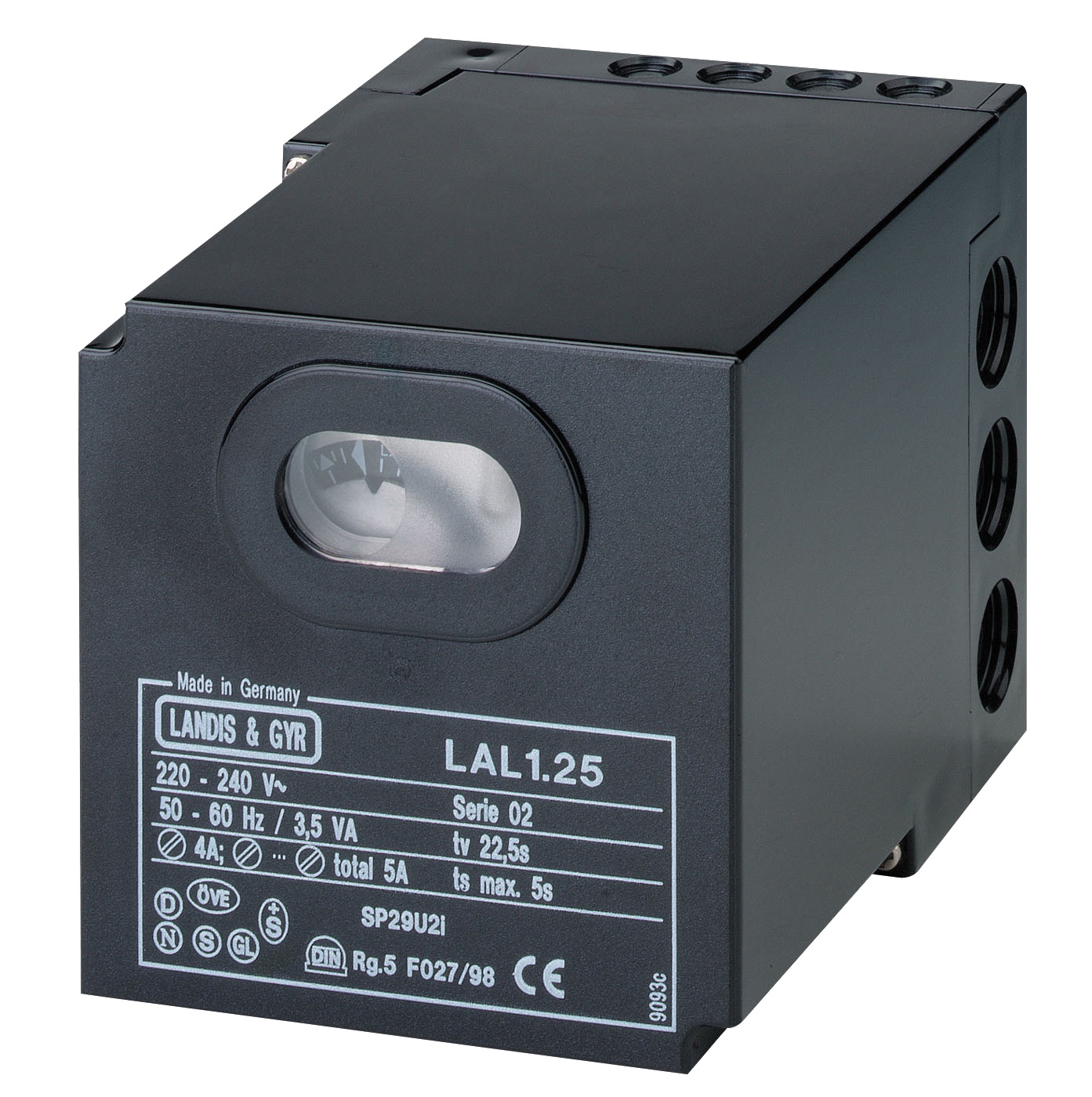
The hardware backbone of both strategies revolves around electronic control relays that orchestrate ignition sequences, monitor combustion, and command fuel shutoff during fault conditions. For intermittent applications serving atmospheric and fan-assisted burners, the CBM Eurobox series relays such as the CM391.2 relay represent the industry standard. These relays are engineered specifically for automatic gas burner control in non-permanent operation. The CM391.2 features reinforced isolation and non-volatile lock-out, ensuring that once a fault is detected (such as flame loss or loss of air pressure), the burner cannot restart without manual intervention. This is critical for safety: the lock-out prevents repeated ignition attempts that could lead to fuel pooling in the combustion chamber—a hazard that could cause delayed ignition and explosive conditions.
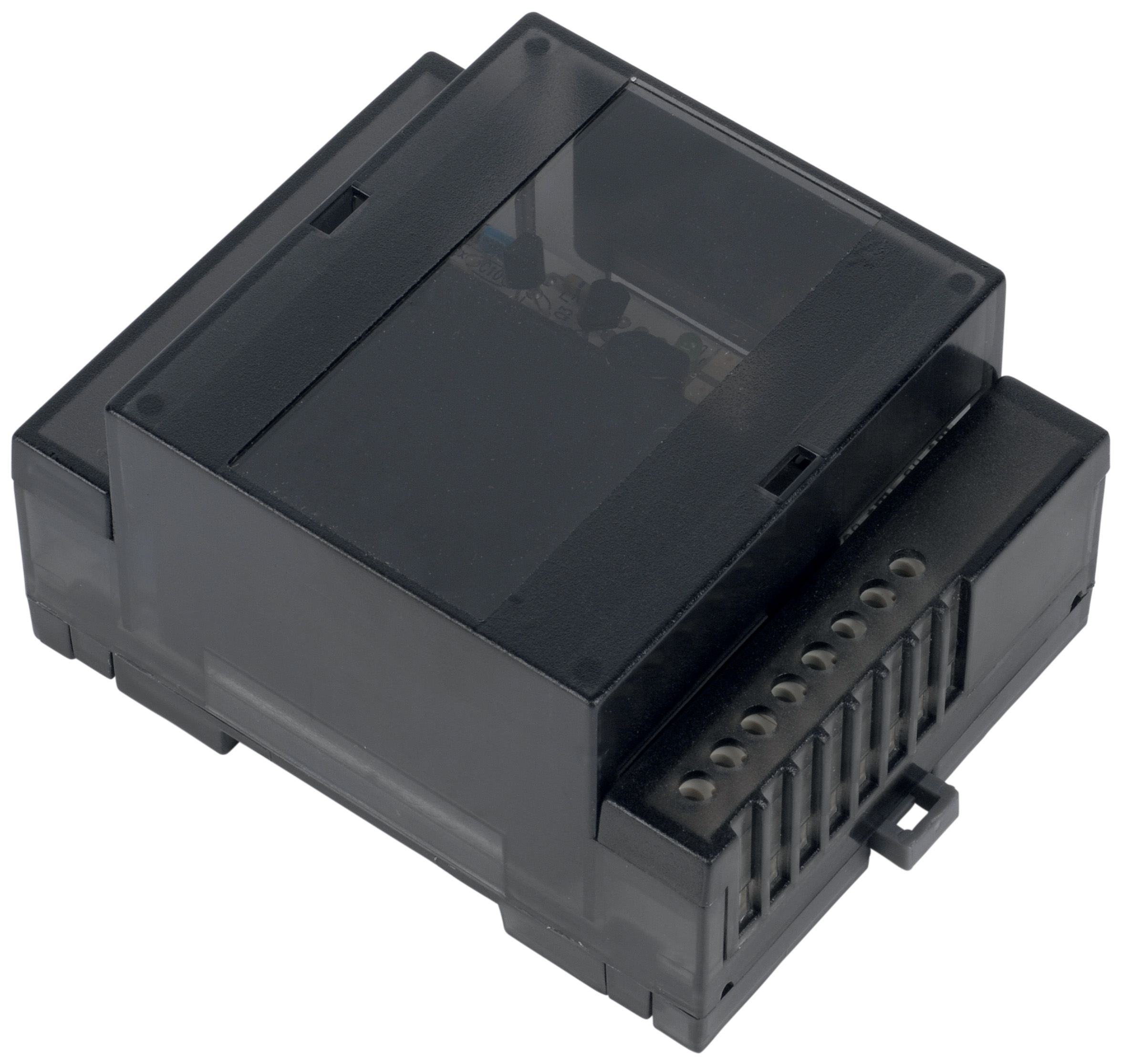
Flame detection technology diverges significantly between control strategies. For intermittent systems burning oil or biomass, infrared detectors such as the CBM IRD 1010 blue cell provide robust monitoring across the duty cycle. This detector operates across the 800–1100 nm spectral range with a daylight filter response at 950 nm, enabling reliable discrimination between actual flame radiation and ambient light. The IRD 1010 accepts any mounting position and achieves IP 41 protection, critical for industrial environments where vibration, thermal stress, and dust load compromise sensor longevity. For gas burners, the CBM flame relay CF1 offers a compact alternative rated for 1 A @ 250 VAC with mechanical endurance exceeding 15 million operations—sufficient for thousands of on-off cycles without degradation. Its polycarbonate UL94-V0 housing withstands thermal cycling and provides IP 40 environmental sealing.
Universal burner safety control systems, exemplified by the CBM LAL 2.14 relay, support intermittent operation across hot-air generators and diverse appliance types. The LAL 2.14 integrates with flame sensors (QRB1, QRC1, or RAR types) and provides staged safety interlocks: air pressure monitoring, flame supervision, and fuel shutoff command. The two-stage architecture—a primary safety stage monitoring air pressure and ignition proving, followed by flame monitoring during the burn phase—ensures that fuel is never introduced unless combustion air is proven available and flame is continuously confirmed.
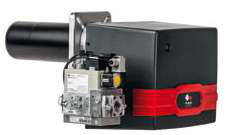
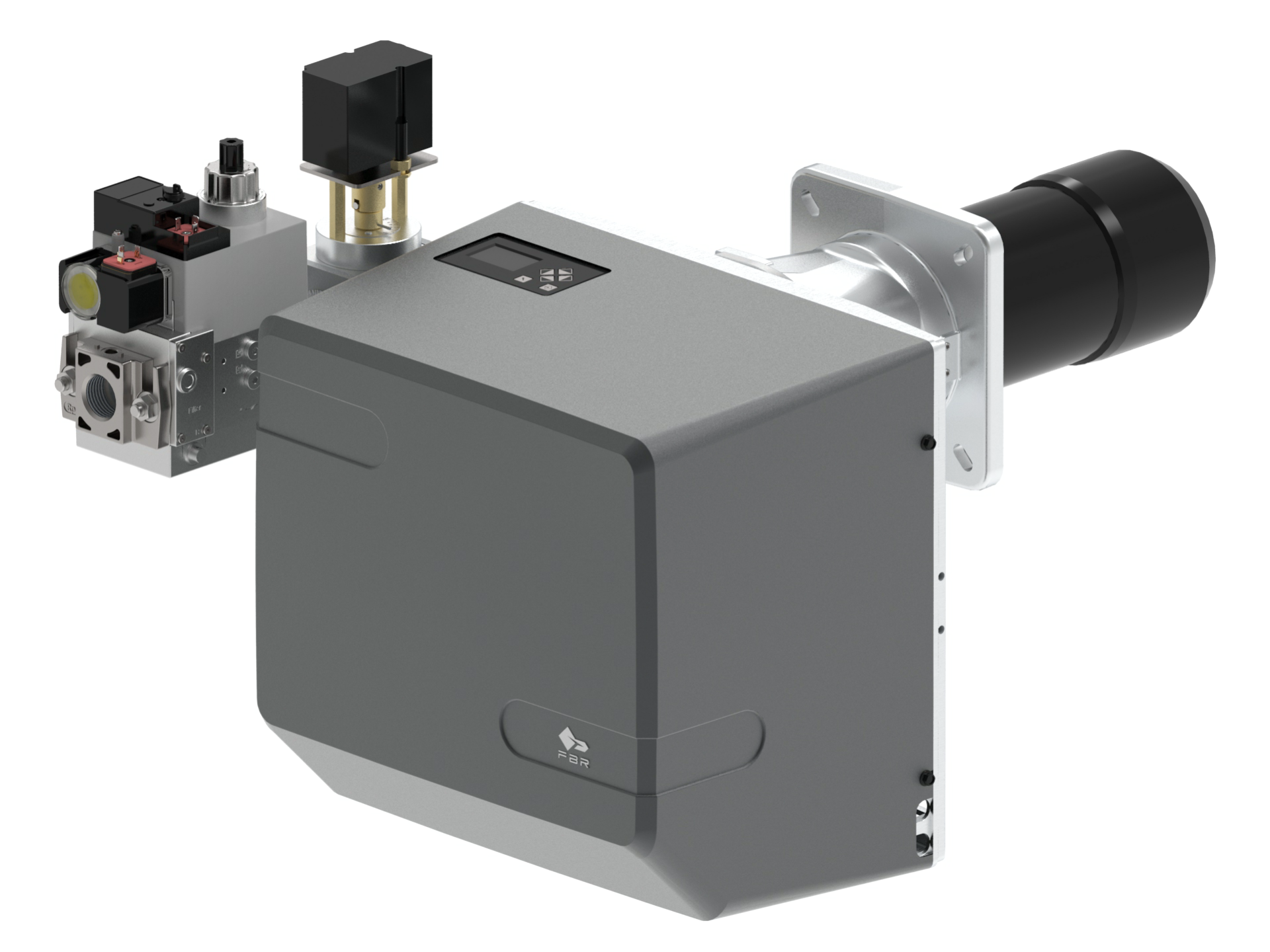
Continuous operation systems employ more sophisticated control architectures. The FBR BURNER GAS X5/MF TL EL VC LPG is engineered for modulating operation when paired with an optional modulation kit and flame probe. This burner features a die-cast aluminum body with a high-pressure fan (370 W motor) and combustion head optimized for efficiency and flame stability. The power range spans 69.8 kW minimum to 349 kW maximum, with fuel categories covering I2R, I2H, I2L, and I3-series gas classifications. Modulation is achieved through PID feedback loops that adjust fuel flow proportionally to demand, maintaining optimal combustion efficiency across a wide turndown ratio. The gas train minimum pressure tolerance (27/33 mbar for natural gas and LPG) establishes the operational envelope—pressures below this threshold disable ignition.
Real-World Application Scenarios: When to Select Each Strategy
Intermittent Control Use Cases: A commercial laundry facility with batch washing cycles represents an ideal intermittent application. During each cycle, hot water demand spikes as drums fill and heat to operating temperature; once the batch completes, demand drops to near zero. An intermittent system with a CM391.2 relay ignites the burner, fires for 20–30 minutes, satisfies the load, and shuts down. Between cycles, the burner remains offline, consuming no fuel. When the next batch begins, the relay receives a call signal and re-initiates the full ignition sequence. Should flame be lost mid-cycle due to a blocked nozzle or supply pressure drop, the non-volatile lock-out engages immediately—fuel shuts off and the system waits for manual reset. This inherent safety through complete shutdown is a major advantage when untrained personnel operate the facility.
Continuous Control Use Cases: A pharmaceutical manufacturing facility requiring constant 85°C drying chamber temperature employs continuous modulating control. As product moisture load varies, the drying chamber temperature drifts slightly; the modulating burner's PID controller senses the deviation and adjusts fuel flow incrementally—increasing fire when temperature drops below 84°C, decreasing when it climbs above 86°C. The result is steady-state operation with minimal thermal overshoot, protecting product quality. An intermittent system would cycle on and off, causing temperature swings that damage thermal-sensitive compounds. The continuous system with an CM391.2 10.10 relay maintains proportional fuel control and accepts modulation signals from the drying chamber's thermostat, delivering seamless stability across 24-hour production runs.
Hybrid Scenario: A warm-air generator serving a large commercial building during winter employs staged continuous control. Multiple gas burner zones (staged burners rather than a single modulating unit) allow the system to operate at 25%, 50%, or 100% of total capacity by sequentially lighting burners. This staged approach avoids the turndown penalty of continuous modulation while preventing the thermal cycling of pure intermittent operation. Control relays such as the CM391.2 30.5 1.2 orchestrate which burners are active based on space temperature demand.
Selection Criteria and Comparative Analysis
| Criterion | Intermittent Control | Continuous Operation |
|---|---|---|
| Fuel Consumption (Cyclic Load) | Zero standby consumption; burner fully offline | Minimum fuel flow maintains pilot or low-fire state |
| Thermal Cycling Stress | High—frequent ignition/shutdown stresses heat exchanger | Low—continuous operation minimizes metal fatigue |
| Startup/Shutdown Safety | Highest—non-volatile lock-out prevents fuel accumulation | Moderate—relies on continuous flame monitoring |
| Modulation Efficiency | Poor—fixed firing rate or on-off only | Excellent—proportional fuel/air reduces excess air loss |
| Turndown Ratio | Limited to mechanical adjustments; typical 2:1–3:1 | Wide turndown; modulating systems achieve 5:1–10:1 |
| Sensor Stability Requirements | Moderate—flame detector active only during fire periods | Stringent—flame detector must track continuously; drift causes instability |
| Maintenance Burden | Lower—fewer duty cycles means less component wear | Higher—modulation servos, proportional valves require calibration |
| Initial Equipment Cost | Lower—simpler relay architecture and ignition system | Higher—modulation kits, sensors, proportional valves add cost |
| Applicable Burner Types | Atmospheric, fan-assisted, compact monobloc designs | Fan-assisted forced-draught burners with proportional fuel control |
Key Selection Factors for Contractors:
- Load Profile Analysis: If the load demand is episodic or seasonal (laundries, batch processes, winter-only heating), intermittent control is cost-effective and inherently safe. If demand is continuous or tightly regulated (process heating, climatic chambers), continuous modulation justifies its complexity.
- Thermal Mass and Setpoint Stability: High-mass heat exchangers (boilers, large accumulators) tolerate intermittent cycling because thermal inertia buffers temperature swings. Low-mass systems (instantaneous water heaters, air-to-air exchangers) demand continuous control to prevent overshoot.
- Regulatory and Safety Requirements: Some jurisdictions mandate non-volatile lock-out for unattended burner operation, effectively requiring intermittent control. Check local boiler codes and insurance requirements before designing continuous systems in critical applications.
- Operator Skill Level: Intermittent systems are forgiving—if something goes wrong, the burner shuts down and stays off until manually reset. Continuous systems require trained technicians to interpret sensor diagnostics and adjust proportional valve trim.
- Energy Cost vs. Capital Outlay: In applications running >6,000 hours per year, the efficiency premium of modulating burners (5–15% fuel savings across the season) often amortizes their higher capital cost. Below 3,000 hours/year, intermittent control's simplicity and lower initial expense typically wins economically.
Safety Interlocks and Fault Response Differences
Both control strategies implement safety interlocks, but the response logic differs fundamentally. An intermittent system with a non-volatile lock-out (as in the CM391.2 relay series) responds to a flame-loss fault by immediately commanding fuel shutoff and then entering a locked state. The system will not attempt re-ignition until external authorization is received—either through a manual reset button or a cleared digital command from a building management system. This conservatism prevents the dangerous scenario where unburned fuel accumulates and ignites explosively on a subsequent ignition attempt. The trade-off is operational inconvenience: if flame is lost due to a transient disturbance (a gust of wind, a temporary supply pressure dip), the operator must manually intervene rather than the system automatically recovering.
A continuous modulating system, by contrast, implements proportional response. If flame intensity drops below a safety threshold but is not completely lost, the controller adjusts burner parameters to restore stable combustion—reducing fuel flow slightly, increasing combustion air, or adjusting fuel/air ratio. Only if flame is completely extinguished does the system lock out. This responsiveness is advantageous for stable, attended operations but demands higher sensor accuracy and more sophisticated electronics. Sensor drift—where the flame detector's sensitivity gradually decreases over months—can cause nuisance lockouts or, conversely, allow operation at degraded combustion quality without alarm.
Closing Recommendation and Next Steps
The choice between intermittent and continuous burner control strategies is not a simple product selection—it is a systems engineering decision that cascades through equipment specification, installation methodology, and operator training. Intermittent control excels in safety-critical, episodic-duty applications where the cost and complexity of modulation cannot be justified. Continuous operation shines in demanding, high-utilization applications where steady thermal output and efficiency gains outweigh the engineering overhead. Real-world industrial sites often employ hybrid approaches—multiple burners staged to deliver discrete power levels, combining the simplicity of intermittent control on each burner with the modulation benefit of having multiple units online.
To make the right specification for your project, assess your load profile, thermal dynamics, local regulatory requirements, and maintenance capabilities. If you are unsure whether your application favors intermittent or continuous control, contact 3G Electric Singapore. Our technical team has decades of experience specifying burner control systems for industries ranging from commercial HVAC to pharmaceutical manufacturing. We can evaluate your duty cycle, review your facility's existing infrastructure, and recommend a control strategy backed by real product specifications and field-proven reliability. Reach out today to schedule a technical consultation and ensure your next burner installation delivers safety, efficiency, and dependable long-term performance.