Understanding Maintenance & Service Cost Drivers in Industrial Equipment
Maintenance & Service expenses represent 25-35% of total operating costs for most industrial facilities in Singapore. Unlike capital equipment purchases, these expenses accumulate throughout an asset's lifecycle, making component selection decisions critical to long-term financial performance. Procurement engineers must evaluate not just initial component costs, but how equipment design, material quality, and support infrastructure affect maintenance frequency, downtime duration, and replacement intervals.
3G Electric's 35 years of experience distributing industrial equipment across Southeast Asia has demonstrated that the lowest-cost component rarely delivers the lowest total cost of ownership. Components with superior engineering reduce catastrophic failures that trigger unplanned shutdowns—often costing 10-50 times more than preventive maintenance. For Singapore's competitive manufacturing and processing sectors, this distinction can determine profitability.
This comparison examines three critical component categories affecting Maintenance & Service outcomes: pressure regulation systems, high-capacity pumping solutions, and precision spray delivery mechanisms. By understanding how each category functions within broader system architecture, procurement engineers can make evidence-based decisions that align with facility operational requirements and risk tolerance.
Pressure Regulation: Foundation of System Reliability
Pressure regulation appears deceptively simple—gases or liquids flow through a restricting element toward a target pressure. However, the difference between basic regulation and integrated safety regulation determines whether your facility experiences gradual performance degradation or sudden catastrophic failure.
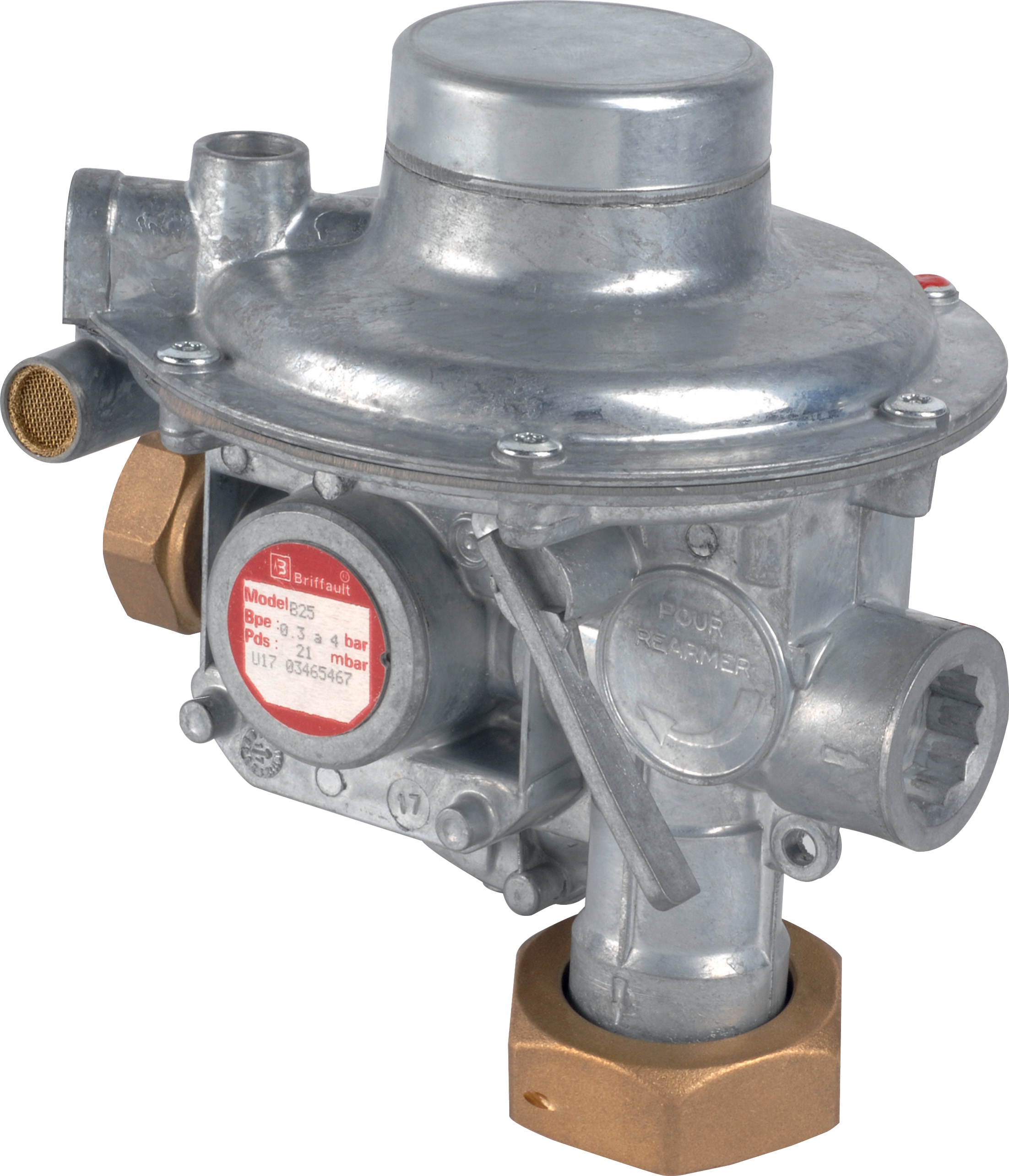
The Francel B25/37mb pressure regulator with integrated safety relief represents the integrated approach to pressure management. This unit combines primary regulation (delivering consistent 37 mbar outlet pressure) with a 10 mm vent safety relief valve in a single assembly. For laboratory and industrial gas distribution systems common in Singapore's pharmaceutical, semiconductor, and specialty chemical sectors, this integration reduces:
- Connection points: Fewer ports mean fewer potential leak sites and simplified installation
- Response time: Integrated safety relief reacts instantly to overpressure conditions without relying on external monitoring
- Maintenance access: Single-unit design simplifies inspection and component replacement cycles
- Footprint: Compact mounting fits space-constrained equipment configurations
Procurement engineers evaluating pressure regulation components should assess whether your facility requires:
1. Modular regulation (separate regulator and safety valve) — useful when upgrading existing systems or requiring field-adjustable safety set points
2. Integrated regulation (combined functionality) — preferred for new installations prioritizing reliability and reducing maintenance access requirements
3. Redundant regulation (parallel systems) — necessary for critical processes where single-point failure creates unacceptable operational risk
The 37 mbar outlet specification of the Francel B25/37mb suits processes requiring precise low-pressure delivery—common in laboratory automation, pneumatic control systems, and calibration equipment. Singapore's precision manufacturing base frequently incorporates such systems, making component reliability directly proportional to production consistency.
Integrated safety relief eliminates the scenario where external relief valves fail independently, a common maintenance failure mode. When 3G Electric's service records from regional facilities show that 40% of unplanned shutdowns involved relief valve malfunction, integration becomes a cost-avoidance strategy rather than a design preference.
Pump Selection: Matching Capacity to Duty Cycle Requirements
Industrial pumps represent major capital and operational costs. Unlike pressure regulators, pump selection requires simultaneous evaluation of flow rate, pressure capacity, power consumption, and duty cycle compatibility. Singapore's industrial sector encompasses diverse applications—from continuous chemical processing to intermittent cleaning systems—creating varied pump performance requirements.
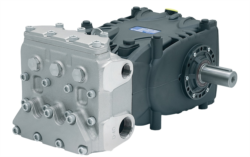
The Pratissoli KF30 (50 hp series) delivers 106 L/min at 200 bar with 40 kW power input. This specification suits:
- Medium-capacity industrial cleaning systems
- Secondary process automation requiring moderate flow and pressure
- Coating and material transfer applications
- Systems operating 4-8 hours daily with regular shutdown periods
The Pratissoli MW40 (100/150 hp series) provides 211 L/min at 210 bar with 85 kW power input. This model addresses:
- High-throughput production requirements
- Continuous or near-continuous operation (16+ hours daily)
- Demanding industrial washing and descaling operations
- Systems where downtime creates significant financial loss
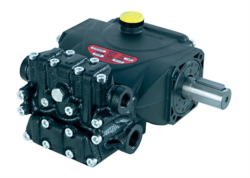
The Interpump PUMP E1D1808 L operates at a different performance tier—8 L/min at 180 bar, 2.72 kW power. This compact unit suits:
- Equipment integration where space constraints limit pump size
- Low-flow, high-precision applications
- Mobile or modular equipment requiring lightweight components
- Systems where energy efficiency exceeds throughput requirements
Procurement engineers comparing these options must quantify duty cycle economics:
Flow Requirement Analysis: Calculate your facility's actual daily volume requirements. A common mistake involves over-specifying pump capacity "for future growth." Higher-capacity pumps consuming more electricity even during partial-load operation increase utility costs throughout the equipment lifecycle. The Interpump E1D1808 L's 2.72 kW input versus the MW40's 85 kW represents an 31x difference—significant when operating thousands of hours annually.
Pressure Requirement Analysis: Specify the minimum pressure your process requires, not the maximum available. Excess pressure increases seal wear, shortens component lifecycle, and wastes energy. Systems requiring 200 bar should not use 350 bar-capable pumps operating at derated pressure.
Maintenance Access: Italianengineered Pratissoli pumps (manufactured by Interpump Group) feature modular construction simplifying field repair and component replacement. Compact Interpump designs prioritize integration but may require complete unit replacement rather than component-level service. Document your facility's technical capacity for field maintenance versus requiring service contractor involvement.
Redundancy and Downtime Cost: High-capacity operations (MW40 class) may justify redundant smaller pumps rather than single large units. Two KF30 units in parallel provide:
- Continued operation if one pump requires maintenance
- Flexibility to operate at reduced capacity during maintenance windows
- Extended component lifecycle through balanced load distribution
- Reduced power consumption during low-demand periods
Spray System Precision: Optimizing Delivery for Application-Specific Results
Spray nozzles represent the interface between system capability and actual process performance. Poor nozzle selection creates problems that appear like system failures—inadequate pressure, inconsistent flow, or spray pattern drift—when the underlying issue involves incorrect nozzle specification.
The Euspray flat jet nozzle (HP 1/4" M BSPT, 25° angle, index 30) delivers targeted spray for industrial cleaning and coating applications. Procuring engineers must understand three critical nozzle specifications:
Spray Angle: The 25° specification determines coverage width at specified distance. Wider angles (40-60°) maximize coverage area but reduce impact force at distance. Narrow angles (15-25°) concentrate energy for penetrating deposits or building precise coating patterns. Select 25° when your application requires balanced coverage and force—typical for general industrial cleaning.
Connection Type: The 1/4" M BSPT (British Standard Pipe Tapered) connection ensures compatibility with standard industrial manifolds throughout Singapore. Mismatched connection types require adapters introducing leak points and increasing maintenance complexity. Verify your system's port specifications before procurement.
Index Design: The index 30 design enables nozzle rotation in increments, allowing operators to adjust spray direction without disconnecting the nozzle. This feature proves critical for maintaining continuous operation during spray pattern adjustments—common in cleaning and coating processes requiring frequent optimization.
Nozzle maintenance implications extend beyond component cost. Worn or partially clogged nozzles create uneven spray patterns causing:
- Inconsistent coating thickness or cleaning intensity
- Operator frustration prompting excessive pressure increases (accelerating wear)
- Product waste through inconsistent application
- Downstream quality issues appearing unrelated to spray delivery
Establish nozzle inspection intervals based on your water quality and application severity. Singapore's municipal water typically requires minimal filtration, but recirculated systems accumulate deposits over time. Schedule nozzle replacement proactively every 6-12 months rather than reactively when performance degradation becomes obvious.
Integrated System Approach: Component Selection Within Operational Context
Optimal Maintenance & Service planning evaluates components not individually but as integrated system elements. A facility operating continuous coating systems would specify:
1. Pressure regulation: Francel integrated units ensuring stable upstream pressure regardless of demand fluctuations
2. Primary pumping: MW40-class capacity supporting continuous operation without thermal stress
3. Secondary circulation: Interpump E1D1808 L units recirculating fluid at controlled pressure during idle periods, maintaining nozzle saturation and reducing startup wear
4. Delivery nozzles: Euspray flat jets optimized for your specific coating thickness and coverage width requirements
This architecture supports:
- Predictable maintenance cycles: Known component lifecycles enable scheduling maintenance during planned production windows
- Failure isolation: Multi-component design limits failure scope—a nozzle failure doesn't require shutting down primary pumping systems
- Incremental improvement: Operators can upgrade individual components as technology advances without replacing entire systems
- Documentation clarity: Multiple components from established manufacturers (Francel, Pratissoli/Interpump, Euspray) simplify technical reference and spare parts management
Singapore's sophisticated manufacturing base benefits from this componentized approach. Rather than depending on single integrated equipment manufacturers, procurement engineers can source world-class components from specialists—each optimized for their specific function.
Maintenance & Service Cost Optimization Strategies
With 35 years of industrial equipment distribution experience, 3G Electric has observed consistent patterns in successful Maintenance & Service programs:
Documentation and Spare Parts: Maintain current equipment datasheets, parts diagrams, and service bulletins. Distributor relationships like 3G Electric ensure access to original components and technical support when alternatives become necessary. Generic replacement components frequently create compatibility issues or reduce equipment lifespan.
Preventive Scheduling: Establish calendar-based and usage-based maintenance intervals. Pressure regulators require annual inspection regardless of operating hours. Pumps benefit from oil analysis every 500 hours identifying wear patterns before catastrophic failure.
Training Investment: Facility technicians familiar with your specific equipment designs troubleshoot problems faster and execute maintenance more effectively. Allocate training budget when introducing new component families into your operations.
Performance Monitoring: Track equipment metrics—pressure stability, flow consistency, power consumption—to identify gradual degradation. Performance dashboards catch developing problems before they create failures.
Supplier Relationships: Establish partnerships with equipment distributors offering technical support, not just transaction processing. 3G Electric's regional presence enables rapid problem resolution and component availability critical for Singapore's just-in-time manufacturing environments.
Procurement engineers optimizing Maintenance & Service outcomes select components balancing initial cost, lifecycle reliability, maintenance accessibility, and supplier support. This comprehensive approach reduces total cost of ownership while improving operational consistency—the financial reality underlying effective industrial maintenance programs.