Understanding Pumps & Compressors Material Requirements
Pumps and compressors operate at extreme pressures and temperatures, requiring materials engineered to resist corrosion, wear, and chemical degradation. With over 35 years of experience supplying industrial equipment across Southeast Asia, 3G Electric recognizes that material selection directly impacts equipment reliability and total cost of ownership.
The choice of materials—from pump housings to internal components—must align with three critical factors: the working fluid type, system pressure and temperature ranges, and the facility's environmental conditions. In Singapore's tropical climate, where high humidity and salt-laden air from coastal operations accelerate corrosion, material compatibility becomes even more critical.
Industrial pumps and compressors operate within standardized pressure classes (70, 160, 210, 250, and 315 bar), with each pressure tier requiring specific material grades. Higher pressures demand stronger alloys, while certain fluids necessitate non-ferrous materials to prevent chemical reactions. Understanding these relationships prevents catastrophic failures and extends equipment service life significantly.
Pump Material Grades and Selection Criteria
Ductile Iron and Cast Iron Housings
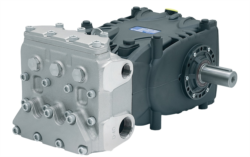
Ductile iron (nodular cast iron) dominates industrial pump construction due to its excellent pressure-bearing capacity and machinability. It withstands pressures up to 160 bar reliably and costs substantially less than premium alloys. Pratissoli pumps like the KF30 series utilize high-grade ductile iron housings designed for 200 bar continuous operation, making them suitable for demanding hydraulic applications.
Cast iron remains viable for lower-pressure applications (70 bar) and water-based fluids. However, it demonstrates brittleness under shock loads and limited corrosion resistance—critical considerations in corrosive environments. For Singapore operations near marine facilities or chemical processing plants, ductile iron or stainless upgrades become mandatory.
Stainless Steel and Alloy Construction
Stainless steel (304, 316, and 316L grades) provides superior corrosion resistance essential for challenging chemical and offshore applications. Type 316 stainless contains molybdenum, enhancing resistance to chloride corrosion—critical for Singapore's maritime environment. While material costs increase 40-60% compared to ductile iron, the extended service intervals and eliminated maintenance downtime justify the investment.
The Pratissoli SS71153 pump represents industrial-grade construction suitable for mixed fluid environments. Premium alloy bodies and stainless internals accommodate aggressive chemicals while maintaining performance across 160 bar ratings.
Pump Internal Components and Wear Surfaces
Internal pump geometry—gears, pistons, and valve plates—demands specialized hardened steel grades (typically 42CrMo4 or equivalent) heat-treated to 50-55 HRC hardness. These surfaces experience 10^9 contact cycles during equipment life and require exceptional fatigue resistance.
Gear pumps like the Interpump E1D1808 compact gear pump employ carefully matched gear pairs with precise tolerances (±0.05mm) to minimize internal leakage while maximizing efficiency. The material consistency between paired gears prevents accelerated wear and maintains volumetric efficiency beyond 90% throughout the equipment's operational life.
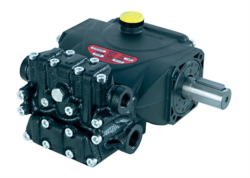
Sealing surfaces demand different material strategies. Tribological (friction-reducing) coatings like PTFE or DLC (diamond-like carbon) reduce seal wear by 30-50%, directly extending service intervals. The Interpump ET1C1612 SX*D20 pump features PTFE construction specifically engineered for high-pressure hydraulic systems, demonstrating how material selection targets specific performance metrics.
Fluid Compatibility and System Chemistry
Mineral Oil-Based Hydraulic Fluids
Mineral hydraulic oils (ISO VG 32, 46, 68) remain industry standard, offering excellent lubricity and temperature stability. Compatibility with most ferrous materials is excellent, but mineral oils absorb moisture readily—critical in Singapore's humid climate where water contamination reduces fluid film strength and accelerates corrosion.
Water content exceeding 500 ppm (parts per million) in mineral oil systems initiates rust formation on ferrous surfaces and reduces seal life by 50%. Regular fluid sampling and maintenance become essential, with separator filter cartridges rated for 3 microns absolute (β₃ ≥ 200) becoming mandatory for Singapore operations.
The Pratissoli MW40 pump, rated for 85 kW power and 210 bar operation with 211 L/min flow capacity, demands rigorous fluid management. Contamination in systems of this displacement can cause valve stiction and catastrophic component failure, making fluid chemistry management non-negotiable.
Synthetic and Environmentally Acceptable Fluids (EEAF)
Polyalphaolefin (PAO) and polyol ester synthetic fluids offer superior oxidation stability, extending fluid life 2-3 times compared to mineral oils. This translates to reduced fluid change frequency and lower operational costs despite 2-3x higher fluid costs.
Environmentally Acceptable Hydraulic Fluids (EEAF)—primarily rapeseed or synthetic ester-based—are increasingly mandated for operations near water bodies or environmentally sensitive areas. Singapore's strict environmental regulations make EEAF adoption increasingly common. These fluids require compatible sealing materials; standard nitrile elastomers swell excessively with synthetic esters, necessitating fluorocarbon (Viton/FKM) seals throughout the system.
Water-glycol and water-in-oil emulsion fluids provide fire-resistant properties essential for hot-work environments. These fluids exhibit lower lubricity than mineral or synthetic oils, requiring specially formulated pumps with enhanced surface treatments. Material compatibility extends beyond the pump—entire piping systems and accumulators must accommodate the fluid's chemical profile.
Compressed Air System Fluids
Compressor lubrication requires specialized oils (ISO VG 22-32) with exceptional air-release properties (15-20 minutes per ASTM D3427). These oils must release entrained air rapidly to prevent vacuum formation and maintain accurate pressure control. Mineral compressor oils remain standard, but synthetic alternatives provide superior temperature stability and extended oil change intervals (500-1000 hours versus 250-500 hours for mineral oils).
In tropical environments, water separation becomes critical. Compressor discharge temperatures reaching 80-100°C create condensation risks, making water-removal cartridges essential maintenance components. Failure to remove moisture leads to rust formation in downstream piping and control components.
Environmental Factors and Material Degradation in Singapore Operations
Corrosion Prevention in Tropical Climates
Singapore's maritime climate, with 85-90% relative humidity and salt-laden air, accelerates corrosive attack on ferrous surfaces. Bare carbon steel surfaces oxidize visibly within weeks of exposure, while painted surfaces deteriorate through salt-creep mechanisms. For equipment installations in coastal facilities or exposed outdoor locations, material selection becomes deterministic rather than optional.
Stainless steel housings eliminate atmospheric corrosion concerns entirely. The passive chromium oxide layer self-repairs when scratched, providing indefinite corrosion resistance in tropical environments. For critical systems where downtime costs exceed material upgrade costs by 10:1 or greater, stainless construction represents economically justified design selection.
Thermal Effects on Material Properties
Pump displacement changes with temperature according to thermal expansion coefficients. Steel exhibits approximately 12 × 10⁻⁶/°C linear expansion; temperature swings from 20°C to 60°C produce 0.48% dimensional changes. In precision gear pumps, this expansion directly impacts tooth meshing clearances and internal leakage rates.
High-pressure systems generate substantial waste heat. The KF30 pump operating at 200 bar with 106 L/min flow rate generates approximately 10-12 kW of thermal energy in the working fluid. Without adequate cooling, system temperatures exceed 60°C, reducing fluid viscosity and accelerating seal degradation. Material selection must accommodate thermal stress; aluminum bodies used in some compact designs fail prematurely under sustained high-temperature operation due to strength loss at elevated temperatures.
Vibration-Induced Corrosion
Micromotion and fretting corrosion occur where components contact under vibration. This phenomenon, distinct from electrochemical corrosion, occurs when surfaces separated by thin oxide films experience relative motion. Fretting generates localized pitting that propagates rapidly under sustained pressure cycling.
Material pairing in pump assemblies requires careful consideration. Avoiding dissimilar metal couples (galvanic couples) prevents accelerated corrosion at interfaces. When design requires mixed materials, isolation through coatings or elastomeric interlayers becomes essential. The Pratissoli series pumps employ comprehensive material selection strategies addressing these phenomena through integrated design.
Practical Selection Matrix for Singapore Industrial Applications
Low-Pressure Water Pumping (up to 70 bar)
Cast iron housings with bronze bushings and nitrile seals remain cost-effective. However, raw water applications require stainless internals or special coatings to prevent pitting. For treated water with pH 6.5-8.5 and minimal hardness, standard materials perform adequately with proper chlorine management (residual chlorine ≤0.5 ppm).
Industrial Hydraulic Systems (160-210 bar)
Ductile iron housings with stainless-clad valve bodies provide optimal cost-performance. Seal material selection must match the working fluid: mineral oil systems use nitrile or EPDM, while synthetic fluids demand Viton. The MW40 high-performance pump exemplifies this approach, balancing durability with operational cost efficiency across standard industrial hydraulic applications.
Chemical Processing and Aggressive Fluids (up to 250 bar)
Full stainless steel construction becomes mandatory for acids, bases, solvents, and corrosive chemicals. Even brief exposure to aggressive fluids damages carbon steel beyond repair. Material selection documentation must specify 316L stainless steel minimum, with special attention to fastener materials (avoid carbon steel fasteners that generate galvanic corrosion). The Interpump ET1C1612 SX*D20 pump with PTFE construction demonstrates chemical-resistant design applicable to these demanding environments.
High-Pressure Testing and Research (315+ bar)
Specialized forged alloy steel housings (SAE 4340 or equivalent) provide necessary strength. These applications often require custom materials testing and material certification from third-party laboratories. Seal material compatibility becomes critical at extreme pressures where elastomer compounds shift through pressure-induced phase changes.
Preventive Material Management Strategies
Fluid Testing and Monitoring Programs
Implement ISO 4406 particle counting and Karl Fischer water content testing quarterly for critical systems. Establish fluid analysis baselines immediately after commissioning, before contamination occurs. Trending analysis reveals degradation rates; accelerating contamination indicates component wear generating wear debris.
Viscosity monitoring (ASTM D445) detects oxidation progression and fluid aging. Viscosity increase beyond ±10% from fresh fluid specifications indicates oxidation requiring fluid change. Temperature-controlled lab testing provides reliable data absent from field testing methods.
Material Inspection and Documentation
Maintain certified material test reports (MRs) for critical pump installations. Original equipment documentation specifies material grades; cross-reference against actual hardware during commissioning to verify no substitutions occurred during manufacturing.
Implement thermographic (infrared) monitoring on pump housings during operation. Elevated temperatures (>15°C above ambient) indicate internal wear generating friction. Early detection prevents catastrophic failure and enables planned maintenance replacement.
Corrosion Monitoring in Aggressive Environments
Install witness coupons—small material samples of the same material as the pump housing—in the fluid reservoir. Periodically measure weight loss to quantify corrosion rates. Material-specific corrosion rates exceeding 0.5 mm/year indicate inadequate material selection; upgrade to stainless alternatives before perforation failures occur.
Conclusion
Material compatibility and fluid selection represent fundamental engineering decisions determining whether industrial pumps and compressors operate reliably for 5,000-10,000 hours or fail catastrophically within 500 hours. 3G Electric's 35+ years of industrial equipment distribution across tropical regions emphasizes the critical importance of matching materials to operational environment, fluid chemistry, and pressure requirements.
For Singapore industrial operations, the tropical climate's corrosive potential demands material specifications exceeding temperate-region standards. Premium material investments—stainless steel housings, synthetic fluids, enhanced sealing systems—frequently deliver superior total cost of ownership through extended service intervals and reduced emergency maintenance. Systematic fluid management, material verification at commissioning, and condition monitoring throughout equipment life transform material selection from a one-time specification decision into an ongoing operational discipline ensuring maximum equipment reliability and productivity.