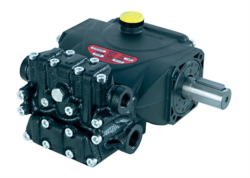
Understanding Lifecycle Cost Analysis for Pumps & Compressors
Procurement engineers across Singapore's industrial sector often face pressure to minimize upfront equipment costs. However, focusing solely on purchase price for Pumps & Compressors ignores 70-80% of the true cost of ownership over a 5-10 year operational period. Lifecycle cost analysis (LCA)—also called total cost of ownership (TCO)—provides a comprehensive financial framework that accounts for every expense category from installation through final disposal.
Drawing on 35+ years of industrial equipment distribution experience, 3G Electric has observed that organizations using rigorous TCO analysis make purchasing decisions aligned with operational reality rather than spreadsheet minimums. This approach prevents the false economy trap: buying the cheapest pump upfront only to face accelerated maintenance, energy waste, and unexpected downtime that compounds costs exponentially.
For Singapore's demanding tropical climate and 24/7 manufacturing environments, lifecycle cost evaluation becomes even more critical. Equipment operating in high-humidity conditions with continuous duty cycles experiences different wear patterns and maintenance demands than temperate-climate operations. Understanding these regional factors allows procurement engineers to select Pumps & Compressors that deliver superior value within Singapore's specific operational context.
Core Cost Categories in Lifecycle Analysis
Initial Capital and Acquisition Costs
The first phase extends beyond the quoted equipment price. True acquisition cost includes transport logistics to Singapore, customs duties, documentation processing, and pre-delivery inspection. For imported Pumps & Compressors from European manufacturers like Pratissoli (Interpump Group), these ancillary costs typically add 8-15% to the base equipment price.
Consider the Pratissoli KF30 high-performance pump (106 L/min, 200 bar, 40 kW): the equipment price represents only the foundation of acquisition cost. Procurement engineers must factor freight from Italy, import clearance procedures, and specialized handling for equipment weighing 72 kg. Additionally, some equipment requires pre-installation modifications or adapter kits specific to Singapore facility infrastructure, adding further pre-operation expenses.
Installation, Commissioning, and Integration Costs
Proper installation of industrial Pumps & Compressors demands skilled technicians, often resulting in 15-25 days of on-site labor depending on application complexity. Integration into existing hydraulic or pneumatic systems requires system evaluation, valve adjustments, hose fabrication, and pressure testing to ensure safety compliance with Singapore's Machinery Safety Ordinance.
For higher-capacity systems like the Pratissoli MW40 pump (211 L/min, 210 bar, 85 kW), commissioning involves extensive baseline measurements, performance verification under load, and operator training. Budget allocation should include contingencies for facility-specific modifications—many Singapore installations require corrosion-resistant components or enhanced cooling systems due to tropical humidity and ambient temperatures reaching 32-35°C.
Energy Consumption and Operating Costs
For most industrial Pumps & Compressors, energy represents 40-60% of total lifecycle cost. A 40 kW pump operating 8,000 hours annually at Singapore's average industrial electricity rate (~SGD 0.22/kWh) consumes SGD 70,400 in energy annually. Over a 7-year service life, this single cost element reaches SGD 492,800—nearly 10 times the typical equipment purchase price.
Efficiency variations between equipment models have enormous financial impact. The KF30 achieves 95% volumetric efficiency, while older or improperly sized alternatives may operate at 80-85%. This 10-15% efficiency gap translates to SGD 7,000-10,500 in additional annual energy costs for comparable duty cycles. Procurement engineers should always request certified efficiency curves from manufacturers and calculate energy costs using actual facility electricity rates rather than national averages.
Compressor selection adds further complexity. Rotary screw compressors typically consume 25-35% less energy than reciprocating models for equivalent output, yet higher capital cost can obscure this operational advantage. Lifecycle analysis reveals that energy savings frequently justify premium pricing within 2-3 years of operation.
Maintenance, Parts, and Labor Expenses
Regular maintenance for industrial Pumps & Compressors includes scheduled servicing (oil changes, filter replacement, seal inspection) occurring at 500-2,000 hour intervals depending on equipment type and duty cycle. Unscheduled repairs—seal failures, bearing wear, contamination events—occur with statistical predictability based on equipment design and operating conditions.
Tropical environments like Singapore accelerate wear patterns. High humidity promotes corrosion, elevated temperatures reduce lubricant longevity (requiring fluid changes every 1,000-2,000 hours rather than 2,000-4,000 hours in temperate climates), and salt-air environments near coastal facilities demand corrosion-resistant construction.
Compact models like the Interpump E1D1808 L gear pump (8 L/min, 180 bar, 2.72 kW) typically cost SGD 1,200-1,800 to service annually, while larger systems like the MW40 may require SGD 3,500-5,200 in preventive maintenance yearly. Procurement engineers must obtain detailed parts catalogs and service cost schedules from equipment suppliers, then multiply by expected service frequency over the equipment lifespan.
Contracted maintenance agreements with 3G Electric or authorized service providers often deliver better value than reactive repairs. A SGD 8,000 annual maintenance contract preventing 20-30 hours of emergency downtime at SGD 500/hour (lost production plus technician premium rates) provides clear ROI.
Downtime and Production Loss Costs
Unplanned equipment failure creates costs extending far beyond repair expenses. Manufacturing downtime in Singapore's precision sectors (semiconductor components, medical devices, advanced manufacturing) incurs lost production valued at SGD 2,000-10,000 per hour depending on facility type. A single 8-hour unscheduled pump failure could cost SGD 16,000-80,000 in foregone production.
Quality concerns compound downtime costs. If a failing Pump & Compressor produces degraded output before complete failure, scrap rates may spike without obvious cause, creating months of investigation and troubleshooting before root cause identification.
Reliability metrics directly influence downtime probability. Mean Time Between Failures (MTBF) varies significantly across equipment quality levels. Premium European-engineered equipment from manufacturers like Pratissoli typically achieves MTBF values 2-3 times higher than commodity alternatives, translating to dramatically lower downtime probability and associated costs.
End-of-Life Disposal and Environmental Costs
When industrial Pumps & Compressors reach end-of-life (typically 7-12 years), disposal involves environmental compliance costs. Singapore's Environmental Protection and Management Act requires proper handling of equipment containing oils, lubricants, or refrigerants. Contaminated fluids require certified waste disposal (SGD 500-2,000 depending on volume), and metal components require authorized recycling (SGD 0.50-1.50/kg depending on material composition).
Some equipment designs simplify end-of-life processing, reducing environmental compliance costs by 30-40%. Procurement engineers should evaluate equipment design for material separation ease and fluid containment features during selection.
Building Your Lifecycle Cost Model
Step 1: Define Operational Parameters
Begin by establishing equipment duty cycle specifics: annual operating hours, typical load profile (continuous, intermittent, cycling), environmental conditions (temperature range, humidity, contamination exposure), and required service life. For Singapore facilities, account for tropical humidity, ambient temperatures 25-35°C, and potential salt-air exposure if near coastal areas.
Step 2: Gather Equipment-Specific Data
Request detailed technical specifications from suppliers including: power consumption curves across operating range, certified efficiency ratings, recommended maintenance intervals, parts catalog with pricing, typical parts wear rates, and historical reliability data (MTBF values). Compare equipment models such as KF30 versus Interpump ET1C1612 (12 L/min, 160 bar, 3.68 kW) across these parameters.
Step 3: Calculate Energy Costs
Multiply equipment power rating by annual operating hours and local electricity rate. Apply efficiency ratings: actual energy consumption = rated power ÷ efficiency factor. For example, a 40 kW pump at 95% efficiency consuming 8,000 hours annually at SGD 0.22/kWh: (40 ÷ 0.95) × 8,000 × 0.22 = SGD 74,105 annual energy cost.
Step 4: Estimate Maintenance and Repair Costs
Request supplier maintenance schedules and multiply service labor hours by regional technician rates (typically SGD 80-120/hour in Singapore). Add parts replacement costs based on historical failure rates. Budget 15-25% annual contingency for unscheduled repairs.
Step 5: Model Downtime Impact
Calculate facility-specific downtime cost: (lost production revenue per hour) × (estimated unplanned downtime hours). Based on equipment MTBF, estimate probability of failure within service life. More reliable equipment (higher MTBF) justifies premium pricing through reduced downtime risk.
Step 6: Project Complete Lifecycle
Sum all cost categories across the equipment's anticipated service life (typically 7-10 years for industrial Pumps & Compressors). Divide by annual operating hours to obtain true cost per hour of operation. Compare this metric across competing equipment models—it reveals true economic value beyond purchase price.
Practical Application: Comparing Two Pump Options for Singapore Manufacturing
Consider a precision machining facility requiring 150 L/min continuous flow at 180 bar. Two options: a commodity Asian import priced SGD 2,800 versus the Pratissoli SS71153 pump (122 L/min, 160 bar, 37.5 kW) from 3G Electric at SGD 4,200.
Asian alternative: 35 kW input, 88% efficiency, MTBF 3,000 hours, maintenance interval 1,500 hours.
Pratissoli alternative: 37.5 kW input, 94% efficiency, MTBF 5,500 hours, maintenance interval 2,500 hours.
7-year lifecycle (56,000 annual operating hours, SGD 0.22/kWh):
Asian Import TCO:
- Acquisition: SGD 2,800
- Energy: (35 ÷ 0.88) × 56,000 × 0.22 = SGD 493,818
- Maintenance: 56,000 ÷ 1,500 services × SGD 800/service = SGD 29,867
- Downtime (18 failures × 8 hours × SGD 3,000/hour): SGD 432,000
- Disposal: SGD 1,200
- Total: SGD 959,685
- Acquisition: SGD 4,200
- Energy: (37.5 ÷ 0.94) × 56,000 × 0.22 = SGD 495,064
- Maintenance: 56,000 ÷ 2,500 services × SGD 950/service = SGD 21,280
- Downtime (10 failures × 8 hours × SGD 3,000/hour): SGD 240,000
- Disposal: SGD 1,200
- Total: SGD 761,744
The Pratissoli option delivers SGD 197,941 (20.6%) lower total cost of ownership despite 50% higher purchase price. Energy efficiency and superior reliability (lower downtime) drive this advantage. Over the equipment lifespan, the premium purchasing decision returns SGD 27.80 per operating hour in savings.
This analysis type—comparing total ownership cost rather than acquisition price—transforms procurement decisions from tactical purchasing to strategic asset investment management.
Integrating TCO Analysis Into Procurement Workflows
Effective lifecycle cost evaluation requires systematic integration into procurement procedures. Develop standardized TCO comparison templates capturing all cost categories for your facility profile. Include provisions for sensitivity analysis: how do results change if operating hours increase 20%, if electricity rates rise 10%, or if equipment MTBF proves 15% lower than manufacturer claims?
Collaborate with operations and maintenance teams to validate assumptions. Their historical experience with similar equipment provides crucial reality-checks preventing overly optimistic cost projections. Finance teams should review discount rates applied to future costs—while beyond the scope of this guide, using appropriate discount factors significantly influences TCO conclusions.
Document all assumptions transparently. When procurement decisions are later questioned, clear documentation of cost methodology builds stakeholder confidence and provides defensible rationale for equipment selections.
3G Electric's 35 years distributing industrial equipment across Southeast Asia equips us to assist procurement engineers in gathering regional cost data, obtaining detailed specifications from European manufacturers like Pratissoli, and validating TCO assumptions against facility-specific operational realities. Our technical specialists can review your facility's duty cycles and help identify equipment configurations optimizing lifecycle value for Singapore's operational environment.