Understanding Maintenance & Service in Fleet Operations
Maintenance & Service strategies separate high-performing procurement operations from those struggling with unexpected equipment failures. For procurement engineers managing industrial equipment portfolios, the shift from calendar-based maintenance to data-driven, predictive approaches directly impacts capital allocation, inventory optimization, and operational reliability.
With over 35 years of experience distributing industrial equipment across Asia-Pacific, 3G Electric has observed that predictive maintenance reduces unplanned downtime by 35-45% while extending asset lifecycles by 20-30%. This isn't theoretical—it's the tangible outcome of systematic monitoring, documented service histories, and strategic parts procurement.
Predictive maintenance begins with understanding your equipment baseline: specifications, operating hours, pressure profiles, and fluid conditions. Whether managing Francel pressure regulators, Pratissoli KF30 high-pressure pumps, or MW40 industrial units, each asset requires tailored service protocols based on manufacturer data and operational context.
Implementing Condition-Based Monitoring Systems
Condition-based monitoring (CBM) uses real-time performance data to determine when equipment actually needs service, rather than following fixed schedules. For procurement engineers, this approach directly reduces spare parts inventory carrying costs and improves equipment availability metrics.
Data Collection and Baseline Establishment
Begin by documenting baseline parameters for critical equipment:
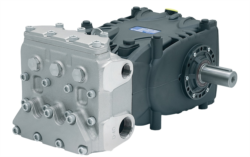
- Flow rates and pressure readings: Record normal operating ranges. For instance, the Pratissoli KF30 operates at 106 L/min and 200 bar; deviations >5% indicate potential wear or seal degradation.
- Vibration patterns: Abnormal vibration signatures signal bearing wear or cavitation, allowing service scheduling before catastrophic failure.
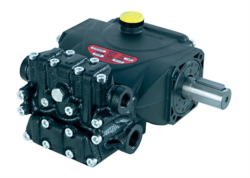
- Fluid condition analysis: Oil analysis reveals particulate contamination, viscosity changes, and additive depletion—critical for pump systems like the MW40 (211 L/min, 210 bar) and Interpump E1D1808 compact gear pump.
- Temperature trending: Thermal imaging identifies heat dissipation issues and internal friction increases before performance degradation becomes measurable.
Capture this data through automated sensors, manual gauge readings, or integrated telemetry systems. The investment in baseline documentation pays immediate dividends: you establish when actual service is needed, not when a calendar suggests it.
Creating Service Trigger Thresholds
Define specific parameters that trigger service intervention:
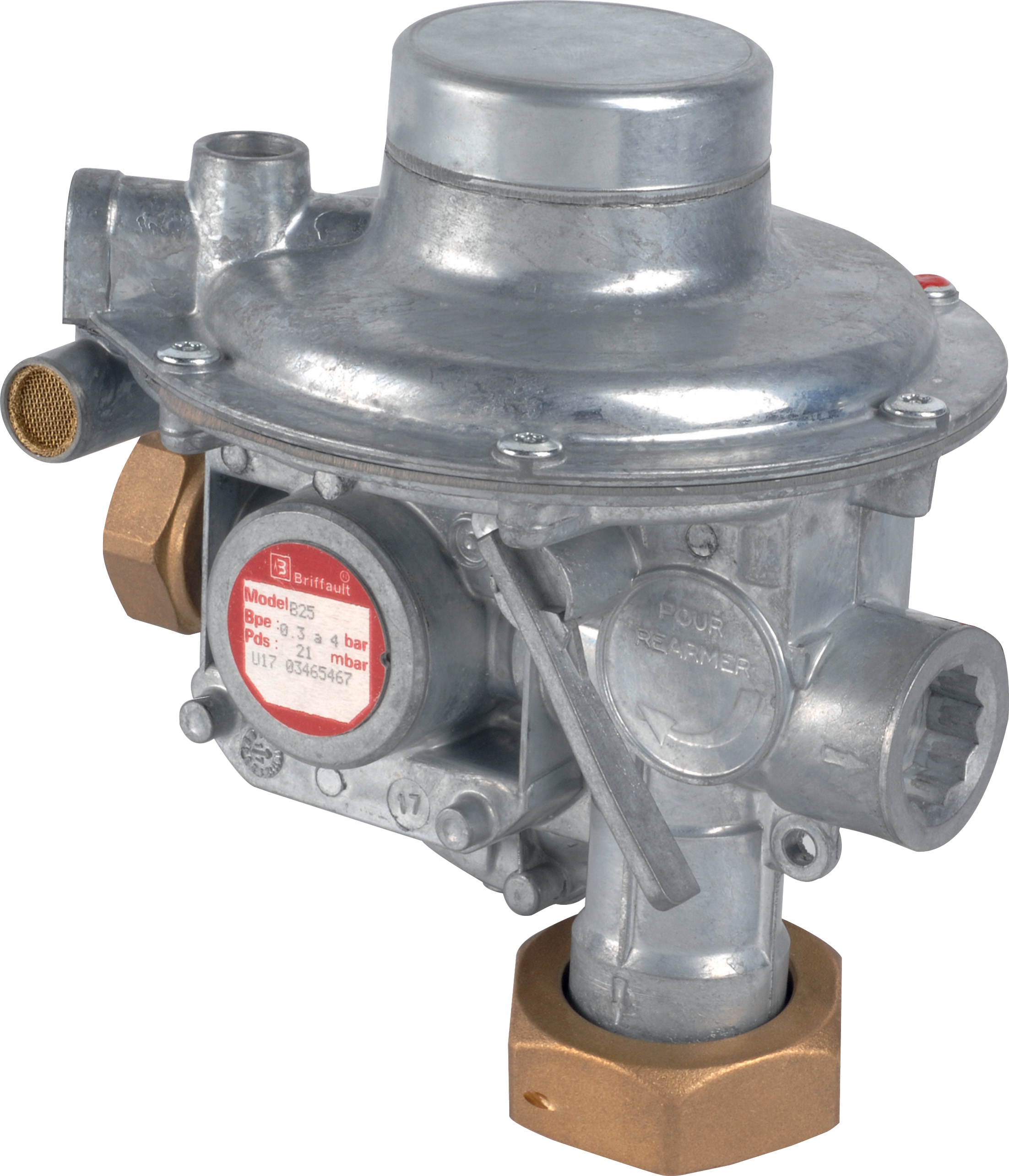
- Pressure regulators (Francel B25/37mb): Monitor outlet pressure stability. If outlet pressure drifts >10% from 37 mbar specification, schedule diaphragm and seal inspection before relief valve drift affects downstream processes.
- Pump systems: Establish flow decline triggers (typically 5-10% from baseline), pressure rise at constant flow (indicating internal wear), and noise/vibration limits. The Interpump E1D1808 (8 L/min, 180 bar, 2.72 kW) showing flow reduction requires seal inspection before catastrophic failure.
- Spray nozzles (Euspray flat jet nozzles): Track spray pattern degradation, droplet size changes, and flow uniformity. Clogged or worn nozzles reduce coating quality and consume excess energy.
Strategic Parts Procurement and Inventory Optimization
Condition-based data enables procurement engineers to optimize spare parts strategy—ordering components when predictive signals indicate wear, not when items unexpectedly fail.
Tiered Parts Classification
Category your equipment parts into procurement tiers:
Critical path components (24-48 hour lead time required):
- Pump seals and impellers for KF30 and MW40 systems
- Diaphragms and cartridge assemblies for pressure regulators
- Drive bearings and shafts
Maintain 2-4 week safety stock for these items. Predictive data allows you to order replacement seals 2-3 weeks before failure rather than emergency ordering at 3x cost.
Standard maintenance items (2-4 week lead time):
- Filter elements
- Gaskets and O-rings
- Hose assemblies
- Nozzle wear parts (Euspray nozzles at index 30)
For these, establish just-in-time procurement: order when condition monitoring indicates wear approaching service thresholds.
Long-lead specialty components (8-16 week lead time):
- Complete pump assemblies
- Integrated safety cartridges
- Custom manifold assemblies
For these items, predictive maintenance provides 2-3 month advance warning, allowing negotiated pricing and consolidated shipping rather than costly emergency freight.
Cost Control Through Predictive Procurement
Condition-based service procurement typically reduces total maintenance costs by 25-40% through:
- Eliminating unnecessary service: You perform maintenance when equipment actually needs it, not on calendar schedules. This reduces labor costs and minimizes risk of introducing contaminants during unnecessary disassembly.
- Batch scheduling: Group maintenance across equipment with similar warning signals. Scheduling KF30 seal replacement alongside MW40 bearing service reduces technician travel and minimizes production downtime concentration.
- Supplier consolidation: Predictable maintenance windows allow ordering from preferred distributors at volume discounts rather than emergency sourcing.
- Extended asset life: Timely seal and bearing replacement prevents cascade failures (e.g., pump seal failure leading to contamination and motor bearing damage).
Service Documentation, Compliance, and Continuous Improvement
Systematic documentation transforms maintenance from cost center to strategic competitive advantage. Procurement engineers who control service documentation control equipment lifecycle costs.
Developing Service Records and KPI Tracking
Maintain comprehensive service records including:
- Equipment specifications: Nameplate data, procurement date, installation location, original cost, expected service life
- Operating history: Hours of operation, fluid types used, operating conditions (temperature extremes, pressure spikes, contamination events)
- Service events: Work performed, parts replaced, technician notes, fluid analysis results, performance metrics post-service
- Cost tracking: Parts cost, labor hours, downtime duration, emergency premium costs
Track key performance indicators (KPIs):
- Mean time between failures (MTBF): Target >2,000 hours for pump systems, >3,000 hours for pressure regulation equipment
- Mean time to repair (MTTR): Benchmark against industry standards; excessive MTTR indicates poor spare parts availability or training gaps
- Cost per operating hour: Calculate total maintenance cost (parts + labor) divided by equipment operating hours. Use this metric to compare equipment lifecycle costs across different manufacturers.
- Unplanned downtime percentage: Target <5% of scheduled operation. Higher rates indicate maintenance strategy failure.
Compliance and Regulatory Integration
In Singapore operations, integrate maintenance documentation with:
- MOM (Ministry of Manpower) pressure equipment inspection requirements: Maintain calibration records for pressure regulators and gauges. Francel regulators require annual verification if safety relief functions are critical to process safety.
- Environmental compliance: Document fluid disposal and replacement per NEA (National Environment Agency) guidelines. Systematic maintenance reduces spill risk and simplifies compliance reporting.
- Equipment warranty and service agreements: Coordinate predictive maintenance schedules with manufacturer warranty terms. Some warranties require certified service; others void coverage if unauthorized repairs occur.
Continuous Improvement Through Data Analysis
Quarterly analysis of maintenance data identifies optimization opportunities:
- Failure pattern recognition: If Interpump E1D1808 pumps consistently fail at 60% of manufacturer-rated life, investigate root causes (fluid quality, duty cycle mismatch, environmental contamination) and adjust operating parameters or procurement specifications.
- Technician performance metrics: Track which technicians achieve longest MTBF, fastest MTTR, and cleanest post-service operation. Invest in training that replicates high-performers' approaches.
- Supplier reliability assessment: Evaluate whether replacement parts from different suppliers yield different lifespans. Use this data to negotiate quality agreements and volume commitments.
- Equipment lifecycle optimization: Compare total cost of ownership across KF30 (40 kW), MW40 (85 kW), and Interpump E1D1808 (2.72 kW) options based on your operation's duty cycle and service cost patterns.
Implementation Timeline for Procurement Engineers
Month 1-2: Audit existing equipment, establish baseline performance metrics, and implement data collection systems.
Month 3-4: Analyze baseline data, define service trigger thresholds, and classify spare parts into procurement tiers.
Month 5-6: Launch condition-based monitoring for critical equipment; refine suppliers and lead time agreements based on predicted service requirements.
Month 7-12: Monitor KPIs, refine thresholds based on actual service outcomes, and optimize spare parts inventory levels.
With 35+ years of experience supporting industrial operations across Singapore and Asia-Pacific, 3G Electric helps procurement engineers navigate these transitions. Our equipment specialists understand the operational realities of managing Francel regulators, Pratissoli KF30 and MW40 pumps, Interpump gear pumps, and Euspray spray systems—equipment we've distributed to hundreds of operations. We provide technical support, spare parts availability, and service planning guidance that directly reduce your maintenance costs and operational risk.