Understanding Motor Coupling & Drive System Failures in HVAC Applications
Motor couplings are critical mechanical components that transmit rotational force from electric motors to pumps, compressors, and fans in HVAC systems. In Singapore's hot, humid environment with frequent ambient temperature swings, coupling degradation occurs at an accelerated rate compared to temperate climates. With over 35 years of experience supplying HVAC equipment to Southeast Asian contractors, 3G Electric has documented recurring failure patterns that can be prevented through systematic maintenance protocols.
Coupling failures manifest as increased vibration, unusual noise, reduced pump flow rates, and loss of system pressure. For HVAC contractors managing multiple installations, coupling-related downtime directly impacts service response times and customer satisfaction. The primary failure modes include misalignment, bearing wear within the coupling hub, elastomer degradation in flexible couplings, and corrosion of coupling bolts in installations exposed to salt spray or high humidity.
Understanding the root causes of coupling failure allows contractors to implement preventive measures before catastrophic breakdown occurs. This guide provides diagnostic frameworks, maintenance intervals, and troubleshooting procedures specific to HVAC system demands in Singapore's operating conditions.
Diagnostic Procedures for Coupling Misalignment & Vibration Analysis
Initial Visual Inspection & Baseline Measurements
Begin by establishing baseline vibration measurements before performing detailed diagnostics. Use a vibration meter (accelerometer) to record vertical, horizontal, and axial vibration amplitudes at the motor bearing housing and pump inlet. Document readings in millimeters per second (mm/s) or gravitational units (g). Normal baseline vibration for properly aligned HVAC pump systems typically ranges from 2–4 mm/s.
Examine the coupling visually for visible defects:
- Elastomer couplings: Look for cracks, hardening, or discoloration indicating heat degradation from constant friction
- Jaw couplings: Check for broken teeth or chipped rubber elements
- Flex couplings: Inspect for corrosion on steel hubs, cracked welds, or loose fasteners
- Bolt condition: Verify that all coupling bolts are tight and show no signs of stress corrosion cracking
In Singapore's tropical climate, corrosion develops rapidly on exposed coupling components. Apply corrosion inhibiting spray (VCI products) to coupling hubs after cleaning, particularly for systems operating in coastal areas or facilities with chemical exposure.
Dial Indicator Alignment Check
Misalignment is the primary cause of premature coupling wear. Perform a dial indicator check using the following procedure:
1. Secure the dial indicator: Mount a magnetic dial indicator base on the motor shaft coupling flange, with the probe positioned against the pump shaft coupling flange
2. Rotate through one complete revolution: Rotate the shafts together (hand-rotate the pump rotor) and record runout at four points: top, bottom, left, and right
3. Angular misalignment: If runout exceeds 0.05 inches (1.3 mm) on opposite sides of the coupling, angular misalignment is present
4. Parallel misalignment: If runout is consistently high around the entire circumference, parallel offset exceeds acceptable limits
Acceptable alignment tolerances for HVAC pump couplings depend on coupling type. Elastomer couplings typically tolerate 0.15–0.25 inches of parallel offset and 0.5–1.5 degrees of angular misalignment. Precision flex couplings require alignment within 0.05 inches and 0.25 degrees for optimal performance.
Vibration Analysis & Frequency Diagnosis
Vibration frequency patterns reveal specific failure mechanisms. Use a vibration analyzer (FFT capability) to convert time-domain vibration into frequency domain:
- Running speed frequency (1X): Vibration at the motor shaft rotation frequency. Elevated 1X vibration indicates imbalance or looseness
- 2X frequency: Twice running speed. Prominent 2X peaks indicate misalignment or bearing wear
- High-frequency broadband noise: Above 5 kHz suggests elastomer degradation or bearing cage wear
- Subsynchronous components: Frequencies below 1X often indicate loose mechanical elements
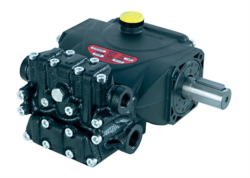
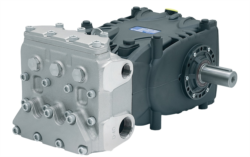
For a Pratissoli KF30 pump operating at 1500 rpm (25 Hz running speed), expect normal 1X vibration around 25 Hz and 2X around 50 Hz. If 2X amplitude exceeds baseline by 50% or more, plan coupling replacement within the next service cycle.
Maintenance Intervals & Preventive Service Schedules
Monthly Inspection Protocol
Conduct monthly inspections for all HVAC systems with critical operational requirements:
- Check coupling bolts for tightness using appropriate torque wrench (specifications vary by coupling manufacturer—typical range 15–45 Nm)
- Listen for unusual squeaking or grinding sounds indicating elastomer degradation
- Feel for abnormal heat generation by carefully touching the coupling hub midway between inspections (should remain near ambient temperature)
- Verify no visible cracks or material separation in elastomer elements
- Confirm motor and pump shafts are not rubbing against frame mounting points
Quarterly Vibration Monitoring
Every three months, measure and log vibration data at five standardized locations:
1. Motor bearing housing (vertical and horizontal)
2. Pump inlet flange
3. Coupling hub center
4. System frame base
5. Pressure line outlet
Create a trending spreadsheet comparing vibration amplitudes over time. When vibration increases by more than 25% compared to baseline values, escalate the component to the semi-annual inspection schedule. This predictive approach prevents unexpected failures during peak summer cooling demand in Singapore.
Semi-Annual Comprehensive Service
Every six months, perform detailed maintenance including:
Coupling Cleaning & Corrosion Treatment:
- Use soft brass brush to remove corrosion from coupling hubs
- Apply penetrating oil to corroded bolt threads (allow 24-hour soak if necessary)
- Wipe clean with lint-free cloth
- Apply thin coat of marine-grade corrosion inhibitor
- Remove each coupling bolt and inspect for stress corrosion cracking (appearance: crack lines radiating from stress concentration points)
- Apply anti-seize compound to bolt threads
- Re-torque all bolts to manufacturer specification
- Mark bolt head with paint stripe to detect future loosening
- Perform dial indicator check as described in diagnostic section
- If runout has increased more than 0.02 inches since last measurement, schedule realignment
- For Pratissoli MW40 pump systems, verify coupling can accommodate documented thermal expansion (steel couplings expand ~0.01 inches per 20°C temperature change)
- If coupling uses internal lubrication points (spherical roller couplings), check grease condition
- Replace grease if it appears contaminated with water or debris
- Use NLGI Grade 2 synthetic grease rated for high-temperature performance (Singapore ambient temperatures)
Annual Replacement Evaluation
At each 12-month service cycle, evaluate whether coupling replacement is justified:
Replace coupling if:
- Elastomer elements show permanent deformation (creep exceeding 0.1 inches)
- Any coupling bolts show stress corrosion cracking
- Vibration amplitude has increased more than 50% over baseline
- Visible cracks are present in elastomer sections
- Bearing play within coupling hub exceeds 0.05 inches (check by attempting to move hub radially)
- Coupling has operated beyond manufacturer's rated service life (typically 3–5 years for elastomer types in tropical climates)
Troubleshooting Common Coupling Failure Scenarios
Scenario 1: Rapidly Increasing Vibration with No Visible Damage
Likely Cause: Internal bearing failure within coupling hub or elastomer cracking beneath surface
Diagnosis:
- Vibration increased over 2–3 weeks despite normal operation
- No visible cracks in coupling elastomer
- Vibration concentrated at coupling location (high amplitude at coupling hub, lower at motor/pump extremities)
- Possible audible grinding if bearing race is spalling
1. Reduce system pressure to 70% of normal operating pressure if possible
2. Schedule equipment shutdown for immediate replacement
3. Monitor vibration daily—if amplitude doubles, shutdown system immediately to prevent cascading damage
4. Do not defer replacement as internal bearing failure accelerates exponentially
Prevention Going Forward:
- Implement monthly vibration monitoring for this equipment class
- Specify coupling bearings with higher load ratings for similar installations
- Ensure motor and pump shaft runout is within 0.02 inches before coupling installation
Scenario 2: Coupling Bolt Failure & Partial Separation
Likely Cause: Bolt stress corrosion cracking in humid environment + inadequate bolt preload
Diagnosis:
- One or more coupling bolts missing or severely corroded
- Coupling visibly misaligned or offset
- Sudden vibration spike coinciding with loss of bolt
- Pump discharge pressure drops 10–20% immediately after bolt failure
- Audible clanking as coupling rocks against bolt holes
1. STOP system operation immediately—continued rotation with loose coupling risks catastrophic bearing damage
2. If partial separation is occurring, the motor and pump are no longer synchronized; damage accelerates within minutes
3. Support pump inlet and outlet piping to prevent gravity collapse
4. Do not attempt field repair if more than one bolt is loose
Repair Procedure:
1. Lock out and tag electrical supply
2. Support coupling with jack to prevent gravity drop
3. Remove remaining bolts and separate coupling halves
4. Inspect motor and pump shafts for burring or damage from rocking motion
5. Clean coupling bore surfaces with soft brass brush
6. Install new coupling bolts with anti-seize compound
7. Apply thread-locking compound (medium strength) to bolt threads
8. Torque bolts to specification in star pattern (not sequential) to ensure even clamping
9. Perform dial indicator check before system restart
Prevention:
- Specify stainless steel coupling bolts for coastal Singapore installations
- Use anti-seize compound on all coupling bolts during initial installation and semi-annual re-torque
- Implement quarterly bolt tightness verification
- Consider elastomer bellows couplings for corrosive environments (better isolation from salt spray)
Scenario 3: Intermittent Pressure Loss with Normal Vibration
Likely Cause: Slight coupling misalignment causing periodic contact between rotating elements, damaging pump inlet valve or creating micro-cavitation
Diagnosis:
- Pump discharge pressure drops 5–15 bar for 1–5 second intervals
- Event frequency correlates with motor shaft rotation speed
- Vibration remains within normal range
- Pressure loss occurs during periods of high ambient temperature or peak cooling demand
- Pump operates normally for extended periods between dropout events
1. Measure coupling runout using dial indicator—likely to show 0.08–0.15 inches misalignment
2. Check that pump mounting feet are evenly supported (use feeler gauge under feet to identify gaps)
3. Measure motor and pump bearing stack height—unequal heights cause angular misalignment
4. Install pressure transducer at pump inlet to confirm cavitation event (low inlet pressure < 0.5 bar absolute during dropout)
Correction:
1. Loosen pump mounting bolts
2. Insert shim stock under pump feet to raise inlet centerline 0.02–0.05 inches
3. Re-check alignment and re-tighten pump feet
4. Verify pressure loss has been eliminated over 8-hour test run
5. Re-tighten all fasteners and apply thread lock
For installations using Interpump E1D1808 gear pump, this misalignment issue is particularly common because inlet pressure is more sensitive to suction lift changes. Maintain inlet pressure above 0.8 bar absolute by ensuring coupling alignment to within 0.05 inches.
Coupling Selection & Upgrade Strategies for Singapore Operations
Elastomer vs. Rigid Coupling Selection
Elastomer couplings (jaw-type, disc-type) are the standard choice for most HVAC applications because they absorb vibration and accommodate minor misalignment. However, Singapore's tropical climate accelerates elastomer hardening through continuous heat exposure and humidity cycling.
Elastomer coupling benefits:
- Vibration isolation reduces stress on bearings and seals
- Minor misalignment tolerance (0.15 inches parallel, 1.0 degree angular)
- Lower initial cost
- Damping effect improves system stability
- Service life reduced to 3–4 years (vs. 5–7 years in temperate climates)
- Elastomer hardening increases vibration transmission over time
- Moisture absorption in humid climate reduces damping effectiveness
- Cost of frequent replacement offsets initial savings for high-duty equipment
- Longer service life (7–10 years) in tropical climate
- Minimal vibration transmission across coupling
- Higher misalignment tolerance (0.25 inches)
- Tolerates brief periods of severe misalignment without damage
- Higher initial cost (30–50% more than elastomer)
- Requires more precise alignment procedures
- Lower compliance means more vibration feels transmitted to system frame
Thermal Expansion Compensation
Singapore ambient temperatures range from 23°C at night to 35°C+ during peak cooling demand. Steel coupling hubs expand 0.01 inches per 20°C temperature rise. HVAC systems that shut down at night and operate during hot days experience 12°C temperature swings, generating 0.006 inches of coupling hub expansion.
For systems with tight clearances or precision alignment requirements, specify bellows-type flex couplings that accommodate 0.05–0.10 inches of axial movement in addition to radial misalignment. This prevents binding when thermal expansion occurs.
When replacing couplings on existing systems, measure coupling runout under operating conditions (system at full temperature) rather than at ambient temperature. Alignment performed at night may appear loose by mid-afternoon.
Practical Service Tools & Documentation for HVAC Contractors
Required Diagnostic Equipment
Essential tools for coupling troubleshooting:
- Magnetic dial indicator base with 0.001 inch resolution
- Dial indicator probe (carbide tip for durability)
- Vibration meter with FFT frequency analysis (minimum 0–5 kHz range)
- Torque wrench with 10–50 Nm range
- Soft brass brush for corrosion cleaning
- Feeler gauge set (0.001–0.010 inch increments)
- Stroboscopic tachometer for shaft speed verification
Service Record Documentation
Maintain service logs including:
1. Baseline vibration measurements (1X and 2X amplitudes in mm/s)
2. Coupling runout measurements (angular and parallel misalignment in inches)
3. Bolt torque verification dates and values
4. Corrosion treatment dates and products applied
5. Pressure and flow rate at time of measurement
6. Ambient temperature during measurement
7. Cumulative operating hours
8. Date and reason for any component replacement
This documentation demonstrates maintenance compliance to building owners and provides trend data for predictive maintenance decisions. Create a checklist specific to each equipment type and building system for consistency across service calls.
Spare Parts Inventory Recommendations
For HVAC contractors managing 20+ installations in Singapore, maintain spare coupling inventory:
- 2–3 complete replacement coupling assemblies matching most common pump types
- Assorted coupling bolts (stainless steel, M10 and M12 with anti-seize compound)
- Corrosion inhibitor spray (VCI type) for humid environment storage
- Elastomer coupling elements (replacement "jaws" for jaw-type couplings)
- Shim stock material (0.005 inch thickness) for alignment correction
- Bearing puller for safe coupling removal from shafts
Rapid parts availability enables same-day coupling replacement, reducing customer downtime from multi-day repairs.
Summary: Maintenance & Service Best Practices
Motor coupling failures represent preventable downtime when systematic maintenance and diagnostic procedures are implemented. Singapore's tropical climate accelerates coupling degradation, requiring more aggressive preventive intervals than temperate climate standards recommend.
Establish baseline vibration measurements for all new HVAC installations, conduct quarterly monitoring with trend analysis, and perform detailed semi-annual inspections focused on corrosion management and bolt security. When vibration increases 25% above baseline or dial indicator reveals misalignment exceeding manufacturer tolerances, schedule coupling replacement within 30 days.
For high-duty applications (4,000+ annual operating hours), specify precision flex couplings that accommodate thermal expansion and minor misalignment while maintaining system stability. Invest in diagnostic equipment and staff training to enable in-house troubleshooting, reducing service call response times and improving customer satisfaction.
3G Electric's 35+ years of experience as a distributor of HVAC and industrial fluid system components throughout Southeast Asia provides direct access to coupling specialists who understand Singapore's unique operating environment. Collaborate with equipment suppliers during system design to select coupling types appropriate for your climate and duty cycle, rather than applying generic specifications designed for temperate conditions.