Industrial Pump Performance Comparison: Interpump E3B Series vs. Application Requirements in Singapore
Industrial pump selection is a critical maintenance and service decision that directly impacts operational efficiency, equipment longevity, and total cost of ownership. In Singapore's competitive industrial landscape, where precision engineering and reliable uptime are non-negotiable, choosing between functionally similar pump models requires careful analysis of technical specifications against real-world application demands. This article provides a data-driven comparison framework for industrial professionals evaluating industrial pumps in Singapore, with specific focus on the Interpump E3B series—a family of high-pressure centrifugal pumps widely deployed across manufacturing, HVAC service, and industrial cleaning operations throughout the region.
Understanding High-Pressure Pump Classifications and Selection Criteria
Industrial pumps serve fundamentally different roles within maintenance and service operations, and specification alignment with application requirements prevents costly downtime and premature component failure. High-pressure pumps are classified primarily by their pressure rating (measured in bar, MPa, or PSI), flow capacity (litres per minute or US gallons per minute), power consumption, and rotational regime (RPM). These four parameters interact to determine whether a pump can deliver the combination of force and volume needed for a specific task—whether that's pressurized water systems, hydraulic circuits, or thermal management applications.
In Singapore's industrial maintenance environment, pump selection often involves balancing three competing demands: maximum pressure capability (to overcome resistance in system pipework and components), adequate flow rate (to maintain cycle times and productivity), and electrical compatibility with existing infrastructure. A pump rated for 250 bar but delivering only 15 L/min may generate sufficient force for precision cleaning but will bottleneck throughput in high-volume applications. Conversely, a high-flow pump at moderate pressure will fail catastrophically if introduced to a system designed for higher pressure ratings. Understanding the technical hierarchy of pump specifications—and how each parameter constrains the others—is essential for specification engineers, maintenance planners, and procurement professionals responsible for equipment selection across industrial facilities throughout Singapore.
Interpump E3B Series Technical Specifications: Data-Driven Comparison
The Interpump E3B series represents a standardized family of high-pressure centrifugal pumps engineered for demanding industrial and commercial applications. Within this family, three primary variants are available in Singapore through distributors like 3G Electric: the E3B2515I R, the E3B2515 L, and the E3B1515 DX with valve and RS500H gearbox. All three variants share identical core performance parameters: 9.7 horsepower (7.13 kilowatts) maximum power, 15 litres per minute flow capacity (3.96 US gallons per minute), 250 bar maximum pressure (25 MPa or 3,625 PSI), and a standard rotation regime of 1,450 RPM at rated speed.
The technical consistency across these three models indicates they are designed for equivalent application classes—high-pressure, moderate-flow hydraulic and cleaning operations where the distinguishing factor becomes mechanical configuration rather than raw performance output. The E3B2515I R and E3B2515 L variants differ primarily in shaft orientation and connection type (internal versus left-mounted configurations), enabling adaptation to different piping layouts and installation geometries. The third variant, the E3B1515 DX with integrated directional valve and RS500H gearbox, adds mechanical complexity through built-in flow control and speed reduction capability, which trades some of the base unit's raw pressure potential for enhanced system integration and reduced ancillary component requirements. All three units maintain compact overall dimensions (approximately 265 mm in combined length, width, and height), critical for space-constrained equipment rooms and integrated system designs common in Singapore's densely-packed industrial and commercial facilities.
For maintenance and service operations, the 7.13 kW power envelope is significant: it aligns these pumps with standard three-phase industrial electrical supply (380V, 50Hz) widely standardized across Singapore, eliminating costly transformer or power distribution upgrades during installation. The 250 bar maximum pressure rating positions these pumps at the boundary between general industrial applications (which typically demand 150–200 bar) and specialized high-pressure cleaning or precision hydraulic circuits (which may exceed 300 bar), making the E3B series a versatile choice for multi-purpose service fleets.
Real-World Application Scenarios: When to Select Each Variant
In Singapore's building services and industrial maintenance sectors, the three Interpump E3B variants address distinct operational scenarios. The E3B2515I R with its internal shaft configuration is preferred in integrated hydraulic systems where the pump drives gearboxes, motors, or proportional control valves directly mounted downstream—common in automated cleaning equipment, pressure-washing platforms, and HVAC maintenance pumps for circulating high-temperature fluids. The E3B2515 L left-shaft variant adapts to installations where external piping arrangements and modular system assembly require pump outlet positioning on the left side of the mechanical envelope, typical in portable or containerized service units where space efficiency and component accessibility drive the design.
The gearbox-integrated E3B1515 DX with RS500H gearbox represents a higher-integration solution for applications demanding variable-speed operation and built-in directional flow control. This configuration is deployed where a single pump must support multiple downstream circuits or where system pressure and flow requirements fluctuate based on operational mode—for example, in industrial washing systems that require both high-pressure spray (250 bar, 15 L/min) and lower-pressure, high-volume rinse cycles (reduced pressure through proportional valve sequencing). The integrated gearbox reduces motor speed from the pump's 1,450 RPM baseline, effectively increasing system torque and enabling mechanical speed-matched operation of downstream equipment.
In Singapore's tropical climate, thermal management becomes a secondary consideration: the moderate 7.13 kW power input minimizes heat generation compared to larger industrial pump classes, reducing cooling fluid circulation requirements and lowering operating costs in confined equipment rooms where ambient temperatures regularly exceed 30°C during peak operations.
Technical Comparison Table: Interpump E3B Series Specification Matrix
| Parameter | E3B2515I R | E3B2515 L | E3B1515 DX + RS500H |
|---|---|---|---|
| Power (kW) | 7.13 | 7.13 | 7.13 |
| Power (HP) | 9.7 | 9.7 | 9.7 |
| Max Pressure (bar) | 250 | 250 | 250 |
| Max Pressure (MPa) | 25 | 25 | 25 |
| Max Pressure (PSI) | 3,625 | 3,625 | 3,625 |
| Flow Rate (L/min) | 15 | 15 | 15 |
| Flow Rate (US GPM) | 3.96 | 3.96 | 3.96 |
| Rotation Regime (RPM) | 1,450 | 1,450 | 1,450 (base) |
| Weight (kg) | 9.5 | 9.5 | 9.5 |
| Shaft Config. | Internal (I) | Left-mounted (L) | Integrated DX Valve |
| Best For | Integrated systems, gearbox drive | Modular piping, portable units | Variable-speed, multi-circuit ops |
This specification matrix demonstrates that raw pressure and flow performance are constant across all three variants. Differentiation occurs in mechanical configuration, system integration capability, and operational flexibility. For maintenance and service operations in Singapore, the choice between models should prioritize installation geometry, existing system piping standards, and the operational requirement for speed variation or integrated directional control.
Supporting Equipment: Completing the Pump System
Selecting a pump is only one element of a complete high-pressure system. Proper operation requires complementary maintenance components and diagnostic tools. For pressure monitoring and system diagnostics, the CBM glycerin stainless steel pressure gauge with 0/+4 bar range and G1/4 connection provides reliable analog pressure indication suitable for pump outlet circuits and accumulator vessels common in Singapore's industrial facilities. The glycerin-filled design protects the internal gauge movement from vibration and pressure spikes inherent in pump-driven systems operating in harsh industrial environments.
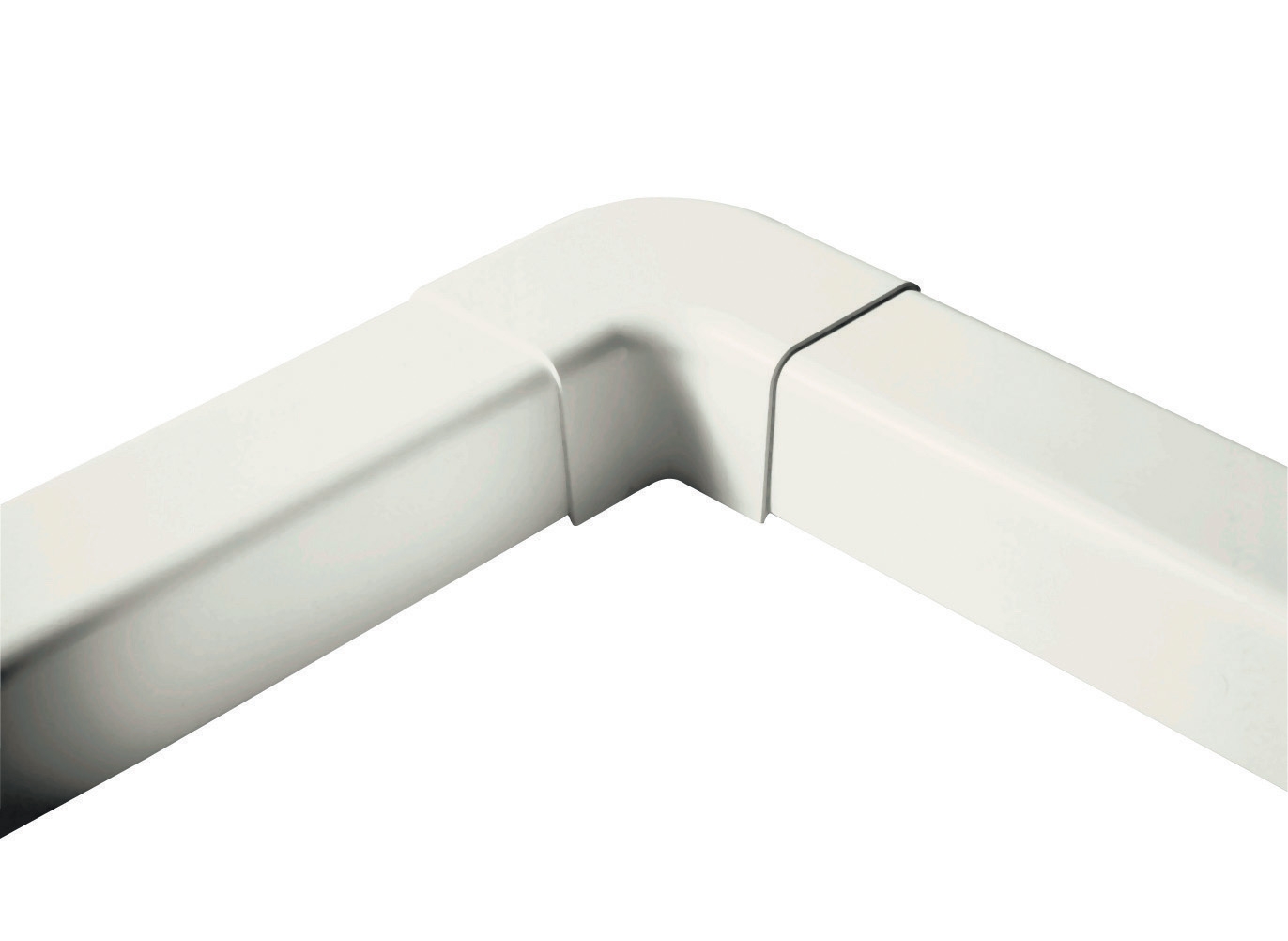
Installation and system routing often require directional piping adaptation. The CBM flat elbow 90° fitting in 60 mm size enables compact angled connections in equipment rooms where space is constrained, a critical consideration in Singapore's high-density industrial zones where every cubic centimeter of mechanical room space carries significant real estate value. Proper elbow selection prevents turbulent flow losses that would reduce effective pump performance and increase heat generation.
For technicians performing troubleshooting and maintenance diagnostics, the CBM automatic multimeter MM420 enables electrical circuit testing and motor verification, ensuring the pump's driving motor operates within specification before pressurized operation. The non-contact voltage detector capability allows safe preliminary assessment of electrical systems before physical circuit interaction.
Practical Maintenance and Service Considerations for Singapore Operations
Tropical climates and high ambient temperatures present specific challenges for pump system reliability in Singapore. The 15 L/min flow capacity of the E3B series should be sized with thermal load consideration: systems operating continuously in 32–35°C ambient conditions may experience accelerated fluid aging and seal degradation. Implementing thermal monitoring—supported by the CBM expansion tank inflator with digital pressure display and 2,000 mAH battery—ensures system pressure remains within safe operating envelope as fluid temperature fluctuates throughout the operational day.
For organizations managing multiple pump installations across distributed facilities, maintaining standardized spare parts inventory reduces response time when component failure occurs. The Interpump E3B series' consistent 7.13 kW power rating and 1,450 RPM base speed simplify motor and coupling standardization, allowing a single spare motor to support multiple pump units across a service fleet.
Choosing the Right Pump: Decision Framework
To select between the three Interpump E3B variants, industrial professionals in Singapore should answer these sequential questions: (1) Installation geometry—does the system layout require internal shaft drive or external left-mounted outlet? (2) Operational complexity—does the application demand variable-speed operation or integrated directional flow control, justifying the gearbox variant? (3) System integration—will the pump operate standalone with external valve controls, or should mechanical integration be prioritized to reduce component count and potential leak points? (4) Maintenance accessibility—in the selected location, is technician access sufficient for routine seal inspection and fluid servicing?
For most general maintenance and service applications in Singapore—industrial cleaning systems, HVAC booster pumps, and hydraulic circuit testing equipment—the E3B2515 L with left-mounted shaft configuration provides the optimal balance of performance, modularity, and ease of integration into existing piping infrastructure. Organizations requiring advanced flow sequencing or variable operational modes benefit from specifying the gearbox-integrated variant, accepting slightly higher capital cost for reduced operational complexity and integrated component count.
Conclusion and Next Steps
Industrial pump selection in Singapore requires alignment of technical specifications—pressure, flow, power, and rotational regime—against specific operational requirements and system integration constraints. The Interpump E3B series represents a proven solution for high-pressure, moderate-flow maintenance and service applications across manufacturing, building services, and industrial cleaning sectors throughout the region. The three available variants enable configuration flexibility without requiring custom engineering, reducing procurement lead times and supporting rapid system deployment when operational demands arise.
To explore the full range of industrial pumps available in Singapore and discuss specific application requirements, contact 3G Electric's technical sales team. Our authorized technicians can assess your facility's pressure, flow, and power distribution constraints, recommend the optimal Interpump configuration, and coordinate delivery and commissioning support. Whether you're expanding a service fleet, upgrading aging hydraulic infrastructure, or troubleshooting performance issues in existing systems, 3G Electric provides the technical expertise and product inventory to support your maintenance and service operations throughout Singapore and Southeast Asia. Reach out today to discuss your specific requirements.