Understanding Gas Valve & Regulation Failure Modes
Gas valves and regulation systems are critical to maintaining safe, efficient operations in industrial plants. When these systems fail, the consequences range from production downtime to catastrophic safety incidents. Over 35 years as an industrial equipment distributor, 3G Electric has worked with plant managers across Southeast Asia to troubleshoot valve failures that compromise system integrity.
Understanding failure modes is essential for preventive maintenance. Gas valves fail in predictable patterns based on operating conditions, maintenance practices, and design limitations. Rather than waiting for catastrophic failure, plant managers can recognize early warning signs and take corrective action before production is impacted.
The most common failure modes include:
- Pressure creep (outlet pressure rises uncontrollably)
- Seat leakage (gas passes through when valve should be closed)
- Frozen adjustments (pressure setting cannot be changed)
- Pilot line blockages (restrict control signal to main valve)
- Safety relief malfunction (fails to vent excess pressure)
Each failure mode has distinct causes and requires specific diagnostic approaches. By mastering these troubleshooting techniques, you can reduce unplanned maintenance costs and improve system uptime.
Diagnosing Pressure Creep and Outlet Pressure Problems
Pressure creep is perhaps the most insidious failure mode—the outlet pressure gradually increases above the setpoint, and operators may not notice until downstream equipment is damaged or gas consumption becomes erratic.
Root Causes of Pressure Creep:
- Contaminated seat surfaces: Particles or deposits on the valve seat prevent full closure, allowing gas to bleed past
- Worn internal seals: Elastomer degradation from temperature cycling or incompatible gas media
- Spring fatigue: Repeated cycling weakens the spring, reducing closing force
- Adjustment screw creep: Vibration gradually turns the adjusting mechanism
1. Baseline measurement: Use a calibrated pressure gauge upstream and downstream of the regulator over a 24-hour period. Document readings at different times to identify trends.
2. Isolation test: Close the inlet isolation valve and monitor outlet pressure for 10 minutes. If pressure rises, the valve seat is leaking. If pressure is stable, the problem is elsewhere.
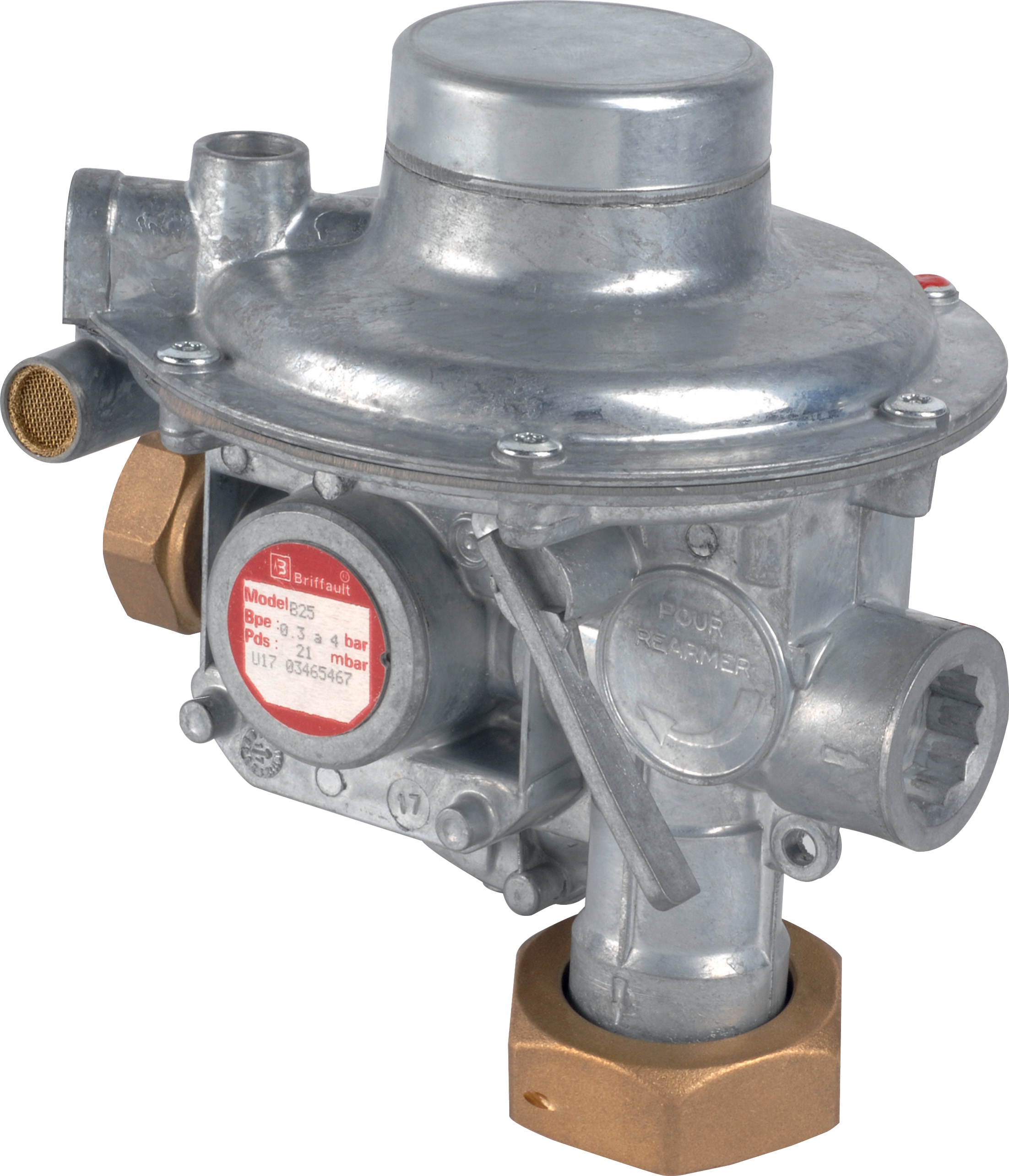
3. Spring tension check: For adjustable regulators like the Francel B25/37mb with integrated safety relief, attempt to adjust the outlet pressure downward. If the setpoint cannot be moved, the spring may be fatigued or the adjustment mechanism is frozen.
4. Visual inspection: Remove the regulator from service and examine the valve seat under magnification. Look for scratches, pitting, or discoloration indicating deposits.
Corrective Actions:
- Light contamination: Flush the system with clean dry gas and operate the regulator at low flow for 30 minutes to purge particles
- Seat damage: Replace the regulator; internal repairs are typically not field-serviceable
- Adjustment screw drift: Lock the adjustment screw with a small amount of medium-strength threadlocker (Loctite 243) after setting the correct pressure
- Spring fatigue: Schedule replacement based on failure analysis; common interval is 3-5 years for continuously operated regulators
Addressing Pilot Line Blockages and Control System Failures
Many industrial gas systems use pilot-operated regulators, where a small portion of outlet gas is diverted through a pilot line to modulate the main valve. When this pilot line becomes blocked, the regulator loses sensitivity and cannot maintain accurate pressure control.
Symptoms of Pilot Line Blockage:
- Slow or no response when adjusting the pressure setpoint
- Outlet pressure fluctuates wildly with flow changes
- Safety relief fails to activate at the correct pressure threshold
- Downstream equipment exhibits erratic gas consumption
1. Verify gas supply: Confirm inlet pressure is adequate (typically 1.5–2× outlet setpoint minimum)
2. Identify the pilot line: Trace the small-bore tubing from the regulator body. Check for sharp bends, kinks, or crushing damage
3. Listen and feel: With the system pressurized, listen for a hissing sound at the vent or pilot outlet. Touch the pilot line tubing carefully—it should be cool if gas is flowing freely
4. Measure differential pressure: If the system includes pressure gauges before and after the regulator, the outlet pressure should track smoothly with inlet changes. If not, pilot blockage is likely
Resolution Steps:
- Disconnect and flush: Isolate the regulator, disconnect the pilot line, and blow compressed dry air through it at 5–6 bar. Repeat several times until no debris is expelled
- Replace tubing if damaged: Kinked or crushed pilot lines restrict flow beyond repair. Use tubing sized to the original specification (typically 4–6 mm OD for industrial regulators)
- Install upstream filters: Add a gas filter rated for your application upstream of the regulator to prevent future contamination. Change filter elements every 6 months or when pressure drop exceeds 0.5 bar
- Check vent line: The relief vent should be unobstructed. Ensure it is not capped or exposed to wind that could create back-pressure
Safety Relief Valve Verification and Maintenance
The safety relief valve is your system's last line of defense against overpressure. The Francel B25/37mb integrates a safety relief function into the main regulator body, simplifying maintenance and ensuring coordinated pressure control.
Why Safety Reliefs Fail:
- Seat corrosion: Gas moisture or chemical contaminants attack the valve seat
- Spring weakening: The relief spring loses tension and cracks at higher than expected pressures
- Stuck adjustment screw: The relief setpoint cannot be verified or adjusted
- Pilot signal loss: For pilot-operated reliefs, a blockage in the sense line prevents activation
1. Bench calibration test: This must be done by a qualified technician with the regulator removed from service. The regulator is connected to a precision pressure source and the pressure is slowly increased until the relief vents. The cracking pressure is recorded; it must match the design specification (for the Francel B25/37mb, typically 37 mbar outlet pressure)
2. In-service function test: While operating normally, gradually reduce the outlet isolation valve opening. The regulator should maintain setpoint, and if pressure rises uncontrollably due to a blockage downstream, the relief should vent excess gas with an audible hiss
3. Visual inspection: Look for corrosion or deposits around the relief vent. If vent blockage is suspected, disconnect the vent line and blow dry air through it
Maintenance Schedule:
- First 6 months: Perform weekly in-service function tests to establish baseline behavior
- 6–12 months: Increase to monthly testing; any deviation warrants immediate investigation
- Annually: Arrange off-site calibration testing by an accredited service center
- Every 3 years: Replace the regulator as preventive maintenance if it has been in continuous service
For critical safety-function applications, consider installing dual regulators with independent relief valves. This redundancy ensures that a single failure does not result in uncontrolled gas discharge.
Implementing a Proactive Valve Management Program
Plant managers who move from reactive repair to proactive management see measurable improvements in uptime, safety, and cost. Building a successful program requires three elements: documentation, monitoring, and scheduled replacement.
Documentation and Baseline Data:
- Create a register of all gas regulators and valves, including model number, installation date, outlet pressure setpoint, and associated equipment (burners, process controls, etc.)
- Record baseline pressure readings at startup and after 8 hours of operation
- Document any adjustments made, including the reason and the technician who performed the work
- Keep photographs of gauge readings for reference
- Install permanent pressure gauges upstream and downstream of critical regulators
- Log readings daily at the same time; this identifies trends before failure occurs
- Flag any deviations of more than ±5% from the setpoint as requiring investigation
- Use simple spreadsheet tools to plot pressure over time; trends are often more revealing than single-point measurements
- High-duty regulators (operating 18–24 hours daily) should be replaced every 2–3 years
- Moderate-duty regulators (8–16 hours daily) can be extended to 3–5 years
- Low-duty regulators (startup/shutdown use) may reach 5–7 years if maintained well
- Always replace as a set if multiple regulators serve a single process; mixing new and aged units can mask emerging problems
3G Electric's 35+ years of experience distributing industrial gas equipment means we understand the real-world pressures plant managers face. We stock a wide range of replacement regulators and valves to minimize the lead time when failures occur. Our technical team can assist with troubleshooting, specification verification, and parts selection to ensure you choose the right solution for your application.
Key Takeaway:
Gas valve and regulation failures do not happen without warning. By implementing systematic diagnostics, maintaining accurate records, and planning replacement cycles, you transform valve failures from catastrophic events into routine maintenance tasks. The investment in a structured monitoring program pays for itself many times over through reduced downtime and improved safety.