Understanding Gas Valves & Regulation: Pilot-Operated vs. Direct-Acting Technologies
With over 35 years of industrial equipment distribution experience across Southeast Asia, 3G Electric has supported maintenance teams through thousands of gas valve specification decisions. The choice between pilot-operated and direct-acting gas valve designs represents one of the most critical technical decisions in your facility's pressure regulation strategy. Both technologies deliver reliable gas control, but they operate on fundamentally different mechanical principles that directly impact your maintenance workflow, operational costs, and safety compliance.
Pilot-operated valves use a small pilot flow to control a larger main valve, while direct-acting regulators rely on spring force and system pressure to maintain setpoint. Understanding these differences—especially in Southeast Asia's high-humidity, high-temperature operating environments—ensures your maintenance team selects equipment that minimizes downtime and extends service intervals.
Direct-Acting Regulators: Simplicity, Responsiveness, and Maintenance Efficiency
Direct-acting gas valves represent the most straightforward pressure regulation technology available to maintenance teams. These regulators operate without external pilot signals or complex sensing mechanisms. Instead, they use a simple spring-loaded diaphragm or piston that responds directly to downstream pressure. When outlet pressure rises above the setpoint, the internal mechanism closes; when pressure drops, it opens again. This elegant simplicity translates into tangible benefits for Southeast Asian industrial facilities.
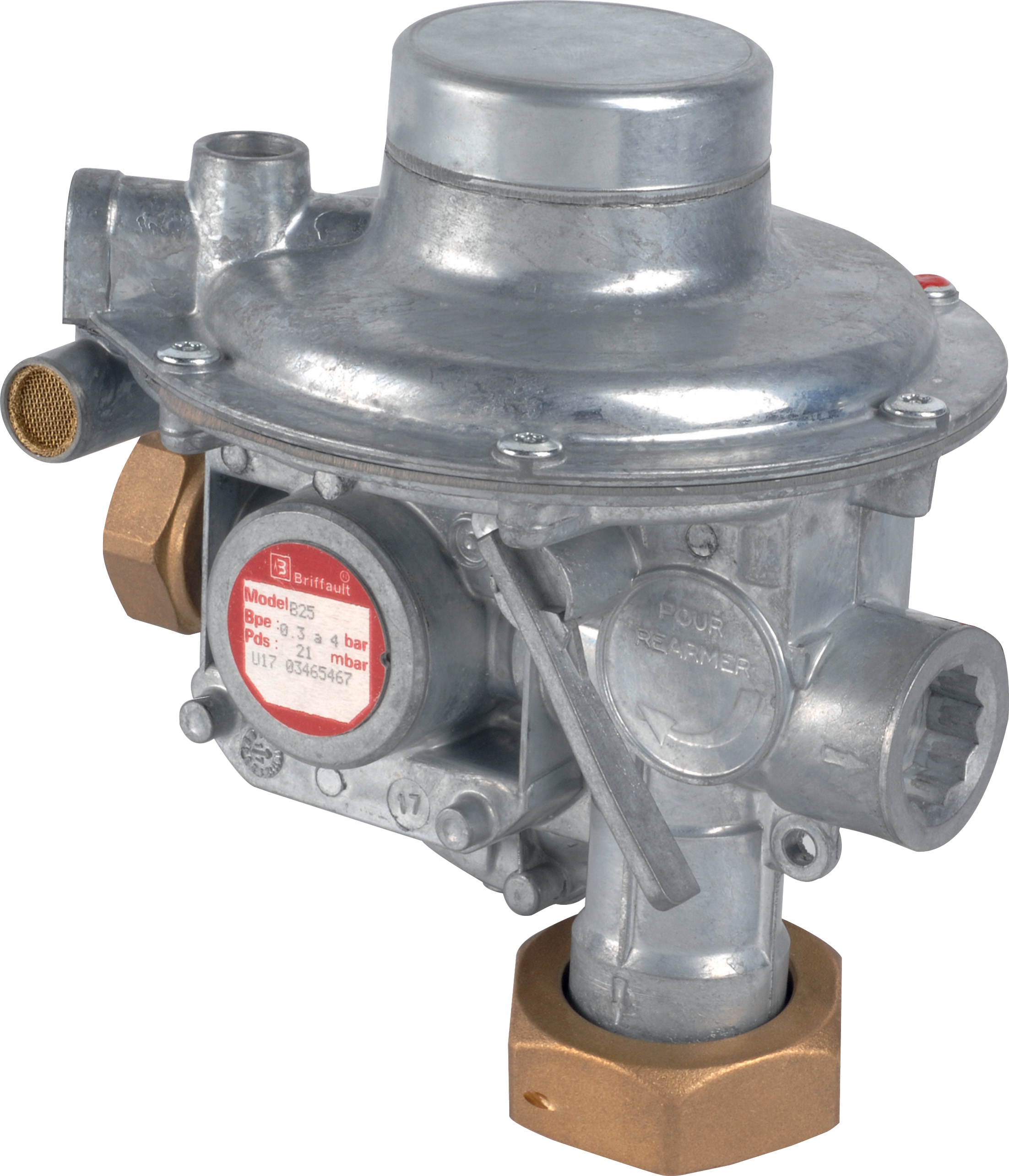
The Francel B25/37mb pressure regulator exemplifies direct-acting design with integrated safety relief. This unit delivers consistent 37 mbar outlet pressure through straightforward mechanical action. Your maintenance team benefits from reduced training requirements—technicians understand the fundamental operation within hours rather than days. The 10 mm vent size provides rapid response to pressure fluctuations, critical for laboratory gas distribution and precise industrial applications.
For facilities operating in Southeast Asia's variable climate conditions, direct-acting regulators offer superior reliability. High humidity and temperature swings (common in Malaysia, Thailand, and Indonesia) can affect pilot supply lines and sensing tubes in more complex systems. Direct-acting designs eliminate these vulnerable components entirely. Your maintenance schedule remains predictable: annual diaphragm inspection, vent clearing, and spring verification. No pilot supply filters to replace. No sensing line blockages during monsoon seasons.
Direct-acting regulators excel in applications below 10 bar and when flow rates remain relatively constant. If your facility operates a dedicated gas line serving a single burner or control point, direct-acting technology delivers maximum reliability with minimum complexity. The mechanical response is instantaneous—no lag time between pressure change and valve response.
Maintenance cost analysis reveals another advantage: replacement parts are generic and stocked by virtually every industrial supplier. Spring kits, diaphragm assemblies, and seat rings cost 40-60% less than pilot-operated valve components. In Southeast Asian markets where supply chain delays can extend downtime significantly, this parts availability represents substantial operational insurance.
Pilot-Operated Regulators: Precision Control for High-Pressure, Multi-Point Systems
Pilot-operated gas valve designs serve fundamentally different operational requirements. These regulators sacrifice mechanical simplicity for superior accuracy and load-holding capability. A pilot-operated valve uses a small pilot flow (typically 5-10% of main flow) to control the opening and closing of the main valve spool or piston. This indirect control method enables precise pressure maintenance even when downstream load conditions change dramatically.
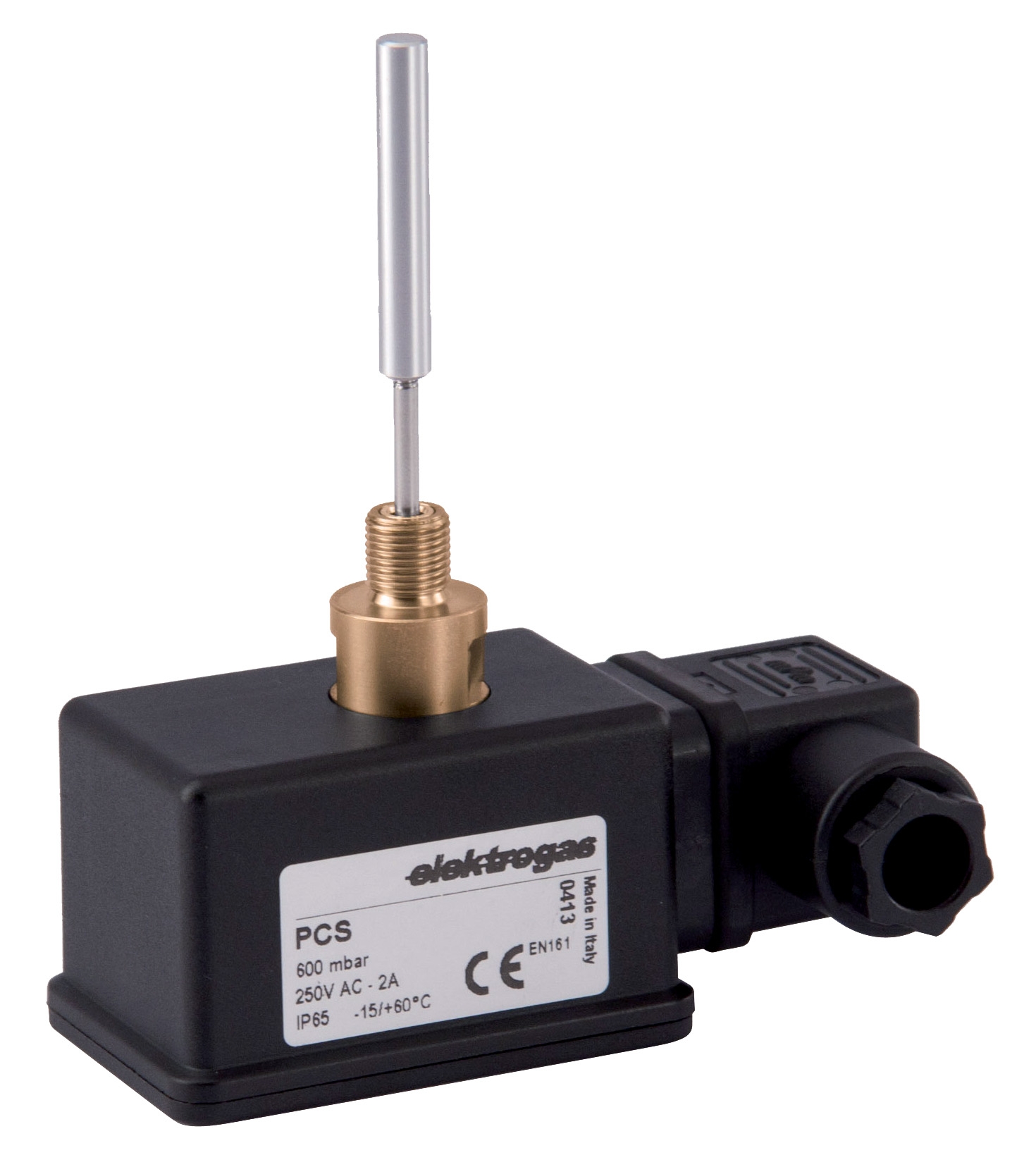
The Elektrogas VMM 20-25 end-of-stroke contact valve demonstrates pilot-operated principles in a specialized application rated for 6 bar pressure and designed to EN 161 safety standard. This valve maintains precise control at the end of pneumatic actuator strokes, preventing pressure surges and protecting downstream equipment. Adjustment via 3 mm Allen wrench enables field calibration without disassembly—critical capability for maintenance teams supporting multiple production lines.
In Southeast Asian industrial facilities serving multiple gas distribution points, pilot-operated technology becomes economically justified. Consider a manufacturing plant operating 8-12 individual gas burners from a single supply line. Direct-acting regulators would require individual regulators at each burner—expensive and vulnerable to interconnected pressure oscillations. A single pilot-operated regulator at the main supply line maintains consistent pressure across all downstream points regardless of individual burner cycling.
Pilot-operated valves excel at high-pressure applications (20-100+ bar range common in pneumatic systems). The pilot stage uses low-pressure energy to control high-pressure flows, reducing the mechanical stress on main valve components. Your maintenance team observes longer service intervals on main valve seats and spools. Pilot supply pressure typically remains stable at 2-4 bar, minimizing wear on critical sealing surfaces.
The precision advantage proves particularly valuable in Southeast Asia's demanding manufacturing environments. Industries including semiconductor fabrication, pharmaceutical production, and precision machining require ±0.5 bar pressure stability. Direct-acting regulators typically maintain ±2-3 bar accuracy. Pilot-operated designs achieve ±0.1-0.5 bar accuracy—substantial difference when controlling sensitive processes. A food processing facility in Thailand operating pasteurization equipment depends on this precision to ensure consistent product quality.
Pilot-operated technology introduces additional maintenance complexity. Your technicians must understand pilot supply pressure regulation, sensing line operation, and two-stage control logic. Pilot supply filters require replacement every 500-1000 operating hours in Southeast Asia's dusty industrial environments. Sensing lines can clog from pipe corrosion products or moisture contamination during monsoon seasons. These failure modes don't exist in direct-acting designs.
Comparative Analysis: Maintenance Requirements and Operational Costs
3G Electric's 35+ years distributing industrial equipment across Southeast Asia provide real-world maintenance data for both technologies.
Direct-Acting Regulators—Typical Annual Maintenance:
- Visual inspection and vent clearing: 2-4 hours annually
- Diaphragm replacement cycle: 3-5 years depending on duty cycle
- Spring replacement during diaphragm service: preventive measure
- Parts cost per service cycle: $150-350 USD
- Training requirement: 4-8 hours for maintenance technician
- Spare parts inventory: 2-3 complete kits per facility
- Visual inspection and vent clearing: 4-8 hours annually
- Pilot supply filter replacement: every 500-1000 hours operation
- Sensing line inspection and purging: quarterly in humid climates
- Main valve seat/spool inspection: 2-3 year cycle
- Parts cost per service cycle: $400-800 USD
- Training requirement: 20-40 hours for comprehensive competency
- Spare parts inventory: 4-6 complete kits plus pilot supplies
For facilities operating in Southeast Asia's high-humidity coastal regions (Singapore, Malaysia's west coast, southern Thailand), the difference becomes more pronounced. Moisture infiltration in pilot sensing lines creates pressure sensing errors. Your maintenance team experiences false regulation and pressure oscillations requiring emergency shutdowns. Direct-acting regulators eliminate this failure mode entirely.
Capital cost comparison shows direct-acting technology at $800-1200 per unit for industrial-grade regulators. Equivalent pilot-operated units cost $2000-4000. However, total cost of ownership (TCO) calculations often favor pilot-operated designs in high-flow, multi-point applications. A manufacturing facility serving 10 burners with pilot-operated technology costs less than 10 separate direct-acting regulators plus interconnection complexity.
Specification Decision Framework for Southeast Asian Maintenance Teams
Your facility's optimal choice depends on five critical factors:
1. Pressure Range and Application Type
Direct-acting: optimal for 0-10 bar, single-point distribution, laboratory gases, and utility fuel gas applications. Pilot-operated: required for 10+ bar, multi-point systems, and applications requiring ±0.5 bar or better accuracy.
2. Flow Rate Characteristics
Direct-acting: steady, predictable flows from 0.5-50 m³/h. Pilot-operated: handles extreme flow variations (50-500 m³/h) and rapid cycling without pressure oscillation.
3. Environmental Factors
Direct-acting: superior reliability in high-humidity tropical climates, corrosive coastal air, and facilities lacking climate-controlled equipment rooms. Pilot-operated: requires protected pilot supply lines and regular sensing line maintenance in Southeast Asian conditions.
4. Maintenance Team Capability
Direct-acting: suitable for facilities with basic HVAC/mechanical technicians. Pilot-operated: requires specialized training in gas control systems and instrumentation principles.
5. Spare Parts and Supply Chain
Direct-acting: readily available components throughout Southeast Asia, minimal lead times. Pilot-operated: specialized components may require 2-4 week lead times from European manufacturers.
Practical Implementation: Integration with 3G Electric's Product Portfolio
3G Electric supplies both technologies across Southeast Asia with comprehensive technical support. The Francel B25/37mb direct-acting regulator serves laboratories, research facilities, and precision gas distribution applications. Its integrated safety relief eliminates separate safety valve installation—simplifying your maintenance documentation and spare parts management.
For facilities requiring higher-pressure control or multi-point distribution, consider integrated regulator systems combining both technologies. Pressure regulation at the main supply point (pilot-operated) with safety valve function (direct-acting relief) provides optimal performance across wide operating ranges.
Your maintenance team should document baseline pressure readings during commissioning—critical reference data for diagnosing future performance degradation. Southeast Asian climate variations create seasonal pressure shifts; understanding your system's normal behavior prevents unnecessary troubleshooting.
Conclusion: Aligning Technology Selection with Maintenance Capabilities
Neither gas valve regulation technology represents "superior" choice universally. Direct-acting regulators excel in simplicity, reliability in humid climates, and total cost of ownership for straightforward applications. Pilot-operated designs deliver precision control, superior load-holding, and economy at high-pressure and multi-point installations.
Your maintenance team's decision should prioritize your facility's specific operational demands, climate challenges, and technical expertise. Southeast Asia's diverse industrial environments—from coastal petrochemical facilities to inland food processing plants—require thoughtful technology matching.
3G Electric supports your specification process through technical consultation, equipment trials, and comprehensive training programs across Southeast Asia. Our 35+ years distributing industrial gas control equipment ensures your maintenance team receives guidance grounded in real regional operating experience, not theoretical specifications.
Contact 3G Electric today to discuss your facility's gas valve regulation requirements and arrange a technical consultation with our Southeast Asian industrial gas specialists.