Gas Burner Performance Optimization: Matching Nozzle Size, Power Output & Electrical Requirements for Singapore Industrial Applications
Industrial combustion efficiency depends fundamentally on understanding the relationship between burner specifications and application requirements. For Singapore's manufacturing, food processing, and chemical sectors, selecting gas burners with properly matched technical parameters—nozzle diameter, minimum/maximum power output, and electrical supply configurations—determines both operational safety and energy efficiency. This guide examines critical performance specifications and how to align them with your facility's thermal demands, moving beyond generic burner categories to practical technical analysis that engineers can apply immediately to equipment selection and troubleshooting.
Understanding Gas Burner Technical Specifications: The Core Parameters That Drive Performance
Gas burner performance is defined by three interdependent technical parameters that must work in harmony: nozzle diameter (measured in millimeters), electrical power output (expressed in kilowatts minimum and maximum), and electrical supply configuration (single-phase or three-phase). These specifications are not arbitrary—they represent the burner's ability to atomize fuel, mix it with combustion air, and sustain stable flame across varying load conditions.
The nozzle diameter determines the spray pattern and atomization fineness of the gaseous fuel. Larger nozzles (385mm and above) accommodate higher fuel flow rates for industrial-scale applications, while smaller nozzles (90mm) suit precision heating in confined spaces or lower-capacity systems. The relationship between nozzle size and power output reveals critical insights: a 90mm nozzle burner typically delivers 17.4-93 kW, whereas a 385mm nozzle can reach 850 kW maximum output.
Power output specifications include both minimum and maximum kW ratings. The minimum rating (often 20-30% of maximum) indicates the lowest stable combustion point—critical for applications requiring turndown capability and part-load efficiency. Maximum kW represents full-fire capacity under optimal conditions. For example, a burner with 130-850 kW range can modulate across a 6.5:1 turndown ratio, essential for facilities with variable thermal demands throughout production cycles.
Electrical supply configuration—either single-phase (1 Ø) or three-phase (3 Ø)—determines installation requirements and compatibility with facility infrastructure. Single-phase burners suit smaller installations and facilities with standard electrical service, while three-phase units are mandatory for larger industrial applications where 3-phase power is standard. This specification affects not only installation cost but also control system integration and compliance with Singapore's electrical installation standards.
Technical Specifications of High-Performance Gas Burners: Data-Driven Selection Framework
3G Electric's portfolio includes comprehensive gas burner solutions across multiple performance tiers, each optimized for specific industrial scenarios. Understanding these specifications enables precise application matching.
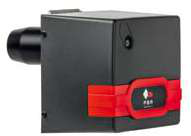
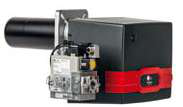
Compact Industrial Range (Single-Phase, Low-to-Mid Power): The FBR GAS X2/M CE TC (_31) and FBR GAS X2/M CE-LX4 TC Cl. 4 (_31) represent entry-level industrial combustion solutions. Both feature 90mm nozzles and deliver 17.4-93 kW output on single-phase (1 Ø) electrical supply. The CE-LX4 variant includes additional Class 4 certification and LX4 flame detection capability, providing enhanced safety margins for applications requiring continuous flame monitoring. These burners suit small-to-medium facilities: bakeries, small food processors, localized heating systems, and equipment with modest thermal requirements. The tight 17.4-23.7 kW minimum threshold enables precision temperature control in processes where overshooting creates product quality issues.
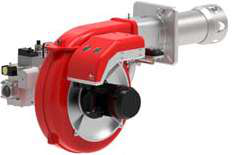
Mid-Capacity Industrial Range (Three-Phase, Moderate-to-High Power): The FBR X GAS XP 60 CE TC EVO (_41) bridges single-phase and heavy industrial applications. With a 250mm nozzle and 232-630 kW range on three-phase (3 Ø) supply, this burner delivers 2.7:1 turndown—sufficient for manufacturing processes with moderate load variation. The CE TC EVO designation indicates integrated electronic control and optimized combustion efficiency through advanced flame supervision.
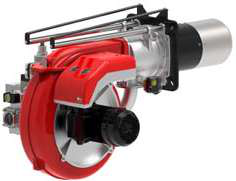
Heavy Industrial Range (Three-Phase, High-Capacity Output): The FBR GAS XP 80/2 CE-LX4 TL Cl. 4 (_41) and FBR GAS XP 80/M CE-LX4 TL Cl. 4 (_41) represent the industrial sector's workhorse. Both feature 385mm nozzles and reach 850 kW maximum output on three-phase supply. The XP 80/2 variant (170-850 kW minimum) serves facilities requiring rapid load response, while the XP 80/M variant (130-850 kW minimum) provides extended turndown for processes with extended low-fire periods. The CE-LX4 TL Cl. 4 rating ensures European standards compliance and enhanced flame detection across the full load range—critical for Singapore's manufacturing sector where equipment often meets international standards alongside local requirements.
Technical data reveals a critical pattern: larger nozzles (385mm) enable higher absolute power and superior turndown ratios (6.5:1 capability) compared to smaller nozzles. This relationship drives selection logic: if your process requires both high peak capacity and extended part-load operation, larger-nozzle burners deliver superior flexibility despite higher initial investment.
Real-World Application Scenarios: Matching Specifications to Industrial Processes in Singapore
Food Processing Facility (Pasteurization & Sterilization): A medium-sized food processing plant operates multiple pasteurization tanks simultaneously with varying batch sizes. Peak thermal demand reaches 400 kW, but average operating load averages 250 kW due to batch scheduling. The FBR X GAS XP 60 CE TC EVO (232-630 kW, three-phase) matches this profile perfectly: maximum capacity covers peak demand with 57% headroom, while 232 kW minimum enables efficient low-fire operation during partial-batch cycles. The 250mm nozzle provides stable atomization across this wide turndown range, and integrated electronic control optimizes flame characteristics as load varies.
Industrial Ceramics Production (Kiln Firing): A ceramics manufacturer requires sustained high-temperature firing with minimal load variation. Operating specification: 800 kW continuous, with occasional peaks to 850 kW. The FBR GAS XP 80/M CE-LX4 TL Cl. 4 (130-850 kW, three-phase) provides exact capacity match. The 385mm nozzle generates the spray pattern required for full-chamber distribution, while the 130 kW minimum supports pilot operation during startup and shutdown sequences. The Class 4 certification and CE-LX4 flame detection ensure continuous operational safety in the high-temperature environment typical of kiln operations.
Small Manufacturing Workshop (Localized Heating): A metal fabrication shop requires targeted heating for small parts finishing. Peak demand: 75 kW, normal operation: 30-50 kW. Single-phase electrical availability constrains options. The FBR GAS X2/M CE TC (17.4-93 kW, single-phase, 90mm nozzle) aligns precisely with this requirement: 93 kW maximum provides 24% capacity margin, while 17.4 kW minimum enables low-temperature holding without overshooting. Single-phase supply eliminates expensive three-phase installation, reducing project cost while maintaining full functionality.
Specification Selection Criteria: Engineering Decision Framework for Singapore Facilities
Step 1: Determine Peak Thermal Demand. Calculate your maximum process requirement in kW. Select a burner with maximum output 10-15% above peak demand (provides operational margin and extends burner service life).
Step 2: Evaluate Load Variation and Turndown Ratio. Analyze your typical operation: does load remain constant or vary significantly? If load varies by more than 30%, prioritize burners with extended turndown capability (minimum-to-maximum ratio of 5:1 or higher). The FBR XP 80 series (130-850 or 170-850 kW) excels here; single-phase burners suit more stable processes.
Step 3: Match Electrical Infrastructure. Verify available electrical supply. Single-phase burners require standard facility wiring; three-phase burners need 3 Ø service (standard in most Singapore industrial zones). Three-phase capacity typically costs less to operate over equipment lifetime despite higher installation expense.
Step 4: Assess Safety & Compliance Requirements. Specify LX4 flame detection and CE/TL certification for critical processes (food safety, chemical production, high-temperature applications). Standard TC ratings suffice for less critical heating applications.
Closing: Optimize Your Combustion System with Data-Driven Specifications
Gas burner selection extends far beyond choosing "small," "medium," or "large." Technical mastery of nozzle diameter, power output ranges, and electrical supply configurations transforms selection from guesswork into engineering precision. Whether you operate a food processing facility requiring 400 kW with extended turndown, an industrial kiln demanding sustained 800 kW output, or a workshop needing flexible 30-75 kW heating, specification alignment ensures efficiency, safety, and cost-effectiveness throughout equipment lifetime.
3G Electric's gas burner portfolio spans this full specification range, backed by three decades of industrial equipment experience in Singapore's manufacturing and process industries. Our technical team specializes in matching complex application requirements to optimal burner specifications—considering not just peak capacity, but turndown capability, electrical infrastructure, flame detection requirements, and compliance standards specific to your facility and process. Contact 3G Electric's technical department today to discuss your specific thermal requirements and receive a detailed specification analysis from experienced industrial combustion engineers. Let our expertise ensure your next burner installation delivers optimal performance from day one.